
Translated material
Minister of Energy of Turkey: Ankara will not make the concessions of Russia in the "Turkish stream"
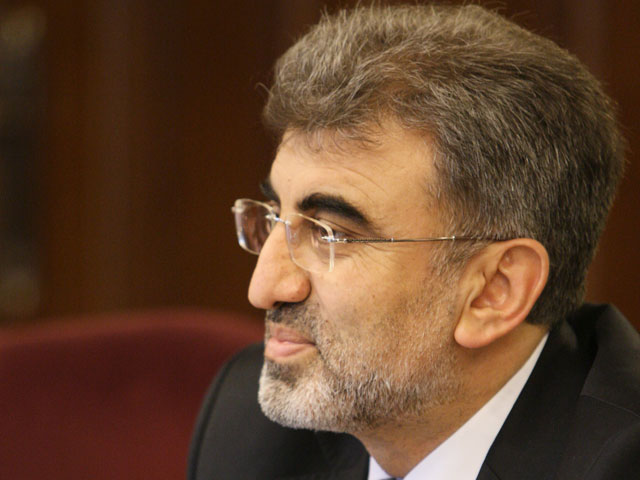
The Minister of Energy and Natural Resources of Turkey Taner Yildyz said his country would not make concessions to Gazprom in matters of implementation of the Turkish Stream project, Rosbalt reports.
“Moscow sees only a transit country in us. There is no sense for us for us. We are interested in creating a joint supply system. A fundamental agreement on this issue has been reached, but Russia has gone back,” said Yyldyz, commenting on the course of negotiations with Gazprom about the implementation of the project .
According to the minister, the "Turkish stream" must meet the interests of both Moscow and Ankara.
“We will never make concessions that threaten our interests,” Yyldyz emphasized. He also added that the problem cannot be solved only by providing gas discounts.
Preliminary agreements on the construction of the "Turkish stream" were reached after the cessation of work on the "South Stream", which was closed in December 2014 due to the EU position on the conflict in Ukraine.
The first thread of the Turkish Stream Marine gas pipeline from Russia to the west of Turkey should earn at the end of 2016. It will be aimed at supplying the West of Turkey instead of Ukrainian transit. The next three threads are designed to replace the supply of gas to the countries of Central and Southern Europe to replace Ukrainian transit. It was assumed that the power of the gas pipeline will be up to 60 billion cubic meters of gas per year.
A month ago, it became known that Russia could not conclude an agreement with Turkey, and Gazprom canceled 11 tenders on the Southern Corridor and broke off a contract from the Italian Saipem to lay pipes along the Black Sea bottom. The project will no longer be able to implement within the specified time, although Gazprom has already been purchased and lie in pipe warehouses worth 1 billion euros for the first thread of the Turkish Stream. 40% of the pipes for the second branch were also shipped, but they have not yet been paid.
EC all this time avoided directly expressing their attitude to these projects, referring to the lack of information, and only publicly expressed doubts about their economic efficiency.
In parallel, the EU began active negotiations on gas pipelines from Azerbaijan and, in a more distant perspective, from Central Asia, which could deliver gas to Southern Europe, alternative to Russian.
Last week, the second meeting of the group to increase the gas coherence of the countries of central and southeastern Europe (CESEC) was held. These are countries that were going to take part in the South Stream project, to which representatives of Bosnia and Herzegovina, Macedonia, Moldova, Serbia and Ukraine joined the invitation of the EC.
Based on the results of this meeting, the EC proposed two new supplies to the Balkan countries - Azerbaijani gas under the TAP gas pipeline (construction has already begun), as well as liquefied gas from LNG terminal, the construction of which is planned in Croatia.