
Translated material
"Everyone is already tired of hating ..."
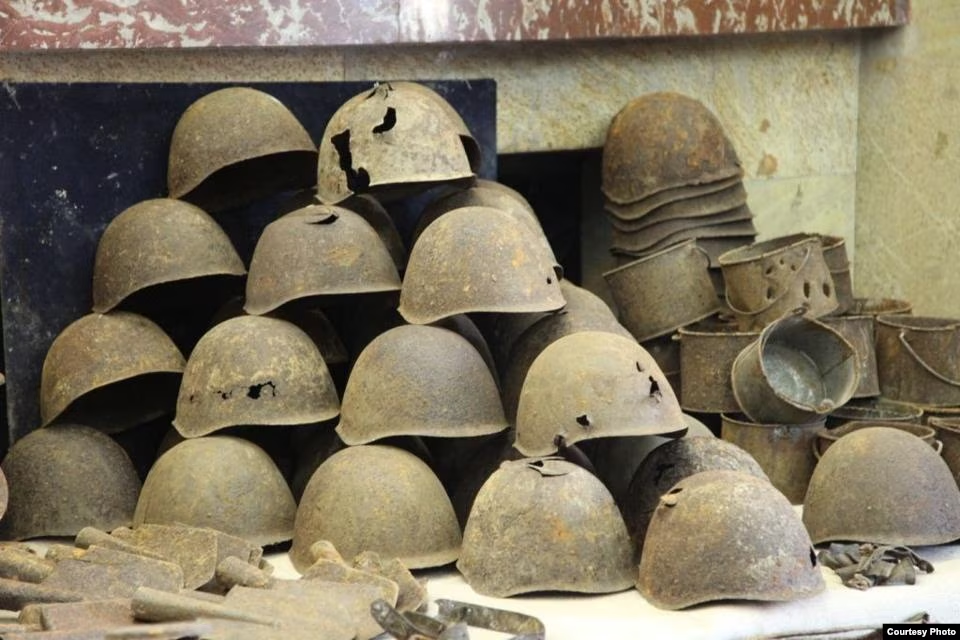
The Ukrainian humanitarian mission to search for the bodies of the dead in the Donbass is suspended due to the lack of funding
"Black Tulip", a humanitarian mission to evacuate the bodies of those killed in the conflict zone in eastern Ukraine, may cease their activities due to the lack of funding. Over 10 months of work, the expedition search engines "Black Tulip" found and took out the remains of hundreds of military personnel from the front line. There are no exact data on the number of missing from both sides, but in any case, the bodies of dozens remain on the battlefields, if not hundreds of dead.
According to Ukrainian Pravda , the search for the dead fighters in Ukraine is entirely carried out by volunteers, the state does not take any financial participation in this matter. Protocols for the seizure and evacuation of bodies, inventories of personal belongings, photographs that can help in identifying the dead do not have the status of official documents. The authorized President of Ukraine for the peaceful settlement of the conflict in the Donetsk and Lugansk regions Irina Gerashchenko said that 1160 people were listed on the lists of missing people. To find out which of them was captured and who is killed should, in theory, of the state investigative body, but it was not created in Ukraine. Relatives of the missing are trying to independently conduct investigations: they are associated with representatives of the separatists, go in search of Russia, demand from mobile operators printouts with information about when the disappeared for the last time appeared on the network. However, for data collected by relatives and volunteers, there is no single base. The search for the dead on the line of contact, the head of the Black Tulip, Yaroslav Zhilkin, told Radio Liberty:
Unfortunately, we most often bring bodies that are very difficult to identify
- Our group represents the public organization "People’s Memory" , founded back in 2011. The organization included detachments working in different regions of Ukraine. Until last year, we fulfilled our main task - this is perpetuating the memory of the fallen during the First World War, World War II and World War II. We successfully coped with this task. A year ago, military personnel of the Ukrainian army turned to us for help - with a request, since there is an agreement with the “that side”, to go and collect the bodies of the dead fighters who lie on the fields. We agreed, because this is also included in our task. From September 1, everything spun. Gradually, this activity turned into a separate mission called "Black Tulip". We leave and carry out search work, collect the remains of the dead in order to bring and give to forensic experts who are identified.
- How many fighters did you manage to find the remains?
- From September 1 to today - 609 bags. This is not to say - bodies, these are 609 bags with bodies and fragments of bodies. We do not have feedback from forensic expertise. Unfortunately, we most often bring bodies that are very difficult to identify. DNA analysis and comparison with the database are required.
- Psychologically, this is not an easy job. Why are you doing this?
- You are right, it's not easy. On the first day, when we went to the fighting zone (I headed the first group) I sucked "under the spoon", there was a spasm in my stomach. I was scared, like my comrades. But no one but us agreed to do this; Moreover, in the whole country, probably there are no people who are better prepared for this task. We have repeatedly had to exhumer the remains of fallen warriors - however, seven decades after their death. There, let's say, the material, sorry for this word, is more pure. And here is completely different. Of course, I had to encounter a new reality. But it's okay, we overcome ourselves. There are about 50 of us, we conduct rotations of field expeditions, because people work in their free time from work, to the detriment of their earnings, absolutely on a voluntary basis, at their own expense.
- What do your operations look like, field expeditions on the contact line? Here you come somewhere where you just fought. How does everything happen next ?

- As a rule, we try not to work on the contact line. Because the line of contact - especially if it is old - is stuffed with mines of different modifications and stretch marks. Flooding into such a territory to meddle, if someone even lies there, it is extremely unsafe. Even if we agreed with both sides so that they cease fire for the duration of work. As a rule, we try not to climb into such areas, and if we climb, then only after laying the route. There is very long and painstaking work. Basically, we work in the so -called boilers - this is Ilovaisk and Debaltseve. And in the airport zone, for example, we still do not stick, although we were going - this is still a "hot point", it is unsafe there. Our task is to return without adventure. There, where it is very hot, we try not to climb.
The Ukrainian humanitarian mission to search for the bodies of the dead in the Donbass is suspended due to the lack of funding
- Do you agree with the separatists yourself? Or are there any agreements reached in advance by some Ukrainian command?
- In September, I asked the same question to our curators, military personnel of the Ukrainian army: what guarantees? I was reassured: at the highest level there are agreements, guarantees are given. "People meet you, they accompany you and are responsible for you with your head." Since then, it has happened, although at different points it happened differently. At the checkpoints to our cars, they are already accustomed to our guys - everyone welcomes, we know us on both sides, we don’t even have to introduce themselves. But still with us always accompanying us.
In September, there was some universal radicalism, fierce hatred on both sides. Fatigue is felt now ...
"Inner checkpoints" we pass unhindered. Well, we come to the place of recent clashes ... Another fresh technique, it is still warm. Everything is practically in sight - and the chaos of war, and devastation, of course, and on the other side of the combatants. We communicate with them, introduce, talk. They help, show-there they saw the body there, here something was lying ... We do our work.
- Do you only take the remains of Ukrainian fighters?
- Of course, we found the bodies of not only Ukrainian troops, we do not divide - our own or strangers. We find the deceased, he must be properly buried. Therefore, we collect everything that we need - we transfer to the Donetsk morgue, whom we need - we take it to Dnepropetrovsky.
- How dangerous are such expeditions?
- If we compare the situation of September last year with the present, are two completely different things. In September, there was some universal radicalism, fierce hatred on both sides. Now you feel fatigue ... Well, on the other side they find out that we are from Kyiv, the combatants surround us, dirty, thin. They ask: "What is there in Kyiv, you can hear when the war will end?" And exactly the same words I hear on our part. Of course, in the air you feel fatigue from uncertainty, incomprehensibility. Already everyone is tired, tired of hating. Therefore, there is some warming, or something. Humanization went on both sides in humanitarian matters.
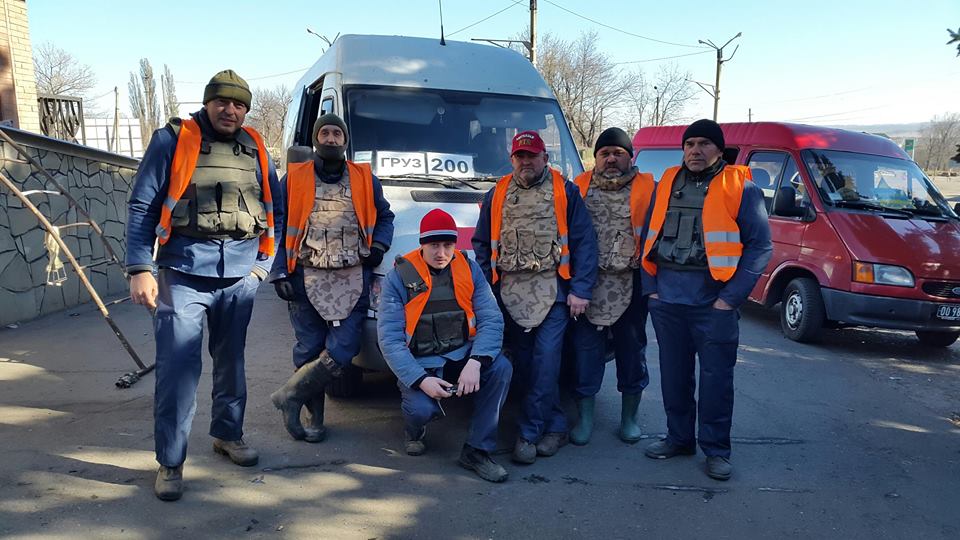
“This hatred that you mentioned ... How exactly did you feel it last fall?”
- There were incidents when it became scary for his life, when he was literally said goodbye to life ... "You are the enemy!" - And all ... thank God, the accompanying people found words, and our behavior did not provoke sharp actions.
- How many dead, according to your estimates, cannot be buried? There are many unknown soldiers left?
- A lot. Well, like a lot, even one person is already a lot, because this is a whole fate. According to my estimates, about 200 more people from the Ukrainian side of the unenf. How much on the other side? I have no information to analyze. But what they write in the news - supposedly dead are stacks, the bodies are littered with the bodies - 99% of a lie, these are military tales. There are no mobile crematoriums, there are no such cases that, like floats, corpses with stones around the neck are swimming in the lakes.
- Directly on the line of contact of the dead are buried? Or are the remains to be taken out if they are found?
-It happens differently. I would say - they do not bury it more often, but preach. Even the scouts somehow called incognito-guys, in such a square we stumbled upon the remains of the body. We pushed it with a stone, put a mark and crawled on. It was simply informed that when we have the opportunity, we have developed. Then the front line moved (it was in Debaltsevo), we arrived there, and there already a grader worked. Therefore, you still have to look.
- Your "black tulip" is a public organization. Are there any army structures, units that are engaged in the search for the bodies of the dead? If there is, why do you also do this?
-The Office of Military-City Cooperation was created, whose officers oversee our work. They provide us with a stay in the anti -terrorist operation zone, provide corridors, if necessary - a “green corridor” to stop fire, if you need to work in a dangerous zone. They release fuel to us, of course, solve the issues of general coordination. We help each other. We de facto are a division of the Armed Forces of Ukraine, but without official status. We are civilians with volunteer status. In addition to us, no one is engaged in the search for the bodies of the dead.
-You stated a few days ago that your organization’s activities are stopped due to lack of funding. Is it so?
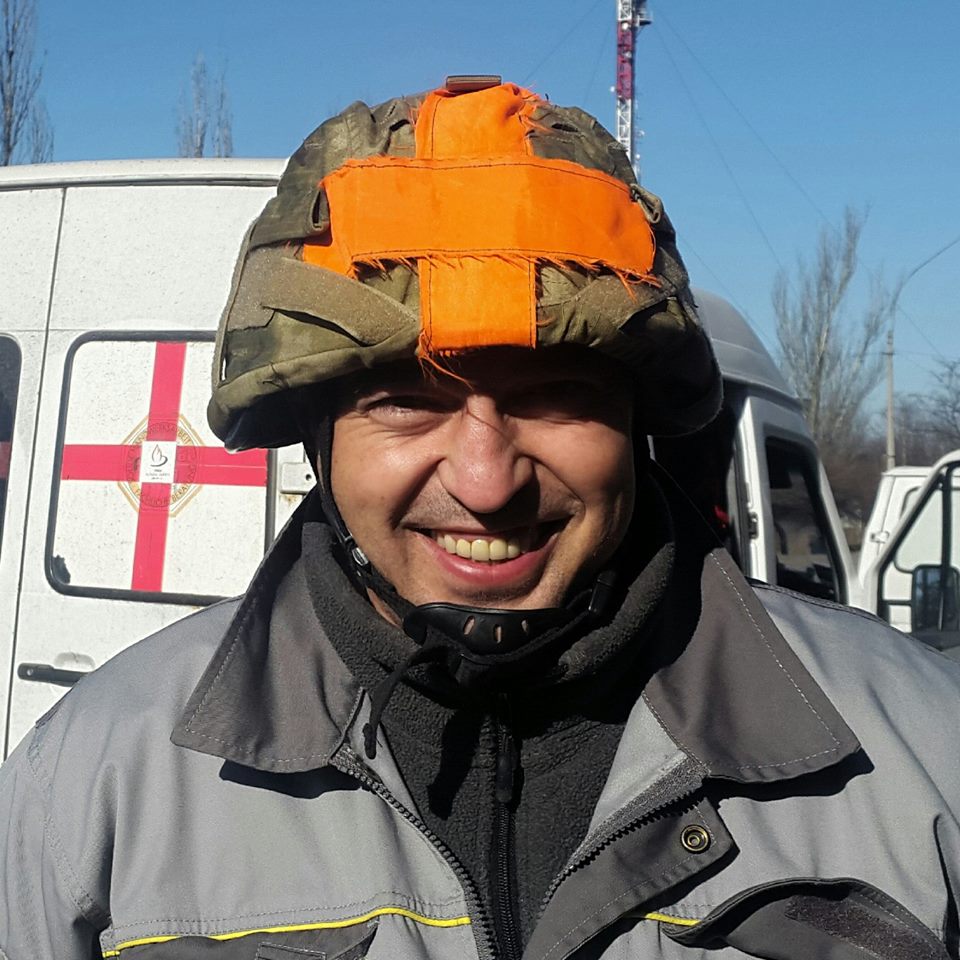
- The activities of the mission are suspended. We were forced to undertake such a demarche, I would say so. Boil. Why? Because from September to today this work exclusively at our expense, we have received zero kopecks from the state for this program. We are tired of solving the problems of providing the expedition with everything necessary. We believe that this is the obligation of the state that called the soldier into the army. They died, fulfilling the order. And this is the obligation of the state - to return them to their homeland, even after death.
Honestly, we expected that some kind of reaction to our statement would follow. But, besides noise in the media, unfortunately, there was not any reaction in fact, although I periodically meet with officials and deputies. Since September, we have written letters to the president, to the Cabinet of Ministers, to the deputies-with a request to pay attention, to consider, to take some urgent measures. In the end, immorally self -destroy from this problem and not notice it. It is not clear to me as a person who understands what the memory of the dead is, it is generally not clear how this can be explained.
-Yaroslav, tell me after all, why did you decide to engage in this activity? Does this solution have a personal, family story? Who are you by profession?
- Everyone in the former USSR, probably, has their own personal scores with the Second World War. In my war, my grandfather went missing - June 22 or 23, 1941. I made many attempts to find his grave - my grandfather died in Lithuania - but unfortunately, to no avail. There are millions of such destinies. This led me to the search movement. I am an entrepreneur by profession, was a very successful businessman. Now my wife earn money, and I spend this money ... If I had funds, we would probably have continued the activities of the Black Tulip and financed at my own expense.
-A few years ago, it was even impossible to imagine the actual Russian-Ukrainian war. What do you think of her?
- Any war ends sooner or later. The only question is in price - how much we should put the heads of our compatriots on the altar of this world. It’s very sad, I am very ashamed that we did not protect the world that was won by tens of millions of lives of our loved ones - including my loved ones - who went missing, died. I am very bitter. Unfortunately, the barriers are quickly erected, then it is difficult to ruin them. I hope that sooner or later the barriers that people have now built in their heads will be destroyed. It all depends on desire and political will. Naturally, on both sides, ”said Yaroslav Zhilkin, head of the conflict in the zone of conflict in the zone of conflict in the zone of conflict in the zone of conflict in the eastern Ukraine zone, in an interview with Radio, Yaroslav Zhilkin .
The Ministry of Defense of Ukraine is negotiating the resumption of the humanitarian mission. The weekly costs of "black tulip" amount to about 2 thousand dollars.
-
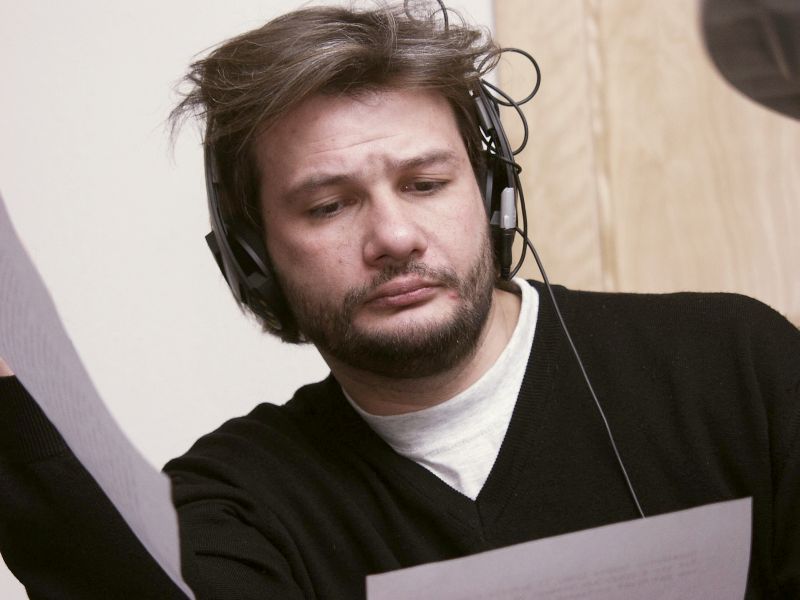

Andrey Shary
I.O. Regional Director of Radio Free Europe/Radio Liberty for Russian -Sound Content
Andrey Shary on Facebook
Sharya@rferl.org