
Translated material
School of Dramatic Art
That would be where to roam the jealouss of theatrical piety: their main target, Kirill Serebrennikov , set Lermontov (!) In the Bolshoi Theater (!). The composer Ilya Demutsky is also very suspicious: too young and loves unreliable plots ( the fight against pedophiles , the last word of the accused in the Pussy Riot case ). Choreographer Yuri Posokhov is generally a foreign agent living, scary to say, in the USA. A great reason to convict the authors in the illegal crossing of the boundaries of the interpretation.
However, the “Hero of our time” turned out to be in the best sense a traditional performance, which is not able to offend either the book-conservatives, nor fans of ardent passions in the theater, or supporters of the idea that it is advisable to dance in ballet first of all. What is even more important - the performance did not think to solve the problem of the embodiment of a particular novel in the dance. The question was global: whether two extreme concepts of ballet spectacle put in an artificial opposition can be reconciled on our scene: a multi -act “plot” performance “Cloths” with a linear melodramatic intrigue - and a “indescribable ornament”, the plot of which is dynamic relations between choreography and music.
The recent experiments of the Bolshoi Theater on the introduction of book wisdom into ballet (“taming the obstinate” and “Hamlet”) stubbornly convinced that there could not be a way out, that classic PA next to household skirmishes would always look like real idiocy. In a striking way, by watching the “hero” there was no feeling that you were driven by the nose for two hours and it was better, if you really wanted literature, read the book. The plot is generally preserved: the highlanders rejoice, the water society misses. The action did not get in the bustle of the mise -en -scenes, but the novel did not strangle the choreography in the arms of psychologism - the full -blooded dance was abundant. And Lermontov is intact, and dancers are full.
 © Damir Yusupov / Bolshoi Theater
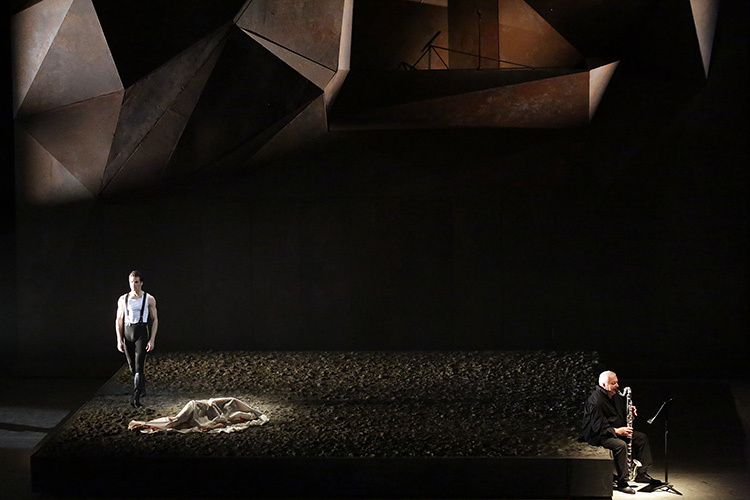
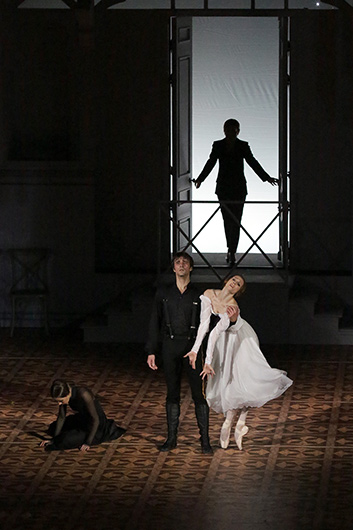
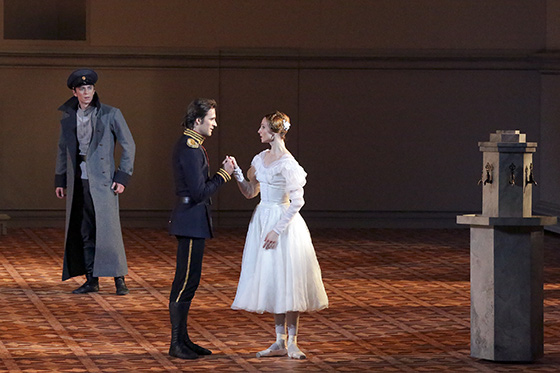
For the first time putting the ballet, Serebrennikov took on the script and design - and found a successful compromise between the two extremes indicated above. Three acts (“Bela”, “Taman”, “Princess Mary”) formed three independent opus: the large narrative ballet took the compact form of Triple Bill (in our opinion-“triple”), which is familiar just for “Besshous” performances. On the stage, instead of picturesque realism and frontal metaphorics, there is a clean design space: the entire Caucasian massif is a wall of crumpled paper, the entire region of the Ministry of Water - a white hall with large windows. The costumes hint at the Lermontov era, but it is not so important when the action takes place: “our time” - any time. The Hero of our Time is not pretended to be an e -book or a collection for preparing for the exam, he does not want to be an adaptation of the novel for those who read it.
Tasty, purely theatrical details are scattered throughout the performance. Here is a soprano “letter of faith”: while Vera herself, clamped between a ballet machine and a mirror, is beating in a pointe hysteria, the singer in a trouser suit sneaks along the walls - a guest without a mask, a newcomer from another reality. Or in the sea "Taman", while Pechorin is looking for an overnight stay, the old woman’s dimensionless woman sits on the pier and twists the drum of the windshot, which is used in the orchestra in storm scenes; Then the smuggler Yanko crawls out of the old woman’s rubber body. This is no longer a single -layer retelling of the book, rather - Capriccio Alla Lermontov , non -violent blurry of the boundaries of the genre, injection of the game principle, which does not harm ballet nature.
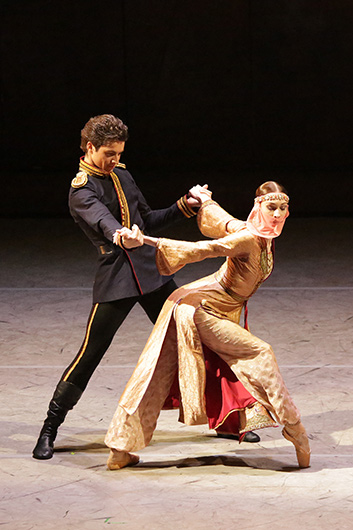
The main thing that distinguishes the “hero” from other staging is the abundance of a complex dance text. Yuri Posokhov escaped academic boring and vulgar ethnography: neoclassical PA is supplemented by freely working hands, adhered to intricate combinations, filed in an impulsive manner. In mass numbers containing the denser text, plastic counterpoints and diving small ensembles are masterfully built. Numerous duets, full of non -banal supports, do not look monotonous - which, alas, can not be said about the monologues and the final trio on duty. A full-fledged virtuoso antra even went to wheelchair users-an episode organically sewn into dance fabric and avoids rough naturalism. Unless in the smuggler’s dance will be seen by Boris Eifman's cabal whale-but this is still a rare exception.
 © Damir Yusupov / Bolshoi Theater
It is important with what ease of states (obviously, with the support of the admiring Debutant Serebrennikov), it introduces elements of professional reflection into the performance - in the literal sense makes a ballet stick on stage. Pechorin gets up to her, repeats the morning class movements, teaches the classic dirk Bel, decorates it in a ballerinsky pack. At the stick, young ladies in the ballet studio on the waters are practiced. The heroine of “Taman”, even thunder, is called Undina, inherits the romantic ghumen girls and daughters of nature-and the romantic Katarin, the daughter of the robber from the ballet of the same name. Metateratral techniques and craft details do not seem like a naive babble - the Capricio genre allows them to look organic.
Of course, for the sake of the happy g esamtkunstwerk 'and the authors had to compromise. The platforms and ancient simulators provided by the scenariomed dancing characters. In Taman, on the contrary, for the sake of the greater freedom of the choreographer, the episode of the night espionage of Pechorin was seized, and the scene of the struggle in the boat was reduced to several tacts, which made it just looked like an unsuccessful date with his mistress - the robber's spirit of the adventurous story was lost. Finally, the strict and stingy appearance of the action (especially in “Bel”) was difficult to correlate with an inflated, bursting from the inside, over time an excessively pathos partimer.
The idea to bring Pechorin one in three faces also did not work: in different ballets, his arrogant-phlegmatic character and the vocabulary of monologues changed little. But the technical problem was solved: three premiers of the theater received parties with a fat portion of dance. In general, the “hero” will be remembered not only by the successful balance of narrative and choreography, but also by a number of performing successes. These are three heroes (Igor Zvirko, Artem Ovcharenko, Ruslan Skvortsov), flaunting excellent training and easily overcome tricks of jumping combinations. Two large tragic heroines - Bela Olga Smirnova and Vera Kristina Kretova (one of her best roles). The desperate neurasthenik Grushnitsky is new, after the Hamlet party, the triumph of Denis Savin. Simple as three pennies, a touching blind boy - impeccable Georgy Gusev.
 © Damir Yusupov / Bolshoi Theater
Ultimately, Kirill Serebrennikov was needed by the ballet not as a radical artist and the overthrow of the foundations, but as an experienced person of the theater, whose eyes were not blurred by the everyday life of ballet cuisine and the great traditions of the genre. Insisting in all the interviews that he was only called to help the choreographer, the director did not be sly. A pair of exact movements, he gave the clumsy genre of the drama to a modern frying shape. Another thing is that the “Hero of our time” turned into a self -valuable theatrical text, and so desired by some “Lermontov Caucasus”, “local color” and “spirit of the era” in it.
It doesn’t matter: in the new season, two ballet companies in the country will show the “Copper Horseman” - and for sure, for sure, firmly following Pushkin’s letter, the Falconets monument will jump and striped booths will swim along the canvas waves. We hope that the institutions of natural heritage, pork heads and insulted feelings will sleep calmly.