
Translated material
Found an imprint of cat paws of 2 thousand years
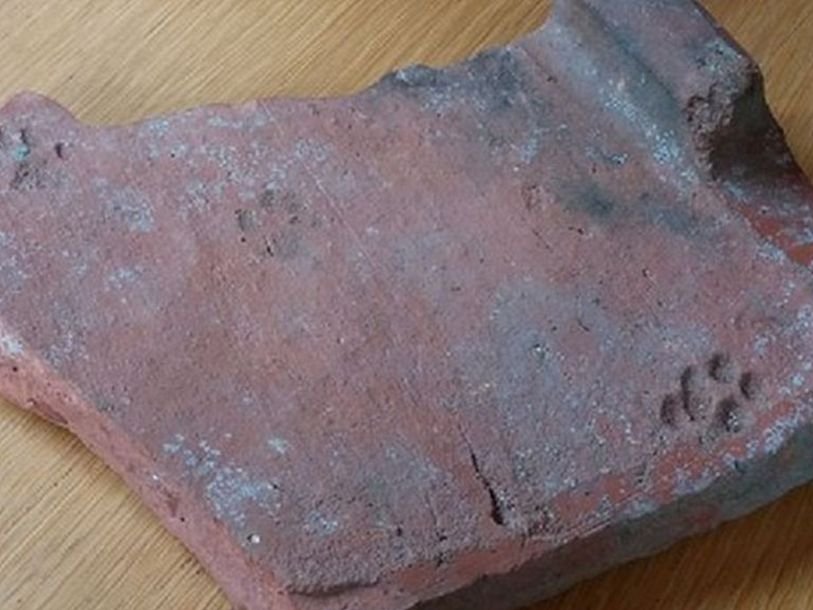
Employees of the Museum of the city of Gloster (Glouzester City Museum) found a trace of a cat left on the tiled tiles of Roman times. The tile, which dates from the 1st century AD, was found in the city back in 1969 during excavations on Berkeley Street. Several hundred fragments of the tiles were transferred to the museum, and more recently, during their study, the researchers saw the footprints of the paws. It was possible to quickly establish that the trace belongs to the cat.
Roman tiles, the so -called tegula ( Tegula ), was made of burned clay. It was covered with roofs of both private houses and public buildings, temples and palaces. The ranks of flat tegul alternated with a tile in the form of a half of the cylinder (Izbeks). The compounds between the tiles were so dense that they were not required to additionally fix them with any binder. The roof was strong and waterproof.
Scientists believe that some cat went through the still soft tiles laid out for drying, and then, after firing, its trace remained on the tiles forever. According to the museum’s employees, they have already met traces of people, dogs and even piglets found in the gloster in the gloster, but they met the imprint of cat paws for the first time.