
Translated material
Evgeny Demin, splat: "A store shelf is not access to the pipe"
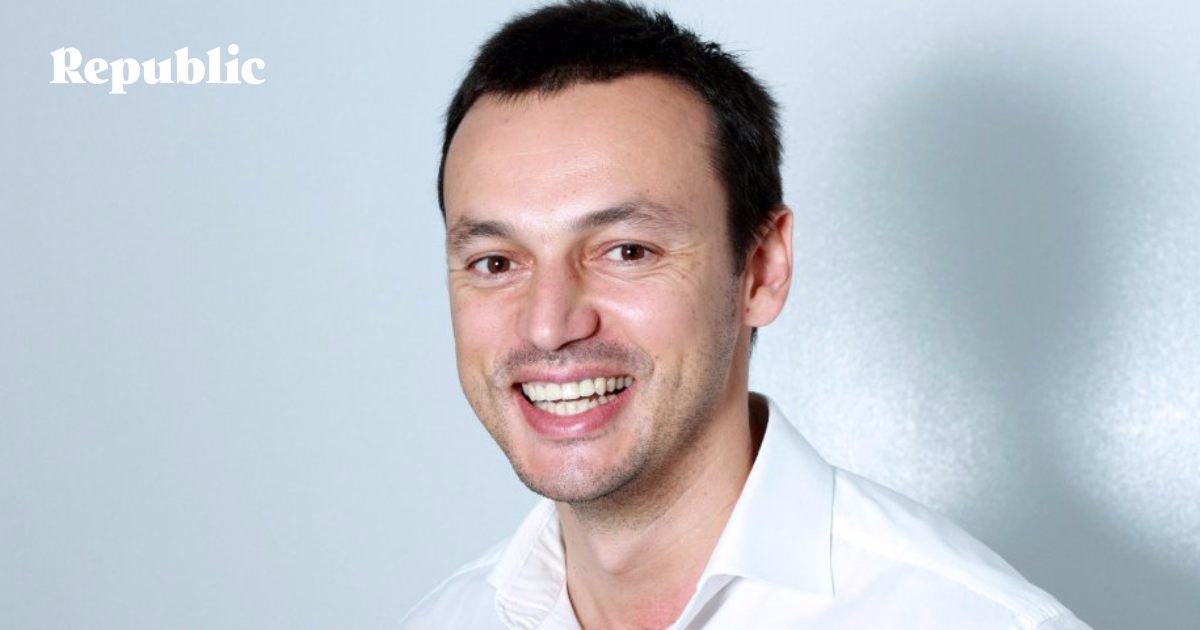
Eugene Demin began to make and sell toothpaste in 2001, when all major transnational companies were already engaged in this in Russia. Nevertheless, soon his SPLAT brand began to grow rapidly, not slowing down even in the crisis of 2008-2009. Today, Splat occupies almost 15% of the Russian market and is trying to repeat its experience abroad in thirty countries. In an interview, Slon Demin talked about how to conquer a share in the market without advertising, which is the secret of “gazelle” growth and how much money is needed to start its own production.
- When did you start going abroad?
- In 2007-2008. At first the CIS, but it differs little from Russia, it was more interesting when we went further - to Europe, to Asia, this is 2010-2011. Firstly, this is really work in completely different cultural codes: sales in the CIS, Germany and China are very different. Secondly, we have 95% of raw materials-imported, respectively, part of the revenue in the currency is important to us. Thirdly, it is still important for me that the perception of Russia changes towards the country that can produce some cool goods, very different, from IT to food or hygiene products. Therefore, when we hear that the Germans consider us their product, and Asians-that this is some kind of European product, this is great. Open the German Amazon.de, in the bestsellers of toothpasts in the first place for six months now you will see our black paste.
- This is amazing. In Germany, its very powerful pharmaceutical industry and the largest traditions of chemical production. How did you go to such a mature market?
- The market, perhaps, is mature, but standard. If you look at the German, Italian or French regiment, there are three or four brands with similar boxes. We brought the products, probably, brighter and more emotional, and more diverse. At first there were impulse purchases, out of curiosity. And then the result. In the same Germany, we got, without knowing it, in their “control purchase”, which was shown on their TV channels in Switzerland, Austria. Europeans generally fit very pragmatic: if I help and like it, well, okay, let it be from Moscow.
- Which market was the most difficult?
- China. We underestimated the thoroughness with which we need to work there. Now we are making a second attempt.
- What was your mistake ?
- There are several mistakes. The first - they chose not a very strong partner, and for such a rapidly assembly product you need powerful logistics and a large sales support team, store control and so on. And then, we did not understand what the Chinese consumer awaits from the product and how he chooses. They like it when there is a lot of information, they read a lot, it is important for them to come to the store, take a picture, read reviews on social networks. We did not do this work, and in two years the sales did not grow there, and we see why.
- And in other countries, outside of Russia, do you also invest your famous letters in packages?
- Not everywhere. We came across different situations. For example, in the Baltic states, journalists regarded our letters from packaging as pro -Russian patriotic leaflets. Tint networks, in order to avoid conflict, were asked to remove letters from the packaging.
- And there you invested the same texts as here, in Russian?
- In the Baltic states, yes. Just now we think a lot about what to do with letters in Asia and Europe. The Chinese, Iranian or Dubai consumer will not understand what we are writing about in Russia. Perhaps there will be an international letter.
- How much did the company's revenue last year?
- About 5 billion rubles.
- How many of this is it in Russia?
- Eighty percent.
- At what speed do foreign sales grow now?
- There are 70%and 100%significantly faster than in Russia. Last year, on average, more than 60%were on average.
- What countries and markets are you moving now?
- It is very important for us not to smear with a thin layer, so we have chosen five countries: China, India, Germany, Türkiye, Great Britain. These are centers that affect their neighbors. And there, in the next two to three years, we must build the same controlled distribution, such mini-SPLAT departments as in Russia and the CIS.
- If you return to the very beginning, 2001. How did you find funding on launch? Own production, development is a lot of money.
- In fact, this is a little money.
- Which?
- We even have a statement of assets that were. In 2001, we had a little more than a million rubles. We bought the brand in early 2002 and until 2004 were also engaged in the fact that they simply sold someone else's, worked with a large assortment of health goods. This made it possible to earn money, but then led to difficulties. We were significantly distracted from the idea of production, because the whole team was engaged in the fact that it generated the turnover. At the same time, the earnings were very low. I remember I looked at the reports, and there was a feeling that we were selling rubles for 90 kopecks. The next day we talked with the team, and I decided that we generally cease to do this. There was a very difficult period, the revenue fell by 90%, because we actually burned bridges. We decided that now we would only engage in our brand and our products and either we break through or not break through. Such a concentration, of course, drove us into a fierce crisis, and we were probably a year and a half in it.
- But quite quickly, by 2006-2007, you have achieved annual growth of 200–250%.
- Yes, because the company concentrated on one. In 2005, the turnover began not to grow by 50%, but by 200%. In principle, until 2014 we remained the Gazelle company, which has grown more than five years faster than 30%, while remaining profitable.
- And how is this done?
Subscribe to read the whole
Make a subscription Redefine.media to read Republic
Subscribe [you can pay for a Russian or foreign card. The subscription is extended automatically. You can unsubscribe at any time.]
Where are the money subscribers going