
Translated material
There is no return
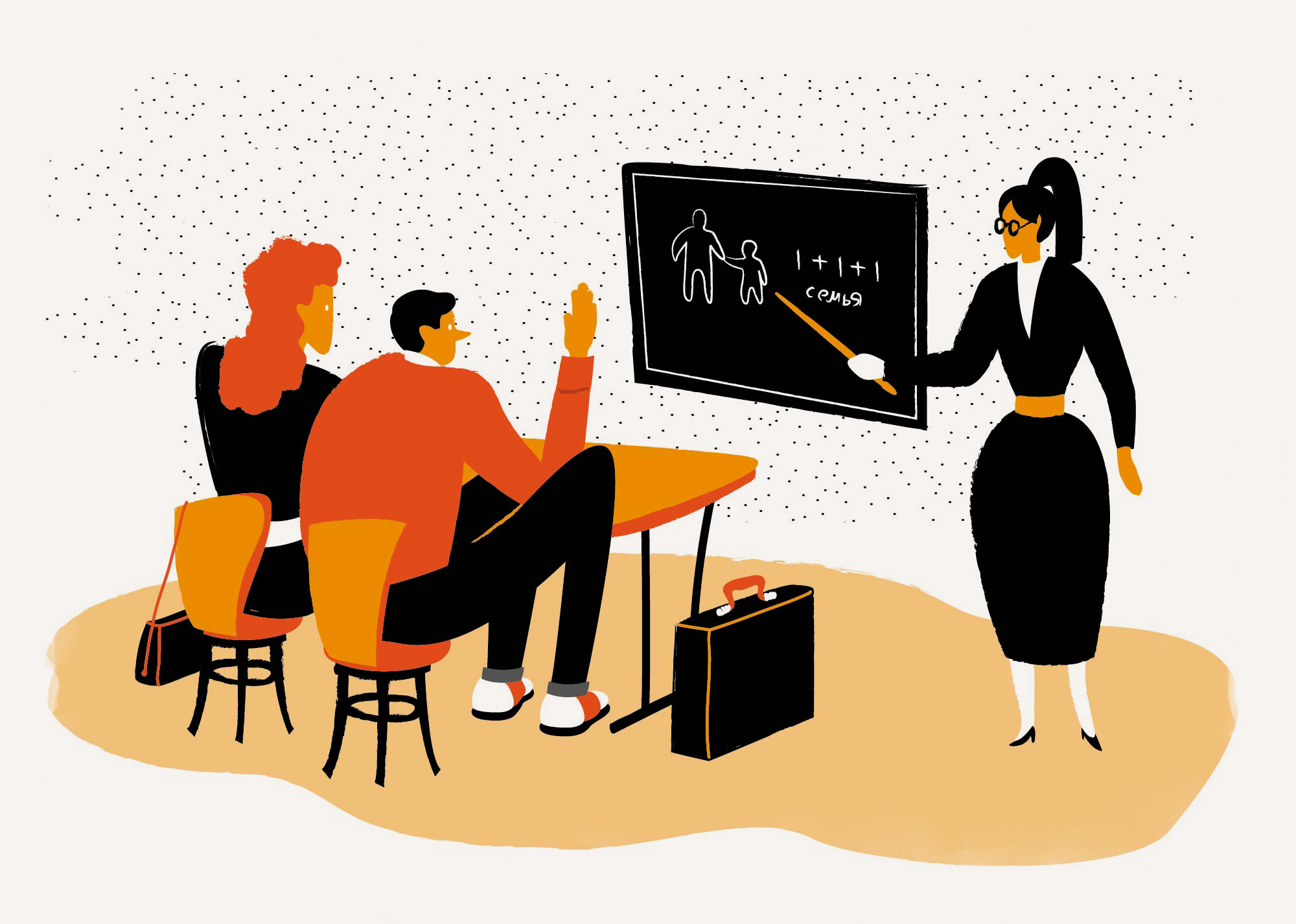
The school of admission parents at the Parental Bridge Foundation gives the orphanages a chance to find a new house once and for all.
We help the school of adoptive parents collect 471,914 R needed 735,000 rThe collection of funds is over
When a person wants to drive, he goes to a driving school, pays money, studies, passes exams and receives rights. Did you want to buy a gun? In addition to training, you will have to buy a safe and a safe for its storage. Logical requirements, because people are not born to drivers or hunters. Children are another matter. Well something, but we can educate children. No one heard that the state force its citizens without fail to take any special parent courses. Of course, there are different courses for preparing for childbirth and the like useful and at the same time voluntary undertakings. But in general, society believes: once they gave birth, it means that they will be able to educate. But it happens that the child who appeared in the family is the foster. And here both the baby and parents can not wait for the easiest trials. And the parental instinct may not always come to the rescue.
“I adopted Anechka and I adopted when she was five years old,” says Valentina T., a resident of St. Petersburg, “Lice was going on for several years: the child categorically did not trust us, hid in the corners or, conversely, arranged tantrums on the floor. At the age of 12, the daughter began to bring two from school and steal things from the house, although she had never been denied anything. And we were not ready for this at all ... ”Fortunately, Valentine in time turned to the Parental Bridge Foundation, which is engaged in the installation of orphans in the families. The weekly work of psychologists with both the family as a whole and with each of its member individually helped to gradually cope with the crisis. The family has been preserved, parents and girl have learned to understand each other. But often it is different.
Last year in St. Petersburg, more than 70 adopted children returned to orphanages. Most of them are adolescents who have been brought up in families for more than six years. Naturally, such children are embittered - they were betrayed twice. Naturally, their chances of re -adoption are reduced - both due to age and by virtue of their behavior after returning. Naturally, they need special rehabilitation.
It happens that they return and completely babies Twisting this quote yes, orphanages are often far from a gift. But it happens that they are returning completely babies. The “parental bridge” talk about the case when a woman could not make the smell of a child, how he moved and ate. Obviously, the baby has nothing to do with it. This is a story about the woman herself, about her own fears and problems that she thought to solve with the help of adoption. The statistics collected by the Duma Committee on Family, Women and Children (thereby led by Elena Mizulina) helps to realize the scale of the problem. Almost a third of the adoptive parents as the reason for the refusal of the child calls the “unfavorable appearance, development, behavior of the child”, 10% - conflicts in the family in connection with the admission of children. Some adoptive parents complain that the adoptive children do not affect their native children, while others simply give up their hands and prefer to sign in their own failure.
The state ultimately did what was to: obliged potential foster parents to undergo special training. Without it, the guardianship authorities no longer have the right to consent to adoption to those who would like to take a child from the orphanage. Better, people at this stage will understand that adoption does not suit them. Indeed, the number of returns among parents who have undergone training began to decline.
The program for the training of foster parents at the Parental Bridge Foundation has existed since 1997, when it was still voluntary. Now the flow of those who want to study at the school of foster parents is constantly growing: for example, now it is seven times higher compared to 2013. This is not surprising: the school is considered one of the best in the city. And naturally, it is free for parents. But not free for the fund, because psychologists and other employees need to pay salaries.
The holding of one school of foster parents costs the “parental bridge” of 735 thousand rubles. This amount includes payment of specialists and buying supplies for training. How does the school work? First, a “hot line” is held, on which psychologists advise potential adoptive parents. Suppose 200 people called there. Already at this stage, approximately three quarters of the candidates are cut off. The remaining 50 people come to the primary reception. Six installation trainings are carried out for them - this is necessary so that people can decide whether it is necessary or not to take a child to them. Group trainings, because the time of psychologists costs money. At this stage, about half more. And the remaining are already the main training. All trainings of the school of foster parents are designed for 130 hours and take about three months. If the program is launched, as planned, in December of this year, then by May the next out of 200 potential candidates will get 30 trained foster parents, which will allow at least 10 children next year. That is, the adoption of one child requires a maximum of 73.5 thousand rubles. The adoption of one child requires costs of a maximum of 73.5 thousand rubles Twist this quote
The work of the school of foster parents of the Parental Bridge Foundation is not financed by the state and is carried out only at the expense of donations. Due to our donations with you. The longer the collection of funds will go, the longer the fund will be forced to postpone training, without which the guardianship authorities simply will not give permission to take the child. And this child will spend several months in the orphanage. But among candidates for adoption, there are also babies with serious diseases that future parents can and want to cure. But for this they need to get rid of the prefix "Future", and we can help them with this. We will help?