Date
Author
Константин Ситников

Preserved copy
Translated material
When did Mari paganism begin?

I’m reading Yamurzin’s dissertation “Picture of the world of Mari paganism: social aspects” (dissertation ... candidate of philosophical sciences: 00/09/11 - Ufa, 2007. - 147 p.). Of course, this is more about social aspects, which is not so interesting for me; What is interesting, however, is that, speaking about Mari paganism itself, the author sets out some generally accepted , but, as it turns out, far from indisputable ideas. In other words, the author in this case is interesting to me not as a generator of new ideas (like Kaliev), but as a mouthpiece for generally accepted ideas, rigid in their generally accepted nature, and this rigidity makes me want to argue.
This is the most traditional point of view on the emergence of Mari paganism. Yamurzin writes:
“The picture of the world of Mari paganism began to take shape back in the era of the commonality of the Finno-Ugric peoples (approximately the 3rd - 2nd millennium BC). The most ancient complexes of mythological ideas of the Mari, characteristic of all Finno-Ugric peoples, date back to this time. Thus, a certain similarity is revealed by cosmogonic myths associated with the motif of a waterfowl acting as a demiurge" (p. 35).
(The bird, if anything, is not ancient Mari.)
And then I tell myself: stop. Let's unwind this ball once again - for the hundredth time.
There are folklore and literary records of Mari cosmogonic myths - they can be listed - telling about the drake Keremet (younger brother of the god Yumo), who, at the behest of Yumo, dives and retrieves earth from the bottom of the primary waters. Yumo creates earth from it, and Keremet, having hidden part of the earth in his beak, imitating his older brother, spits out mountains. Moreover, Yumo himself is never a drake, but a kind of spirit, a biblical God.
Based on the fact that the myth about a waterfowl diving for land - in one variation or another - is also found among other Finno-Ugric peoples, it is concluded that it is common to them, and, therefore, the era of commonality of the Finno-Ugric peoples is the time when the “picture of the world of Mari paganism” “began to take shape.”
Is that logical? Wait! The “commonness” of this myth for the Finno-Ugric peoples is beyond doubt. But the conclusion that it was in the era of the Finno-Ugric community that Mari paganism began to take shape does not follow from this at all!
Why? Yes, because the myth about a waterfowl diving for land is common not only to the Finno-Ugric peoples: it is known to the Slavs and even the peoples of North America!
Aikhenvald, Petrukhin and Khelimsky, who tried to reconstruct “the most ancient Proto-Finno-Ugric mythology” in the classic article “Towards the reconstruction of the mythological ideas of the Finno-Ugric peoples” (1982), write (large quotation):
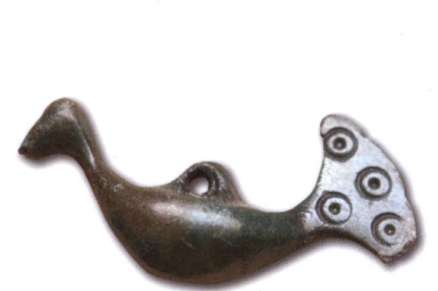
“The similarity of Finno-Ugric dualistic myths with the cosmogonies of other peoples, primarily with Slavic apocryphal legends, through Bogomil and Manichaean texts going back to the ancient Iranian dualistic cosmogony, with Turkic and Mongolian myths gave rise to controversy about their origin, mainly from the point of view of the theory of borrowing; the natural desire was to see the source borrowings in Iranian mythology, which has ancient traditions (...). However, A.N. Veselovsky pointed out the need for an autochthonous typologically similar basis for borrowing folklore plots, and A.M. Zolotarev showed the universal prevalence of dualistic cosmogonies in the presence of the motif of a waterfowl diving for land in the myths of northern (p. 187) Eurasia and North America, which makes it irreducible. to Bogomil and Iranian sources. Indeed, the motif of diving for land is absent in Iranian and Bogomil myths dating back to them, but the role of waterfowl in the ideology of the Finno-Ugrians has been obvious since ancient times, judging by archaeological data (starting with Neolithic petroglyphs and ending with medieval pendants in the form of a waterfowl (...) The opposition of the “upper” (heavenly) god and his opponent). (god of evil, the underworld), clearly traced in all daughter mythologies, as well as in Samoyed myths, has, undoubtedly, a common Finno-Ugric origin, and even more ancient roots, going back to the Ural community" (p. 188).
Napolskikh showed even more specifically that the motif of a waterfowl diving for land goes back to the Proto-Ural community (The most ancient stages of the origin of the peoples of the Ural language family: data from mythological reconstruction (Proto-Ural cosmogonic myth) / Materials for the series “Peoples of the USSR”. Issue 5. Peoples of the Ural language family. M., 1991) and confirmed in a very recent article “The myth of diving for land (A812) in Northern Eurasia and North America: twenty years later” (collection “Not for the sake of curiosity, but for knowledge...” - M., 2011).
Long quote: “...this motif has a very ancient (at least Upper Paleolithic) North Asian origin...”, “according to the proposed hypothesis, in Northern Eurasia already in ancient times specialized versions of the myth of diving for land with birds in the main role became widespread, in which the old idea about the success of the last and weaker diver was eventually realized in the confrontation between birds such as the loon, which dived first and unsuccessfully, and the duck (...), who brought the land. This version of the diving myth received the short designation MNP2. This distribution of the roles of the “duck” (...) and the loon is explained by the role that these birds played in the cosmological ideas that, as is supposed, developed more than 6 thousand years ago, among the tribes of Central and Western Siberia, primarily among the ancestors of the Ural peoples (...). north, these people associated the south, the upper reaches of the river with the upper world, the world of the heavenly gods, and the north, the lower reaches of the river - with the lower, the world of evil spirits and death. A special role in this system was played by migratory waterfowl (swans, geese, ducks), whose mass migrations to the south were perceived as journeys to the upper world, thanks to which they could act as intermediaries between people and the heavenly gods. rivers and on the sea coast and migrating to the south alone, imperceptibly, were perceived primarily as birds of the lower world, not endowed with divine heavenly power, and the corresponding picture of the world was proposed to be considered as a proto-Uralic, that is, reconstructed for the culture of the carriers of the Uralic proto-language, who lived in the taiga of Western Siberia and the Urals in 4-6 thousand BC, which then spread. with them (as well as with the Tungus-Manchus and, probably, with the Turks who early borrowed some of its components) in Eastern Europe and Siberia."
Those. The Mari myth about the drake Keremet, who mined earth from the bottom, goes back not to the era of the Finno-Ugric community (3-2 thousand BC), but to the era of the Proto-Ural community (4-6 thousand BC)! This, guys, is a big difference.
It may be objected: but at that time there was no trace of the Mari, what kind of Mari mythology can we talk about? Sorry, but there were no Mari as such even in the era of the Finno-Ugric community, but we are still talking about the emergence then of the “picture of the world of Mari paganism.”
Why does literally everyone make a mistake - both in letter and in spirit - by repeating the idea of the origin of Mari paganism (mythology) in the era of the Finno-Ugric community? Yes, because they read various popular books like “Myths of the Finno-Ugrians” by V. Petrukhin!
Here he writes: “Common myths about the creation of the World, especially the Earth, and the common names of the gods are reminiscent of the once united Finno-Ugric mythology. Thus, the Baltic and Volga Finns and the Trans-Ural Ugrians have preserved myths about a waterfowl that reaches the Earth by diving to the bottom of the World Ocean, often at the command of the creator god.”
But Petrukhin knows exactly what he is talking about (and for whom: for a wide range of readers, and not for candidates of sciences!) - and limits himself only to stating the fact of the existence of “a once unified Finno-Ugric mythology.”
If you make an unfounded conclusion that it was then that Mari pagan mythology arose, you will inevitably end up in trouble.