
Translated material
Decriminalization
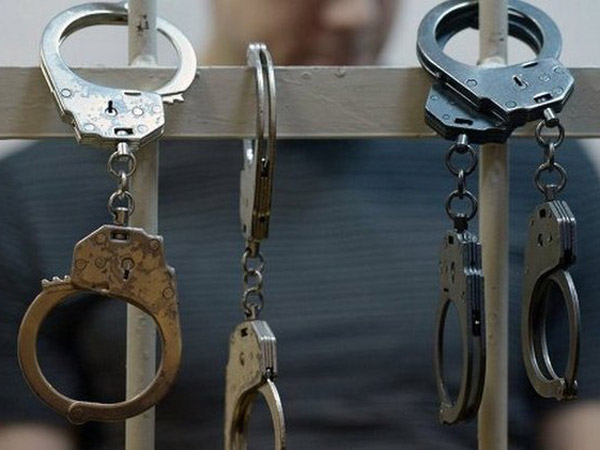
The Supreme Court on Friday approved the introduction of a bill to the parliament, which would withdraw several articles from the Criminal Code. If the proposals are approved by the parliament and the president, then soon for some misconduct, not criminal, but administrative punishment will follow - and although the sanctions themselves may remain , the lack of criminal record will simplify life for a person.
The Plenum of the Supreme Court, as reports the Portal "Prav.ru", approved the bill "On Amending the Criminal and Criminal Procedure Code and on the Improvement of the Fundamentals and Procedure for Liberation from Criminal Liability" unanimously. From the Criminal Code, it is proposed to translate four compositions of a crime of small gravity: beatings, the use of a knowingly false document, evasion of alimony and a threat to murder.
The head of the Supreme Court Vyacheslav Lebedev also said that in the future, decriminalization of other articles of the Criminal Code, for example, providing for liability for non -payment of wages and failure to provide information.
In addition, the bill is proposed to five thousand rubles, to increase the amount of theft for which criminal liability occurs. Significant damage is proposed to consider theft not from 2.5, but from 10 thousand rubles. At the same time, for example, pocket thefts will continue to be considered a criminal offense, since in most cases they are committed by a group of persons, that is, with aggravating circumstances.
The punishment for misconduct is proposed to be left the same: a fine, correctional or compulsory work. The only difference is that “there will be no criminal record, there will be no sentence,” Lebedev noted during the meeting of the Presidium of the Armed Forces. He is sure that due to obtaining the “criminal status” not only the convicts themselves, who have problems arise when applying for a job, traveling abroad and obtaining a loan, but their relatives who are closed to the police, they also cannot become, for example, judges.
The deputy chairman of the Supreme Court Vladimir Davydov, a speaker at a meeting of the Presidium, especially paid much attention to the exclusion from the Criminal Code of Article 157 "malicious evasion of funds for the maintenance of children or disabled parents." “Perhaps our opponents will say that this will reduce the security of children and elderly parents, but this is not so. The responsibility remains quite serious - compulsory work and a fine of up to 200,000 rubles, ”the judge said. He also drew attention to the fact that serving a real term, and under this article can be obtained before a year of imprisonment, only reduces the possibility of recovering from convicted alimony, and administrative punishment leaves more opportunities for this.
According to Vyacheslav Lebedev, the decriminalization of the “non -heavy” articles of the Criminal Code, contrary to the fears of some, will not entail the growth of crime caused by the possible sense of impunity. “The person stops not that he will become a criminal, but the realization that he committed is wrong, unlawful. This will give a person the opportunity to take his actions more seriously, because the repetition of a crime in the future will entail a criminal liability, ”said the Chairman of the Supreme Court.
Deputy Prosecutor General Sabir Kehlerov looked at the question of decriminalization on the other hand. “This will not only release the courts, but will also give investigators the opportunity to do important cases without hiding behind a large load,” he said at the meeting.
Another innovation of the bill is a new procedure for exemption from criminal liability for crimes of insignificant and moderate severity. In the case of the adoption of the bill, the investigating authorities will not be able to institute criminal proceedings if the person first committed a crime of small or medium gravity and the damage caused by the crime was compensated for the damage or otherwise. Instead of criminal prosecution, the investigation may appoint such an offender a fine, correctional or compulsory work, which cannot exceed half the term and size of the corresponding type of punishment for the crime.
Repeated exemption from criminal liability in this way is not allowed, and if the offender evades the execution of the appointed measures, a criminal case will still be instituted against him.
Earlier, Vyacheslav Lebedev has already submitted the bill to President Vladimir Putin. He substantiated the need to decriminalize some articles of the Criminal Code by the fact that in recent years the number of cases on charges of committing such crimes has increased sharply.
So, in 2000, Russian courts received cases of crimes of small severity against 184 thousand people, it was approximately 15% of the total number of cases, in 2014 their number increased to 330 thousand and this is already 46% of all cases considered by the courts. “Moreover, the nature, the degree of social danger of these cases are not always adequate to committed acts, and the consequences of criminal record are negative and inadequate to crimes of minor gravity,” said the head of the Armed Forces.
According to Lebedev, the adoption of initiatives of the Armed Forces will save the courts of 300 thousand criminal cases.
The head of state as a whole approved the initiative of the Supreme Court - so in her future few doubts. “In our places of imprisonment, there are a fairly large number of people who committed insignificant offenses by modern standards, but, nevertheless, are forced to pass sad, say directly, and far from always the most effective school of life,” Putin said.
Last time, a conversation about decriminalization in Russia was conducted during the reign of Dmitry Medvedev. In 2010, the criminal and criminal procedure codes introduced a whole package of amendments, which, among other things, prohibited the arrest on “entrepreneurial articles” and removed a crime from the Criminal Code as slander. However, already in 2012, the revision of the “Medvedev” liberalization began, the criminal code returned to the slander, and it turned out to be tougher than before.
In general, the Criminal Code is one of the most long -suffering Russian laws. From the moment of its adoption in 1996, about 200 amendments were brought to it, so there was little left from the original version of the document.
Naturally, in the legal environment they are constantly discussing the issue of criminal law, that is, in fact, the adoption of the new Criminal Code. Recently, a competition has even appeared between different structures for who will compose a new document.
In early October, Deputy Secretary of the Public Chamber and a member of the Russian Association Vladislav Grib said that he intends to launch the All-Russian public discussion on Russian criminal legislation, during which proposals will be developed for new versions of three codes-criminal, criminal procedure and criminal-executive.
Meanwhile, the Federal Assembly began their own consultations on the reform of criminal law. In February 2014, a special working group was created, which included the then vice-speaker of the Federation Council Alexander Torshin, the head of the Constitutional Legislation Committee, Andrei Klishas and the head of the State Duma Committee Vladimir Pligin, the representative of the SF in the Constitutional Court, Alexei Aleksandrov, the head of the Duma Committee on Security, Irina Yarovaya and the leader of the United Russia faction, Vladimir Vasiliev. Since then, Alexander Torshin moved to the post of deputy chairman of the Central Bank and nothing was heard about the work of the group-however, there was no one delivered any deadlines for the end of the work.
At the same time, Pavel Krasheninnikov, the head of the Duma committee on criminal and civil law, advised the OP “get approval at the highest level” before starting to work on a new Criminal Code - apparently, “at the very top” has not yet been made.
Mikhail Barshchevsky, a representative of the government in the courts of higher instance, has been talking about the adoption of the new Criminal Code for quite some time - there were even rumors that he was responsible for writing a document, it is not clear, however, in what status.
If work on the new Criminal Code is really carried out, then the Supreme Court, of course, is known about this. But once in the highest court, they develop their own edits, which will allow unloading district courts from hundreds of thousands of criminal cases, it means that they are unlikely to hope for an early renewal of the Criminal Code.