
Translated material
God in the washing machine
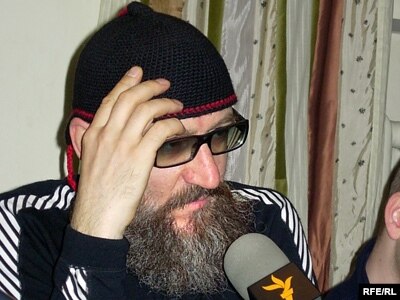
The monologue of the artist Oleg Kulik - about turning into a dog, Tibetan monks, Lenin mummies and the annexation of Crimea
In the early 1990s, the artist Oleg Kulik made a rapid, absolutely provocative world career in the role of "human man." At that time, actionism for Russia was still quite Vnove, and therefore really shocked the audience. In the West, his aggressive “dog” image naturally gained a different sound - naked, hungry, brutalized Homo Soveticus, who found herself in a situation of timelessness, deprived of values, social and moral frames. In this capacity, he ended up in a cultural history; Many museums in the world store in their meetings documentary evidence of those desperate shares. For many, he remained a "dog-man." However, in reality, his path is much more winding and complicated - from painful attempts to comprehend himself and God in Mongolia, India and Tibet, grandiose productions in the famous Paris Theater and efforts to divide the sacred contents of the mausoleum into all Russians.
Oleg Kulik talks about his feats and insights:
-In the distant 1980s, despite all the difficulties of the Soviet era, we still managed to watch something and read about the world art process. I remember that we were somehow sitting in the workshop of one of the classics of Moscow conceptualism Ivan Chuikov in the company of an American actor-actingist Chris Berd. Vanya showed Western art magazines, there I saw for the first time photographs of shares with bare human bodies. They reminded me of reports from a psychiatric hospital, I did not understand where there is a “work of art” and whose bodies are actors or artists themselves here. They became my first strong impression of the performanists-Vito Akkonchi, Marina Abramovich, Gutai Group. At that time, all these desperate artists were heroes. It is now, especially for the West, a performance is a kind of theater show, it can be very spectacular, but absolutely not provocative, unexpected or scandalous. And then the performanists were real madmen, rats ran along them, they shot at them ... Each gesture was protested against the system, an attempt to get out of it. But I myself, at that time, so notorious and clamped, could not imagine myself in a naked form before the public.
Then the restructuring begins, and the whole circle of the people with whom I spoke in Moscow is rapidly leaving. Who are grants, some under agreements with various Western galleries. In two or three years, there is simply no one around. And there was a feeling that everyone was in demand, and whoever is not in demand was just shit. And this shit was just me.
But once he was a quite happy Soviet child from the Kyiv party family. I remember how, at thirteen years, I walked along the Embankment of the Dnieper and cried, worrying how much I was unlucky to be born in such a beautiful country! Whereas in the rest of the world there is an endless struggle for justice, here in the USSR, all problems are resolved and people are incredibly happy. Only then, at fifteen years, having read the “Gulag Archipelago”, began to understand that this is “not quite so”. My father in his party work was forced to constantly withdraw dissident literature, various Western publications and pornography. Here on them I eventually grew up-on George Orwell, Alexander Isaevich Solzhenitsyn and on pornography. Although he lived well: I was taken to school on the personal white “Volga”, the family had its own personal boat on the underwater wings, the house is a full bowl, foreign trips ...
The Russian, European and American public perceives the same action in a completely different way
With the beginning of perestroika, all former institutions collapsed, and I myself had a complete disappointment. With this moment, my initiation as a performanist in the Ridzhin gallery coincided with this moment. Then the English feminists, led by Patricia Cox, arrived there, making prints of naked human bodies. It was a minimalist art, very formal. I suggested placing these sculptures-prints on the catwalk from Russian snow. They made me pose to them. I had to agree - I hoped that everything would go easily, sort of like a joke. But when the audience entered the gallery and I had to undress, a terrible psychological breakdown began. Around the people! And you sit completely naked and with your back you feel their views, conversations, ridicule. Then I first felt like a work of art, really saw myself from the outside. "This cannot be! This is not me!" - flashed through my head. Then they asked me to get up, and then the worst began. In men, in the place where they sit, hair grows. And these Baba English not only did not shave me, but they also anointed my ass. So I got up from this cast, probably an hour, screaming in pain. In general, it was akin to violent hair removal.
The very fact is that in the heart of our Motherland there is an unlimited grave, produces an amazing effect
In 1993, many of those who left in 1989-90 began to return. But at the same time, it was clear that there was no "wonderful transformation" in the country. There are no institutions, money too. And when the parliament was shot, a complete collapse of illusions occurred. At that very moment, I have a desire to leave art. There is a feeling that I am a person who woke up in a foreign time alien to him, nothing is clear around him. As if they destroyed the wall of the zoo, and all the animals, instead of scattering, rushed to eat each other. And for the first time I suddenly had the idea that I am the same animal in essence, just a little less aggressive, but intimidated, I could rely only on my teeth. But still I am an artist, and therefore I wanted to leave as an artist, making some bright, expressive gesture. It was here that I had the idea of a man-dog that protects the gallery, in which there is nothing. I was then thirty -three years old, and the decision to leave art was perceived by me as a tragic one. At the same time, artist Alexander Brener appeared in Moscow, who then had the image of a “lone poet”, completely divorced from reality. In general, I decided to come to the galleryman Marat Helman and share my idea to become a dog, a slave who has lost his master, a man whose name no longer “sounds proudly”, a person-living person. Gelman at first neighed my proposal, but three days later he called and said yes. I began to train in front of my wife, ran up to her naked and barking, trying to be as convincing as possible in the image of the dog. And she in response laughs: "What a dog? Just a naked man. Funny!" It was clear that if I jump out in this form to the street, the audience would also laugh in response. And then an idea appeared with a brander: I have to guard a non-empty gallery, but a “man-poet”, “man-artist”, “pure idea”. The Brener agreed. And so the day of the action is approaching, I begin to feel euphoria, but at the same time fear that all this will not work. An hour before the action, I suddenly come to Marat, I say: "Listen, I don’t feel anything! Maybe, like a bride before the wedding, to escape?" And he already closed the door to the public curious and offers me: "And you drink for courage!" And I - Oops! - I drink. And suddenly I got this vodka across my throat, I was sick. And then the team is heard: "Come out!" The doors open, Marat knocked them out with their foot, jump out into the street. The first is the Brener, I am behind him and immediately hit the face in some operator! He almost falls. The Brener holds my neck, and from this something like asphyxiation, oxygen starvation begins. It all lasted about seven minutes, but I do not remember this state. Only lights, screams. I remember how you stumble upon someone, some kind of car is going to you, you jump, fall ... It seemed that this lasted eternity. After the promotion, he fell into the car and drove off. I was rubbed with vodka because I was all in scratches. And here it was really in fact. For me, this was the first experience of transgression, losing myself. And after that it began! Everyone began to write about me - newspapers, magazines, television. The poet Andrei Voznesensky called this to the "riot against cars", the Western publications saw in my image of the furious Homo Soveticus, which lost the whole framework and landmarks. But from the Russians, on the contrary, no one took it as a "portrait of Russia." I myself had a feeling like a nonsense after a strong booze. They say to him: "You jumped on the table, molested the boss’s wife, beat dishes!" And he, poor, does not remember anything and listens to all this with wild horror.
They said that they needed tension, expression, and my dog is an ideal image of Russia
Nevertheless, a few weeks later a letter comes from Zurich. It says that in the near future in Kunsthaus it is planned to open a large exhibition "Signs and Miracles", the organizers of which would really like to see my performance with a dog. I was in complete bewilderment: I dreamed of a serious career of the artist, and not about a naked dog biting the audience. But after all, the project was attended by such worldwide recognized masters as Ilya Kabakov and Damien Hurst. In general, my wife and I went. Before the opening, I explained to the organizers that in the image of the dog we are uncontrollable, it is dangerous. They suddenly thought and decided that the whole idea could really end with lousy. As a result, I was refused participation. And they also said that "there is no such artist." It was a blow for me, it seemed that everyone was mocking me. We agreed that I seemed to be not. But I am! And since I am not, then I can do anything. One against the whole world! And I decided that I would still make a performance, albeit not within the exhibition, but at the entrance. And now, an hour and a half before the vernissage, Swiss friends and I went to the park near Kunsthaus and hid behind the "fallen horse" of the grand sculptor Marino Marini. There I was undressed and smeared with cream for scenting. Before that, everyone drank a little and in our Russian-Swiss company a stir and excitement reigned. But when I undressed, silence suddenly came. And everyone somehow bashfully moved away from me, feeling that the air smelled fried. Here I was seized by an acute sensation of deep existential loneliness and a complete loss of strength. From the monument to the door of Kunsthaus there were five hundred meters, this path was remembered forever. I see that a decent dressed couple is going towards me, as it turned out, mayor of Zurich and his wife. He greeted, they answered, as if nothing had happened. This moment was even captured in the photograph that later fell on the cover of the Flash Art magazine.
And then a nightmare begins, lasting exactly forty -seven minutes. I barked, rushed at people, bit and even publicly shook. By the way, for the latter I was specially prepared for two days, I had to eat an incredible combination of products in large quantities and train for a long time. The people around laughed, indignant, called the police, yelling: "Take this horror! These Russians are completely brutalized!" - "No, this is the most interesting at the exhibition!" By the way, it is not for nothing that the famous art theorist Boris Grois used to say: "In the West, art where the police appear." And then the moment came when it was necessary to finish the performance. But how to finish it? You will not stand in front of the public and you will not say: "Thank you all!" And here are the police, grab me by the chain and drag me into the car. The audience squeals. But thanks to the intervention of the police, the playwright of the action turned out to be completely completed. And then interrogations in the criminal police begin, where I behaved completely disgusting, barking, licked the boots with a police officer. They decided that I was a complete crazy one. Then they called the police. I began to convince them that the great artist and this is my concept. I was offered a choice: either a year of prison, or 10 thousand fines for exhibitionism, an attack on people, public defecation. As a result, the penalty for me paid a museum. In general, this action made me really believe in myself. It became clear: you are alone in the world, and everything is in your power. The next day, we went to another vernissage to a certain famous gallery, where there was a cloud of people and television. But as soon as we entered, they turned on me at once. So I became famous. And then it started and went.
But the most important story was connected with Stockholm. I was informed about the large exhibition planned. The topic was this: the West that integrates the East, or vice versa. I tried to abandon the performance with a dog, but they said that they needed tension, expression, and my dog was an ideal image of Russia. I wanted to refuse, but when I received photos from them with a booth put already for me, I realized that there was nowhere to retreat.
What is happening with the Crimea now, I call "the sleep of Koshchei immortal"
By that time, I had already engaged in serious social studies regarding the relationship of humans and animal, as well as a new anthropology. It was necessary to tap some kind of ideological platform around my dog. In a word, I agreed to participate in the project, but said: as an animal I refuse to communicate with the public and ask around my booth to put a fence from a police tape with a warning about danger. One of the participants in the exhibition was the Chinese artist Venda GU, who collected human hair throughout Stockholm for two years. From them he weaved huge, to the very ceiling of the canvas, with which the entire hall was scorched.
The audience came to stare at me with whole buses
And at the entrance, Alexander Brener set the shock unit, depicting a superstar, with all the force of the drums and screaming something unusual. And all this was monstrously acted on the psyche of the poor Swedes. Then, on the contrary, I decided not to rush to anyone, but just quietly lie in my booth, thinking about life and feeling almost diogenes. At some point, I even dozed off until they woke me up. It turned out that the Brener decided to throw his drums and began to tear the hair of the unfortunate Wendy Gu. And at that moment, a very respected master, the curator, went to my booth and began to pull my chain. In response, I jumped out of the booth and rushed at him. He published a terrible, inhuman cry, I threw him and bit his caviar to blood. And what began here! The bitten man began to yell heart -rendingly, demanding a doctor. I went back again, rushed at someone else. Then I turned up a certain paratrooper with a woman who was who who was who was who was caught by the admixture and fell. Siding we broke someone’s installations, and alerted the artists and the audience. At that moment, the police came running, and the paratrooper immediately planted me with his huge boot in the face. Then I realized: this is no longer a game. But the run -up police officers threw me to the ground, put on handcuffs and took me away. Then there was a tough interrogation in the site, ending with a fine equal to about 245 dollars. When I asked why such a strange amount, they answered me that there was exactly so much an injection from rabies made by my victim. But one way or another, these days I experienced a strong euphoria, I could get out of which only upon returning to Moscow. Then I had a surprisingly fresh perception of the world, as if I had just been born. Then it turned out that Venda GU wrote a huge text in Flash Art, which said that during the exhibition, Kulik allegedly tore the teeth of the unfortunate children. It was clear that this was the end. Then the wide Western public wrote an open letter against me, explaining that Kulik is an enemy of freedom, democracy, women, children and disabled people. The letter was sent to all artistic institutions, so a fat cross was actually placed on my career. I was terribly shocked, not even suspecting that this intrigue created by them was just the beginning of real glory for me.
I must nevertheless explain that each such performance has become a very difficult experience of transgression, magical movement in space with the “human” level to the “daughter-in-law” or, on the contrary, “overchous”. At the same time, the “human” itself gradually gained frankly negative features for me, as something deeply irresponsible, not able to make some kind of important and the surrounding world, vicious and cynical. My next, New York, the action was, on the contrary, perfectly organized. A large cage was built there, and I could no longer escape from it, I could no longer attack people. The audience came to stare at me with whole buses. Success was grandiose.
In general, I realized that the Russian, European and American public perceives the same action in completely different ways. In this sense, we Russians, oddly enough, in their tendency to depression, suspicion and gloom are very close to Europeans. The Americans, on the contrary, are friendly and childishly open.
Since then, they began to call me almost everywhere and everywhere, but I began to feel like a certain decorative component of the world artistic establishment. My performances began to resemble theatrical actions, but, unlike the theater, the performance should always be spontaneous, you never know how it will end, and this is the most interesting in it. In general, I decided to abandon this “bad theater” imposed on me and came up with my series of “Russian”, the center of which was a figure similar to Laocone and symbolizing a person clamped between physiology and ideology. В 2001 году возникает новый проект Deep into Russia в галерее Генты SMAK, где был сделан перформанс "Броненосец для вашего шоу". Позже я повторил этот перформанс в Tate Modern. Там было изображено ночное животное, все облепленное зеркалами и вертевшееся в лучах прожекторов прямо под потолком. Фактически контекст ночного клуба оказался перенесенным в музейное пространство.
Российская атака на Крым привела меня к потребности экзистенциального понимания себя как человека
В этот же период у меня случаются сильные потрясения в личной жизни, несчастная любовь, на фоне отчетливой коммерциализации жизни, выставок и удачных продаж работ. И опять приходит ощущение дискомфорта. В это самое время, в 2002 году, как раз и начинаются мои поездки на Восток. Трудности первого путешествия по Монголии с учетом тамошнего воздуха, климата, жары, еды заметно отвлекли меня от внутренних переживаний. Мне было тяжело, но, с другой стороны, я как будто вошел в какой-то совсем иной мир, где все было иначе. Первое путешествие длилось три с половиной месяца, я даже купил кусок земли, всерьез планируя там поселиться. Потом поехал в Монголию второй раз, дважды в Индию и столько же в Тибет. Много занимался медитацией и решил для себя в Москву больше не возвращаться. Это было что-то невероятное! Там я искал и находил нужные монастыри, связался с традицией черношапочников, согласно которой просветление должно прийти к тебе, как некое внезапное озарение. Кстати, именно "черношапочники" считаются самыми сильными магами, колдунами, телепатами и волшебниками.
Такие простые вещи, как мытье посуды или подметание пола, должны наполниться глубоким сакральным смыслом
С ними совершил немало серьезных путешествий, "зависая" в разных монастырях. Известно, что многие европейцы, оказываясь в подобных условиях, начинают чувствовать себя крайне дискомфортно. У меня же, напротив, организм начал работать, как часы, и чувствовал я там себя прекрасно. Но однажды случилась вот какая история. С одним тибетским монахом и двумя адептами из России мы поднялись высоко в горы, на высоту почти четырехсот метров. Место было удивительно красивым, и мы решили разойтись на полчасика с тем, чтобы просто побыть в одиночестве. На такой высоте явственно ощущался недостаток кислорода, мое дыхание стало глубоким и учащенным. Взойдя на ближайший холм, я решил прибегнуть к практике холотропного дыхания, дающего очень сильную энергию, но вводящего при этом в глубокий транс. Дошел до вершины холма, сел в позу лотоса и закрыл глаза. И вдруг явственно ощутил, что у меня нет тела, я превратился в один мощный поток энергии. Нет, сам был этим потоком, и им же управлял. Это совершенно невероятное ощущение, описать которое простыми словами практически невозможно! Я точно знал, что в таких случаях необходимо придерживать пальцем кончик своего носа, в противном случае ты можешь просто не вернуться обратно. В сущности это – опыт сознательного умирания. Ты уходишь, а тело твое остается. Через какое-то время (казалось, прошло не больше пятнадцати минут) усилием воли заставил себя вернуться. Но оказалось, что прошло больше трех часов. Ощущение было ужасное, как будто огромную, распухшую ногу засунул в тесный сапог. Почувствовал себя на дне какой-то страшной колючей пустыни, в которой отчего-то должен продолжать жить. Но ведь буквально только что я был с Богом! Когда меня нашли товарищи, уже не на шутку испугавшиеся, что совсем потеряли, я рассказал им о своих переживаниях. Монах посмотрел на меня очень серьезно и позже, когда мы вернулись в монастырь, отвел к настоятелю. Тот признался, что давно наблюдает за мной, и порекомендовал больше не медитировать. Он сказал, что у меня есть немалый опыт сознательного умирания, почерпнутый из прошлых жизней, и что я уже познал безличного Бога. И вот теперь мне предстояло познать Бога личного. А этот, земной мир, напротив, предстояло научиться полюбить. Я вдруг почувствовал себя пойманным за руку школьником, которого непонятно за какие грехи хотят отлучить от самого прекрасного на свете. И спросил настоятеля, где же найти этого личного Бога? Тот в ответ спрашивает: "Стиральная машина у тебя есть?" – "Есть", – отвечаю. "Вот, скорее всего, там-то ты Его и найдешь". Когда у меня в Москве родился ребенок и я стал все время что-то стирать, то понял, наконец, что он имел в виду. Бог находится в мелочах, в деталях. Такие простые вещи, как мытье посуды или подметание пола, должны наполниться глубоким сакральным смыслом, тогда ты действительно окажешься в Боге. И каждое новое воплощение говорит лишь о том, что ты, двоечник, не выучил своих кармических уроков. А сама жизнь – наши прошлые недоработки. Так что главная задача – познать жизнь в самых мелких ее деталях, полюбить и насладиться ею.
Вдруг увидел, что все небо исполосовано крестами, следами от самолетов. Грандиозная картина и своего рода знак!
Раньше я очень любил медитировать в одиночестве. И вот сижу в тибетском монастыре абсолютно голый, думаю о чем-то своем, и в этот момент раздается звонок из Парижа. Человек с того конца провода представляется директором знаменитого парижского театра Шатле и предлагает мне поставить у них оперу. Я ему объясняю, что нахожусь в монастыре, опер никогда не ставил и вообще мне сейчас не до этого. Звонок из Парижа повторялся три раза. Оказывается, директор Шатле был в Лондоне, видел там мой перформанс и сейчас хочет, чтобы в постановке принял участие не театральный художник, а такой неожиданный, как Кулик. К третьему звонку я уже понял, что мне придется возвращаться в реальность и что из рая меня выгоняют. Еду в Париж. Выбор оперы был предоставлен мне. Но мысль одна: хочу поставить тибетскую пуджу, фактически литургию. А ведь она проводится по очень интересному принципу. Если наша церковная практика делит храм на две части, одна из которых для прихожан, другая для священников, то в Тибете есть еще и аскеты, являющиеся высшей кастой. Они не нуждаются в ярких зрелищах, а нагнетают свое состояние духовного напряжения благодаря барабанному бою. Сами они похожи на людей-тряпочек, жутко вонючих. Когда меня впервые подвели к такому "просветленному" и я наклонился к его ногам, почувствовал страшный запах. Зато потом перевел взгляд на его лицо и не мог отделаться от мысли, что где-то уже его видел. Оказалось, во сне увидел его глаза. Как только вспомнил, то тут же забыл и про запах, и про все остальное, ощутив поразительную легкость. С чем можно сравнить пуджи? Думаю, с костром. Внизу там лежат сучья и бревна, в середине – пламя, а сверху искры, никогда уже не возвращающиеся на землю. Они-то и есть просветленные души. Вот это свое впечатление я и попытался воплотить в постановке пуджи, сделанной по материалам лучшей классической западной литургии. Выбор пал на "Вечерню Деве Марии" Клаудио Монтеверди. И вот начинается постановка, растянувшаяся практически на два года – с 2007-го по 2009-й.
За это время дикого для меня напряжения случилась куча неудач, я услышал в свой адрес массу насмешек. Да и то, что творилось на сцене, было по меньшей мере странным: представьте себе католическую литургию, когда все артисты на сцене обряжены в тибетские одежды. Но именно здесь, в оперном театре, где каждый голос, деталь интерьера и инструмент – уже сами по себе шедевр, началась моя внутренняя гармонизация. Премьера прошла очень успешно. Но еще более удивительно то, что где-то через полгода после премьеры мне опять звонит директор Шатле и приглашает на новую постановку в их театре с вдвое большим бюджетом, чем предыдущая постановка, в четыре миллиона евро. На сей раз они сами предложили поставить "Мессию" Генделя. Сознаюсь, постановка двигалась очень трудно. Во-первых, католическая церковь проявляла самый живой интерес к этому произведению, так что с самого начала встал вопрос о цензуре. В центре внимания постановки стаял принцип бифуркации, благодаря которому человек превращается в Бога. Так что театр вынужден был выставить мне свое условие: в проекте должен принять участие богослов, преподаватель Сорбонны. Через неделю мне пришел огромный текст с комментариями по каждой части. Я же предложил образ Мессии сделать похожим на ваньку-встаньку, на куклу, карлика-акробата. А пророки и цари будут выглядеть, как металлические роботы. Они исполняют свои партии, не обращая внимания на Мессию. Его толкают, он падает, потом встает... Но вот жена директора театра, дама весьма строгая, как оказалось, работавшая в секретариате папы римского, высказала опасения, что образ Мессии может выглядеть неподобающе смешно. И все перепугались. Возник конфликт. Богослов попытался запретить мою версию сцены распятия, настаивая на большей конкретике и достоверности. Кроме того, перед каждой частью должен был выступать знаменитый философ Мишель Серр с современной евангельской интерпретацией темы. Я оказался практически в ловушке, напрочь лишившись творческой свободы, и был готов уже уйти с проекта. Но наутро вышел на улицу, чтобы пойти в театр, и вдруг увидел, что все небо исполосовано крестами, следами от самолетов. Грандиозная картина и своего рода знак! По дороге в театр я прошел мимо церкви и неожиданно вошел внутрь. Обычно в церквях распятие находится вдалеке от входа, у алтаря. А тут вдруг оно, огромное, наваливается на меня прямо у входа! Нечеловечески большое и почти осязаемо живое тело Спасителя. И почему-то внимание мое сразу оказалось прикованным к огромным гвоздям, проткнувшим Его ладони. И в них, в гвоздях, как мне показалось, я нащупал всю суть: что бы ни случилось, Он никогда не уйдет со своего места, никогда не свернет с пути. В отличие от всех нас, способных сбежать, изменить, предать. И тут в один миг я ощутил удивительное спокойствие. Мою прежнюю неуверенность как рукой сняло, и все пошло-поехало. Но в целом постановка далась мне страшно тяжело. Премьера прошла тоже скандально: народ свистел, многие покидали зал. И все же, пройдя через неуверенность, муки и колебания, я вошел в третий период моей жизни и творчества, "человеческий", длящийся и по сей день. Это – обретение благодати Божией, того, что на человеческом языке называется "счастьем". У каждого из нас этот процесс проходит очень индивидуально. К сожалению, многим пережить его в принципе не дано, не все усвоили важные для себя уроки. Процесс обретения "человеческого" очень сложен. У меня родилась дочь, и я, наконец-то, сформулировал для себя "миссию стирания детских пеленок". Помните слова тибетского монаха о "Боге, которого надо искать в стиральной машине"? Он действительно там. Это как некий жизненный баланс, который ты однажды поймал, и с тех пор перед тобой не стоит вопроса о равновесии. It just eats.
Сейчас многие уезжают из России. Смешно сказать, но сам я всегда хотел куда-то уехать. Много раз сбегал из моего киевского дома, от бесконечно нежных и деликатных родителей. Меня в ту пору отлавливали то в Западной Сибири, то на Камчатке. Помню, где-то в далеком 1990 году мы сидели с моей тогдашней женой Милой и на пару плакали, что никогда не выедем за границу, не увидим мир. А потом вдруг, напротив, как взбесившиеся швейные машинки, стали "строчить" по всему миру. Думаю, на карте уже не найти места, где бы я не был. И везде покупал себе либо дом, либо участок. В основном, конечно, мысленно. Всякий раз думал: вот оно – мое место, люди тоже – мои. Их горы, культура, еда... Но российская атака на Крым привела меня к потребности экзистенциального понимания себя как человека. Не как человека разумного, российского или американского, коммерческого или гуманистического, а как существа, находящегося в постоянной зоне турбулентности. Такое существо уже лишилось каких-то постоянных инстинктов, но устойчивых правил жизни так и не выработало. Именно поэтому оно постоянно и мечется. Такое мятущееся состояние в принципе свойственно людям, но мне – в особенности. И я вдруг понял, что лучше всего в нем жить в Москве. Для меня такой выбор в известной мере искусственный, я ведь тут не родился, не вырос, и сам не русский. Уехал с Украины тридцать три года назад ровно под теми же лозунгами, под которыми сейчас туда возвращается так называемый "русский мир". То, что сейчас происходит с Крымом, я называю "сном Кощея Бессмертного" . Все это так фантастично и невероятно, что даже не знаю, как на это реагировать. Не случайно ведь там нынче используются все эти диковинные гибридные аппараты внушения, когда никто уже не понимает, что именно им хотят сказать. Сам я не только бывал в Крыму, но даже сыграл в тех краях свадьбу в 2011 году. И после этого твердо сказал себе, что ноги моей там не будет! Столько мочи, кала и мерзости в соленой морской воде я никогда не видел. А в самой тамошней жизни – столько яда и странной несуразицы. Такова карма этого места.
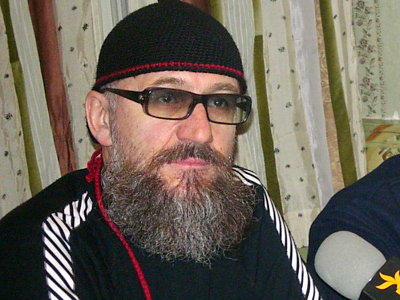
И все же именно с началом украинских событий я понял, что внутренне прикован к Москве. Пусть это будет моя Голгофа, Империя Зла – как угодно. Но именно здесь я состоялся и для всех стал московским художником. При этом сам себя могу позиционировать бобиком или шариком, потому что, как говорил Борис Гройс, я – "единственное в мире животное как таковое". Другие могут быть собаками, лисами, а я – животным в его абсолютном воплощении. Но все равно животным из России, из Москвы. В этом качестве мне и придется умереть. Изменить тут уже ничего не удастся, да и не нужно. Считаю, что Россия – благословенное место для людей, которые хотят понять себя и просветлиться еще в этой жизни. Кому просветления не надо, пусть уезжают. Здесь живут либо ангелы, либо демоны. У меня были друзья и знакомые, при прошлом режиме 90-х жившие вполне комфортно. К примеру, Таня Толстая, Александр Гордон, Леонид Парфенов, словом, интеллигентные, творческие, но вполне вписанные в систему люди. Они-то и были самыми страшными моими врагами. Так же они относились и ко всей андерграундной тусовке, ко всяким там Pussy Riot, Антону Николаеву, группе "Война"... Мы для них были грязью. Та же Толстая выступала на канале НТВ в "Школе злословия" с бесконечными утверждениями, что мы – мразь, и они ненавидят наше искусство.
Но для настоящего андерграунда все эти сталинисты, коммунисты, ворюги-казнокрады или болтающие с каналов ТВ псевдолибералы – одна тусовка коллективного бессознательного. Мы – вечные анархисты и еретики. Если нас не сожгут, так уже хорошо. Я всегда "выброшенный". Могу вписаться, пошуметь, но самому мне от этого благословенного мира по сути ничего не нужно. Кроме разве что спокойствия моих детей. Друзья тащат в приятный город Берлин. Да, туда можно приехать, потусоваться. Но люди там – зомбированные животные, запуганные и затюканные. Машины действительно хорошие, но люди – ужас. У нас наоборот, машины ужасные, но люди гораздо лучше. Утверждаю: русские люди – лучшие на свете. Может, они не очень чистые, не очень внешне доброжелательные и скверно говорящие. Но если их поскрести немножко, помыть, выпить с ними, то можно поговорить по душам. А вот в Америке, где я только что был, вообще не понимают разговоров о человеческом. Смотрят на тебя как на барана. "Человеческое" для них – понятие экономическое. Приедешь куда-нибудь во Францию, так там всюду разговоры о том, как бы где сэкономить. Да и вообще, когда я попадаю в маленькие, тихие европейские городки, кажется, что так выглядит жизнь на кладбище.
Если вдруг Ленина вытащат из Мавзолея, выкинут и согжут, вот тогда жди беды, демон проявит себя по полной
Самому мне сейчас по-настоящему интересно, как сложится в дальнейшем судьба Мавзолея. Сам факт, что в сердце нашей родины находится незарытая могила, производит потрясающий эффект, энергетический, психологический, идеологический. Каков этот эффект, отрицательный или положительный, зависит от будущего. Если с Лениным обойдутся по-человечески, эффект будет определенно положительным. Надо понять и простить, принять вину, а не сбрасывать все на Ильича. Слишком уж там большая яма, рана для России. Ленин у нас за все отвечает – от татаро-монгольского ига до нынешней беспробудной ситуации. За все отвечает его дьявольский мозг. А ведь это – мозг нации, разрезанный на миллионы слоев, кусочков. И каждый из нас должен взять один из этих кусочков. Принять в себя этот маленький кусок дерьма. И если вдруг Ленина вытащат из Мавзолея, выкинут и согжут, вот тогда жди беды, демон проявит себя по полной, и нам всем мало не покажется. Все бывшие у нас кровавые бунты окажутся лишь скромной репетицией будущего страны. Так очень хотелось бы положительно повлиять на это будущее в меру своих скромных возможностей. Этим-то я сейчас и занимаюсь.
Какой бы я хотел видеть собственную смерть? Наверное, сидя в уютной качалке и созерцая прекрасный вид... Правда, делать это я должен лет десять, чтобы окружающие уже перестали понимать, жив Кулик или мертв. Всего навидался в жизни, многое пережил, большие желания ушли. Вот еще сколько-то лет покачаюсь в своем кресле-качалке и годам к девяносто тихонечко перейду туда, где я уже и так по сути, наверное, нахожусь.