
Translated material
Prison under fire
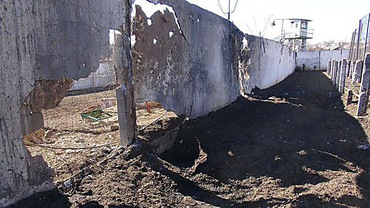
Prisoners in the war zone suffer no less than civilians. The separatists decided to give them to Ukraine
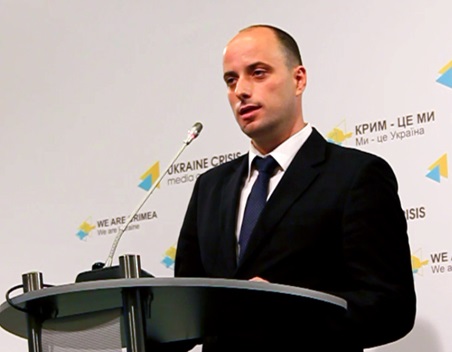
Since the beginning of hostilities in the east of Ukraine, dozens of prisoners contained in the Donbass colonies have died. This did not happen at the oversight of the prison administration, but due to hostilities. Since part of the territory of the Donbass has passed under the control of the separatists, Ukraine has stopped supplying food and medicines in prisons, and the DPR and LPR had no means to contain about 13 thousand in the prisoners. Relatives and relatives who, due to fears for their lives, did not come to the war zone lost the opportunity to visit their loved ones. The prisoners who were in terrifying conditions ran away from prisons, especially when the buildings were fired at, but at the same time often died, blown up on mines. The representatives of the Ukrainian Ombudsman, Yuri Belousov, spoke about the problems of convicts, who in July carried out their first transfer to Ukrainian prisons. The agreement on this was reached at one of the last meetings of the tripartite contact group to resolve the conflict in the Donbass:
Prisoners in the war zone suffer no less than civilians. The separatists decided to give them to Ukraine
- We met in the so -called gray zone. We had to call in the last post controlled by the Ukrainian government, and representatives of the DPR drove for the last checkpoint controlled by the DPR. In this gray zone, we met and took our prisoners.
- How many people?
- Nine people. These are only those that should be extradited to other countries within the framework of international agreements taken by Ukraine.
-Do you have any connection with prisons, in what condition is the penitentiary system in the territories controlled by separatists? How is their financing carried out?
- We receive this information indirectly, thanks to international and volunteer organizations that have access to the territories of Donbass uncontrollable to Ukraine. The fact is that, after the budget financing of the public sector ceased, employees of the central apparatus got the opportunity to go to work on the territory controlled by Ukraine, and many jailers left there. Therefore, the situation is very difficult. If earlier these institutions were provided centrally, the corresponding budget financing was provided, now it is physically impossible to put even any food there. As far as I know, there is also no centralized security on the other side. The colonies virtually survive due to the humanitarian assistance of international organizations and volunteers. Therefore, there are cases of hunger, cases of using the labor of convicts. We are ready to take them, and there are places where we can place them. In Ukraine, over the past five years, the number of convicts has decreased by more than doubled, so there are many places where these people may be contained in penitentiary institutions throughout the country.
In Gorlovka, in one of the boarding schools of about 20 lying patients, 19 were left due to oversight and non-ordering of medical care, due to hunger
- In addition to convicts, negotiations are underway on the export of psychiatric clinics and nursing houses from the so -called ATO zone. What is the situation there? And how many such clinics are there in the territory controlled by separatists?
- Social protection institutions there are about 40, these are various institutions - neurological boarding schools, geriatric houses, territorial social services centers for the elderly. At the time when this territory got out of control of the government, they contained about 4.5 thousand people, of which 1700 were lying patients. We know that in Gorlovka, for example, in one of the boarding schools of about 20 lying patients there was only one, 19 died due to oversight and non-ordering, due to hunger. In the Luhansk region, cases of hungry deaths were in the Slavic-Serbian neurological boarding school, which contains adults. In addition, there are a number of children's institutions, and we still cannot ensure that small patients have been exported. In the Luhansk region there are two such institutions, we have already addressed everyone, starting from the Ombudsman of the Russian Federation and ending with international organizations that could contribute to the salvation of children, but the separatists do not allow them to be taken out. There are still psychoneurological children's boarding schools in Rovenks and Krasnodon, their patients require constant taking drugs that you can’t buy in a pharmacy so simply ... The situation is generally very difficult, there are no purposeful supplies of medicines, products, there is nothing. I can’t say these institutions in peacetime to be provided perfectly, they always had problems, but now the situation is simply critical.
- Do the separatists do not do this at all?
- This is not a priority category, so to speak. I do not think that someone is actively engaged in help.
- And why then do they not allow all these people to take out?
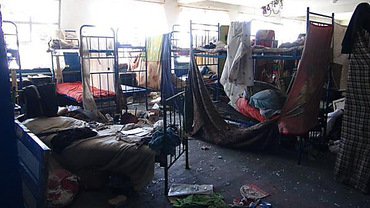
- It's hard to say. In two so -called republics, a little different situation. In the "DPR" they initially said: these people have not committed anything against our republic, we will give them out. Then the situation changed, and they decided not to give them away. Attempts by the evacuation that was undertaken by Ukraine last year were unsuccessful, because there was no one to conduct a dialogue with. There was a huge number of scattered groups that do not obey each other. Someone allowed, someone did not allow. And the evacuation itself was associated with a huge risk for those who evacuated and for those who are evacuated. There was no agreement, which led to the death of prisoners, for example, in the Chernukhinsky colony of the Luhansk region. There, due to hostilities, several dozen prisoners were killed. When Ukraine directed its convoy for evacuation, it was fired and returned back. The remaining prisoners left the colony, someone went through the fields, blown up on mines, on stretch marks, someone returned back. A large number of people died. Now, thank God, we have agreed on the stage of prisoners. According to one of the agreements, we will take people even from a pre -trial detention center.
- The judicial system of the separatists, too, apparently, does not function what the fate of those who are in investigative insulators?
- A fairly large number of people stuck in a pre -trial detention center. It happens that a criminal case is located in the territory controlled by Ukraine, and a person sits in a pre -trial detention center for months, for example, in Donetsk. And in our territory in investigative insulators there are a large number of people whose affairs were considered by the courts, who are now in the uncontrolled territory. We cannot give them to that territory to participate in trials, and they do not send us criminal cases. And a person cannot be released either. According to the new Code of Criminal Procedure, such people are issued if there is no court decision. But a large number of people are sitting in the old Code of Criminal Procedure, where such automatic release is not provided. We are trying to somehow resolve these issues.
- There are reports that "DPR" And the “ LPR ” at their discretion is issued by prisoners, they give them some documents that are not recognized on Ukrainian checkpoints, for example.
- Yes, we are well aware of these problems. But the point is not only in the documents issued by the separatists. Some prisoners ran away due to shelling, came to the checkpoints and wanted to get home, having no documents with them. We discussed these problems at a separate meeting with the head of the state penitentiary service and are glad that it was decided not to send these people back, but to pass. This is a signal to the rest of the convict that they may not be afraid to return home. If the identity of the prisoner is established, a revision of his case is provided for a reduced procedure or parole.
- Did similar negotiations conducted on the prisoners who are in the Crimea?
Convicts who were in places of imprisonment in Crimea were automatically adopted into Russian citizenship
- In Crimea, we tried to use another mechanism - through the Ombudsman of the Russian Federation. The main problem is that it is still not clear how many people are ready to leave. In Crimean colonies, more than 80 percent are local residents who, obviously, will not want to leave. Although initially we were ready to pick up everyone. At the time of the occupation of Crimea, there were 3100 convicts in four institutions. We proposed monitoring together with the Ombudsman of the Russian Federation with the involvement of a third party as a third -party observer, invited the Supreme Commissioner for Human Rights of the Council of Europe Nils Muizhniex so that he interviewed the convicts which of them wants to leave the Crimea. Unfortunately, this failed. The commissar independently visited us first, then Moscow, then Crimea, wrote a rather critical report on the situation with human rights, and after that he is an unwanted guest there. We do not have legal mechanisms how to take out prisoners, because the Russian side proposes to use the European Convention on the transfer of convicts as such a mechanism, but this document implies relations between the two countries, and we do not consider Crimea part of another state, we believe that this is the territory of Ukraine, so we cannot use this convention. Nobody gives us to pick up these people. Another mechanism was proposed - a memorandum between the two Ombudsmen. According to the Russian side, 22 people seemed to be agreed to be taken away. The problem is that the convicts who were in places of imprisonment in the Crimea were automatically accepted into Russian citizenship. At large - so to speak - people had the opportunity to declare a refusal, but in conclusion this right was not given. Therefore, someone has already been released according to the laws of the Russian Federation, someone was transferred to another colony outside the Crimea, someone was released ato or on an amnesty.