
Translated material
"Plan-Antterror" Putin
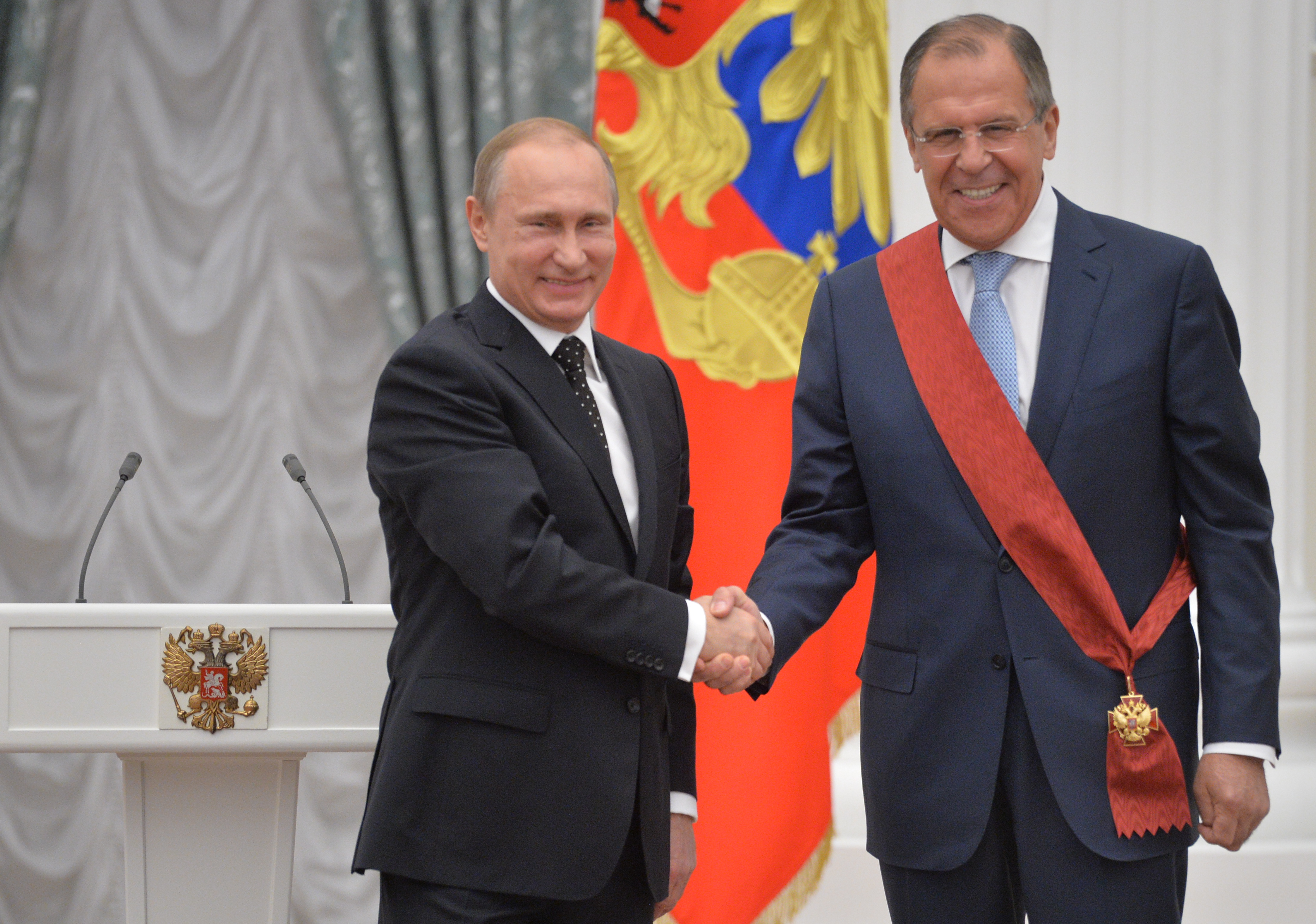
On air Alexander Shumilin, Zeev Khanin, Vladimir Gladyshev
Sergei Lavrov set out at a meeting with John Kerry and colleagues from the Persian Gulf of the Persian Plan of Vladimir Putin to combat the Islamic State extremist group, prohibited by the decision of the Russian court. The main features of the plan and the possibility of its implementation are discussed by political scientists Alexander Shumilin (Moscow), Zeev Khanin (Jerusalem), lawyer Vladimir Gladyshev (London).
Presenter- Vladimir Kara-Murza Sr ..
Vladimir Kara-Murza Sr.: The main news of international relations over these days was the results of Sergei Lavrov’s meeting with John Kerry and colleagues from the Gulf countries, where Vladimir Putin’s plan was made to combat the extremist group “Islamic State”. The essence of this plan is to create a wide coalition, which will include military personnel of the Syrian and Iraqi armies, as well as the Kurds, which would avoid the direct armed intervention of the United States in the Civil War in Syria.
Putin's anti -terrorist plan: Who is against? Such is the subtitle of today's conversation with the expert and another of our program - Alexander Shumilin, the head of the Center for the Analysis of Middle Eastern Conflicts of the Institute of the USA and Canada.
Alexander Ivanovich, what is the novelty of the anti -terrorism plan of the Russian president?
Alexander Shumilin: I would talk about originality. There is an attempt by the Russian side to reformat the international wide coalition that has already existed a year ago as part of more than fifty states so that Russia enters it, but not one, but together with Bashar Assad. That is, this is an attempt to legalize the Syrian regime under the pretext of its active complicity in the struggle against the terrorists of the Islamic State.
But this attempt is contrary to the concept of an existing international coalition. All its participants - and these are regional states and most leading states of the world - make efforts to combat terrorists of the Islamic State. At the same time, they make a bet - as for the land surgery against ISIS planned in the near future - on the Syrian rebels, moderate groups of fighters against the regime of Bashar al -Assad. Here, within the framework of this concept, this coalition is valid.
Lavrov today announced a completely different concept. The fact is that the participants invited Russia to the coalition during this year, but the Russian side refrained from direct participation, mainly the Iraqi government. Well, Syria is itself. And now, according to the idea of Moscow, it is assumed that Russia will enter some new coalition together with Bashar Assad. And this is justified by the idea of the need to transition from air strikes to ground operations. But in fact, ground operations mentioned in Lavrov’s speech have been underway for a long time. That is, this is the Iraqi army, the Syrian army (as they lead - this is another question) and Kurds. These three components were mentioned by laurel. The international coalition acts within the framework of an already designated strategy.
In the region, the leaders of the Arab states, and throughout the world perceive this idea as not quite adequate. In Russia, it looks quite adequate, since Moscow has always supported Damascus and Bashar al -Assad, so the idea does not look extravagant. And for the participants in the coalition and for the whole world, this is really extravagant, it is similar to if during the Second World War, for example, a call was heard from the participants of the anti -Hitler coalition to rely on Hitler to combat militaristic Japan, we’ll be permissible. This, of course, is unacceptable. Hitler Germany and militaristic Japan should be destroyed in the corresponding sequence. It is also assumed that the Islamic State should be destroyed - the efforts of the moderate Syrian rebels and the Iraqi army, who are still actively participating in the war and the Kurds, with the active assistance of the entire world community. And at the same time, the Bashar al -Assad regime should be transformed, which, from the point of view of the coalition participants and the countries of the region, cannot be a partner in this struggle.
Vladimir Kara-Murza Sr.: Zeev Khanin, a professor of political science of the Israeli University of Bar-Ilan, joined us.
Zeev, how realistic is the plan of Vladimir Putin to combat the Islamic State?
Zeev Khanin: There are two doctrines, we will call them conditionally “Western” and “Russian”. The Western doctrine involves the combination of pro -Western moderate Sunni regimes against ISIS, but without the participation of the "Shiite belt". And the Russian doctrine with the condition of its participation in limiting the actions and elimination of ISIS involves the connection of the "Shiite belt". These doctrines contradict each other. If you do not take into account the important circumstance that the agreement with Iran, which was concluded under very serious pressure of the White House, has an internal aspect - Iran’s attraction as a certain guarantor of security establishing, including the fight against ISIS. Here the positions of Washington and Moscow converge in some aspects. At the same time, moderate Sunni regimes of the Middle East are unlikely to perceive this with great pleasure. Even if there can be some mutual understanding on the Washington -Moscow axis, this is not the plot that Americans will actively sell today.
As for Israel, then in Jerusalem they traditionally occupied the position of "strangers" on this "festival of life." Israeli participation was limited to humanitarian assistance and support of the allies. This is the transfer of part of the weapons and intelligence information of Jordan, humanitarian support and treatment of the wounded who suffered in the Syrian conflict, contacts with the Kurds and Syrian Druzes - and not only Syrian. So in this case, the direct involvement of the Israeli army and special services in this conflict, apparently, will not be in the near future. Unless some active actions are taken that will force Israel to become one of the parties to this conflict. This, as they say, in the operational perspective.
As for the strategic prospect, in Jerusalem in the political and expert community they do not express much enthusiasm for the scheme that is proposed in Moscow. True, the scheme, which is proposed by Western countries, also meets a certain alertness. The Israeli analytical community on this occasion took a timeout to understand what this would ultimately lead to. Well, if only because the strategic doctrines of the Israeli leadership at the end of the previous cadenia of Prime Minister Benjamin Netanyahu and at the beginning of the present that began several months ago, and the line that the then Foreign Minister Avigdor Liberman proposed at the time, were built to simultaneously solve three problems. That is, to find ways to solve the Syrian problem, of course, from the point of view of the security calls of Israel, the Palestinian problem and the Iranian problem. We must find a certain mutual understanding with the capitals of the Gulf countries, building a certain anti -Iranian front.
Today we see that at this stage, as it would like in Moscow, and as the ideal would like the Americans, the active and open accession of Iran to the "anti-Islamic state" coalition does not occur. But what is built today will hardly contribute to building the axis "Jerusalem - the capital of the Gulf countries." So in Jerusalem they want to see how events will develop.
Vladimir Kara-Murza Sr.: Vladimir Gladyshev, a lawyer and diplomat, a former employee of the Ministry of Foreign Affairs of the Soviet Union, got in touch with us.
Vladimir, what is the main essence of the contradictions between the plan of the Russian president and the plans of his Western partners?
Vladimir Gladyshev: I drew attention primarily to the fact that the Kurds were mentioned here. This is a very interesting moment. The fact is that currently the two main players in this crisis are Türkiye and Iran. Both Turkey and Iran have a common strategic interest - to prevent the appearance of independent Kurdistan. Currently, the Turks are conducting fighting not so much against the "Islamic state" as against the Kurds. And the inclusion of the Kurds in the coalition should be considered as part of the current exacerbation of relations between Moscow and Ankara. Moscow and Ankara are currently in a very bad relationship in a number of strategic and current considerations. Türkiye, as it is now seen, will be the main beneficiary from the discharge of tension in the relations of the West with Iran. Through Turkey, most likely, the main gas pipeline of Iranian gas to Europe will go. Also, through Turkey and Pakistan, the main gas pipeline of Iranian gas to China will go. And in this the strategic and economic interests of Turkey and Russia diverge.
But Turkey has one strategic task, like Iran, is the struggle with the Kurds. And Peshmerga in Iraq and Kurdish formations in Syria are real, with weapons in their hands are opposed by the Islamic State. And Lavrov’s emphasis on the fact that the Kurds must be attracted as full partners to the coalition, it reaches a certain goal - the contrast of the position of Russia, the position of Turkey, which is always supported by the United States, and, accordingly, US position.
Vladimir Kara-Murza Sr.: And the problem of the Kurds and the problem of the Assad regime can interfere with the implementation of the Russian plan, its adaptation with Western allies?
Alexander Shumilin: Well, this plan is nevertheless unrealize for already these reasons. The fact is that this plan involves involving in the coalition as one of the most important elements of Shiite crescent. What is meant? The point is that the army of Bashar al -Assad consists mainly of the alavites, which are considered Shiites, firmits, in any case, configured pro -Rights and pierces. They are in close interaction with Hezbollah - this is a purely Shiite organization created by Iran.
At the same time, the Iraqi army for the most part also consists of Shiite elements. And the problem remains in regard to the relations of the government, the army and the inhabitants of the "Sunni triangle" - the Iraqi Sunnis do not completely trust the Iraq army on this basis. Work is underway in order to soften the contradictions inside Iraq and recruit more Sunnis there. But at the moment, Shiites prevail. Accordingly, behind all this is Iran.
And what does it mean - attracting the Syrian army and Iraqi? They are already fighting. But the idea is to make them priority shock land forces. This means Iran’s nomination indirectly to the leading position in this configuration. Of course, neither the Sunni community of the region, nor the United States, or, especially, Türkiye, will go to this. So everything is clear with this question.
As for the Kurds - here it is necessary to separate. The Kurdish working party, which operates on the territory of Syria against the Islamic State, is a continuation of the Assad regime, it is the main ally of the regime in this part of Syria. And it opposes Turkey, for all the latest terrorist attacks in Turkey are largely arranged by militants of the Kurdistan Workers Party. Naturally, the militants of the "Islamic state" too. And in this sense, both of them are holding Turkey under the aim.
But there are other Kurds. Parties of a democratic orientation in a political spectrum can be allies of Turkey and can be considered as allies of all participants in the international coalition. It is they who are attracted by Türkiye and the United States to the fight against the "Islamic state" for a sufficiently long time. The whole situation around the city of Kobani is a story with these Kurds, for which a corridor is laid through Turkey. They penetrate there from the territory of Iraq along the corridor through Turkey and enter the battle, freeing the city of Kobani on the border between Turkey and Syria. So here the situation is quite transparent.
You can ask the question: why has this plan have arisen now? A meeting of Lavrov and Kerry and the Saudi colleague Jubeir in Qatar had been held, it was necessary to offer something, it was necessary to make an application for Russia's participation in the anti-terrorist coalition against ISIS ("Islamic state"). Until recently, the participation of our country was limited only to the supply of some weapons. Initially - tanks, planes. They say that fighters never flew. Well, the supply of some weapons of the Iraqi army was probably. Although mainly the Iraqi army is armed with American products. So it was necessary to make such a request. And as Lavrov noted in his speech at a press conference, Russia did not at all move away from its previous and stable position in Syria. Indeed, we see that Russia is on the side of Assad, continues to bet on Assad, trying to involve it in the international coalition, thereby legalizing it. For involvement in the international coalition involves the provision of military assistance to the participants of this coalition. Which is completely impossible.
Why this plan can cause serious rejection. Assad’s army recedes over the past few months, handing over one city after another. She is trying to hold the iconic sections of the territory. For example, Aleppo, which is considered the economic capital of Syria. In order to demonstrate to the part of the population of Syria, which is under the control of the Assad regime, that the regime is stable, it holds the key positions to maintain confidence in it, the moral spirit and some legitimacy of the regime.
But the cost of holding some positions is the incredibly stringent actions of the Army and Aviation Assad against the civilian population of the part of the territory that left the rebels. For the strategy, according to analysts, the regime is now reduced to make the life of the civilian population in that part of the iconic territorial entities, like Aleppo and its districts, so that the civilian population leaves there. And for this purpose, such barbaric types of weapons as barrel bombs are used, which is ascertained by international organizations. These are really serious and tough actions that lead to an increase in the number of victims among the civilians.
By the way, the Assad regime controls, according to some sources, 20 percent (and I looked at the map, there are no more than 10 percent) of the territory of Syria around Damascus and individual sections, like Aleppo, with corridors. That is, most of the population of Syria is unlikely to consider Assad as a legitimate regime, and cannot hold this idea. Although there is another threat - ISIS threat.
So the Assad and Kurdish rate will cause only a negative reaction. And which Kurds are also a big question. If the Kurds from the working party, which really fight ISIS, is theoretically possible, but most likely this bet is unlikely to work.
Vladimir Kara-Murza Sr.: According to Russian press, President Putin intends to make this plan at the 70th session of the UN General Assembly in New York. Zeev, what do you think is waiting for him - a triumph or a frank failure, how does it turn out with many Russian initiatives of recent times?
Zeev Khanin: I have the feeling that this time there will be no loud failure. If only because the Washington-Moscow vector was strangely manifested, and some signals that go from behind the ocean continue to look for those points of contact and understanding that were felt between Washington and Moscow at the time of the agreement of the great powers with Iran. It is clear that the next proposal that came from Washington is to abandon the support of the Assad regime and instead involve Iran in the system of building a new model of regional security, as an ally of Moscow, giving him wider powers, sacrificing the Assad regime. As we see from the Lavrov plan, in Moscow it did not meet understanding. On the contrary, the opposite was proposed.
So it can be expected that the performance at the session of the General Assembly will be met more than cool. But it may very well be that in this case, attempts will continue to reach additional agreements or understanding. And on what basis? In the Israeli media, information was held today (though I did not see confirmation in foreign media) that between the Assad government and one of the groups of Islamic rebels, an agreement was reached in the spirit of Middle Eastern Fashion - the so -called plan for the exchange of territory for the population. That is, an agreement has been reached that Shiites and Alavites, who are under the control of Islamists, will be given the opportunity to switch to the territory controlled by Assad forces. And for this, Assad’s troops will leave certain settlements, some territory.
This means in practice that the first step is taken. Alexander said that government Syrian troops destroy the infrastructure and do not spare the population in the territories where their subjects theoretically live. This may mean that psychologically they have already said goodbye to this territory. And this can be a step in the direction of Cantonalization of Syria, its decay into separate ethnic, religious enclaves, which, apparently, is going on. And in Damascus, they almost agree to this.
Так что мы можем стать свидетелями формализации не только курдского, но и этрусского анклава, а за этим последует образование блока, то есть формальное провозглашение федерацией территорий, контролируемых курдами в Ираке и в Сирии. А дальше к ним могут присоединиться регионы, населенные курдами в Турции, – вне зависимости от того, что по этому поводу думают в Анкаре. Вот эта новая конфигурация может привести к тому, что план Лаврова, по крайней мере, некоторые его пункты, не отвергнут с порога, а будут обсуждать и взвешивать, пытаясь якобы принятием этих пунктов надавить на Кремль и Смоленскую площадь с тем, чтобы была принята новая схема в сочетании подхода американского и подхода российского. Так что я бы сказал так: представление в ООН будет встречено холодно, но не будет сразу отвергнуто.
Владимир Кара-Мурза-старший: В последнее время российские инициативы были откровенно конфронтационными и заведомо неприемлемыми. В частности, вето на инициативу о создании международного трибунала по малайзийскому Boeing. Владимир Викторович, нынешний план российского президента выделяется в лучшую сторону или стоит в том же ряду?
Владимир Гладышев: Мне кажется, что этот план рассчитан не столько на пропагандистский эффект, судя даже по очень сдержанному, умеренному и осторожному тону Лаврова, которым он был сделан, сколько на сущностную реакцию со стороны прежде всего западных столиц – но и со стороны ближневосточных государств. Россия, как мне кажется, в данном случае хочет играть ту роль, которую, грубо говоря, играла Англия в XIX веке в Европе: когда в XIX веке складывались коалиции, Англия всегда выступала на стороне самой слабой коалиции. А Россия сейчас выступает на стороне Сирии, Ирака, которому Россия недавно поставляла танковое вооружение, и курдов. То есть Россия выступает на стороне шиитов, которые более слабые, и на стороне курдов. Таким образом, этим сторонам конфликта она дает некоторую стратегическую глубину и усиливает их вес в рамках конфликта. Тем самым Россия дает всем понять, что без ее решения в данном конфликте не обойтись.
Это примерно то же, что Россия сделала в ситуации с Ираном. Россия давала Ирану определенную стратегическую глубину, возможность сказать, что если все провалится, по крайней мере, у него останутся какие-то отношения с Россией. И именно это было основным рычагом давления России на Иран, почему Россия и участвовала в переговорах в качестве активного игрока.
С другой стороны, эта активность, как сегодня сообщили иностранные СМИ, может внести некоторый разлад в позицию между Соединенными Штатами и европейцами. Дело в том, что европейцы очень неоднозначно оценивают роль Турции в данном конфликте. До недавнего времени, до терактов, которые явно были проведены боевиками ИГИЛ, Турция фактически поддерживала "Исламское государство". Все люди, которые ехали из Западной Европы в "Исламское государство", ехали через Турцию, и Турция их пропускала. Граница была для них открыта. Для Турции "Исламское государство" до недавнего времени противником не являлось. Турция рассматривала "Исламское государство" чуть ли не как союзника. Главным врагом для Турции остаются курды. А Соединенные Штаты традиционно лучше относятся к Турции, чем Западная Европа. И роль России, которая вклинивается в эти отношения, как считают некоторые обозреватели, способна создать некоторые нюансы в отношениях между Западной Европой и США по отношению к России.
Владимир Кара-Мурза-старший: А как изменилась расстановка сил после того, как произошли теракты в Турции, и она скорректировала свои позиции относительно "Исламского государства"?
Александр Шумилин: Да, скорректировала, но не принципиально. Слишком распространен миф о том, что якобы Турция является чуть ли не союзником "Исламского государства", раз она позволяла рекрутерам проникать в Сирию через свою территорию. This is a deep misconception. Разумеется, террористы "Исламского государства" остаются важнейшим противником Турции. Другое дело, что они находятся в противодействии с курдами, а курды – это проблема "номер один" для Турции. Но какие курды? Курды из Рабочей партии Оджалана, который сидит в тюрьме в Турции, – это те курды, против которых борется Турция открытым образом. И одновременно сейчас она активизирует действия против "Исламского государства", вступая в международную коалицию, активизирует свои усилия, достаточно успешно наносит бомбовые удары. И это говорит о новой ситуации в этом "квадрате": Асад, курды Оджалана, "Исламское государство", Турция. Турция всегда однозначно выступала против трех остальных частей этого "квадрата". И ничего здесь не изменилось, кроме решения играть более активную роль в подавлении "Исламского государства", что еще больше сближает Турцию с суннитским блоком в районе Персидского залива. И одновременно улучшает ситуацию в области взаимоотношений с Ираном. Это весьма важное обстоятельство.
Коллега сказал насчет того, что план России предлагает стратегическую глубину путем создания напряжения, ибо делает ставку на шиитов, на Иран в немалой степени, помимо курдов. На самом деле этот план и история с курдами показывают, что создается зона напряжения между Россией и Турцией, отношения которых осложнились. Но в том, что касается шиитского сообщества, – а именно Хезболлы, режима Асада и армии Ирака, – то эти элементы всегда были задействованы, и они уже давно находятся в активном противостоянии с "Исламским государством". Здесь нет ничего нового, кроме политической оценки и оценки предполагаемой стратегии.
Владимир Кара-Мурза-старший: В последнее время боевики "Исламского государства" прибегли к тактике индивидуального террора с использованием террористов-смертников. Будет ли востребован опыт израильских спецслужб для предотвращения этой угрозы?
Зеев Ханин: Он уже открыто востребован. Речь идет о передаче израильского опыта, информации и наработок израильских спецслужб израильским партнерам – спецслужбам Египта, Иордании и некоторых других. Есть многочисленные секретные каналы информации, которая попадает в СМИ. Понятно, что прежде всего речь идет о режимах Персидского залива, и не только. Но израильский опыт востребован, – прежде всего, потому, что идея, которая долгое время господствовала в профессиональных кругах, о том, что невозможно остановить человека, который уже распрощался с жизнью и готов подорвать себя, говорит о том, что не существует "потенциала сдерживания". Чем можно сдержать или пригрозить человеку, если он уже готов себя уничтожить?
Выяснилось, что в израильских кругах, которые связаны с системами безопасности, разработана схема, которая позволяет в значительной степени остановить эту угрозу. Эта схема четырехслойная, она включает в себя целый ряд действий, при которых непосредственно охрана объектов является последним условием безопасности. Если потенциального террориста-самоубийцу останавливает охрана возле военной базы или на входе в супермаркет, это значит, что система безопасности провалилась. Это значит, что не сработали три предыдущих слоя, которые включают в себя очень точную разведывательную информацию, систему изоляции людей, отдающих приказы, а также те передаточные звенья, которые готовят инфраструктуру, средства доставки вооружения и транспортировку террориста на место теракта. Понятно, что он – только исполнитель, на него работает множество звеньев инфраструктуры подготовки теракта. Вот ликвидация этих звеньев и является основной задачей спецслужб. В Израиле эта схема разработана достаточно неплохо. Ну что ж, имеющий уши да услышит! И те режимы и страны, с которыми, как считают в Иерусалиме, можно иметь дело, этой схемой достаточно эффективно пользуются.
Владимир Кара-Мурза-старший: Москва гарантирует получение новой коалицией, создаваемой в соответствии с ее планом, мандата Совета безопасности ООН. Пытается ли Кремль загладить ту неловкость, которая возникла после голосования Чуркина, который наложил вето на предыдущую инициативу по малайзийскому "Боингу"?
Владимир Гладышев: Ну, может быть, это как-то связано в связи с тем, что Россия хотела бы поднять авторитет Совета безопасности ООН и ОБСЕ, как двух организаций, в которых у нее есть право вето. То есть это организации, в которых западные партнеры должны садиться с Россией за стол переговоров. Начиная с Билла Клинтона, основной поток реальной мировой политики Америка решила пустить мимо Совета безопасности. А сейчас говорят, что надо возвращаться в это русло. Естественно, каждое вето не добавляет убедительности этой позиции. Хотя, естественно, надо смотреть о чем идет речь – по сути каждого голосования.
Фактически Россия говорит: "У нас получилось с Ираном, хорошо вышло, "пять плюс один". Теперь давайте сделаем то же самое в отношении борьбы с "Исламским государством". Самое главное, как мне кажется, – это попытка ввести военные действия на Ближнем Востоке в русло 51-й статьи Устава Организации Объединенных Наций. Потому что с точки зрения Устава ООН, все, что происходило на Ближнем Востоке последние много лет, является незаконным. В том числе бомбардировки Турцией сирийской территории. Поэтому Россия не хотела бы, чтобы поток силовых отношений в международном пространстве пускался помимо Организации Объединенных Наций, а ООН использовалась бы просто как пропагандистский канал – в тех случаях, когда это западным партнерам интересно. То есть Россия заранее говорит: "Мы никакое вето применять в данном случае не будем".
Владимир Кара-Мурза-старший: Александр Иванович, видно ли, что Кремль и кремлевская дипломатия взяли более примирительный тон? "Мы гарантируем получение коалицией мандата Совета безопасности ООН".
Александр Шумилин: Да, тон в этом смысле примирительный. И разумеется, здесь есть элемент компенсации того, что произошло с "Боингом" и с голосованием по "Боингу" в Совете безопасности. Если угодно, это спасение лица, изображение хорошей мины. И это все, что требуется, безусловно, и это в данном контексте делается правильно.
Но ведь предлагается совершенно противоположная большинству стран мира и уже существующей международной коалиции против ИГИЛ концепция, направленная на легитимизацию режима Асада, который рассматривается всеми этими странами как преступный. И ясно следует, что речь идет и о попытке более активного вовлечения Ирана и всего управляемого им шиитского сообщества в этом регионе под предлогом необходимости борьбы с ИГИЛ. Хотя на самом деле шиитское сообщество и Иран уже и без того вовлечены в борьбу с ИГИЛ, и они ведут эту борьбу. Иран официально не входит в коалицию, но все считаются с его позицией. И здесь отношения, очевидно, отлажены, с учетом специфики существующего противостояния между суннитами и шиитами. Ибо саудовцы, может быть, не хотели бы активно взаимодействовать с Ираном, даже в противодействии ИГИЛ, рассматривая его все-таки как противника, особенно в связи с Сирией.
Так что эта концепция вряд ли может быть одобрена. Как благое пожелание, как реализация логичного продолжения курса России в связи с Сирией (и уже немножко шире – в связи с Ираном), совершенно обоснована. Но вряд она ли может быть воспринята мировым сообществом.
Владимир Кара-Мурза-старший: Мы понимаем, что эта концепция для мирового сообщества неприемлема. А какие ее аспекты могли бы быть использованы в реальном сценарии подавления терроризма "Исламского государства"?
Зеев Ханин: Первое: в какой степени произведет впечатление требование России пропустить все через Совет безопасности. В Москве сформулирована идея: никакие силовые действия не могут быть предприняты, если не существует благословения международного сообщества в лице ООН. Возможно, с учетом некоторых тактических, а может быть, и среднесрочных интересов, как их понимают в Вашингтоне и в Брюсселе, это может быть использовано. Хотя, может быть, в кулуарах будут говорить о том, что Россия не ждала благословения Совета безопасности для того, чтобы использовать силовые методы защиты своих интересов, как их понимают в Москве, например, в ближнем зарубежье. Но как некоторый символ это может быть использовано.
The second point. Вероятно, в дискретном виде, на уровне консультаций может быть использована идея привлечения Ирана к выстраиванию новой модели региональной безопасности. Хотя американцами (я имею в виду администрацию Обамы), которые являются наиболее горячими сторонниками передачи Ирану значительной части полномочий по поддержанию безопасности в различных регионах мира, в данном случае – в Ближневосточном регионе, возможно, эта тема может обсуждаться. Хотя не в ближайшие дни и, наверное, не в ближайшие недели. Потому что американцам нужно очень сильно постараться, чтобы успокоить Израиль, который, мягко говоря, без восторга воспринял сделку великих держав с Ираном, и то, что за ней должно последовать, – то есть присоединение Ирана к этим схемам.
А в еще большей степени "ядерная сделка" раздражает лидеров стран Персидского залива. И на сегодняшний день американцам нужно успокоить ситуацию, показать, что речь сейчас не идет о полном размене союзников. И в Вашингтоне тоже без особого восторга посмотрели бы на складывание "антииранского союза", – а он был бы в каком-то смысле союзом, который призван обслуживать новое прочтение американских интересов на Ближнем Востоке.
Так что вслух это все говориться не будет, но в кулуарах отдельные пункты этого плана, который предложил Лавров от имени российского руководства, наверное, будут обсуждаться.
And the third moment. В европейских СМИ, а оттуда это просочилось и в израильские СМИ, стали говорить о неком плане размены Сирии на Украину. Я думаю, что если такая идея поступала из Москвы или из каких-то столиц, которые пытаются примирить Запад с Россией, то это как раз всерьез не будет рассматриваться.
Владимир Кара-Мурза-старший: А где то рациональное зерно, которое могло бы быть реально использовано в создании коалиции против "Исламского государства"? Я имею в виду российскую сторону.
Владимир Гладышев: Мне кажется, рациональное зерно лежит в отношениях между Европой и США. Потому что это два игрока, которые во многом определяют, что в конце концов будет принято Западной Европой и США. И здесь инициатива России, скорее, ближе к тому, что предпочли бы видеть европейцы.
А кто составляет костяк боевой организации "Исламское государство"? Это, конечно, не те девочки, которых рекрутируют в Лондоне и Берлине. Это фактически армия Саддама Хусейна, которую в 2003 году американский посол Пол Бремер распустил своими знаменитыми распоряжениями 1 и 2. В основном это были офицеры-сунниты, армия в 400 человек. Кстати, распущенная без согласования с американскими военными. И это считается одной из главных ошибок американцев в Ираке. На этой базе и была создана армия "Исламского государства".