
Translated material
Robert Conquest died
Robert Conquest died
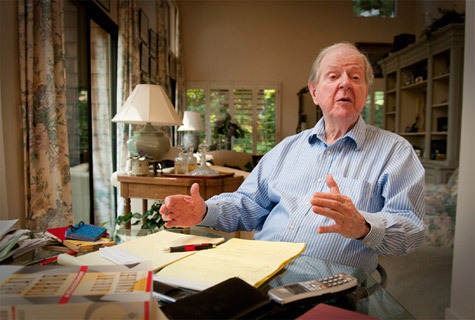 © Stanford University
On August 3, British historian Robert Conquest, one of the largest foreign researchers of the history of the Soviet Union, died in California at the age of 98.
It is reported by The New York Times .
Robert Conquest was born in 1917 in the county of Wostershire, graduated from the College of St. Magdalena at Oxford University, where he received the degree of Bachelor and Master in Philosophy, Politics and Economics and Doctor's degree in Soviet history. In 1937 he joined the Communist Party of Great Britain.
During the Second World War, he served in intelligence, then he was sent to Bulgaria as an officer of communication in the forces of resistance. After the war, he worked at the British Foreign Ministry.
In 1956 he left the public service and completely devoted himself to literary and scientific work. The sphere of interests of Conquest included such aspects of Soviet history as national politics, justice and legal system, deportation of peoples, collectivization and hunger of the early 1930s and others.
The most famous work of the historian was the book “Great Terror: Stalin's Cleaning of the 30s” , based mainly on the data published during the years of the Khrushchev’s “Thaw”. In the era of the publicity of the 1980s, when data from the Soviet archives were published, Conquest revised his book. The new edition saw the light in 1990 under the name "Big Terror. Revaluation. "
Since the beginning of the 1980s, Conquest has been working at the Goverovsky Institute of War, Revolution and Peace at the University of Stanford in California, collaborated with many other universities and research centers.
Robert Conquest was also a famous poet, published poetry works since the late 1930s, in the 1950s-1960s he entered the literary group The Movement , in the 1970s he translated “Prussian nights” into English-one of the chapters of the autobiographical poem by Alexander Solzhenitsyn.