
Translated material
Rosselkhoznadzor against the distribution of the poor sanctions products
There is no mechanism for transferring sanctions products to social institutions due to the lack of security guarantees. This was stated by the deputy head of the Rosselkhoznadzor in Moscow, the Moscow and Tula regions Evgeny Antonov at a press conference, Interfax reports .
"Often, many say that it is necessary to transfer these products to orphanages and so on. There is no mechanism, the safety of products is not guaranteed, the storage periods are very small, it is difficult to bring to a specific consumer," Antonov said. He also emphasized that the volume of detected sanctions products is not so large. “It will be only two, a maximum of three hundred tons of products,” the official said.
Doubts of the quality of sanctions was expressed by the head of the Ministry of Agriculture Alexander Tkachev in an interview with Russia 24. At the same time, he noted that the decision to destroy sanctions products is based on world experience. “If this is a smuggling, then it should be subject to destruction. These products of dubious quality. We cannot allow it to be supplied to our stores, and we will not risk the health of our fellow citizens,” the minister said.
In addition, according to Tkachev, the distribution of products can lead to corruption in the field. “Secondly, if these products are distributed according to incomprehensible decisions, where the guarantee is not corruption, there will be no abuse of authority,” he said. “I think that we have made it correctly, cut off, and the decision is absolutely justified. The most important thing is to reduce the smuggling of food for Russian territory, and in many ways it will improve the quality of products.”
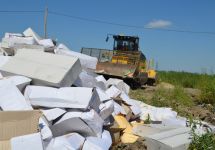
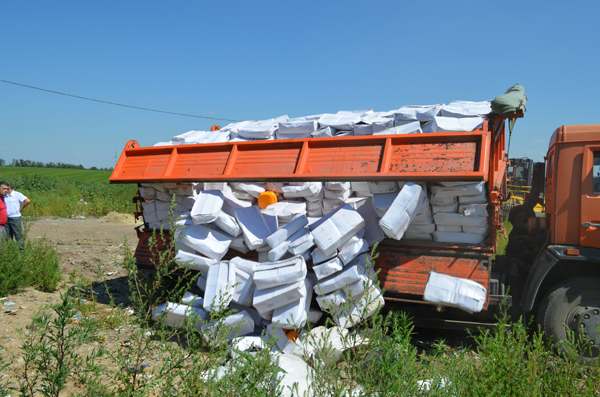
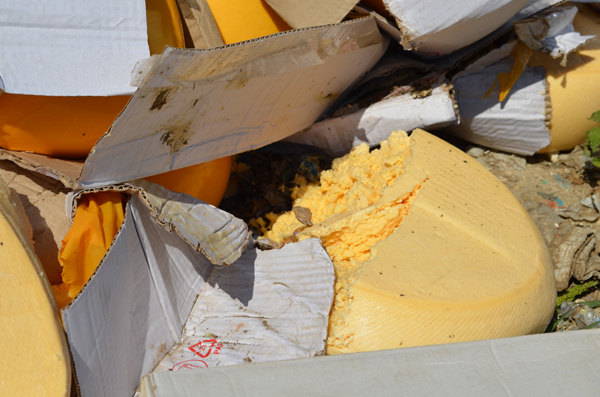
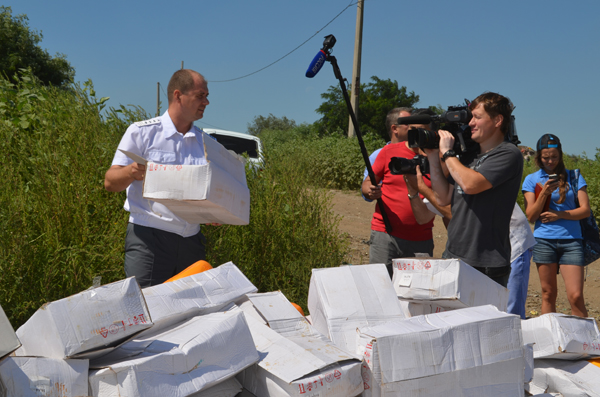
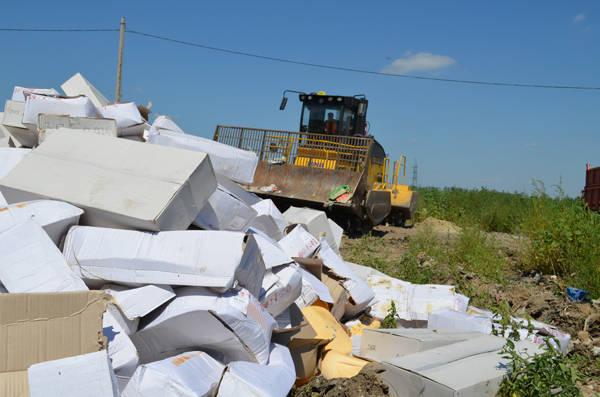
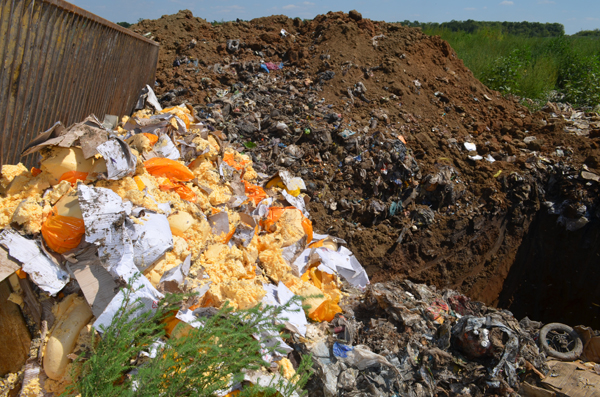
Meanwhile, Russia began to destroy products. The first to destroy nine tons of cheese in the Belgorod region. The products were launched under the bulldozer and mixed with the ground. In addition, 20 tons of sanctions cheese produced in Latvia were destroyed in Orenburg, 650 kg of Polish apples in Novosibirsk, and 55 tons of nectarines and tomatoes in Smolensk. In St. Petersburg, they are preparing to destroy more than 40 tons of illegally imported fruits from Morocco and 17 containers with meat, 28 tons of tomatoes and apples from Poland were found in Moscow.
In the Pskov region, on the border with Belarusia, the driver of the van with 1.5 tons of tomatoes, having learned about the upcoming destruction of the cargo, turned and went back, reports TASS. At the same time, he left all the documents at customs, including his passport.
Destruction of cheese in the Belgorod region
Earlier on Thursday, the assistant to the head of the Rosselkhoznadzor Alexei Alekseenko said that from August 6, they would destroy sanctions products every day , wherever it was found. Meanwhile, the petition on the abolition of the decree on the destruction of sanctions products and the gratuitous transfer to their needy was already signed by more than 280 thousand people. The petition was published on the Change.org website a week ago. The number of signing began to grow rapidly on Wednesday. Even on Tuesday, only 75 thousand signatures were collected.
"Why do we need to destroy fresh European products that can feed veterans, pensioners, disabled people, large families, affected by natural disasters and other needy?" The President of Russia says to cancel our decree and appeal to the State Duma with a demand to consider and adopt the law on the imported products and goods of people's consumption to be destroyed, especially needing categories of the population. "
Vladimir Putin will be reported about the petition. This was stated by Presidential press secretary Dmitry Peskov. “Of course, this will be reported about this, along with other media reports,” he said. At the same time, Peskov noted that information about the number of signatures needs to be verified. “The fact that this resource, if I am not mistaken, does not implies any reliable identification,” he said. “He said.“ Therefore, here, probably, it remains to determine how reliable this amount is taking into account the pace of the set. ”
On July 29, Putin signed a decree on the destruction of sanctions products on the Russian border. From August 6, all products from the countries that the Russian food embargo are applied to. An exception, the decree says, is only "goods imported by individuals for personal use, or placed under the customs procedure of customs transit and transported to third countries."
With the idea of destroying sanctions products, Minister of Agriculture Alexander Tkachev addressed Putin. On July 24, the head of state approved this initiative , giving the Kremlin administration and the government an order to work out the issue. Then Prime Minister Dmitry Medvedev also spoke out in support of Tkachev’s proposal.