
Translated material
Egypt gift to the world
What you need to know about the opening of a new Suez channel
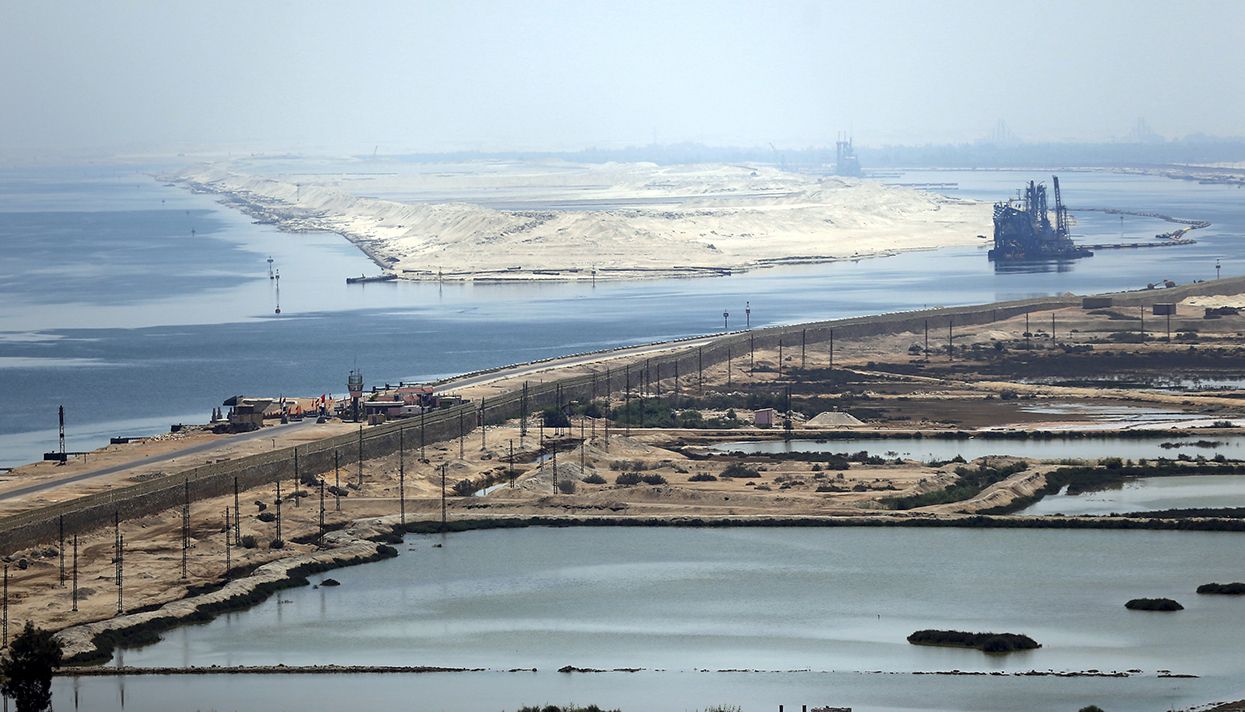
On August 6, a new Suez Canal opened in Egypt - a short path between the Mediterranean and Red Seas. The construction lasted only a year, during this time Egypt was able to significantly expand the old channel: the bandwidth will now reach 97 vessels per day, and the waiting in line for the passage will be limited to three hours against 10-12 hours now. "Medusa" says what you need to know about the new channel, which, as the Egyptian authorities hope, will bring prosperity to the country.
The new Suez Canal is actually not so new . In fact, this is the expansion of the channel built back in the 19th century, which allows to remove cargo from the Mediterranean Sea to Red, not bypassing Africa, but directly through the territory of Egypt. The length of the Suez Canal is 191 kilometers. If you go around, the path will be eight thousand kilometers. The first projects of such a channel dates back to the second millennium BC. The channel, commissioned in 1869, is partly reconstructing the ancient Egyptian waterways from the Nile to the Red Sea. For a century and a half, the Suez Canal had a significant impact - largely due to the passage of oil barges - to the economy of the region, and the whole world too.
Modern expansion is far from the first in the history of the channel , it was finalized both in the 1950s and in the 1980s. In total, builders (mainly engaged in the Egyptian Army) dug 35 kilometers of branches from the main channel for the year and expanded another 37 kilometers of the already existing sea path. In Egypt, the construction is compared with the opening of the channel and claim that it will change the world, but in reality this is not entirely true. The length of the channel did not change, the speed of its passage was not very significantly reduced, while the opening of the path between the Atlantic and the Indian Ocean in the 19th century reduced the path from London to the Persian Gulf by ten days.
The new Suez Canal will allow you to miss up to 97 vessels daily. The previous throughput is almost 50 ships. Egypt hopes that the expansion will double the revenue of the channel, which already brings five billion dollars a year to the country's budget and is the second main article of the country's income after tourism. With all this, now there is a slight share from the global volumes of cargo transportation-about one or two percent on the Suez Canal, Al-Arabia notes , and the profit from the channel can increase only with the simultaneous increase in world trade, which Egypt cannot be influenced.
The vessels will be faster. First of all, the extension of the channel will reduce the waiting time in the queue for the passage through the channel-from 10-12 to 3 hours. For several hours, the barge passage time, previously occupied from 14 to 18 hours, will also be reduced. They still need accompanying vessels, so that the procedure for overcoming the channel will not change significantly. Contrary to widespread opinion, the new Suez Canal will not open a full -fledged bilateral movement. The ships could simultaneously sail to each other earlier, but far from the entire length of the channel. Now the areas of bilateral traffic has increased, but there are plenty of places where the movement is strictly one -sided, writes Mada Masr.
Egypt calls the new channel a gift to the world, which was funded by ordinary Egyptians. The authorities of Egypt, led by the ideologist of the construction of Abdel Fattah al-Sisi, are somewhat exaggerating the world's significance of the expanded channel, but they are right about his “nationality”. The construction was almost completely funded by special bonds of the new Suez Canal, which were bought by ordinary citizens. The surge of patriotism helped this, and extremely high - 12 percent - the profitability of bonds. Due to the securities, the Egyptian authorities received about eight billion dollars, a little less than a billion government took from local banks. By decision of Al-Sisi, foreign investors did not attract fundamentally.