
Translated material
Food should be destroyed. Short
What is known about the fight against sanctions products
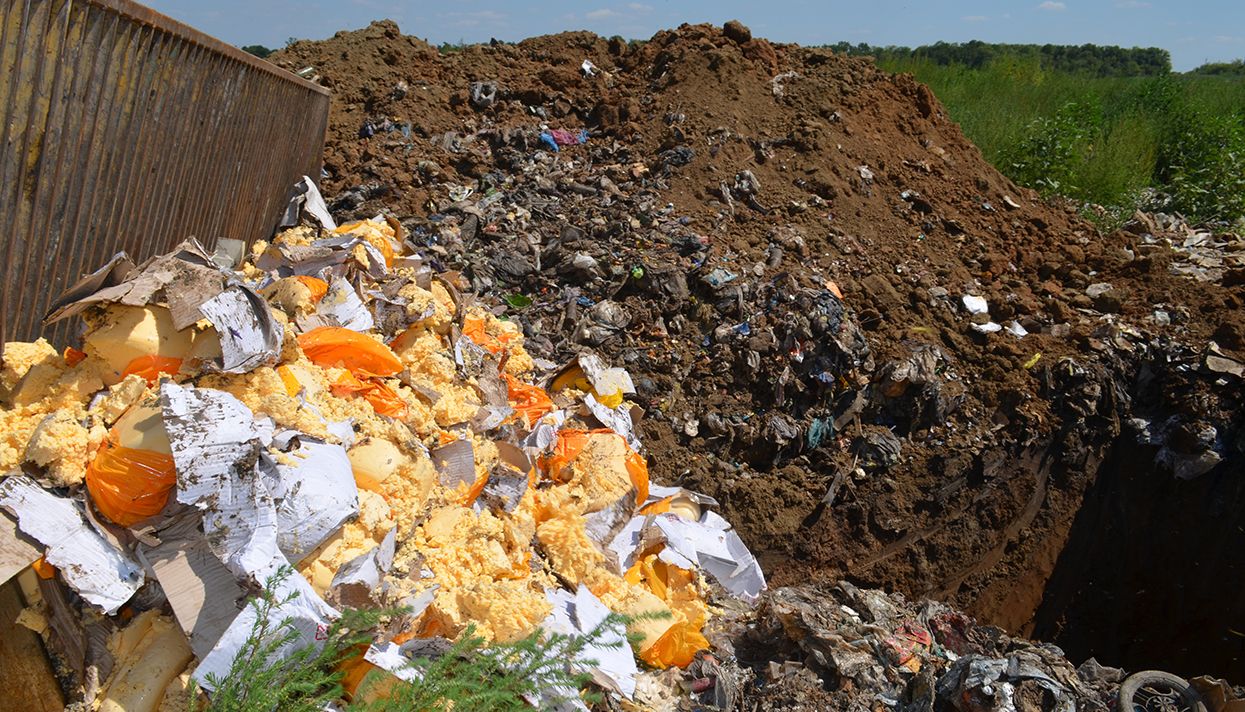
Over the past couple of weeks, almost everything that is possible has been told about the fight against sanctions food on the Russian border over the past couple of weeks. The process of destruction of products was overgrown with myths: pork was allegedly burned in mobile furnaces in which cremation was carried out before; Destroyed food could be fed the poor and hungry; Only in Russia can such an abuse of food. Medusa in a short retelling separated the facts from fiction.
What happened . On July 24, at a meeting of Vladimir Putin with members of the government, the head of the Ministry of Agriculture, Alexander Tkachev, proposed destroying sanctions products right on the state border - earlier they were simply returned back. According to Deputy Prime Minister Arkady Dvorkovich, during the year the embargo was recorded 700-800 attempts to import sanctions food. In the summer of 2015, the sanctions (and antisancations) were extended for at least another year. Putin supported the idea, and on July 29 he signed a corresponding decree that entered into force on August 6.
How should it work . According to the new decree , the products that fell under the embargo are subject to immediate destruction at the border - in fact they are equated with smuggling. For the elimination of smuggling products on two dozen checkpoints in Russia, special insiners (furnaces) are already standing ; There are only two mobile insiners in the country (the production of Tourmaline company), now they are in Altai and in Dubna. In total in Russia, about 400 checkpoints.
The procedure for destroying sanctions products was distributed to all customs of Russia on August 5 until it is published, but it is known that disposal "can be carried out in any way provided for by law." Some methods can be learned from the news. On the first day of the decree entered into force, 10 tons of sanctions cheese in Belgorod were crushed and buried; The same thing was to happen with 73 tons of peaches and nectarines, but in further messages it was indicated that they were compressed .
Food in Russia was destroyed earlier - the same smuggling. So at the end of 2014, Kamchatka entered with more than 2.5 tons of red caviar. Since the caviar in such a volume has to be eliminated for the first time, standard methods have appeared - it is thrown into a hole and set fire to or mixed with the ground using a tractor.
Where food is stored before destruction . This is not entirely clear. “The fact is that all insiners on the border are placed at a“ peaceful ”time, but here we are talking about“ combat ”. It was believed that the capacity of 50 kilograms per hour, or 1 ton per day, is enough, but now the situation has changed. If a truck with an illegal load of 15-20 tons will come to the border, there will be not enough regular capacities, ” says Mikhail Vostrikov, CEO of monopoly company in the production of TURMALINA insiners. However, somewhere all this food should be stored. For example, on August 6, 20 tons of German cheese, which had been lying there since last year, began to burn in Pulkovo. To imagine that the cheese lay for six months somewhere near the airport in an unsuitable place is quite difficult; But nothing is known about where it was stored.
Why this food cannot be distributed to the poor . The food that is destroyed on the border is an illegal product, deprived of any certificates and licenses. “Smuggling” products can be, for example, unsafe, so there is still no legal way to convey this food to the state ( journalist Alexander Timofeevsky wrote about the symbolic sense of destruction of food ).
As in other countries. Russia is not the only country that treats food. For example, food is destroyed in Ukraine-“the destruction of products seized from the circulation-mechanical, physico-chemical, biological or other processing and placement (burial) of products or residual components in specially defined places.” In India, too - burn, dissolve and buried .