
Translated material
Straighten the story
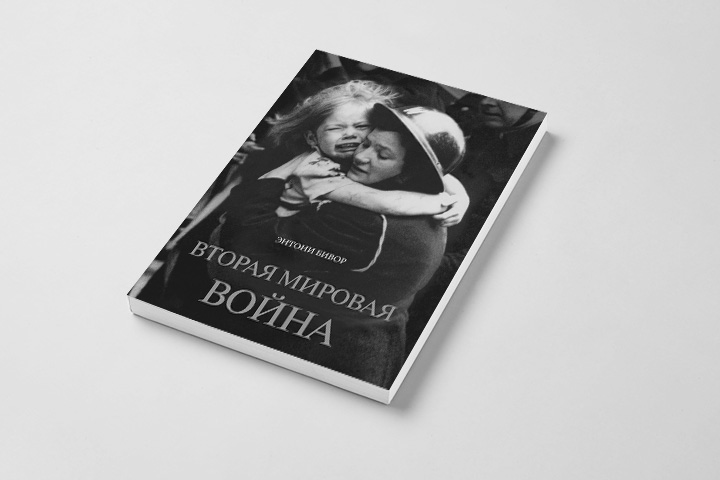
In the Sverdlovsk region, British historians about the Second World War are removed from the libraries
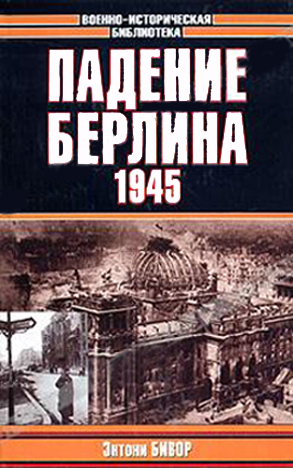
The Ministry of Education of the Sverdlovsk Region issued an order on an unscheduled audit of libraries of schools and schools in order to remove the books of English scientists from them John Kigan and Anthony Bivor about the Second World War, issued with the support of the Discovery Society of George Soros. Anthony Bivor, in particular, is known for the books "Stalingrad" and "Fall of Berlin. 1945", which, among other things, mentioned episodes of cruelty of the Red Army in relation to the civilian population of Germany.
The candidate of historical sciences, a specialist in the history of Russia of the 20th century, Alexander Fokin, considers the decision of the Sverdlovsk officials "bad performances".
- What can you say about the works of Anthony Bivor? What is their value?

- The book "Stalingrad", which brought him popularity, is ambiguous. Many historians criticize her. I also treat her, rather, critically. The problem is that he is partly a historian, partly a publicist. This journalism, an attempt to lure the reader, is very visible. All these stories about rape, crimes committed by Soviet soldiers attract the audience. This was little talked about, few sources. And his merit is that this topic is rising in historiography. And it must be discussed, found suspended positions, and not throw hats. We need an objective historical examination. He makes unsightly features, but on the basis of documents. And if you refute it, then also on the basis of archives - how many crimes were, what is the frequency. And then draw a conclusion about the behavior of the Soviet troops. The only, in my opinion, instrument of scientific discussion is a proposal of a more objective balanced point of view. If Russian modern historians believe that this is not true, it is not necessary to prohibit it, it is necessary to refute their own reasoned work.
Teacher's task is to teach a child to understand, and not to train him
-Or maybe, nevertheless, a school is not a place for historical discussions, and there should not be literature in the libraries of educational institutions whose historicity is doubtful?
- It is very difficult to determine what is historical and what is not. In the sense of textbooks, everything is clear - there is a vulture "recommended by the Ministry of Education and Science." And in fact, schools are doing this. Last year, I took part in the discussion of the historical and cultural standard. One person who was present at the meeting said that historians should not be allowed to teach at school at all, because they all the time doubt, they say, different theories, different points of view. And this, in his opinion, should not be. The story should be direct, like a stick, to educate patriotism and all. And there should be no other function in historical education. Our state acts based on this. And I believe that the main goal of education is to develop critical thinking among students. So that a person can compare different points of view. The task of the teacher is to teach the child to understand, and not to train him.
- So, if you generalize, how would you appreciate the decision of the officials to withdraw these books?
The situation of modern Russia is the lack of intelligible ideology, and instead of it, the Kholuyan execution of some signals from above
-In my opinion, this is a very negative step when some political forces begin to interfere in science and dictate, what is good and what is bad. You don’t have to go far, you can recall the 20th century, the Soviet Union, other regimes, persecution of genetics, cybernetics, history. All this led to stagnation. More than 20 years have passed after the collapse of the USSR, but there was no question that there are bad books, but there are good ones. This is a very symptomatic step that our society is moving in some wrong direction, it partially even scares me internally. Every morning I open some news resource and wait for what our power will surprise me now. At the moment, it seems to me that the problem is not in ideology, but in bad performance. Someone somewhere said that the Soros Foundation is bad, we must urgently report that we are fighting him. The situation of modern Russia is the absence of intelligible ideology, and instead of it, Kholuskoye and stupid execution by local authorities of some signals from above.
- Why right now, after 70 years, in Russia they began to use the images of that war so often in Russia, carefully separating everything from them that could interfere with their sacralization?
-I think this is not so much connected with the war as with the so-called "patriotic stop list." And it so happened that the Soros Foundation, which is now considered a "propagandist of negative values shaking the Russian foundations", has really financed a large number of scientific and journalistic materials. All this time they lay and did not bother anyone, but now it turned out that they were "harmful." I think this is due to the tightening of the nuts in the conditions of the new cold or, as it is called, sanctions war. On the other hand, the Great Patriotic War in the modern political tradition is becoming one of the basic myths that can rally the entire population. There are very few people who want to dispute him. Moreover, it is attractive as a foreign policy factor: the Soviet Union as a liberator. "This we freed Europe from the plague of fascism, so all countries should be grateful to us." Therefore, for the modern Russian political elite, the Great Patriotic War is a win -win trump card. And any attempts to overshadow this trump card or reduce its cost are found in bayonets. This is a ban on talking about collaboration, and discussing the possible crimes of Soviet soldiers during the war years.
-Is it possible to carry out any historical parallels to such facts as the removal of historical books from libraries?
- Students and I are going through the history of modern journalism - I have such an object. And one of the topics in this course is the study of censorship. The simplest example is the Satanic Poems Salman Rushdi, for which he was sentenced to death, was taken away by Fatva. And so far he is forced to fear for his life. Although the book does not claim to be scientific. In the West, one can recall “monkey processes” - there is still a struggle for creationism against the theory of evolution, and sometimes the reactionary policy wins. But of course, in Western democracy countries, this situation is much more difficult to represent-that for political reasons, some historical literature will be withdrawn. Without a court decision, moreover. Any state was engaged in censoring, just in the 20th century this turns into monstrous forms. We are going through the “Areopagitics” treatise John Milton, who, in the middle of the 17th century, protested against censorship, raised the question: how does a person who does not understand history, philosophy, can evaluate the work of a professional? I have not seen the mention of the examination anywhere, why did these books suddenly turned out to be harmful and objectionable.
I can't pretend that nothing like this happened
-In your opinion, can we say that Russians and the peoples of Eastern Europe evaluate the events of the Second World War and the role of the USSR in particular?
- It is still difficult to say unequivocally. Some part perceives us as liberators, the other does not perceive. But the historical mainstream of memory on the side of the second. And the states themselves support this myth that the USSR should not be perceived as a liberator. Or they just say that instead of one dictatorship, another came. This point of view in Eastern Europe is now prevailing. And the young generation of the Eastern Europeans is brought up in this context - that the Soviet Union, having freed from the Germans, established its dictatorship. And, with the departure of the older generation, which grew under socialism, the USSR, will more and more lose the halo of the winner and liberator, ”concludes historian Alexander Fokin.
Despite the fact that in Russia the books of British historians John Kigan and Anthony Bivor are not prohibited by the court to spread, but, according to the education law, schools have the right to independently make a decision on what literature it is necessary to have in their library, the Sverdlovsk region’s prosecutor's office does not see the grounds for the verification on the fact of the removal of the books of these authors.
Anthony Bivor in a column published in the Gardian newspaper said that he was very surprised that his books were not taken earlier, since 13 years ago, in 2002, when the book “Fall of Berlin. 1945” was published in London, Grigory Karasin (now the deputy minister of Russian Foreign Affairs) accused him of “lies, the slander and renunciation of the Red Army”. After that, Karasin invited Bivor to "lunch with vodka." During the meeting, the ambassador said that terrible trials, through which at least three generations of Soviet people passed, made the victory of 1945 to the Sacrede even for opponents of the Stalin regime. And the publication of data on mass rape is for them the "greatest insult."
I am categorically against any attempts to dictate the truth
“This is quite obvious,” writes Bivor, “but I can’t pretend that nothing like this happened.” The historian emphasizes that when writing his books, he used sources in numerous Russian archives. Biwor, in particular, refers to the report of the head of the political department of the first Ukrainian front General Tsygankov, in which he reports on the mass rape of Soviet women who were stolen during the occupation for forced labor in Germany. Tsygankov proposes to take measures so that information about these facts is not widespread. The reports of the NKVD from East Prussia indicate numerous cases of suicide among German women who could no longer bear humiliation and attacks from Soviet soldiers. The diaries of military correspondents who worked in Germany confirm this data, ”writes Bivor, citing a journalist’s record as an example, who called the Red Army an“ army of rapists ”. The lives of those officers who tried to stop the soldiers who were drinking before the next "night hunt" were subjected to serious risk - the weapons to whom the soldiers threatened their victims could well have turned against the commanders. The historian also cites data according to which often Soviet Jewish servicemen, who had sufficient revenge for the Germans, on the contrary, protected women from rape.
According to Bivor, by seizing his books, the Russian authorities "are trying to present a new version of history." “I am categorically against any attempts to dictate the truth, whether this is the denial of the Holocaust, the Armenian genocide or the“ sacred ”victory over Germany,” Entoni Bivor emphasizes.