
Translated material
The fall of the yuan
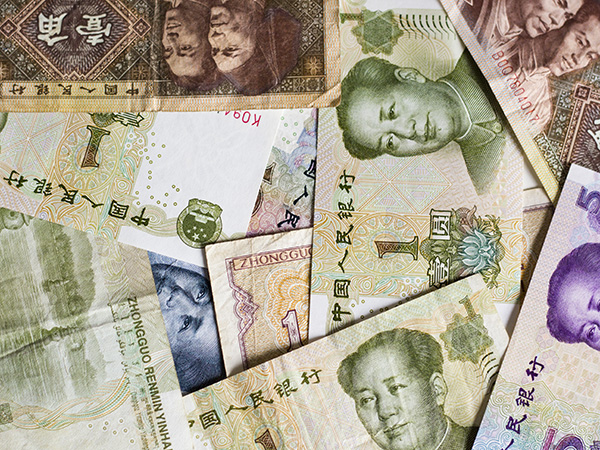
The leadership of the People’s Bank of China in two days has reduced the yuan year by almost 3.5%, this is the strongest drop in the course since 1994, when China has moved from a rigidly fixed to a controlled floating course and reduced it immediately by a third.
The NBK called a decrease in the course one -time - according to representatives of the department, it is caused by a change in the methodology for calculating the Yuan reference course. It is installed every morning, and during trading the course can deviate from it by no more than 2%. Earlier, the NBC board often ignored the results of market trading, but now it promises to focus on the course following a trading session.
The decision of the People’s Bank of China occurred against the backdrop of the recent collapse of the local stock market. On June 12, the Shanghai Composite index reached the maximum since 2007, and then began to quickly decline, having lost about a third of capitalization in a month, $ 4 trillion. After the decisive actions of the Chinese authorities, which for some time ruled the Shanghai exchange manual, the index stabilized, but still now it is a quarter below the peak marks.
The growth of Chinese GDP according to the results of the second quarter amounted to 7% - this is approximately at the level of forecasts of analysts. But if at the end of the year the growth remains the same, and this is what the Chinese authorities expect, then the growth will not only be lower than last year’s 7.4%, it will be a record low in a quarter century - in 1990, the economy grew “only” by 3.8%. For developed countries, such an increase is the ultimate dream, but for China it can become the basis for the growth of social instability.
It is possible that in Beijing it is from this point of view that they also look at the depressing statistics of export. In July, exports from China fell by the same month of 2014 by 8.3%. Moreover, the purchases were reduced by all the most important trading partners - the EU, the United States, Japan. The production -oriented production is quite compactly located in the Primorsky provinces, so if tens and hundreds of factories begin to close, then it will not be possible to avoid a sharp increase in unemployment in large cities.
At the same time, imports were reduced by 8.1% compared to July 2014. This is the ninth consecutive a monthly fall.
But the decision on devaluation may have other motives. Recall, for example, that last week the IMF refused to recognize the yuan with a reserve currency noting that it is not tied to market indicators. Beijing for years has been seeking the status of the reserve currency for the yuan and could decide to sake this goal to start paying more attention to the currency exchange. Thus, devaluation may be associated with the intention of carrying out the liberalization of the Chinese foreign exchange system.
Finally, the NBK step can be just another action in the sluggish currency warfare, which goes between the countries of the Asia-Pacific region, the European Union and the United States, as well as within the Asia-Pacific region itself.
“Currency War” is the conditional name of politics, when the exchange rate is used to increase exports from one country to another or, on the contrary, to build barriers. The country's cheap currency makes it profitable from it, and import, on the contrary, is unprofitable. Almost all Asian countries at one time greatly underestimated their exchange rates in order to stimulate industrial production oriented export.
At some point, it becomes impossible to stimulate industrial growth exclusively cheap resources and labor, production begins to focus on the emerging domestic market and the currency course becomes no longer so determining.
China’s reorientation for domestic demand has been talking about the reorientation of the industry for a long time. Including for this, the government stimulated a construction boom, which, however, despite all efforts, nevertheless grew into a bubble and is now gradually blown away.
Over the past days, the currency of Taiwan, South Korea, Singapore, Australia and New Zealand fell by 1% or more, which could push NBK to the devaluation of its own currency. If this logic was really present in the heads of the reign of the Chinese regulator, then the devaluation was ahead of the, that is, the Chinese currency lost more than the currency of the neighbors, which temporarily gives Chinese exporters clear advantages. But such actions of Beijing can push the central banks of other countries of the region to continue to reduce the courses of their currencies, which, in fact, is called the currency war.
In the end, it may be possible to respond to the US Federal Reserve with the ECB. After the start of the 2008 crisis, as part of a quantitative softening policy (QE), the Fed weakened the American dollar, although this was not declared among official purposes. The bank of England also led a similar policy of pumping the economy with an additional volume of money, and in 2015 the European Central Bank included its own “printing press”, which is why the euro began to decline and at some point was even close to parity with the dollar.
The European Union and the United States are China's main trading partners. So now the question is whether in Washington and Brussels to protect their own industry from “Chinese aggression” through the next round of the “currency war”. And also in how the Russian economy will react to this “war”.