
Translated material
Panyushkin about cerebral palsy. Part 1. Diagnostics
The head of the project "Rusfond. Cerebral palsy »Valery Panyushkin begins an educational cycle dedicated to the disease. The first part talks about the problem of diagnosis. Why every third child “with cerebral palsy” has a wrong diagnosis, how can this lead to blindness and why many parents prefer not to know what their child is actually sick
Stop the conveyor
There is no medical statistics, there were no research, but, according to doctors, about a third of children with a diagnosis of “children's cerebral palsy” are not children's cerebral paralysis, but different genetic diseases similar to cerebral palsy only externally. This means that out of half a million children with cerebral paralysis, a third could be treated with tablets, or even a diet - to cure many or seriously adjust the rehabilitation strategy. But Russian health care is not configured to diagnose genetic diseases: officials have not provided genetic disorders, doctors are not ready to recognize them, and parents do not want to know that their children have “genetics”.
What's wrong with him, doctor?
"Do you want me to show you what mushrooms have gathered?" - says Dr. Natalya Belova and really shows the forest mushrooms photographed by the phone.
Outstanding doctor. He heads the center of the congenital pathology of the GMS clinic in Moscow, and several times, sending the children to be treated abroad, I heard from the best Western doctors: “Why do you need to go to us if you have Belov?”, “Do not be afraid, if the child is watching Belov, then he is in reliable hands.”
But she is tired. Encabise everyone in a row with alphabet truths. Listen to reproaches that works in a private clinic and has a good salary, and therefore is smart. Tired. So I do not really believe that I will listen and understand her.
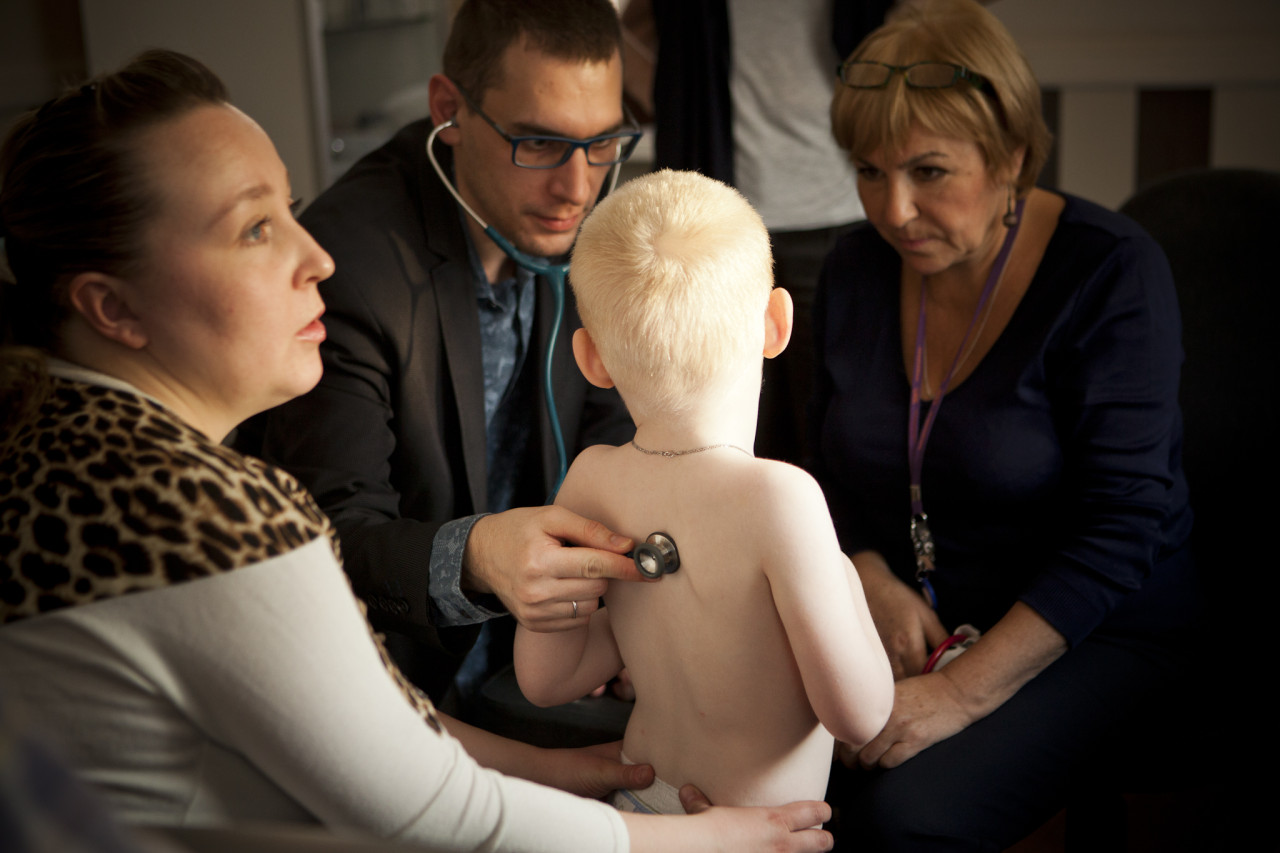 Consulty in the GMS clinic. Doctors Natalya Belova (right) and Fedor Katasonov examine the child with the alleged Angelman syndrome. Photo: Olga Pavlova
Meanwhile, it is easy to understand. So she says one thing - the children are not examined. Our medicine in each baby takes an analysis of the five most common hereditary diseases: adrenogenital syndrome, hypothyroidism, phenylketonuria, cystic fibrosis and galactos. This is reasonable. These diseases are really the most common of the genetic. And these diseases are more or less treated. It is clear why every baby we are looking for them. But it is not clear why all the children who have not found any of these diseases, but who, nevertheless, do not begin to hold their heads, sit, walk or speak in time - write into a cohort of the outcasts under the name “cerebral palsy”. The life of these children further goes under the slogan: “This is the same cerebral palsy, you can’t do anything” or “Well, what do you want, the child has cerebral palsy?” And the word "cerebral palsy" actually does not mean anything - a set of symptoms, a list of motor disorders, not a diagnosis. And since it is not a diagnosis, it is impossible to treat. Phenylketonuria, for example, was not recognized until the 80s of the last century, they were attributed to cerebral paralysis and, therefore, was not treated. And now they recognize and treat, so children who have only half a century ago would have mental retardation and cramps are now almost healthy.
Agree, there is a difference for an immobilized child - he can watch cartoons or cannot Dr. Belov insists on twisting this quote : to examine, examine further, especially in cases where a healthy pregnancy and childbirth, when a child was born on time when there is no obvious mechanical cause of cerebral paralysis, but, nevertheless, there are symptoms - to examine. There must be a genetic disease, look. Even if it is not treated, it will be possible to at least prevent the birth of another seriously ill child in the same family. Agree, the family in which one of the children is paralyzed, and the family in which all children are paralyzed are different families.
Cerebral palsy, what is not clear here?
The mothers of children with cerebral paralysis are often accused of Dr. Belov of just luring the patients to her private clinic to make expensive genetic tests. The mothers of children with cerebral paralysis are often said: “No, well, what will it give me? All the same, rehabilitation for everyone is the same. All the same, massage, gymnastics, speech therapist, sensory room ... Why should I spend a lot of money on genetic tests and even more so to torment the child with general anesthesia to do an MRI, if the result is still one - what rehabilitologists did, then they will do? ”
No, not true!
Here is a four -year -old girl with Kabuki syndrome. He does not speak, does not walk, sits barely. It looks like cerebral palsy. Yes, and loses vision. Children with Kabuki syndrome will cast out for five years. But if the diagnosis of Kabuki syndrome did not make her now, but at least two years, then blindness could be avoided. Agree, for an immobilized child there is a difference - he can watch cartoons or cannot. And for mom there is a difference - she has a paralyzed child or a blind paralyzed child. And for the state, for all these shelters and neuropsychiatric boarding schools, where the girl will certainly turn out to be, as soon as she does not become a mother, they also have a paralyzed patient or a blind paralyzed patient. In the end, a girl with a missed cabuki syndrome will be spent more money on a girl, which would cost a genetic study in infancy, as a result of which the child would remain vision.
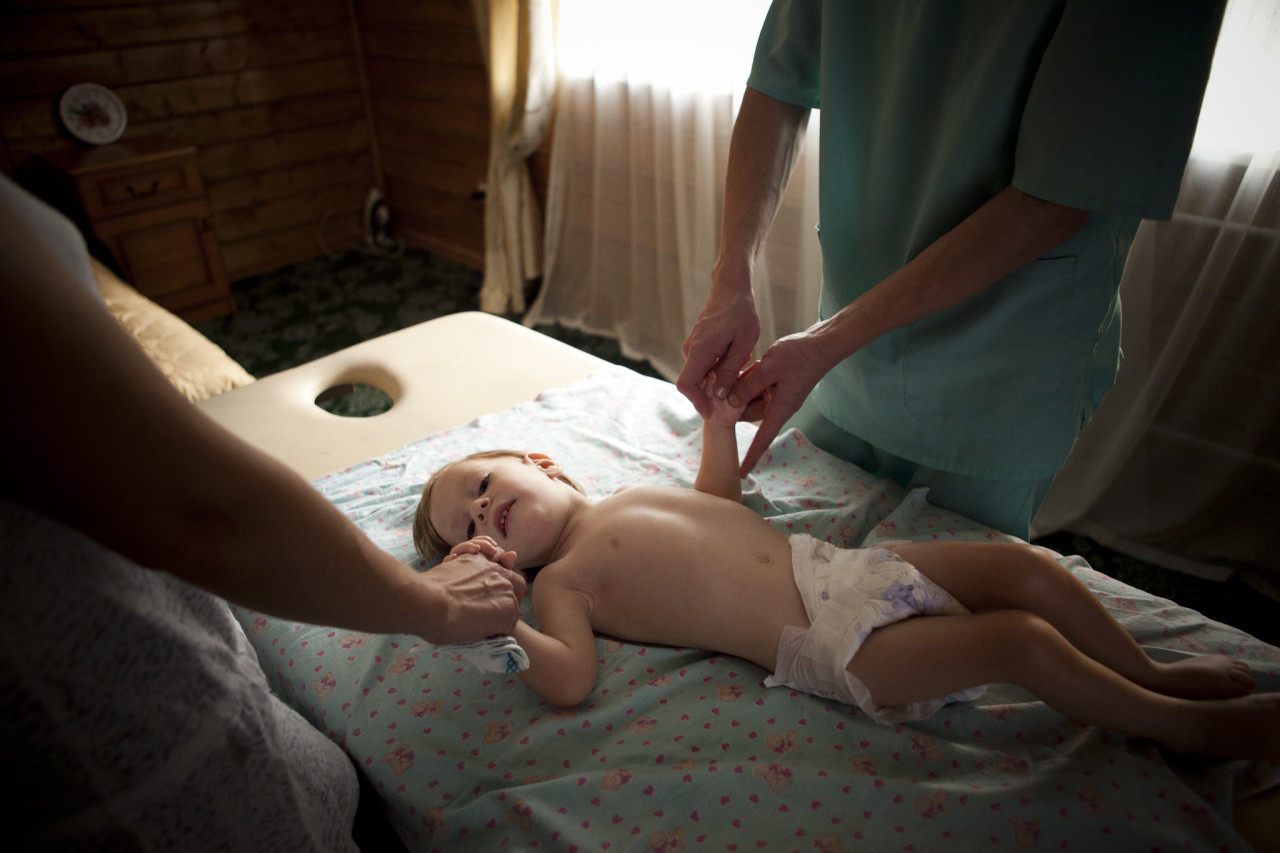 There is no such child with cerebral paralysis that would never have been massage. Meanwhile, many children with cerebral palsy are inconsistent and even harmful. Photo: Olga Pavlova
And here is a boy with Angelman's syndrome. A cheerful baby five years old. He folds cubes, rejoices at the resulting towers, laughs. They are all like that with Angelman's syndrome, not without reason the disease also call the “parsley syndrome”. Paying attention to this specific complacency and the specific movement of the eyes, the doctor, in fact, involves the diagnosis. And if Angelman's syndrome is confirmed, this will greatly change the life of the boy.
The fact is that children with Angelman's syndrome do not speak. Never. This means it is pointless to spend time, money and strength on a speech therapist. It is better to let the boy learn non -verbal communication, lays out Pex cards. Better let him deal with a physical therapist, learns to walk, and not crawl, as now. Let him learn to use the toilet, eat a spoon, to serve himself - all this is available to him, unlike speech, the development of which his parents only studied until today.
Or here Dr. Belova travels in a minibus and sees her mother and daughter. A girl with features, she has a diagnosis of cerebral palsy. But according to the smallest signs, the doctor suggests that this is not no cerebral palsy, but Rubinstein-Tibu syndrome. We persuade mom and girl to go to the clinic, be examined (not to a private clinic, to the state, for free, if only the doctors know what to look for)-and yes, this is Rubinstein-Tibu syndrome. And where is Rubinstein-Tibo syndrome, there you need to look for a heart disease. And a heart disease is found. The girl who has never seriously examined the cardiologist in life (because “cerebral palsy, what else do you want a cardiologist? It’s clear that everything is clear!”) And they operate. After surgery, the brain and spasmodic muscles begin to be supplied with oxygen better. Symptoms of cerebral paralysis - no, do not disappear at all, but weaken, retreat.
Staff schedule
The widespread among mothers, medical officials and even doctors the opinion that children with cerebral palsy should not be examined, because “all the same, this will not affect the rehabilitation strategy” is incorrect. The above examples refute this opinion, and one more examples can be given. The fact that children with cerebral paralysis do not undergo a comprehensive and deep examination with us is explained, in my opinion, by two circumstances.
As soon as a genetic diagnosis is made, the mother itself begins to blame - they transmitted, they say, her bad blood Twist this quote , firstly, mothers are afraid. So far, the child has a diagnosis of cerebral palsy, relatives, husband, mother -in -law sympathize with the mother of a disabled person, blame the gynecologist in all her troubles in a female consultation, who did not put in time on preservation, or obstetrician, who turned his neck during the birth. But as soon as a genetic diagnosis is made, the mother itself begins to blame - they transmitted, they say, her bad blood. Few mothers of children with cerebral palsy told me about this. Only those with whom I have a very trusting relationship. They are afraid. They are afraid that the mother of the child “with genetics” is not waiting for sympathy, but condemnation.
Secondly, making a genetic diagnosis will really not change the rehabilitation strategy. Indeed, what diagnosis to the child is nor, in most rehabilitation centers there will still be massage, gymnastics, speech therapist and sensory room. Not because all these procedures are equally needed by children with Kabuki, Angelman or Rubinstein-Tibu syndrome. And because the domestic system of rehabilitation of children with disabilities simply cannot adapt to the specific needs of each of his patients.
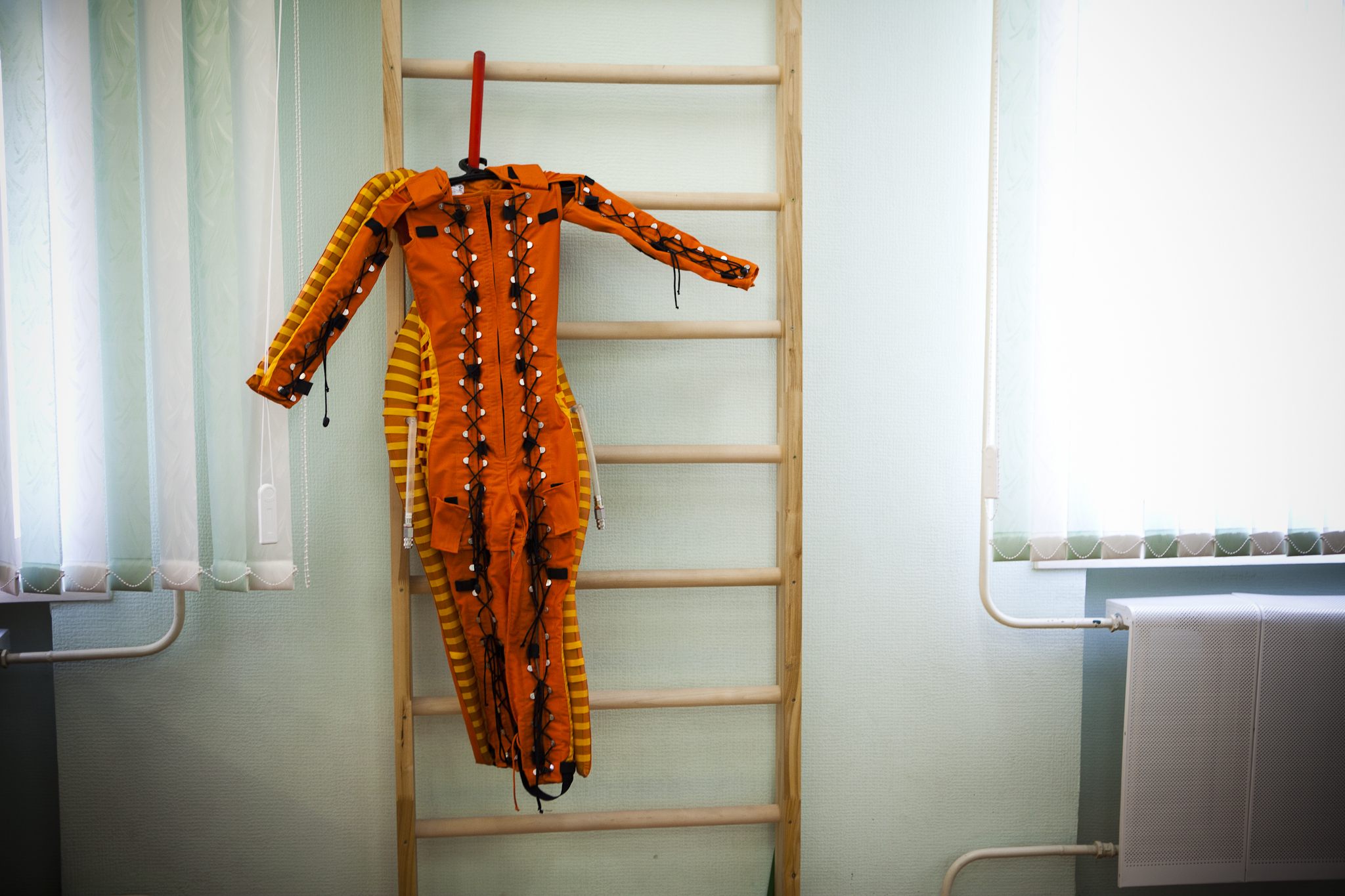
Almost any state rehabilitation center that I saw is a conveyor of pain I will not call this quote to call specific rehabilitation centers so as not to offend anyone: in many rehabilitation centers, people try. But the staffing schedule reduces their efforts to nothing. Almost any state rehabilitation center that I saw is a conveyor of pain. Massector, instructor of physiotherapy exercises, a defectologist on the staffing of the staffing schedule should conduct fourteen individual techniques per day. Divide eight working hours by fourteen. It turns out twenty minutes per child. And in breaks, several more group classes must be held. So it turns out that the specialist runs from the baby, who needs to be put in haste, to the group of babies who must be hung in Alesu's costumes, like the dolls of Karabas Barabas. And the baby who is crumpled (no matter what it is called whether physical therapy or Voit method) cries from the rudeness of hasty touch. And those kids who are hung in Adelie costumes cry from the fact that they were hung.
And for work on this conveyor, the specialist receives a salary of fifteen thousand rubles a month.
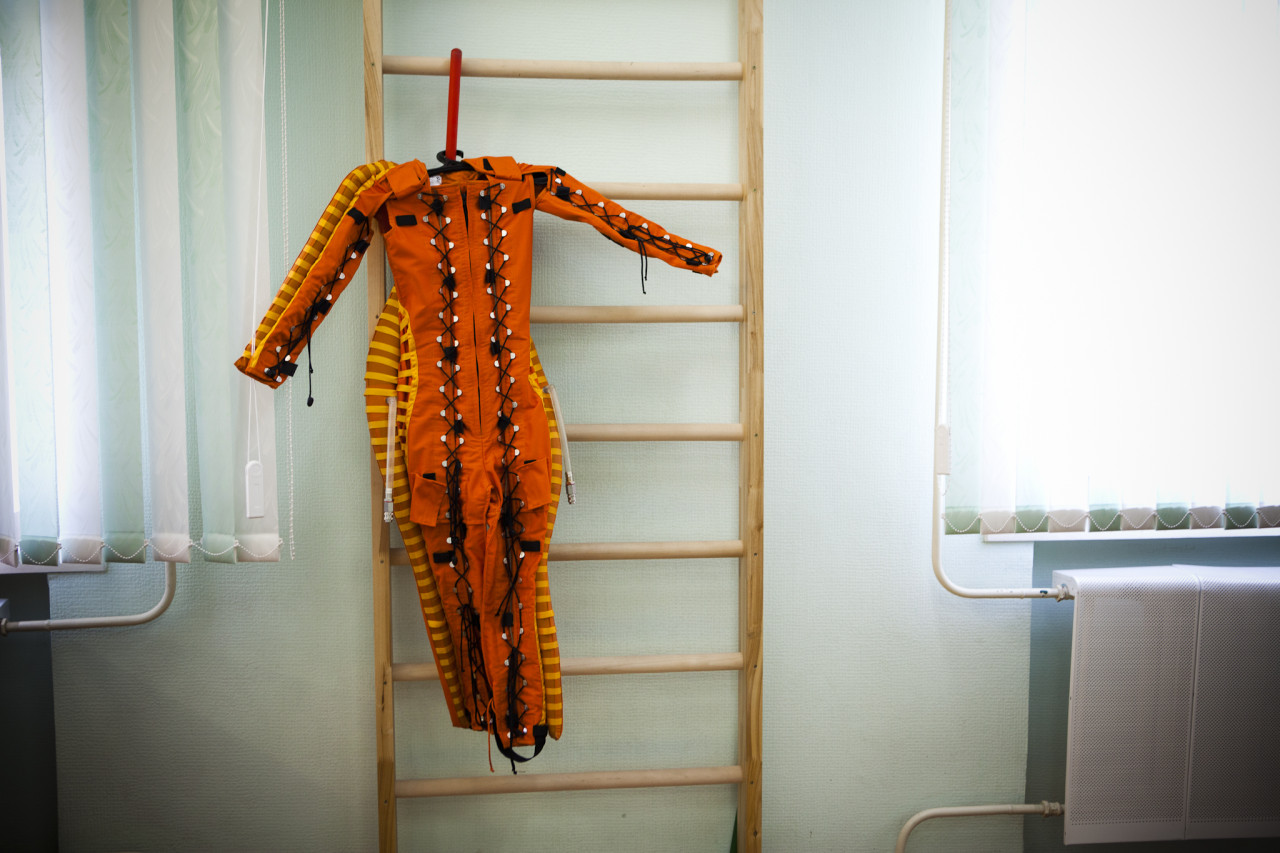 Often, a specialist who would understand why spaces are needed is not attached to costumes and spacesuits. Photo: Olga Pavlova
And even if in this conveyor rush, some specialist notices that one of his patients looks unusual or unusually smells, or makes unusual movements with his eyes-the conveyor cannot be stopped. Neither a massage therapist, nor an instructor of physiotherapy exercises, nor even a doctor from the State Rehabilitation Center (even if he had found time and strength to stop and think), can direct any of his patients to genetic examinations, even if there is reason to assume that a child has not just cerebral palsy, but “some kind of genetics”.
Read also Panyushkin about cerebral palsy. Part 2. The protective mechanism is why mothers abandon their children. Why they turn to charlatans. Why, trying to help their children, in fact often harm them
Because according to the staffing, according to the instructions of the ministry, specialists of state rehabilitation centers are required to work with a diagnosis that is recorded in the patient’s medical record at the time of admission. And there it is recorded - cerebral palsy. Or ZPR - a delay in mental development, no less vague formulation.
I spoke to them. Many have not yet burned out. They read special literature and cherish the same dreams that forced them to go to defectological departments of physical education institutions or to engage in defectology at the medical institute - to help the most unfortunate. Many suspect that about a third of their patients with cerebral palsy have no cerebral palsy, but a non-diagramic genetic disease, which, perhaps, is or about the medicine.
But there is no time to think about it. It is urgent to shove the next group of babies with cerebral palsy in any costumes or simulators.
cerebral palsy people with disabilities