
Translated material
Jump above the head
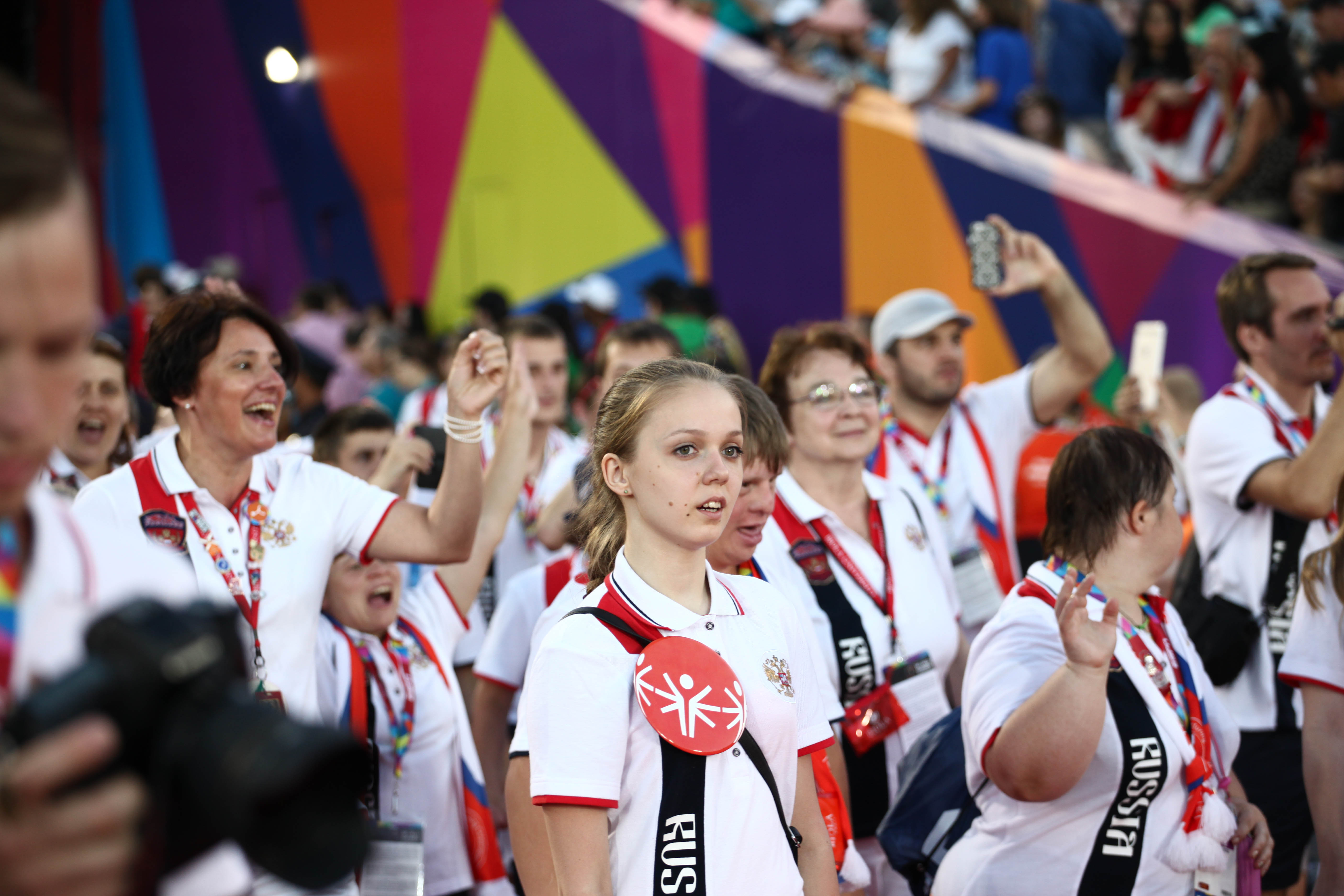
Last week in Los Angeles, a special Olympiad for people with mental violations, on which the Russians won 211 medals, ended. The winners of the Olympiad, their parents and coaches told how to succeed in sports when the starting opportunities are close to zero
Maria Langovaya, 18 years old, swimmer
Barnaul
World Summer Games of Special Olympiad in Los Angeles 2015: gold, bronze
Olga Langovaya, mother:
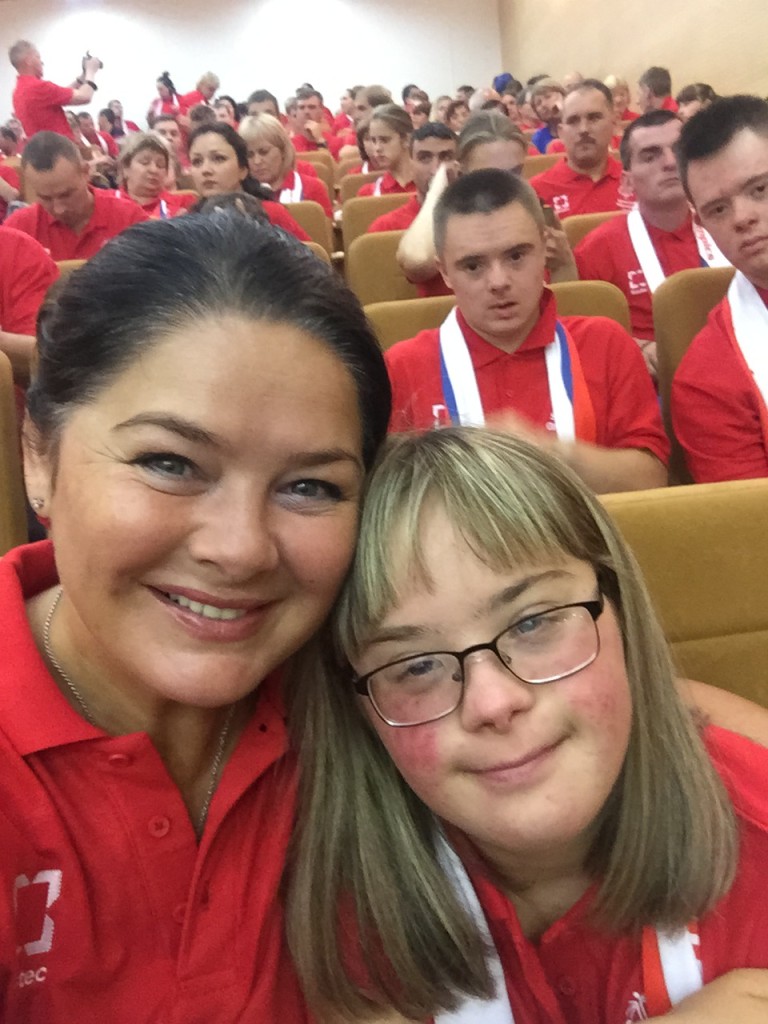 Olga Langovaya and her daughter Masha photo: From a personal archive
Masha devoted the victory to me. She was so busy preparing for the competition that a month ago she did not have time to think about a gift for my birthday. She congratulated me, hugged me and asked: "Mom, what would you be happy with?" I replied: "Your victory, gold medal." She completely arranged such an answer, and then she called Los Angeles and said: "Mommy, I gave you what I promised."
We are still impressed by the meeting in Vnukovo: among the meeting were relatives, friends, and public organizations, and people close to athletes from boarding schools, and just like-minded people who also want to change something in this matter, move a dead point. And the faces of coaches and athletes, when they left the baggage zone - you would see them. Someone had tears before our eyes.
But there would have been nothing, if not for the mother of athletes. They began to find out if some meeting was being prepared. It turned out not. They sent a petition with a large number of signatures in the Ministry of Sports, but no reaction was waited. And a few days before the return of the Mom’s national team, they themselves began to organize everything by connecting public organizations.
Some time ago we were noticed and appreciated in Altai. That year, Masha won two high -ranking competitions: the All -Russian Games of the Special Olympiad, which took place in Barnaul (there she became an absolute champion, received gold for all the swims), and the European Championship in Belgium, where she also took gold. And already before the New Year, Zoya Alekseevna Shmeilova, the head of the Altai branch of the Special Olympiad, called us, and said: “Masha and her coach Sergei Tolkachev need to urgently appear in the sports committee and receive a premium - each for 20 thousand rubles.” Masha spent this money to pay part of the fees in Novorossiysk.
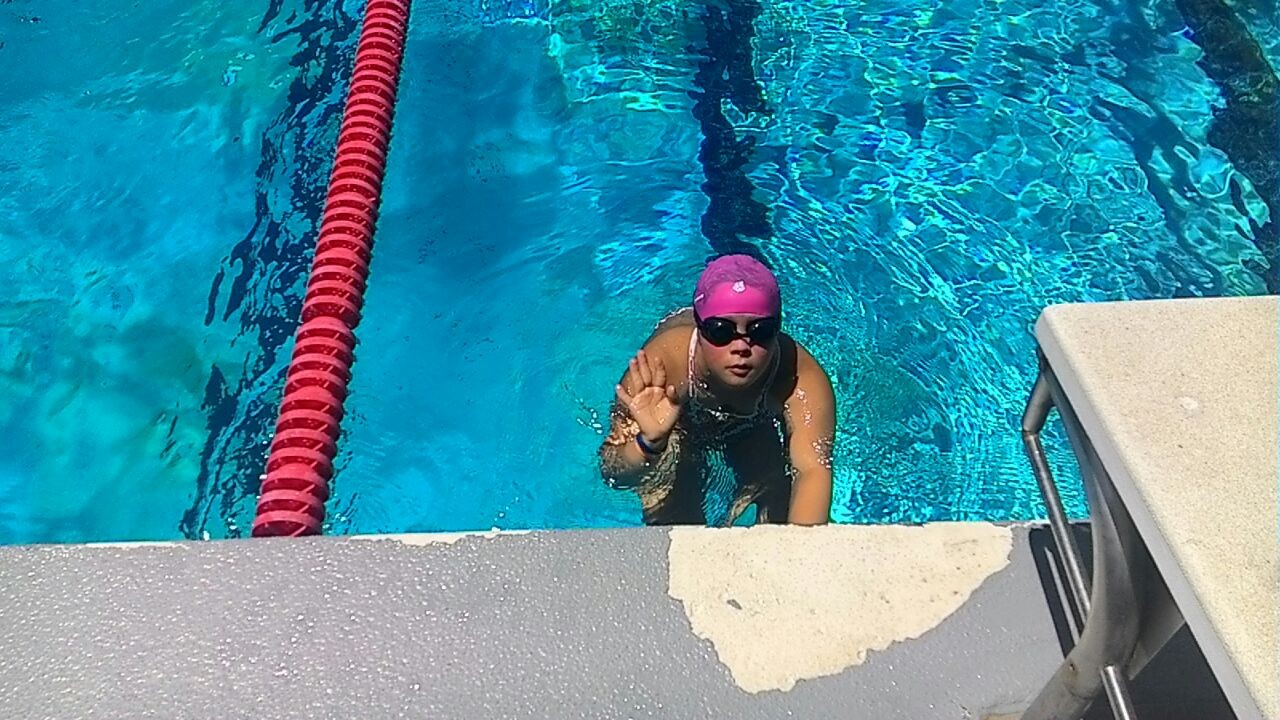 Masha Lhang photo: from personal archive
We just had a shock - before there were no material rewards. After all, the price for the success of Masha is very high - including in the literal sense of the word. After we were forced to take it from a regular pool with too cold water and a lot of chlorine for her, Masha began to go to a private club for individual training. There, the water is warmer, more convenient locker room, less people, a good attitude of management, coaches, maintenance staff. We carry a daughter there and know that they will always help her, no one will offend. Previously, we had to pay for a club card, but after a gold medal in competitions in Athens we were allowed to engage in free. In general, of course, it turns out that we are preparing champions at our own expense.
If you return to the Olympic Games, then in addition to the competition directly, this is also an opportunity to tear children out of the usual environment, give them the opportunity to independently communicate, independent life. The SPECIAL Olympics movement has a family program when relatives-painters come with the athlete, but live separately so as not to knock down the mood. Europeans have huge family delegations, and we, the parents of Russian athletes, are trying to remove. At the Olympics in Athens four years ago there were 25 people, and in the USA even less: tickets are very expensive, very difficult procedure for obtaining a visa. I was going to go, but I didn’t succeed, and I was worried about it. But now I do not regret. It was a small but serious step towards independence. Masha once again proved that she was a fighter in every sense of the word.
Of course, the machine and her victory are changing not only her, but also my life. And the changes are enormous: I am so proud of it, I am so proud of myself, proud of my family, my country, no matter how strange it may sound. And every time my daughter wins the reward, a picture from the hospital is scrolling in my head: what they said, how they convinced how they dissuaded, how bad it was, how I suffered. But it was not worth it. It shouldn't be so. So many years of life, strength, health were taken away. And nothing of what was told to us was justified. Maybe it would be justified if we were sitting. But those speeches and forecasts served as a “golden pendel” and forced to fight.
Andrey Vostrikov, 29 years old, sports gymnast
Voronezh
World Summer Games of Special Olympiad in Los Angeles 2015: gold 6, silver 1.
Zinaida Vostrikova, mother:
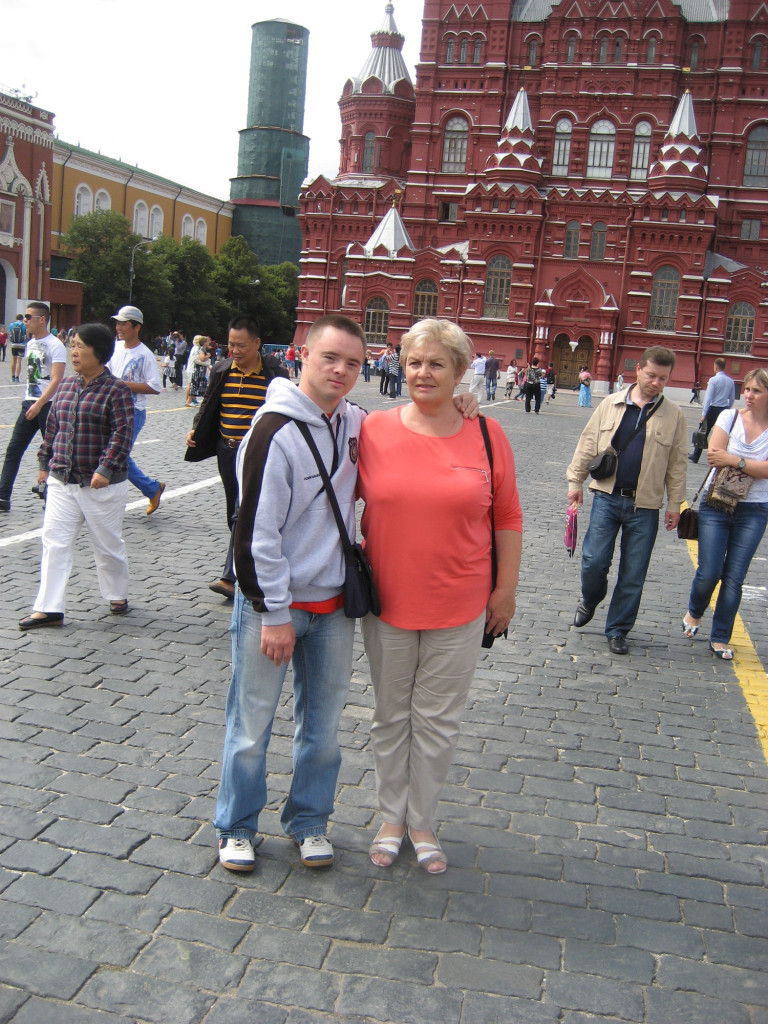 Zinaida Timofeevna and her son Andrei Vostrikov Photo: From Personal Archive
The Olympiad was very difficult for us. On June 15, they call me: “Andrei fell off the rings. We call an ambulance. ” After 20 minutes I go to the Institute of Physical Education, where Andrei is training - he is carried out on a stretcher with a bandage around his neck.
I ask: "What hurts?" He answers: "Nothing hurts, I do not feel either arms or legs." We thought he had a compression fracture. X -ray showed that this is a strong bruise. For two weeks, Andrei lay in the hospital, he was done procedures, injections. Hands did not restore for a long time, even the fists could not clench. And due to the lack of training, the muscles began to lose tone.
For these Olympic games, Andrei prepared a complex second -level program, with flights and interceptions. But because of the injury, he was forced to perform with a simpler, first level. And then he “restrained” himself, for example, Mahi did not do as strong as usual. Coach, Korolev Pavel Yuryevich, says that after injuries it is always scary. Andrei was very worried and doubted. And then he called me from Los Angeles and said that he had six gold medals and one silver.
When Andrei was just starting to study, we, of course, did not think about any competitions and victories. Moreover, sports gymnastics is a difficult sport. When he was small, they told us that he was very weak and could not even walk. My husband is a master of sports in sports gymnastics, and he began to deal with Andrei, when he was three years old, just to strengthen health - so that he at least get to his feet.
In 2000, an adapted sports school for people with disabilities opened in Voronezh. But there was not even any talk about the guys with Down syndrome there. Impressed by the story of the American with Dowun Syndrome, which successfully performed on parallel bars, I still once approached Pavel Yuryevich, our current coach. He agreed to try to work out with Andrei and literally two months later he had already taken him to regional competitions, and then to St. Petersburg. And there I realized that Andrei is really at a very good level.
Six years later, during the European Championship in Italy, the parents of other athletes who performed in other sports came to see him: he was one of the best. And at the World Summer Special Olympic Games in Shanghai in 2011, he was determined in one division with people with light mental disorders, because he was able to compete and perform on a par with them. As a result, he won six gold medals there and performed with a demonstration number at the closing. So people with Down syndrome can also be physically strong and with normal coordination.
Andrei is always going with the following attitude: "I will try, I will be strong, everything will be fine." He really does not like to lose. A very purposeful person. For example, he needed to lose three kilograms, and he firmly went to this. He ate two months like this: in the morning two sandwiches - and for training, returns, dinner, resting, resting and again goes to training, in the evening a light fruit salad with 100 grams of yogurt. And that's it.
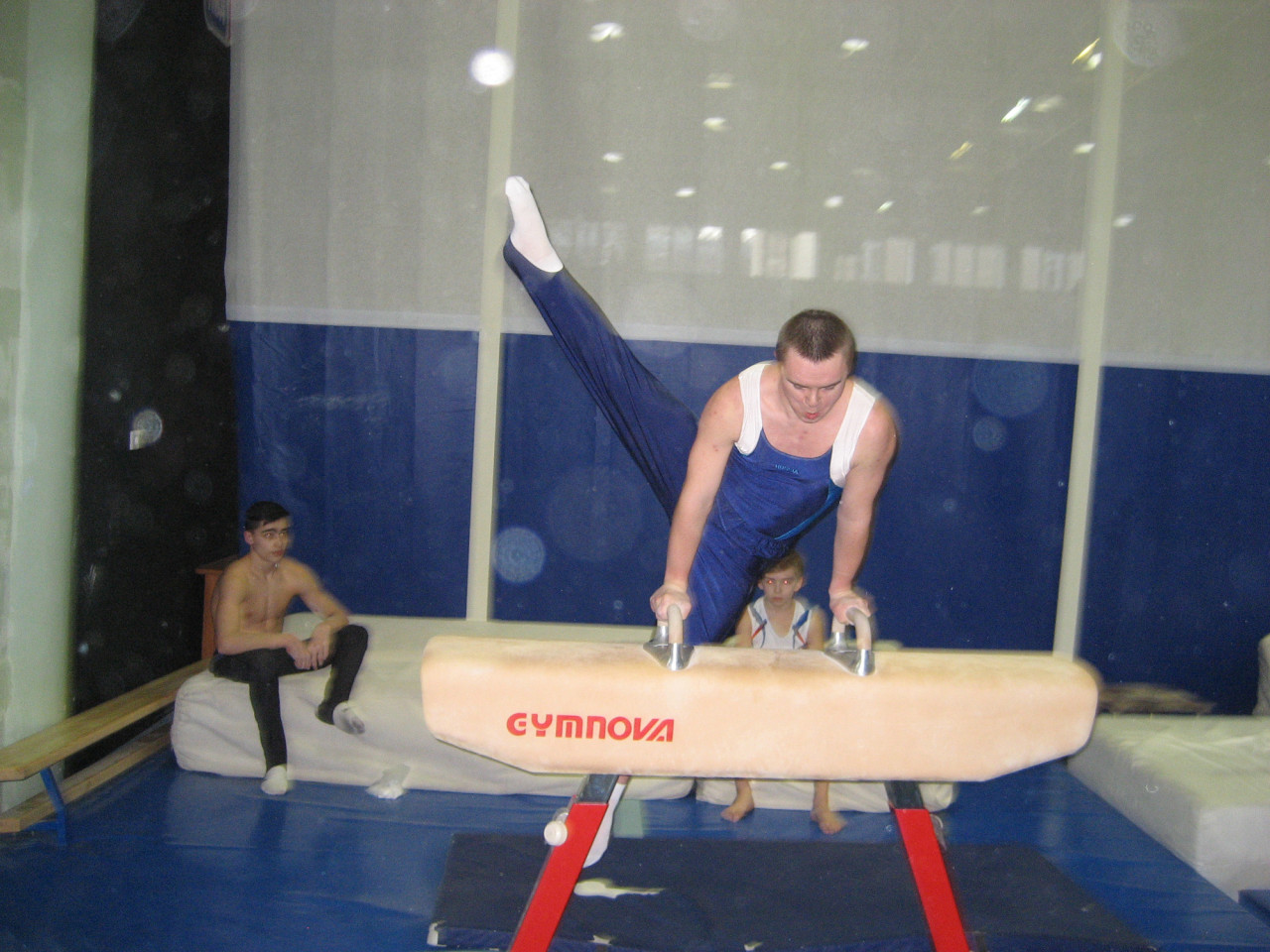 Andrey Vostrikov Photo: From Personal Archive
As for the incentives or vouchers for merits at international competitions and the special -Limpiad - we have nothing of the kind, and no one is going to do anything until there is an indication from above, as it was with the Paralympicians. Three people went from Voronezh - this is not so much. There are funds, and the region would not go broke from at least symbolic encouragement so that the guys feel that they were noticed and recognized. I addressed this issue to the local Ministry of Health and the regional sports committee. They promised to consider, but never examined. In addition, they told me: “Why do people with mental restrictions money? They don't need money. Do you care more about yourself? ” I replied: “Why are you saying that? My son, in your opinion, does not need rest? ” Over the past ten years, Andrei has never traveled to rest, he had no “lazy” rest so that he could swim, go on excursions, take a walk.
And of course, there was no solemn meeting in Voronezh. But both Andrei and the coach were very impressed by the meeting in Vnukovo. Previously, after all, in Moscow, no one paid any attention to them. And then Andrei, as soon as he got off the train, the first thing he showed me a bouquet of flowers: “Here, this was“ sport for good ”at the airport! There I met so many familiar guys! ” And not only them. That is, slowly, a little thing is moving. I have no doubt that more global changes will be, but only when?
The attitude towards Andrei has changed among relatives. Previously, they were silent that we have such a member of the family, and now they are proud. The time has come when they say: "Yes, this is how Andrey is like that." A few years ago, in Voronezh he was called one of the people in the field of sports achievements, they began to write a lot about him, and relatives proudly tell everyone that he had been abroad many times and successfully performed.
Igor Schlenkin, 30 years old, golfist
Moscow
World Summer Games of Special Olympiad in Los Angeles 2015: Bronze.
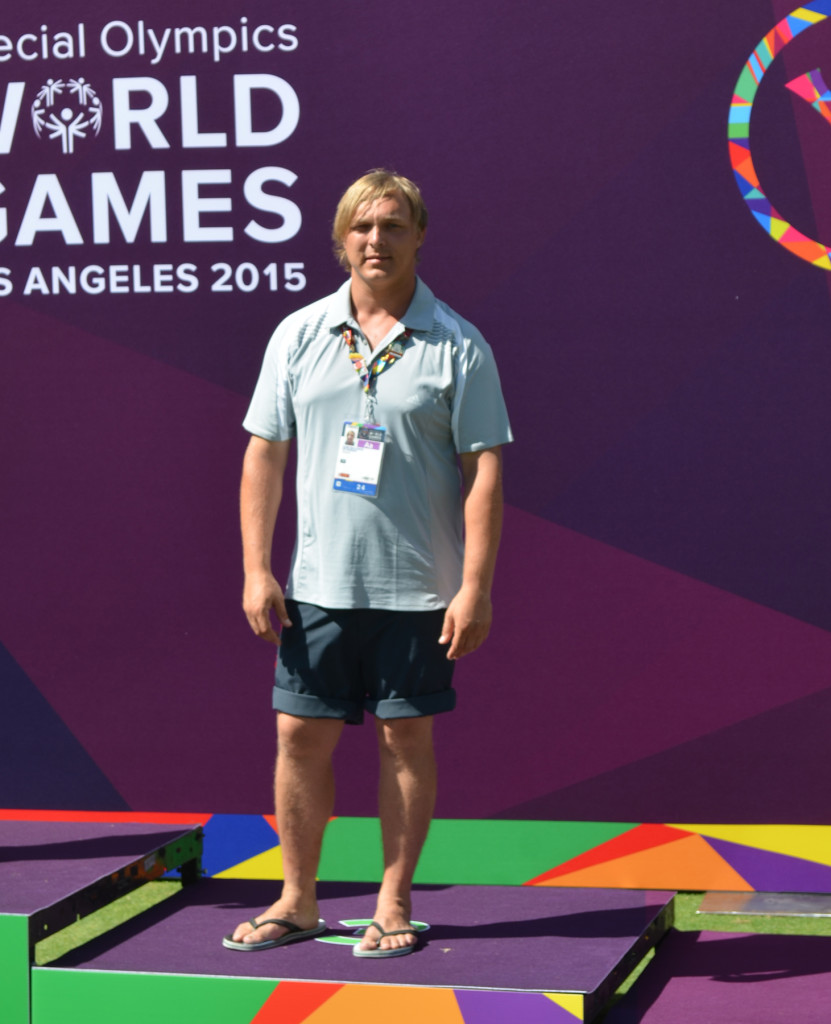 Igor Schlenkin photo: from personal archive
“The main thing is not victory, but participation” is not about me. In 2012, I took only fourth place in the European Golf Championship in Austria. And after the competition in Los Angeles, I am proud of: after all, I took a prize, despite the fact that I had almost no practical training. During these games, I really understood that I would like to continue to engage in golf.
Why golf? Six years ago, Marina Germanovna Kuropova, director of sports rehabilitation of PNI No. 20, where I lived for a long time, invited me to try my hand - I agreed, although I can’t say that I was a fan of this sport.
I used to train at the golf symulator at the Institute of Physical Education and Sports, but recently, training took place under the leadership of Ivan Kugoev from the Golf Federation, mainly in the gyms of a boarding school not equipped for golf. We worked out the blow with a club, but the balls were poorly repelled with contact with the mattress. I believe that all this was not a training, and we went unprepared. Golf requires a special site or training base. We had nothing of this. There were no classes in open fields either, as it is very expensive, and the special Olympiad of Russia does not provide us with such an opportunity. So for the last time before games in Los Angeles, we played on an open area at competitions in Austria three years ago. Other teams, as far as I know, have support for their local special Olympiads and the state, and they are preparing properly.
In general, I was already at the Olympics, in Sochi, - helped the organizers at the Paralympic Games. How do I have games in the USA? Ordinary Olympics. The meeting in Los Angeles was terrible: we waited about four hours while we were taken away. But the meeting in Vnukovo is excellent, chic, unexpectedly.
Alexey Polotkov
Physical Culture Instructor in PNI No. 20, Advisor to Judo, Senior Coach of the Russian national judo team at World Summer Games of Special Olympiad in Los Angeles 2015.
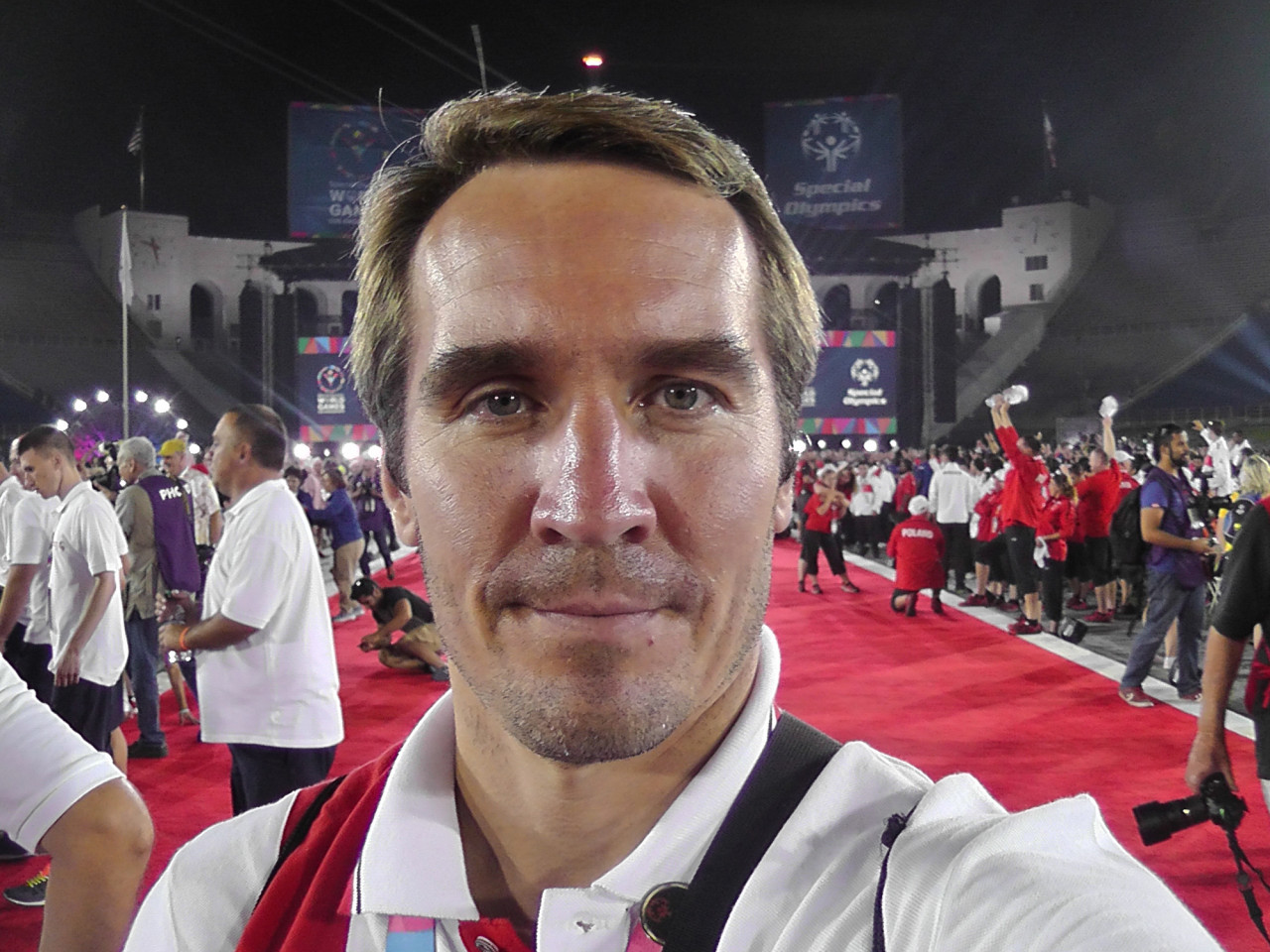 Alexei Polongkov, a coach who went with athletes from PNI No. 20 to the Olympics Photo: From Personal Archive
A special Olympiad is not a sport of higher achievements, not "faster, higher, stronger." This is a self -expression through a sport with a completely different motto, translated from English, it sounds like this: “Let me win, but if I can’t win, I will be courageous in this attempt.” That is, of course, it is good when there is a medal, but the most important thing is the very desire for this victory. The main task of the athlete is to show that he is striving for her, prove himself, to make it clear that he can also be in this life. This is not a full -fledged sports career, but this is an occasion to respect yourself and feel pride in your achievements. That's the main thing. Not medals.
Even within the framework of the special Olympiad, there is a unifight program - this is a united sport when athletes play together with and without impaired development. In Los Angeles, volleyball players and handball players played through this system.
If we talk not only about sports programs, there is also a family program that allows athletes to come to the competitions with relatives (some delegations come with the “Proud Family Mamber” icons - that is, a “proud relative”). And the program "Healthy athlete". That is, during the special-Kilimpiads, tents are placed on some site where doctors sit and examine the participants in the games: eyes, ears ... They even pulled out a tooth with our athlete-he was so pleased. Someone was written out for free, a good auditory apparatus, some glasses were delivered to the room. And in the end, when you bypassed all the doctors, you are still given good running sneakers as a gift.
There were a lot of spectators at these games. On the same judo, on rhythmic gymnastics, everything was clogged, even our representatives were not allowed. They asked me to wait until someone leaves and frees a place. Moreover, ordinary Americans went to the stands. At the special -Kilimpiad in China, the stadiums were also scored, they were specially released from schoolchildren and led to look at the competition. I don’t know what would happen if the special Olympic Games were held in Russia. We few people know what it is. No broadcasts of the competition, of course, were not either.
The most important thing in the system of competitions in the special -Limpiad is the subgroup unit. For example, in athletics: one runs a hundred meter in an average of 10 seconds, the other in 15, the third in 20. And they compete not with each other, but with athletes with about the same indicators. The same thing with judo: let's say, our Andrei and Katya are well -trained athletes, of the first level. The fourth and fifth levels are already heavy guys, they have not such a good reaction, and they fight, standing on their knees, for security reasons - so as not to injure each other.
Are there any features in working with such guys? When you train them, you just need to show more kindness, warmth, praise them more. A good emotional background is very important in the classroom. Therefore, I add more game exercises to have a light fan, entertainment. And before the competition, of course, to support, say parting words (each coach has their own). And just be near.
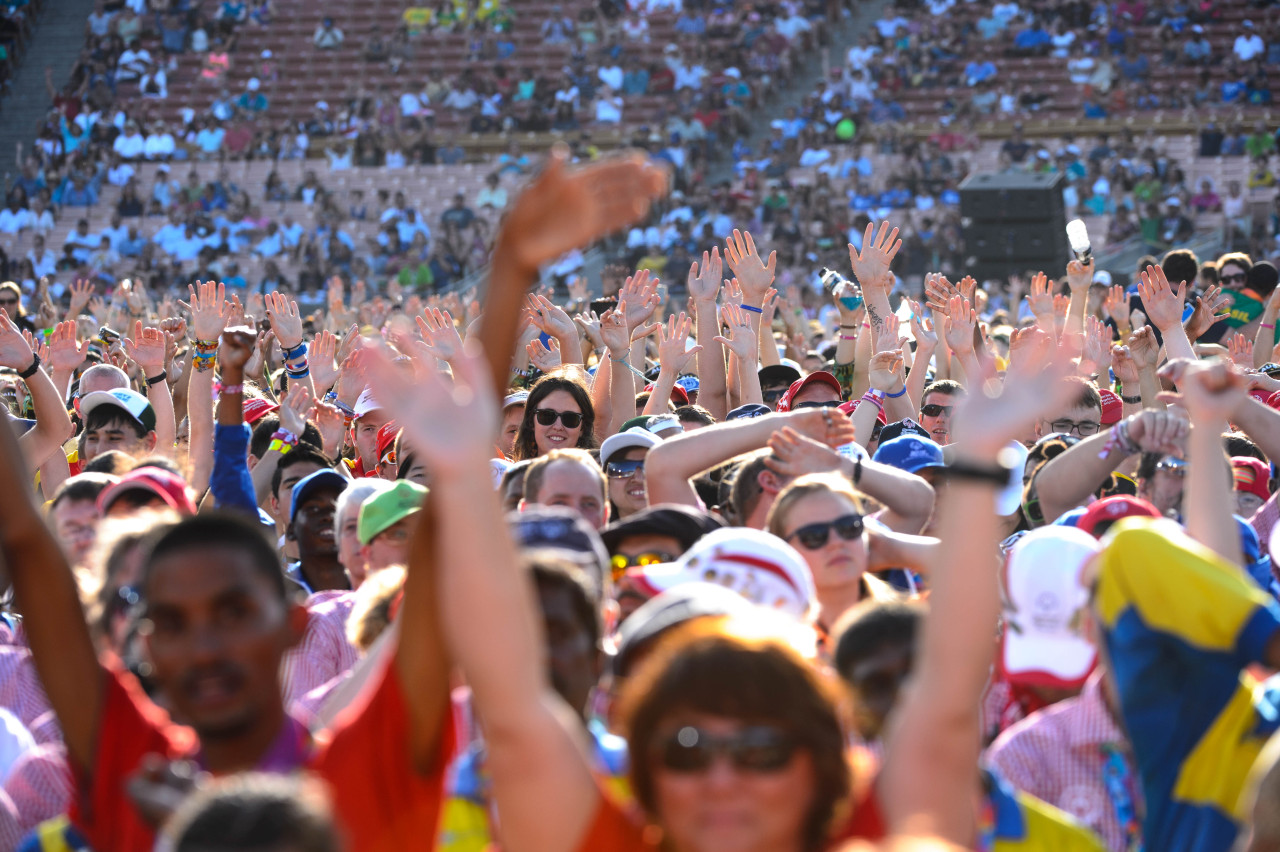 Athletes at the closing ceremony of games. Photo: © Special Olympics International