
Translated material
Ilya Karpyuk: For seven seven
Ilya Karpyuk  Airborne Forces @mil_ru
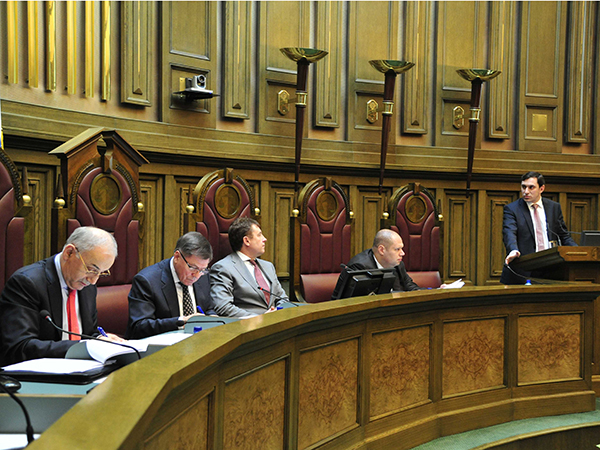 Supreme Court meeting photo: press service of the Armed Forces of the Russian Federation
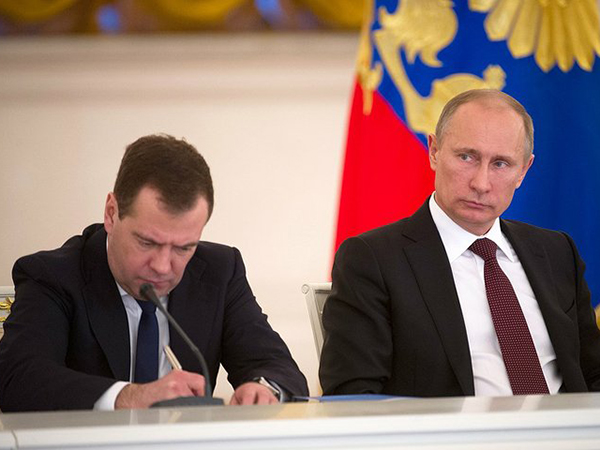 Dmitry Medvedev and Vladimir Putin photo: Kremlin press service
 Airborne Forces @mil_ru
On Thursday, the Supreme Court recognized the decree of Vladimir Putin on the classification of the losses of the Armed Forces “in peacetime during special operations” not contradicting federal law and published within the framework of the powers of the President of Russia.
The news, however, was not a deviation of the complaint - now the plaintiffs are going to go to the Constitutional Court - but the revelation of the government representative about who was the initiator of the presidential decree.
A group of lawyers, deputies, journalists and public figures led by lawyer Ivan Pavlov filed a lawsuit to court.
The applicants argued that the changes entering into force in the list of information classified as state secrets violate the right to freely search, receive and disseminate information guaranteed by the constitution. The plaintiffs said that such amendments can be made only by federal law, and not by the decree of the president. Moreover, they disputed not only the changes made by Vladimir Putin, but also the entire paragraph 10 of the decree on the list of information related to GOSTIN, which was introduced by the decree of Boris Yeltsin in 1995 - until the last edit of it, it said about the classification of losses in wartime. The death of the soldier is an emergency, and therefore cannot be attributed to GOSTIN, said Ivan Pavlov.
Supreme Court meeting photo: press service of the Armed Forces of the Russian FederationThe parliament of the Pskov region, Lev Schlosberg, suggested that the President Putin decree would act 15 years ago when the Kursk submarine sank in the Barents Sea. “Now all the media would be forced to be silent about it,” the deputy noted. Naturally, the parliamentarian also recalled the funeral of the Pskov paratroopers, which took place in August last year - according to the official version, they died on the exercises that took place on the border with Ukraine. “Hundreds of people came to these funerals, including children, relatives, classmates. It turns out that they became the carriers of GOSTaina. How will this law apply to them? " - Schlosberg addressed with a question to the court.
The rain reporter Timur Olevsky told the court that the decree of the head of state infringes on the rights of journalists and makes it possible to hide the facts of the death of the military from hazing or accidents under the guise of special operations.
Svetlana Davydova, who was previously accused of disclosing state secrets, openly called the President Putin’s decree an attempt to “hide the so -called illegal special operations in Ukraine”.
As the representative of the president in court indicated, the director of the Department of Claim and Legal Work of the Ministry of Defense Natalya Elina, the law directly establishes that information about the number, forces and persons in the field of military, foreign policy, intelligence, counterintelligence and operational-search activities of the state dates back to the information constituting state secrets, all this was consistent in 1995.
Accordingly, Elina is sure, information about the losses, and this is not only death, but also injuries, as well as the loss or any state of the personnel during the special operations and according to its results, it is also logical to make a secret.
Elina also denied the data of the plaintiffs that in no legal act a clear definition of the term “special operation” was given and referred to the law “On Countering Terrorism”, in which the concept of a counter -terrorist operation is explained through the term “special event”.
Despite the fact that the court’s meeting lasted about eight hours, the plaintiffs had no chance - the presidential decrees successfully manage to challenge in court only in exceptional cases.
Dmitry Medvedev and Vladimir Putin photo: Kremlin press serviceThe most interesting point in the meeting was perhaps the announcement of Prime Minister Dmitry Medvedev to the president. “Dear Vladimir Vladimirovich, we submit for your consideration a draft decree of the President of the Russian Federation on amendments to the list of information constituting a state secret,” the judge announced the letter of Medvedev.
The government’s apparatus later informed RBC that the initiator of the innovations was still the Ministry of Defense. “Additions to Decree No. 1203 regarding the list of information revealing the losses of personnel in peacetime, the Russian Ministry of Defense was initiated. The draft Decree No. 273 was approved by the Interdepartmental Commission for the Protection of State Secrets, ”the government said.
In general, the government submits to the president a draft of such decrees solely after their approval by the Interdepartmental Commission for the Protection of State Secrets, headed by presidential adviser Sergei Grigorov. After the draft decree, the Presidential State Administration enters the state-legal administration of the president.
At the time of signing the decree, the Kremlin could not explain in any way the need for urgent amendments to the current rules on the classification of information. Commenting on the Decree of May 28, the presidential press secretary Dmitry Peskov stated that this decision of the authorities is not related to the events in Ukraine and does not mean that in the near future it is planned to conduct such operations. “According to the relevant departments, a similar level of secrecy in the best way corresponds to state interests,” Peskov added.
At the same time, the lawyer of the Ministry of Defense Natalya Elina in court in response to the question of Ivan Pavlov about whether special operations have been carried out in the last two years, she answered in the affirmative.
The problem of special operations is that, apparently, they are all secret by definition - in any case, the lawyers of the Ministry of Defense wanted to consider at the hearing “Instructions for the preparation and conduct of military operations”, which mention special operations. The document was approved by order of the Minister of Defense Sergey Shoigu on November 22, 2013 and has the Grif “Top Secret”. But the classified document could not be considered in the open meeting and the defendant refused to refer to the order of the minister.
Thus, it turns out that a journalist or ordinary citizen may not know what is on the territory of a special operation and, reporting the losses of the Ministry of Defense, will disclose secret information, not wanting it himself.
All these arguments, however, were not impressed by the court - it will be possible to appeal his decision in the Court of Appeals of the Supreme Court or in the Constitutional Court than lawyer Ivan Pavlov, apparently, will be engaged in the near future.
See also: a decree on the classification of the losses of the army will appeal in the Constitutional Court the Supreme Court recognized the classes of the loss of the Ministry of Defense Andrei Levkin twenty years later or amendments to the law on GOST