
Translated material
Hunting for "main killers"
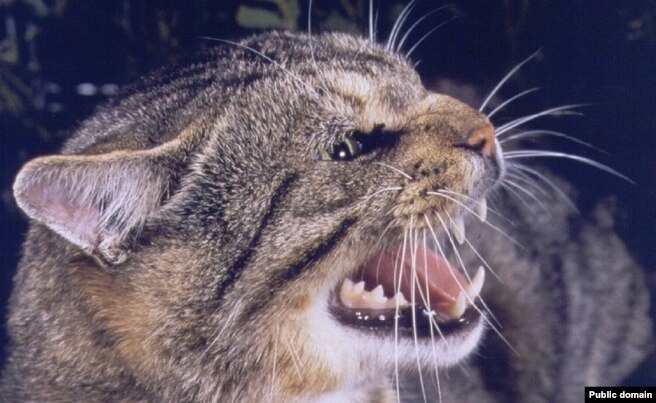
Australia authorities will soon begin to destroy millions of stray cats who have multiplied in the wild
The Australian government declared war on the Wild, or rather, wild cats. Once brought from Europe as domestic animals, but those who have fallen into forests, deserts and jungle, over the past two hundred years, these predators have turned into a real threat to the entire continent ecosystem. Next week, the Australian authorities begin the long campaign of the destruction of millions of animals, which has already caused both approval and a sharp criticism of various local and international environmental organizations.
A huge number of rare mammals live in Australia, which are not found in any other place of the globe . However, about 1800 different species of plants and animals were threatened by disappearance due to cats and dogs that were once abandoned by people, as well as imported from Europe in order to combat the bred rabbits (which were previously brought from behind the ocean) of foxes. But, according to Darren, the Grovery , the representative of the International Fund for the Wildlife Protection named after Darrell , it is the cats in Australia that are the main "criminals":
-The main killers of such recognizable and widely known Australian animals, such as marsupial muravies-nambats , rabbit bandits-bilbi and other similar species, are precisely the wild stray cats.
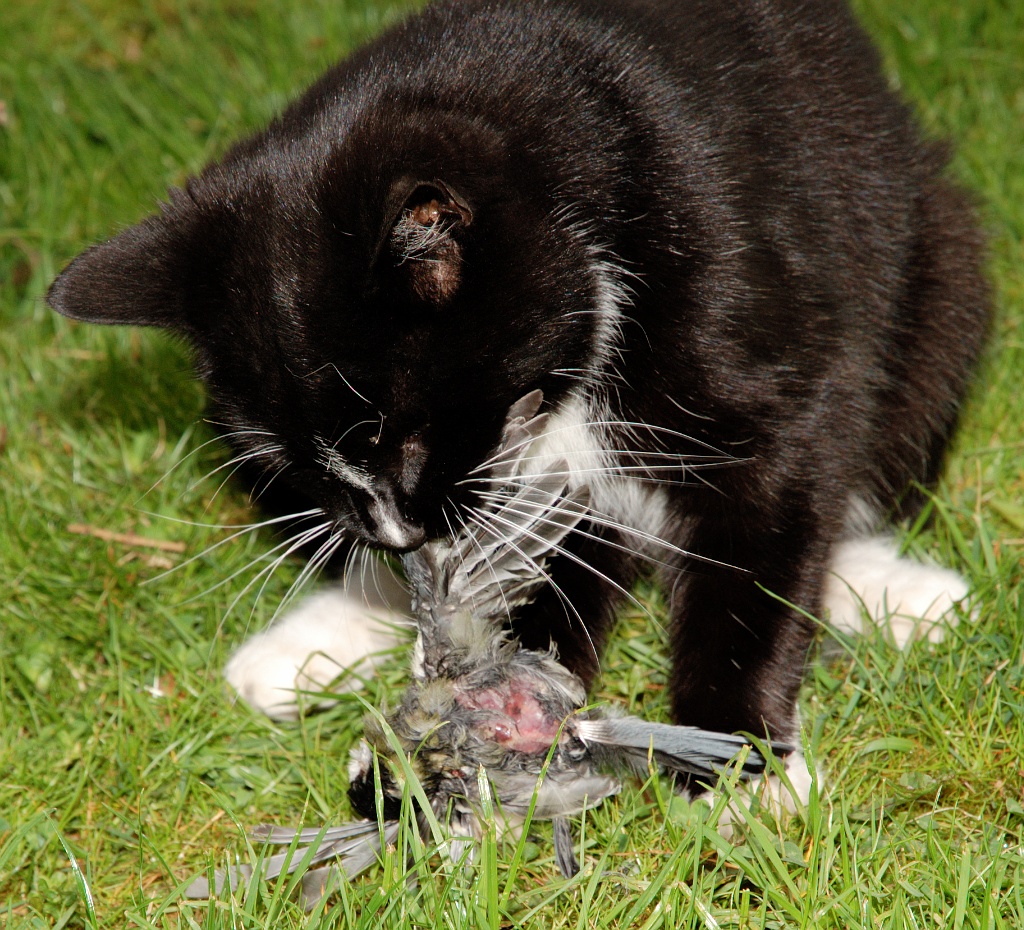
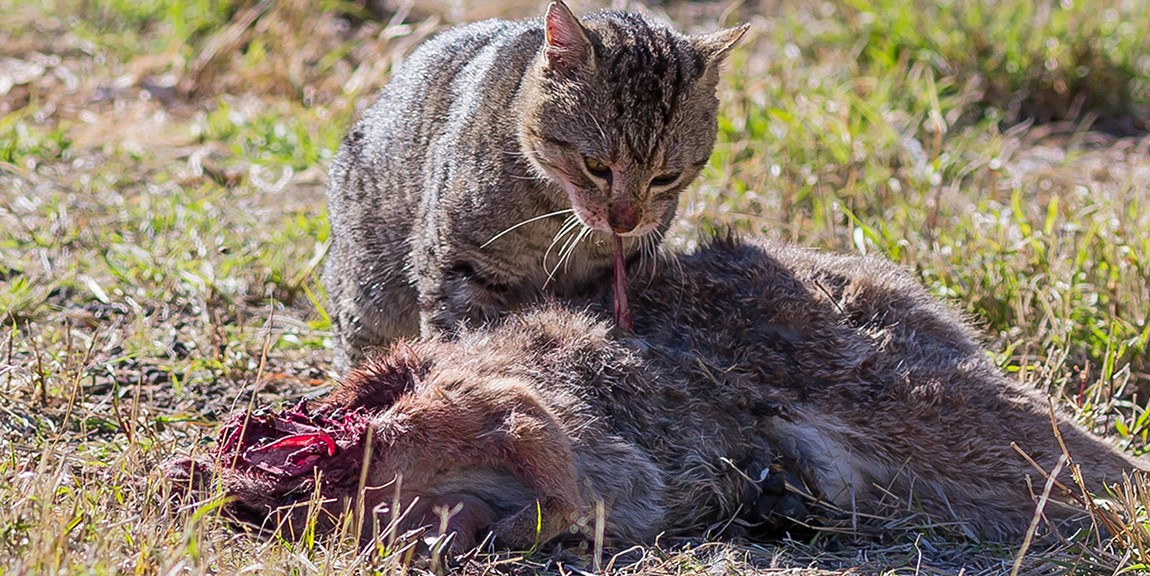
The exact number of Australia of stray cats inhabiting Australia is very difficult. However, some researchers believe that at least 20 million feral cats live on the continent, killing millions of other small animals every night. Other ecologists indicate that these data are very relative, because wild cats live in different areas of Australia, some of them are little investigated and very difficult to access, while the size of the cat populations is constantly changing depending on the available prey. Dr. Tony Bakmaster from the “Australian Center for the study of predators” clarifies that the number of feeding cats is noticeably reduced during the drought periods-due to a lack of food, while after heavy rains such cats are very quickly due to abundant prey. According to the researchers, only one blades down a day can eat from five to thirty small animals, which jeopardizes the complete disappearance of 81 species of rare Australian mammals, reptiles and birds.
The Australian Minister of the Environment Greg Hunt said that, according to the new plan of the government to protect rare animals, about two million cats will be exterminated by 2020:
- Today we make a decision and declare that, under our supervision, the extinction of rare animals should stop. It is difficult and difficult, but we can always do more and better.
The Australian government plans to get rid of homeless cats mainly due to the spread of meat sausages filled with poison. After eating sausages, the animal falls into a deep sleep, from which it no longer comes out. Critics of this method indicate that feral cats prefer to hunt for their prey and often ignore edible, but inert food objects, which significantly reduces the effectiveness of this method.
Opponents of the extermination of wild cats call the Australian authorities inhumane, and the famous actress and defender of animals Bridget Bardo even wrote an angry letter to the country's government, saying that the money allocated for the extermination of homeless cats could be much more efficiently spent on the sterilization program. However, the Australian government does not share the views of the actress, explaining the refusal of sterilization by the fact that a huge number of stray cats live in remote, inaccessible areas where it is almost impossible to apply the sterilization program. Nevertheless, experts note that sterilization is very effective so that stray animals abandoned by people do not turn into completely wild cats over time. At the same time, the Australian authorities urge citizens to be more responsible masters and properly monitor their pets.
As for ecologists, in general, the groups of ecologists supported the initiative of the government to exterminate cats, recognizing their danger to rare animals. However, in their opinion, there is another direct threat. The representative of the Australian Wildlife Protection Kelly O'Shnsesses says that all efforts attached to preserve rare animals will be in vain if their natural habitat is destroyed:
If all these small animals lose their house, then it doesn’t matter at all what we will do to preserve them
- The current government approves the destruction of the natural habitat of animals for the sake of mining and cutting down forests. And if all these small animals lose their house, then it does not matter at all what we will do to preserve them.
Since the arrival of European settlers arrived in Australia, the continent has lost more than 50 species of endemic animals , while today Australia has been a country with the highest level of extinction of mammals in the world. The representative of the Australian "Society of Wildlife" (The Wilderness Society) Amelia Young urge to put an end to this:
- People must understand that the extinction of species does not occur in one night, this is a long process. In Australia, there are many birds, plants, animals and reptiles, which were at risk of complete disappearance.
Critics of the draft Australian government to destroy fucked cats also note that in the past such measures only led to the fact that the exterminated predators began to spray intensively to restore the population. Nevertheless, most Australians, according to sociological surveys, hope that the indigenous inhabitants of the continent will at least have a chance of survival.