
Translated material
Globalization, postcapitalism, and American conspiracy
Why the head of the Russian Railways is very worried about the new world order
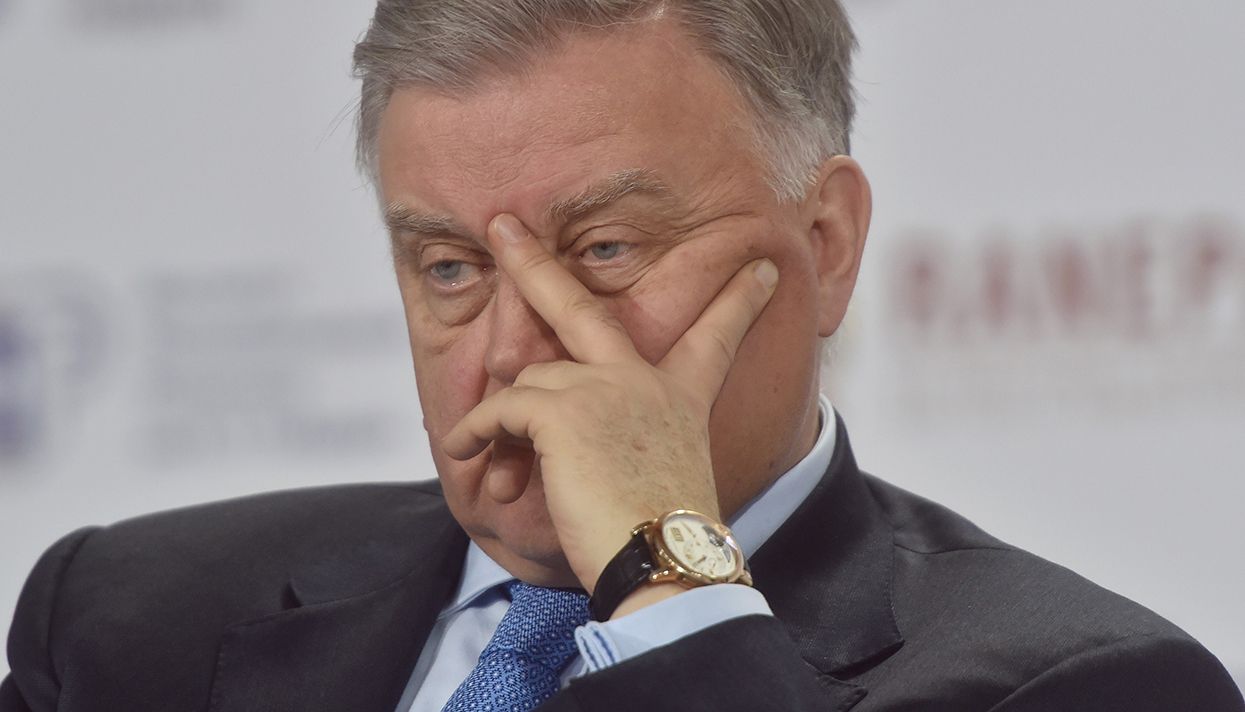
By his own admission, Vladimir Yakunin earns upwards of $1 million a year as head of the Russian Railways. Despite his financial success, it turns out the man is deeply concerned about the state of the world economy. This week, Yakunin announced that he is stepping down from his post at the Russian Railways, after more than a decade on the job. He says he plans to run for a seat in the Federation Council as a senator from Kaliningrad. To get an idea of Yakunin's politics, and generally just to understand the man a little better, it's worth reviewing an article he wrote earlier this summer for the journal Development and Economics. Titled "Globalization and Capitalism," Yakunin reveals that he embraces a strongly conspiratorial view of today's world order, blaming US-dominance for a "cult of consumerism" and much more. Slon Magazine summarizes the main claims of Yakunin's exegesis of American hegemony.
Globalization as "American hegemony"
In his article, Yakunin compares globalization today to historical concepts about the creation of world empires, like those attempted by Alexander the Great, Augustus, Genghis Khan, and Tamerlane. The empires, Yakunin says, tried to establish a single system of global rule, which required "de-sovereignizing the conquered."
The new world order today, Yakunin says, is being created primarily in the interests of the United States (globalization, in his words, is the "hegemony of the US, having won the Cold War"). In a broader sense, globalization serves the interests of the "world financial oligarchy," whom Yakunin credits with defeating the USSR in the Cold War. This group, he says, is now "trying to stamp out the last remaining enclaves of national sovereignty."
The fall of the USSR didn't make the world safer or more just
While he criticizes globalization and the dominance of the US today, Yakunin has kind words for the system that dominated the world during the Cold War. "The creation of the Soviet bloc, and the USSR's achievement of military parity with the West," he argues, "froze [such] global projects for world domination. The balance of power stabilized the world order, albeit it in the format of the Cold War."
The Soviet Union's great achievement, Yakunin says, is that it was able, from time to time, to bring the American ruling elite "to its senses." Without this deterrent, he says, Washington has "made such a mess of the world that masses of people see the US as a rogue state." Regarding the world since the fall of the USSR, Yakunin says it has become "neither more just nor safer."
"A tool of the global oligarchy"
Condemning globalization, Yakunin says the past 20 years are littered with evidence of its destruction. In addition to blaming the campaign against national sovereignty, he denounces the dismantling of the world economy's structure and the "disintegration of society," saying a "world of consumerism" is threatening national values and "manipulating public opinion, crushing even the smallest sprouts of spirituality, historical traditions, and national culture and identity."
Yakunin also has some issues with the global financial system, which he says is an instrument for the world financial oligarchy to rob developing countries and create a system for the global dominance of the US." He says the "debt trap" is how the West ensnares the periphery, and warns against corporate borrowing in foreign currency, which he says the West can use as a lever for economic pressure.
Postcapitalism
Yakunin proposes calling the new world order "postcapitalism," which he says differs from traditional capitalism, insofar as it has replaced the "cult of money" with the "cult of consumerism," privatized state institutions with the "global oligarchy," and erased the differences between legal and illegal economies.
Yakunin laments that the world economy today allows financial speculators to "plunder with impunity entire continents." He says the postcapitalist system's biggest innovation is buying up a country's most important enterprises after orchestrating a financial crisis that devalues its assets.
"An eschatological situation"
Globalization, Yakunin says, is leading mankind to a new, "molecular war." He says the people who have "lost their place in society" are being sent to fight against the "last remnants of the state" in what he calls a "global hybrid war" taking place with the support of a "global shadow elite."
The world today, Yakunin says, finds itself in an "extremely dangerous, eschatological situation." In order to avoid a cataclysm, he recommends that states unite around large integration projects (despite warning earlier that national sovereignty is under threat), in order to guard the world against "an attempt to establish a single hegemon." Yakunin says some good examples of projects to stave off US domination include Russia's participation in the Eurasian Economic Community, and South America's Mercosur sub-regional bloc.