
Translated material
From fans to pilgrims
Museums are genuine and virtual
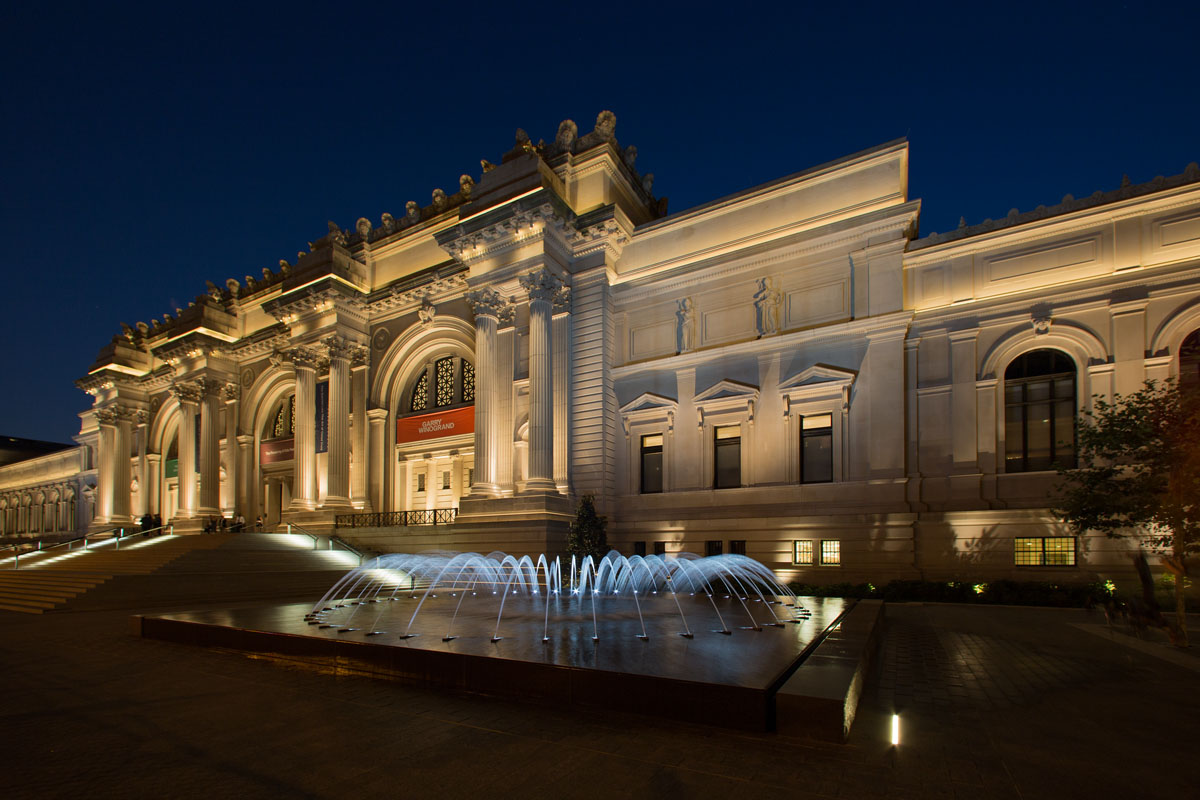
The best museum of America set a record: 6.3 million spectators visited the metro. This is more than for any year of those forty years that statistics have been conducted. By the number of visitors, the New York Museum was equal to the National Gallery of London and the British Museum, second only to Louvre, attracting 9 million a year. However, in recent years, the museum explosion has been experiencing in all countries, which cannot but surprise.
The first time I came to the metro the day after I moved to New York, the last time yesterday. In the interval, 38 years of American life fit, for which I have never parted with the museum longer than a month. And with every visit, it is more and more difficult for me to break through the crowd of visitors. Neither rain, nor heat, nor holidays, no everyday life, nor transport strikes, nor the hurricane “Sandy” stopped this stream growing, like a tide. And it is all the more amazing that many, including metro curators, were waiting for an ebb and were afraid of empty galleries, which compete with pictures on the screens at our house. When the painting was still timidly breaking through computers, museum directors nervously stated that the image quality could not be compared with the original.
“It is incomprehensible,” said Bill Gates then, “are they rejoiced at this or are they upset?”
This issue has become more relevant now, when the perfect electronic reproductions for a billion pixels each (a hundred times more than ordinary digital photography) created the World Virtual Museum. Having reduced the path to any masterpiece to click, network galleries extremely democratized world art - and, as the snobs believe, depreciated it.
Today, when the technical level of reproduction of painting has surpassed the possibilities of our optics, another question has become important: what to do with what got - everything and for nothing. Virtual art, like agriculture, knows two ways: in breadth and deeper.
The extensive method allows you to make others from some museums - their own. You can collect paintings, or you can - their fragments, making collections of arms, legs, carpets or birds. Having digitized the history of elegant arts, the computer - among other things, created his dictionary, which is suitable for postmodern perestroika. Possessing such a material, the viewer replaces the artist, in any case, one that does not create, but mumbles.
The intensive path, as it should be, teaches not to be scattered. Going deep into the canvas, especially if it is Van Gogh, we can see in it what the author did not notice: the pulse of painting. The smear, as a handwriting, opens the subconscious of the picture, the temperament of the artist and comments on the decisions that the brush made at every second and every millimeter. The intimacy of such a meticulous acquaintance (as if to read strangers, moreover, love letters) does not remain without consequences. Passing through the picture in the wake of the master, we pretend to be them and find out about the slightly less.
But no matter how we communicate with virtual painting, now the main thing was to understand how it differs from the real one?
Each technical revolution involuntarily - and therefore brilliantly - redistributes the boundaries of art. So it was with a photograph that excluded a criterion of similarity from painting. So it was with the movie that canceled realism in the theater. This is happening now, when the computer teaches us to separate virtual reality from living experience. And the more successes are the first, the more expensive to us the second. That is why the electronic museums did not replace ordinary, but only, as the record number of visitors to the metro shows, attracted even more spectators, turning them from fans to pilgrims.
“Art,” said the philosopher, disappointed in more radical measures, “the same hole that falls on religion shuts in the soul.” They do not even argue and require the same: hunting for changes inside, and not outside.
The computer cannot cope with this. Having taken the information, he masterfully convey it to everyone and discovers the limits of his capabilities. It’s like sex: we can find out about him except that it is not amenable to translation. Exit - direct contact. If earlier we entered the museum to get acquainted with its contents, now to be with it, gain a miracle and get infected with it. The more we know about our favorite picture, the more we want to learn about ourselves - about how we will feel in her presence. Painting is a transformer of everyday life, and, dividing one space with a masterpiece, we fall into a power field that transforms life into art.
Great paintings, like the relics of saints, change those who believe in them, while others should not get out of the museum. Moreover, now, when the computer so easily satisfies the superficial curiosity that real museums, it would seem, are needed only by fanatics, which, however, are becoming more and more every year.