
Translated material
Russia after Putin. Alfred Koch about the past, present and future
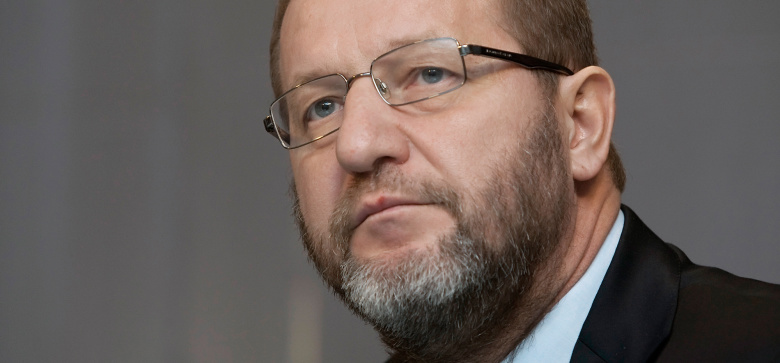
Slon Magazine and Rain TV channel continue the draft talk about the state of minds, about the situation in politics, economics, culture and public life in general, not attached to specific events and news. In the first series of the project, the two most famous Russian political analysts, Stanislav Belkovsky and Gleb Pavlovsky, talked about the problems of future post -Putin Russia. The hero of the second series, Alfred Koch, recalls the past time - both Yeltsin and Soviet, and also discusses whether Russia can turn off the authoritarian rut and what it will then become.
Watch the video version of this conversation at the "rain"
Mikhail Fishman. Alfred, I would have pushed away from what, if possible: recently in the article in the Die Welt newspaper, you, among other things, said that at least ten years ago Russia ceased to be democracy. There are several questions immediately. Was she ever democracy? And why, if you put a point, then 10 years ago?
Alfred Koch. This is a very conditional border, I just think that somewhere around the turn of 2003-2006 the last drawings and counterweights stopped working. In my view, democracy is not only a popular will as such, although it is certainly very important and, perhaps, plays a decisive role. But how the system works in the intervals between the elections. For this, as you know, the same drawings and counterweights, competition between branches of power, their independence from each other, etc. are needed. And finally this mechanism was broken exactly then.
Fishman. Stanislav, as I understand it, you think that we had complete continuity between the Yeltsin and Putin periods.
Stanislav Belkovsky. Democracy arose spontaneously in the late 80s of the XX century, not because someone wanted it, and in this sense I do not consider Mikhail Gorbachev a great reformer. I am rather inclined to believe that he followed the events and used the increase in the request for the import of European political models to strengthen his power, which in the end did not work. In this sense, Boris Yeltsin was a much more Russian ruler: he used the necessary mechanisms for the most rigid suppression of the Russian people. It seems to me that in the minds of Yeltsin there was no Russian people as a political subject. It was necessary to shoot something-he shot. The suppression of democracy, of course, began in the Yeltsin era and was absolutely natural. Because the elites had no idea that Russia needed a European path of development. There was a task to implement a certain program, rather tactical than strategic. And how to realize - with or without democracy, thanks to freedom of speech or contrary to it - this has already been applied in nature.
Fishman. Stanislav Belkovsky says about Yeltsin that he, without hesitation, shot the Russian people. I don't think so. And I want to ask you, Alfred, just about the time when you were in the government. 1997 - very interesting, alive and rich in the most important events. I recall the story with Svyazinvest and with you with everyone, its ideological background. You, Chubais, were then personified the movement towards Western European democracy. And then they opposed Berezovsky, Gusinsky. They said: no, let's build another capitalism, not the same as in Europe. Then all the progressives were mentally with you. Is it possible today, looking around where we came, look at it differently? Could Berezovsky be right when he said that the state in Russia should rely on large business?
Koch. I don't know. You want me to look distantly at the activity that I, including me to carry out, and gave you a sober and unbiased analysis of all the pros and cons, errors and so on. But I can’t do it purely human.
Belkovsky. And why do a sober and unbiased analysis. Let's make a drunk and subjective analysis, biased.
Koch. Why will I tell you that I have repeated a hundred times and know everything? Yes, there was a confrontation with the oligarchs, specifically with the Gusinsky and Berezovsky. Yes, they wanted to teach us, the whole government. Yes, they said that either you would obey us, or go to the street. We refused to obey and ended up on the street. I - before, Chubais with Chernomyrdin - five months later. They, in my opinion, were resigned in March, right?
Fishman . Already 1998.
Koch. They were resigned in March 1998, and I left in August 1997. Borya Nemtsov also left a year later-in August-September 1998. They won. Here is the result that we are now reaping.
Belkovsky. And in what sense did they win? Berezovsky hanged himself. He was my friend, so I can speak so hard. Gusinsky, as it was in exile, remains. Who won?
Koch. At that moment they won. At one time, Zhvanetsky said very well that there are no happy ends, and if happy, then it is not the end. In that episode, they won.
Belkovsky. Do you think a strategic victory is important or tactical?
Koch. We are all ak in flying, as they say. There are no winners at all in this game. I can only say one thing: the country, of course, lost, and a certain third force won, which was waiting for these two to weaken each other in a mutual battle.
Belkovsky. That is, certain gabists?
When the oligarchs took too much power, the only way to cope with them, as it turned out, was to attract security forces to power. But then the security forces will become very strong
Koch. Well, probably, because in the end, when Yeltsin had a choice, whom to put on the future kingdom, this choice was small. Or it is someone among Putin and other people who have now become common names-Stepashin, Aksenenko, etc. In the end, Putin, who was brought to him by Yumashev, his daughter Tatyana, as they say now, Pugachev, as they used to say, Berezovsky. Or choose one of those who will lead the Luzhkov team. In particular, Primakov. Ultimately, this material draws from one barrel - from a barrel of special services.
The main beneficiary of the zero became, of course, special services. I even have a theory in this regard. In order to defeat the Communists, it was necessary to attract the oligarchs to the rescue, but they had to give them too much power. When the oligarchs took too much power, the only way to cope with them, as it turned out, was to attract security forces to power. But then the security forces will become very strong. Only civil society can deal with security forces. Thus, there is no alternative, besides how to build civil society in Russia or die the whole country.
Fishman. In this sense, I immediately recall, for example, the same 1996 or 1995, when Yeltsin’s chances were unobvious when Chubais raised the question by the edge: either communism is returning-or the country disappeared, and we need to mobilize. When Nemtsov objected to him. At least he said: "If Zyuganov wins, it means that Zyuganov will win, we will fight him as possible." When Gaidar even reflected on the fact that maybe it was necessary to move to the president of Nemtsov, not Yeltsin. The question of whether it was worth fighting for Yeltsin then sounds hackneyed and Nevertheless: how much the threat of communism then required such brutal decisions?
Koch. Well, I don't know. Do you remember 1995-1996?
Fishman. Remember, yes.
Koch. The triumph of the Communists in the Duma elections, the loss of Gaidar, when he did not overcome the 5%barrier precisely and only thanks to the rash in the camp of the Democrats. Khakamada went in a separate list, Borova went on a separate party, Boris Fedorov, the kingdom of heaven, went by a separate party. They scored 1%, took 5% from Gaidar, and this did not allow him to go to the State Duma. No matter how they persuaded them, they refused to remove their party lists. Although each of them dragged these party lists for the only purpose - to support their elections in the majority district, and they went through the majority districts, they went - became deputies.
But, one way or another, Gaidar lost the election, and it was rather a defeat of Gaidar than their gain. All kinds of lists began to spread on the sidelines - whom to plant, whom to hang, whom to shoot. Already Zyuganov consulted with the oligarchs, the oligarchs began to vibrate: and everything is not so scary, well, Zyuganov will come, well, he will recover nuts a little, it's high time. The oligarchs are also such people who are strong -willed and very fundamental. Therefore, it was more or less clear, and how far Zyuganov would go, I do not know. Much more pro -Western, liberal and democratic Putin went out where.
I think that Zyuganov would not have rusted, taking into account that not only some Glazyev and others stood behind him, on whose expense I would also not be seduced, but Makashov and various other characters, including from the special services. The former Minister of Internal Affairs Barannikov, in my opinion, was part of this team. History does not know the subjunctive mood. Now, of course, Zyuganov will argue that he would not advance on the democratic conquests of the workers.
http://www.youtube.com/watch?v=nsuk8htj4zw
Fishman. Well, I would be, but we would not be where we were.
Koch. Yes, we ended up where we were. Whether Chubais was right when he fought, as you say, by any means so that Zyuganov did not become president, I don’t know.
Fishman. Not by any means, Korzhakov still offered to fight by any means.
Belkovsky. Well, this is a big question. Korzhakov proposed to postpone the elections for two years. And in the alternative headquarters of Boris Yeltsin, which included, in particular, Boris Berezovsky, and I heard about it (I won’t say anything about Chubais, because I didn’t hear from him), offered to use all methods, including, to put it mildly, the correction of the results of the will of voters to determine the election results. Therefore, who was more democrat here ...
Koch. I don’t know whose friend was Berezovsky, maybe Belkovsky. Now you can say anything. But I am deeply convinced that no one did more harm to the democratic movement than Berezovsky. And Putin led such a collective Berezovsky led by Boris Abramovich. Boris Abramovich was a magnificent person of self -promotion. He told everyone about his power, but in fact there was no power. For example, I know for example that he met Yeltsin for all the time three or four times, but he said that he was spinning Yeltsin as a puppet. And everyone believed in it. This was his magic.
Belkovsky. Personally, he told me that he met Yeltsin once.
Koch. I will tell you what I know. Nemtsov came to Yeltsin with the proposal of Boris Nikolayevich not to run. Prior to this, Gaidar came to Nemtsov and said: "Boris, you need to advance to the president." It was, in my opinion, January 1996. And there was a whole logic about a single democratic candidate, not counting Yavlinsky, with whom it is useless to agree. What Boris, who at that time was in a very good relationship with Yavlinsky, said: "Well, then let's then choose." To which Gaidar answered him: the general opinion in the Kremlin and on the TV channels, that Yavlinsky is impassable, under any circumstances, he will not gain more than 30%, and this is the direct path of Zyuganov to victory.
It is pointless to persuade Yavlinsky at all, it will still be. Which, by the way, is pure truth, and I agree with this. Therefore, the only option is not to run Yeltsin, but to put forward a more passing candidate. Let me remind you that in January Yeltsin had a rating of 5-6%, below the baseboard. With these surveys of public opinion, Nemtsov came to Boris Nikolaevich with an offer not to run, but to support him, Nemtsov, in the presidential election. He came and said: "Boris Nikolaevich, here is such a story, on behalf of the whole democratic public asked me to talk to you." Yeltsin asked: "What?" Nemtsov: “That you have a very low rating, you have a 6%rating.” Yeltsin said: "This is a lie, it was invented by the enemies of Russia, I have a 60%rating." To what Nemtsov says: "Where did you get it from?" He says: "Here is the FAPSI poll, I have a 60%rating." It was January 1996. Well, it is clear that it was Barsukov and Korzhakov to put a pill for him, fed polls, but Yeltsin was in a paradigm that he had 60% and nothing threatens him.
Fishman. Or he wanted to convince Nemtsov that he had arguments to advance, and he already decided to himself for himself.
Koch. In general, it became clear that it was pointless to talk with him about the removal of his candidate. And there was a given: either you support Yeltsin, or it comes ... The only chance is to fight for Yeltsin. And the entire Kremlin apparatus, the whole vertical plus business, all television channels and journalists expressed their readiness to work for this result. And they began to gradually increase. It is difficult to deny that the rating of Yeltsin grew up and grew significantly by the summer. Now I do not presume to judge, there were fraud, there were no frauds.
Fishman. Me too. There is no evidence.
Belkovsky. And I don’t, I also did not claim that I have them.
Koch. Publishing polls, it seems to me, is quite independent, showed that he had a rating at least not lower than that of Zyuganov. And to the second round, in my opinion, even higher became higher. Here is such a layout. Why did Nemtsov not run? It is clear why. The third democratic candidate would have appeared, as if none of them would have passed. It was possible to support Yavlinsky, but then it is pointless to agree on the consolidation of the power elite. Because the power elite of Yavlinsky would not support. Half would run to Zyuganov, half would remain with Yeltsin. But in any case, they would not support Yavlinsky, that's all.
Fishman. You told in detail about this particular moment, but no matter what period, I think, we take in the history of Russia at least the last twenty years, then we will always rest on the fact that events could develop only this way and nothing else, as you told. And so we come to the current result.
Koch. It seems to me that this is a false thesis, that the situation of the 1999–2000s is somehow directly related to the situation of 1996. There were a lot of things in the interval, which greatly distinguishes the 2000 election campaign from the 1996 election campaign. The election campaign of the zero year took place in a completely different background. And there was definitely no risk of victory Zyuganov. There, on the one hand, there was a group of Luzhkov, Primakov, Shaimiev, Rakhimov, on the other - Berezovsky, Dyachenko, Yeltsin, Tyrypyry, Putin. Two groups fought among themselves. As a result, having lost the Duma elections a little bit, the Luzhkov party-Primakova did not put up her candidate for presidential, the same Primakov, and Putin’s victory was predetermined. This was the main success of the Putin, Yeltsin party: they managed to persuade them not to exhibit. What exactly happened there, as they say, remained behind the scenes. Otherwise, the second round would be for sure.
Fishman. You say that these are completely different elections, but the logic was similar: Luzhkov and Primakov in 1999 were also drawn and perceived as a threat to freedom and democratic conquests.
Belkovsky. The logic was absolutely the same, in my opinion: he or no one; Nobody but you. In 1996, Yeltsin opposed Zyuganov, and in 2000 Putin against everyone else. And we must not forget that in both cases the Chechen war was started. In April, before Yeltsin’s elections in 1996, the first Chechen, before Putin’s election, the second, which turned out to be successful.
Koch. Stas, why are you distorting? In order to win the elections, Yeltsin, on the contrary, had to end it, not start.
Belkovsky. Because she was not able to win. And she was not victorious, unlike Putin.
Koch. He did not start her for this, well, stop.
Belkovsky. Well, tell me why he started her.
I don’t know if there is a government in the world that would come to terms with the fact that somewhere on the outskirts of the empire is armed and forms alternative authorities of a certain national-separate community
Koch. Do you think that in 1994 he began it with a lounges for the 1996 elections? I can tell you that about a million Russian, Russian-speaking, in any case, people lived on the territory of the Chechen-Ingush Autonomous Soviet Socialist Republic. These were oil workers, these were teachers of Grozny University, it was, so to speak, the engineering elite of Chechen-Ingushetia. They were all either carved or kicked out, the property was selected, these were refugees of the unnecessary Russian genocide in the territory of Chechen-Ingushetia. Dudaev came to power, dismissed the Supreme Council of Chechen-Ingushetia, expelled Zavgaev to Moscow, remember all this. And there began the seizure of warehouses, the weapons of militants, and so on. For some time they suffered it. By the way, it was the Chechen Khasbulatov in 1992 that the first raised the question of what something needs to be done with this Dudaevsky freemen in Chechnya. In 1993, there were even decisions of the Supreme Council on the need to introduce martial law. I don’t know if there is a government in the world that would have come to terms with the fact that somewhere there, on the outskirts of the empire, a certain national-separate community, capturing military warehouses, is armed and forming alternative authorities.
Belkovsky. It lasted three years before the war began at the end of 1994.
Koch. Are you talking about a benevolent picture that it was necessary to give the same powers as to Tatarstan, and he would have calmed down? Вот вы в это верите? Это когда уже миллион русских был изгнан.
Белковский. Я спрашиваю, почему три года это длилось, а война началась в ноябре 1994-го.
Кох. Вы вспомните, какие это были три года. Страна чуть ли не кровью харкала, на карачках ползала, чуть не сдохли все. Стояли на фоне широкомасштабного голода. В этот момент войну начать? Только оклемались чуть-чуть, огляделись по сторонам – и начали. Я отнюдь не поддерживаю войну 1994 года, я просто вам объясняю логику, в которой действовал Ельцин.
Фишман. Лично я 1999-й помню лучше, чем 1994-й, и в 1999 году общественное мнение поддерживало войну, да и про себя не могу сказать, что я был резко против.
Кох. Я не уверен, что в 1994 году общественное мнение поддерживало эту войну. И я ее не поддерживал.
Фишман. В 1994 году, конечно, не поддерживало. Это же сразу был штурм Грозного.
Кох. Когда начался этот нелепый штурм Грозного, устроенный Степашиным, в котором погибло огромное количество русских солдат, мы с Чубайсом, я помню, сидели в Белом доме и всерьез обсуждали вопрос отставки.
Я вам рассказываю логику, в которой жил тогда Ельцин. Я очень много разговаривал на эту тему с Павлом Грачевым, с Александром Казаковым, который был в то время руководителем регионального департамента в администрации президента и у которого начальником отдела как раз работал Завгаев. Я помню, как Филатов собирал бесконечные совещания по поводу Чечни, как бывший вице-премьер Егоров кричал, что шапками закидаем, говорил: дайте мне покомандовать, я всех победю. Я помню все это прекрасно.
В эту воронку авторитаризма Россия уже соскальзывает второй раз за последние 100 лет. Вот так, по-серьезному
Фишман. Я хотел бы от прошлого перейти к будущему. Встает закономерный вопрос: может быть, демократический проект в России невозможен в принципе? Один раз попробовали 25 лет назад, пришли туда, куда пришли, там дальше будет какая-то точка, нынешняя жизнь кончится. Но дальше снова то же самое; может быть, начинать уже не надо, это не имеет смысла? Все равно печальный итог известен. How do you think?
Кох. Вы нарисовали мрачную картину фатальной невозможности выскочить из этой колеи.
Фишман. Мне интересно, что вы думаете: эта колея есть или ее нет?
Кох. Нет колеи. То есть она есть, но выпрыгнуть из нее можно.
Фишман. How?
Кох. Сложный вопрос, нет легких рецептов. В эту воронку авторитаризма Россия уже соскальзывает второй раз за последние 100 лет. Вот так, по-серьезному.
Subscribe to read the whole
Make a subscription Redefine.media to read Republic
Subscribe [you can pay for a Russian or foreign card. The subscription is extended automatically. You can unsubscribe at any time.]
Where are the money subscribers going