
Translated material
Why live, Vera and Zeus
Three books for thoughtful reading. Overview of Galina Yuzefovich
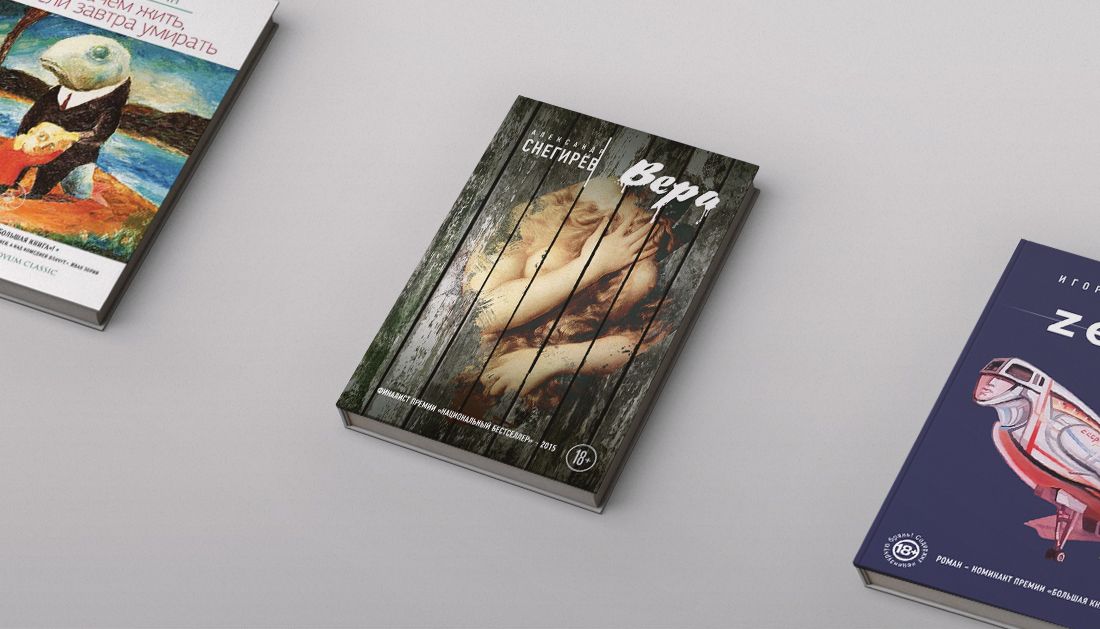
Literary critic Galina Yuzefovich tells at Medusa about the most interesting book novelties published in Russia. In today's review, there are three novels of three relatively young Russian authors, clearly designed to get into premium charts and in general - a thoughtful reader's view: “Zevs” by Igor Savelyev, “Why live if you die” by Ivan Zorin and Vera Alexander Snegirev.
Igor Savelyev. Zevs. M.: Exmo, 2015
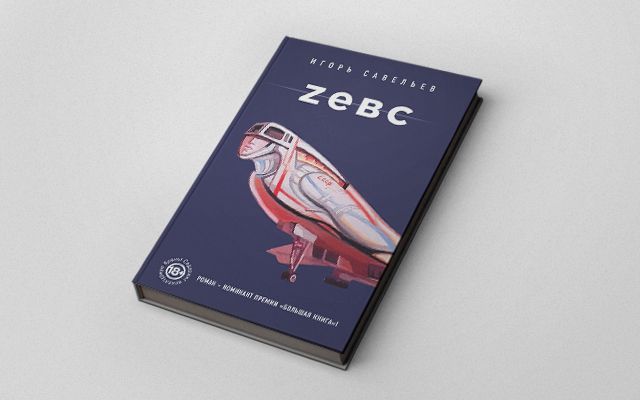
The first thing you get from is Igor Savelyev’s novel “Zevs” is the profession of the protagonist. Cyril is a young aircraft designer, works in Tupolev OKB and works, you won’t believe it, a solution to the passenger airliner to supersonic speed to solve the problem of sound strike.
Having come to your senses from the first shock, you understand what, in fact, its reason: it is terrible, simply unforgivably for a long time we have not read Russian novels from modern life, whose heroes would do something so old-fashioned human, understandable and not without a shade of romanticism. Against the backdrop of endless managers, bankers, bandits, copywriters, marketers, television men and, at the worst end, writers or poets who have flooded today's literature, a real living aircraft designer looks like a marvelous alien on a party of graduates of a textile technical school.
However, and this is perhaps the bad news for the author - everything that does not concern the hero itself and his professional activity, it turns out to be noticeably worse. Cyril comes from Kazan, in his youth he played in KVN and was in this capacity a local spill star. Today, he loves his pregnant wife Jan (a principled journalist on a third -rate cable television channel), learns to drive a car, goes to work in sandals over his socks (the requirement of the authorities) and is sad under the canopy of an exorbitantly overgrown pink bush in a pot, in vain awaiting state financing of his developments and with a variable success that he is engaged in a matter of the necessary, important and important and important and important and important. Partly heroic. Once this peaceful existence will be interrupted by the call of Lechi - a friend of youth and a fellow on the command of KVN, who went from his native Kazan to Moscow. Leha will pluck Cyril from a raised place, ruin (however, thank God, reversibly) his relationship with his wife, he will carry a whirlwind through France and destroy the already fragile faith in the importance of aviation for the fate of mankind. Lane and devastated, Cyril will be thrown ashore the unknown mental continent, where he has to re-rebuild his own identity-including in some way to integrate the myth of the "great and beautiful machines that emerged from the future-and went back because people were not needed."
The fact that in a schematic retelling looks quite smooth, is actually falling apart and floats, releasing excessive prooferens to the sides (like an inserte plot about the subcoverous battles around the notorious “superjet”), as if remaining from the previous versions of the text, and in the current one and not for anything useful. However, if you put all this plot slurred and flimsy on one bowl of weight, and the other is excellent, dense and accurate Russian (Savelyev writes truly well, masterfully choosing words, but not abusing this superpower) in conjunction with the same fresh and original aviation theme, the scales will come in balance. And then they will be inclined towards the sign "plus".
The current novel is the second of Igor Savelyev, and in comparison with the first (“Tereshkova flies to Mars”), it is a noticeable step forward: the skills of drawing characters and the creation of the beautiful, living and filled with diverse meanings of the world were added to the ability to well add words. The inclinations of a truly great writer are still in stock, and the dynamics as a whole is positive. Perhaps I would like a slightly greater mature speed - Savelyev is already 32, and he began to write very young, so it would seem time, but this is, as they say, readers' whims. It is already very good - and if everything goes on, it will soon be completely cool.
Ivan Zorin. Why live if you die tomorrow. M.: Ripol Classic, 2015
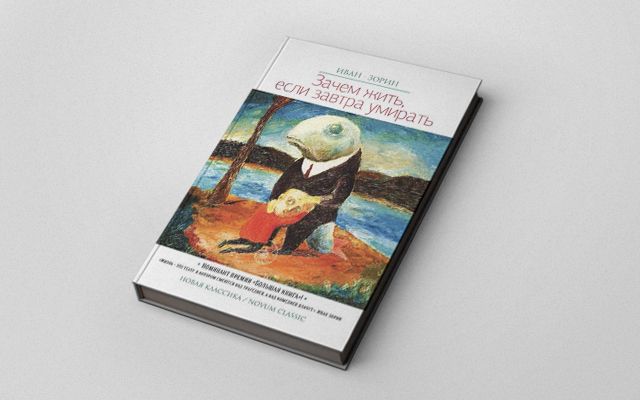
The creator of colorful prose in the genre of magical realism, a lover of parables and allegories Ivan Zorin this time decided to step on the thorny path of a real, adult shock. The title novel of his new book “Why live, if you die tomorrow” is such a demonstrative “fax” towards the state, government and conservative values, so persistently vaccinated today.
The main characters - the psychologist Merzyakov and Luser Letsk - are found at the seminar in the leadership qualities that leads the first, and the second visits. After the seminar, Letsk came up with an unexpected thought, which he immediately shares with the teacher: both of them are disappointed in life and are alone in their souls, they are deadly boring to both. So why don't they kill each other, having finally make some pleasant variety? .. Such an original tie of the acquaintance leads to unexpected consequences - that begins like a gambling war with a potentially fatal outcome, gradually develops into a sagging passion, which then soften to complete kinship of souls and a marvelous harmony. Men's lovers connect, closing on each other and moving away from the rest of the world - and already despise the modern Russian power and retell to each other medieval Jewish parables (where without them).
In essence, there is nothing to complain about. Ivan Zorin (unlike Igor Savelyev) never writes about real life, preferring to operate with types, masks and allegories, so pestering him with reproaches in “unrealistic” is obviously meaningless and dishonest. Yes, both Letsk and Merzyakov are not so much living people as walking sets of some attributes and properties. Yes, the very story of their meeting and mutual attraction looks monstrously artificially. The author does not try to deceive anyone on this subject, and all this “chemistry” is as if included in the rules of the game, which (inside, of course, actually the games) look perfect, logical and convincing.
The main drawback of “why live, if you die tomorrow” is a drawback of any book written in the format of a demonstrative “fak”. At some point, at first, at first the story of two ridiculous and ugly single people (even very conditional ones-but we, in the end, in the end, in the conditional opera and even crying there sometimes), it turns out to be just a way to show the middle finger to the collective deputy of the State Duma. The finger is long, expressive and even with manicure. Shown not without artistry. The general message does not raise questions. Probably just a pamphlet is not my favorite genre (especially when it is masked under the novel). And the ability of the conditional deputy of the State Duma to evaluate the subtlety of literary game causes well -known doubts.
Alexander Snegirev. Faith. M.: Exmo, 2015
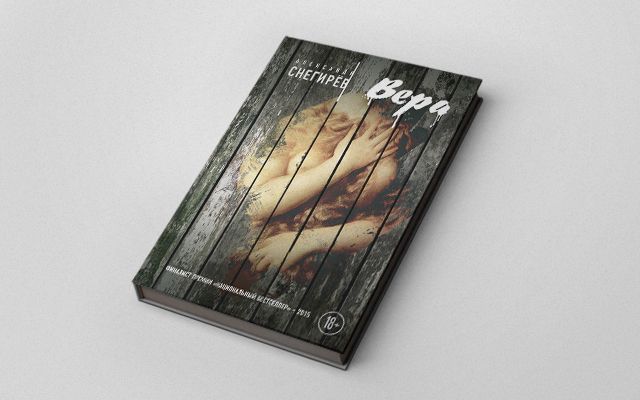
If you have to fly on an airplane with a talkative fellow traveler who want to present you all your biography (and at the same time the biography of your ancestors on both lines), then, consider, you are well prepared to read Alexander Snegirev’s novel “Vera”. In the family of a village policeman and a strict woman Katerina, a boy is born, who, for some unclear reason, is called Suleiman. Suleiman is growing, leaving the village, making a career in the city, unsuccessfully marries, turns to Orthodoxy. He and his wife are born a daughter Vera - a beautiful, but not beloved by a mother. Mother is tyrant, father holds in Christian severity. Then the mother dies, Vera departs from religious foundations, leaves for earnings to America, then returns to his native ashes, also - like his father - for the time being makes a career, unsuccessfully gets married, gets divorced, and in the end he goes crazy and becomes a prostitute with migrant workers, experiencing along the way something like a spiritual transformation.
A normal, universal (minus, perhaps the last episode) the history of a normal Russian family over the past half a century with a little, told exaggeratedly simply and linearly - without excessive details, flashbacks and the like fashionables. Perfectly transparent, intentionally “no” Russian language without frills and beautifulness. A little of Ulitskaya, a little of “Moscow does not believe in tears”, a little (well, honestly, just a little bit) from Oksana Robski.
The reader, rightly, is waiting for rhyme rhyme - or at least explanations of what it is and why. But no - as with any real life history (even the most intricate, bizarre and complex), no morality from Snegirev’s “faith” can not be pulled out - just the next Maupassan “une vie”, only in Russian decorations. With a great desire, it can be assumed that the main idea of the novel is the continuity of the dislike (the mother did not like little Suleiman, Suleiman did not like his daughter, the daughter does not like anyone - and herself first of all), but such a reading still implies some violence over the text, and the next question arising from such an interpretation - well, yes, and what?
Of course, there is nothing terrible in all this (I really really love stories without morality), but it is slightly puzzling - especially taking into account the previous novel by the author “Oil Venus”, from which the idea jumped almost faster than the content. If you ask me, then as it is now, much better. But if you love to explain everything to you with a broken word, then Vera has every chance to disappoint you-something, and there is no ideological intelligence in the manner of Ivan Zorin.
Galina Yuzefovich
Moscow