
Translated material
The exploits of counterintelligence
Who is judged in Russia for espionage and gosmen
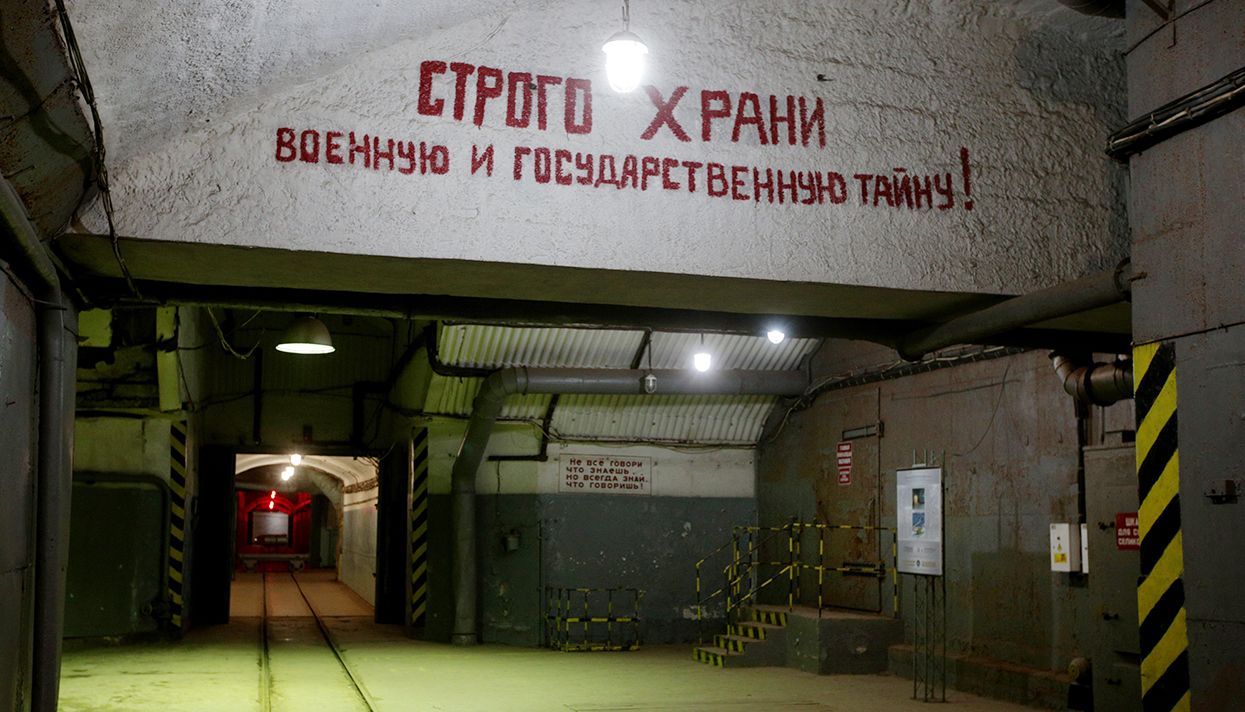
Over the past one and a half years, the number of Russians accused of espionage and state spy has grown several times. The most loud story is the case of a housewife from Vyazma, the mother of seven children Svetlana Davydova , who called the Ukrainian embassy to talk about the possible movement of the Russian troops (as a result, she managed to free herself from arrest). In addition to her, the failed double agents, scientists, and street merchants came into the view of the FSB officers. At the request of Medusa, the journalist of Echo of Moscow, Ilya Rozhdestvensky, sorted out who and why in Russia they called state traitors and spies.
Cases of state treason and espionage are the most closed of all that are considered by Russian courts. The meetings take place without listeners and press, the materials are protected by the heading “secret” or “top secret”, and sentences are not published. The only public information about such cases is the data of the Judicial Department at the Supreme Court.
According to statistics, in 2011, six people were convicted of the Stateizer, only one for espionage; Exactly the same statistics in 2012. In 2013, four tranquers and two spies were identified in Russia. In 2014, under the article “Spying”, not a single court decision was made, but 15 people were sentenced to various terms for the state treason, of which more than ten years of imprisonment received nine. There is no information for 2015 yet, but it is known that since the beginning of 2014, only Moscow courts have arrested at least ten people on charges of espionage and Stateismman.
* * *
32-year-old Evgeny Petrin-an employee of the Moscow Patriarchate of the Russian Orthodox Church. He calls himself the captain of the FSB, who worked "under the guise" in the department of external church ties (ACCS). Petrin really served in the Federal Security Service-from 2011 to 2013, after which he got a job in the Association to continue to engage in counterintelligence.
His brother Alexei Petrin claims that Eugene managed to reveal the agent network inside the Russian Orthodox Church, which worked in the interests of the United States "to the split of the Russian and Ukrainian church." However, the collected information was not interested in the FSB, and Evgeny Petrin himself continued to communicate with “implemented agents” in order to “get more information from them.”
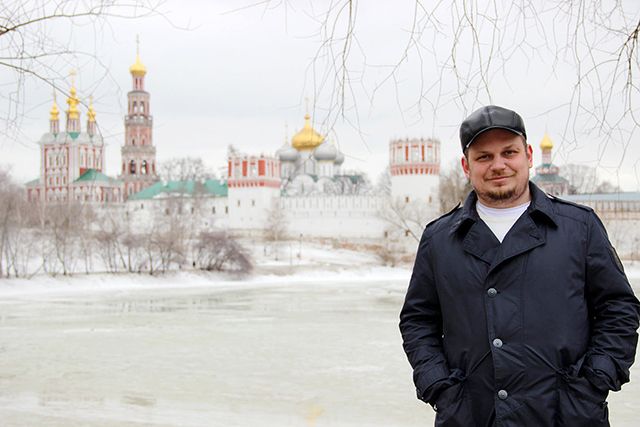
In April 2014, he sent the last letter to the Lubyanka, then visited Ukraine, and in June, operatives burst into his house and detained on suspicion of Gosizmen. According to his brother, Petrin was tortured within 14 hours: the testimony was allegedly knocked out by FSB investigators Denis Krokhmal and his boss Alexander Soim. The FSB does not agree with this version. The department believes that in 2013, Petrinawas recruited by the CIA employees, after which he "gathered in the Moscow region and kept a diverse nature, including representing state secrets in order to transfer information."
Members of the Public Supervisory Commission (including Eva Merkacheva, who met with Evgeny Petrin in the isolationist) told Medusa that he gives the impression of an absolutely normal person. This is also evidenced by the results of a psychiatric examination at the Serbian Institute. At first, Petrina was defended by the lawyer for their intended purpose, who allegedly "arranged an information vacuum and did not miss complaints about the will." Then Andrei Stebenev, known in the case of Svetlana Davydova, undertook to represent the interests of Petrin (the lawyer chamber of Moscow subsequently considered that Stubenev violated professional ethics and did not defend the interests of Davydova, as it should, and deprived him of the status of a lawyer).
Now Evgeny Petrin is in Lefortovo and is waiting for the court. He is accused of state treason.
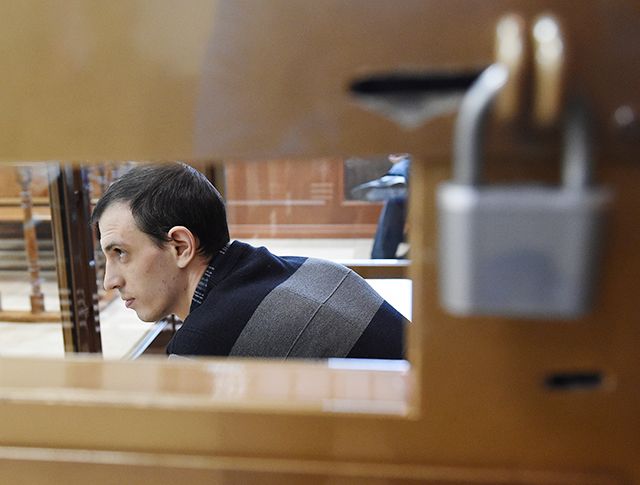
The police officer Roman Ushakov, who was sentenced to 15 years in a maximum security colony for the Stateismman, also tried to try himself in the role of an agent under cover in March 2015.
In 2009, the young and promising major decided to move from the criminal investigation department to the FSB department of the Krasnoyarsk Territory, but for unknown reasons he could not do this. Ushakov, apparently, decided to take revenge: he went to the CIA website, contacted two employees of the department and began to drain the data on the current FSB officers. In February 2013, he quit the police and at the same time attracted the attention of the scouts: without getting a new job, he began to actively ride abroad. At the same time, Ushakov went to the reception in the FSB building on Lubyanka and offered to play a double game to grab American intelligence officers.
The double agent, a 34-year-old retired major stayed for long: on the night of August 24, 2013 on a wasteland in Biryulovo, he had to pick up 37.7 thousand dollars from a “mortgage” stone; At that moment he was detained. In exchange for money, Ushakovpromised the CIA code with which secret telegrams are deciphered.
New generation of spies
The modern history of Spynomania began in 2004 - with the work of the former head of the Institute of the USA and Canada of the Russian Academy of Sciences Igor Sutyagin, who allegedly transferred secret information about Russian weapons and army structure. According to his lawyer, it was possible to condemn Sutyagin to 15 years due to the fact that the former SVR employee Grigory Yakimishen was introduced into the jury collegium.
In the same 2004, the process of the ted aspolophysicist Valentin Danilov went through not without problems-he was accused of espionage in favor of China. The first jury made an acquittal; Then the verdict was canceled by the Supreme Court, the materials were sent for a new consideration - as a result, Danilov was sent to bars for 14 years.
After that, the security forces began the attack on the jury. The FSB insisted that the collegium could not consider the cases of government and espionage, since the jury did not go through a special audit and could not guarantee the non -disclosure of GOSTaina. They managed to achieve their special services only after four years: in December 2008, the State Duma adopted a law that cancel the jury in cases of terrorism, espionage and stateizer.
And in November 2012, amendments to the articles of the Criminal Code on GOSTIN and Spying came into force. Since that time, criminal prosecution is provided not only for the issuance of information constituting GOSTIN, but also for any assistance to a foreign state, an international or foreign organization, if their activities are directed against the security of Russia. In turn, with a spying, a fee has been declared a foreign citizen of any information that is not necessarily constituting GOSTain to transfer them with the aim of using against the country's security.
After the changes began to operate, President Vladimir Putin proposed to return to the discussion of the Gosizmen law in order to exclude its “expanded interpretation”, but this did not happen.
Military secrets
Looking for spies and traitors, law enforcement agencies, first of all, pay attention to employees of military enterprises. At the same time, almost every time the defense of the suspects insists that the information that was allegedly disclosed is not secret.
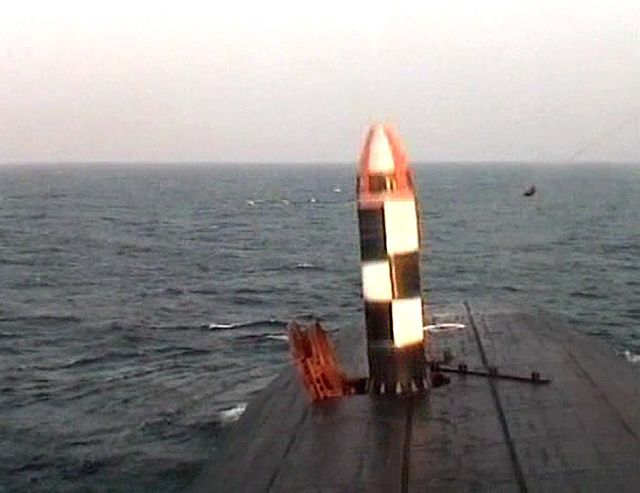
So it was in the case of professors of the Baltic State Technical University "Voenmekh" Evgeny Afanasyev and Svyatoslav Bobyshev. In 2012, they were sentenced to 12.5 and 12 years of colony, respectively, for the transfer of Chinese intelligence secret information about the Bulava missile. In April 2015, Afanasyev died in a colony at 63 years of life.
Information about the Bulava allegedly tried to sell the NPO “Automatics” Alexander Genetyev, who received eight years of maximum security colony in February 2014.
The senior engineer-test of the Cosmodrome Cosmodrome, Lieutenant Colonel Vladimir Nesterets gathered to share information about the complexes “Topol-M” and “Yars”. According to investigators, he planned to transfer information about the secret tests of Russian strategic combat missile systems. He was detained in early January 2010 in Ukraine, presumably in Dnepropetrovsk. In February 2012, the 3rd District Military Court of the Moscow Region sentenced him to 13 years in prison.
And in March 2011, the Moscow City Court sent to the colony for 18 years the Colonel of the Ministry of Defense Andrei Khlychev. A former employee of the Minatoma and the Ministry of Emergencies allegedly supplied American intelligence services about Russian nuclear programs.
Missile documentation is not the only thing for which employees of military-industrial commissions are judged. A special story is connected with the Soviet military cards, which were considered perhaps the most accurate cartographic instrument of the pre -space era ( "Medusa" recently wrote in detail about them ). In May 2012, the Moscow City Court sentenced the colonel of the reserve of the Armed Forces, an employee of the FSUE Goszemkadastastast-Svishagi Vladimir Lazar to 12 years old. According to investigators, the former military personnel of the military-technical department of the General Staff in 2008 transferred seven thousand secret topographic maps containing a state secret in 2008. Then he went to Belarus, where through an intermediary he handed the discs with cards to his friend Alexander Leamement, who lived in Estonia. Special services argue that the leshment has been working for American military intelligence for more than 15 years.
In turn, collector Gennady Sipachev, from whom Lazarus purchased cards, in 2010 was convicted of four years for selling cards to US intelligence services via the Internet. Law enforcement agencies claimed that the Pentagon could use these cards to adjust the winged missiles to increase the accuracy of destruction of goals in Russia. Sipachev fully pleaded guilty and promised to help reveal other spies. This incident was the first in the practice of the cases of Gosizmen when a pre -trial cooperation agreement was concluded .
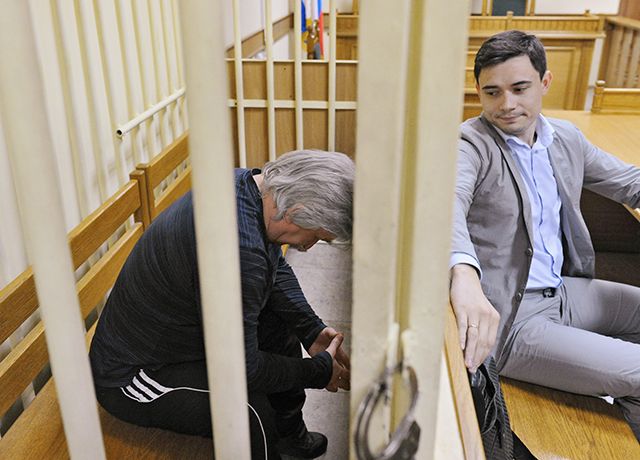
However, the most famous Russian citizen who sold military secrets should be considered the 61-year-old colonel of the FSB retired Valery Mikhailov, who in June 2012 received 18 years in colony. From 2001 to 2007, he handed over to the CIA to the CIA to thousands of secret documents prepared for the country's leadership. In return, Mikhailov received a total of more than two million dollars and moved to the United States with this money. It was possible to lure it to Russia only in 2010. Mikhailov fully pleaded guilty.
Examiners
Scientists who actually were not related to state secrets often come into view of the security forces, but published in scientific publications articles, in which, according to scouts, contained secret information.
So, in 2013, a former researcher at the Russian Federal Nuclear Center in Sarov Vladimir Golubev made a report at a conference in Prague with a report. Golubev’s defense insists that all information from the report has been in the public domain since 1980, but the FSB is sure that the scientist violated the legislation with his publications. Golubev himself believes that in this way he was decided to take revenge on his colleagues, who gave a conclusion about the presence of a state of guest. Now he is in a pre -trial detention center and is waiting for a court.
Former GRU employee, radio engineer Gennady Kravtsov did not make reports, but only tried to find a new job, sending a resume to the Swedish company in 2010. Four years later, he was detained, believing that in the set of skills indicated by Kravtsov, Gostaine was contained. Relatives of the accused insist that the term of access to Gostaina has already expired, noting that for this reason Kravtsov was issued a passport. Why Kravtsov attracted the attention of the security forces is unknown - on the jobs for searching for work, you can find dozens of profiles of former intelligence officers, which indicate, for example, numbers and places of deployment of units.
Now in custody in Russia are two more scientists who are considered traitors.
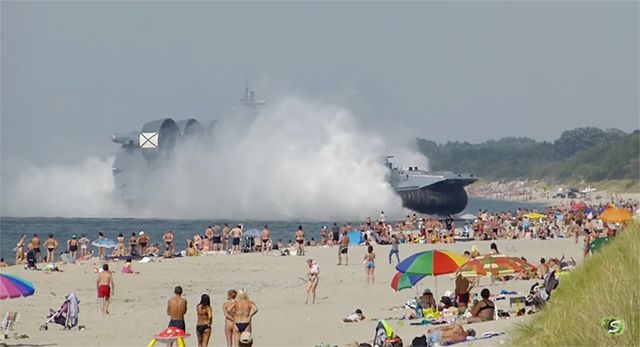
In St. Petersburg, the captain of the first rank, 69-year-old Vladislav Nikolsky, are judged. According to the FSB, sending an SMS message to Ukraine, he caused a damage to Russia for 200 thousand dollars. In the late 1970s, the Leningrad Design Bureau "Almaz" designed the world's largest airbaging airbag "Zubr. They were built at the Almaz plant and the Feodosia production association "Sea". After the collapse of the USSR, Ukraine began to actively trade “bison”. In 2008, the country entered into a contract with China for the supply of two ships. There were problems with one of the courts - there was not enough repair documentation. It was found in Russia-in the bowels of the St. Petersburg 51st Central Design and Technology Institute of Ship Repair. The head of the department of technical documentation Vyacheslav Rodionov, who then handed them to the former senior scientific employee of the 1st Central Research Institute (shipbuilding and weapons of the Navy), the 1st rank captain Vladislav Nikolsky, known for his nationalist views and a year in the colony for the release of the extremist brochure “What to do now (a minimum program for a Russian person)”. Nikolsky digitized 10 thousand sheets of documentation, downloaded them to two electronic boxes and sent an SMS message with logins and passwords to the Ukrainian customer. Nikolsky himself does not plead guilty, and his colleagues insist that NATO countries have long have all the information on the “bison”, so the country's security is not inflicted.
Finally, the last researcher accused of treason was the 74-year-old teacher of MGTU named after Bauman, an employee of the Central Research Institute of Engineering Vladimir Lapigin. The details of this criminal case are not disclosed.
Far borders
Special activity of special services, looking for spies and traitors, manifest in two directions - South and Baltic.
The activation of the FSB in the Southern Federal District was connected, first of all, with the war in Georgia in 2008, and then with the Olympics in Sochi.
In March 2010, the North Caucasus District Military Court recognized two military lieutenant colonels Khvichi Imlishvili and Marlene Bogdanov guilty of treason for espionage in favor of Georgia. They received 13 and 15 years in the colony, respectively. The third person involved in this case, an agent of foreign intelligence of Georgia Zaza Herkeladze, was sentenced to 11 years in prison for espionage. All of them allegedly transmitted information about military facilities and employees of the Ministry of Defense and the FSB for six thousand dollars.
In July 2013, the same court sentenced Denis Kaymakov to the eight years of the FSB ensign, who transferred information about the whereabouts of military units in Abkhazia and the protection of the border of this republic. The defendant admitted that he led hidden shooting and wiretapping and collaborated with two Georgian spies.
The last episode of the fight against Georgian spies is a story (similar to the case of Svetlana Davydova), which occurred with the Sochi saleswoman Ekaterina Kharebava. She was sentenced to six years in prison for espionage in favor of Georgia. According to investigators, in the summer of 2008, she saw the movement of Russian troops and informed the military representative of Georgia about this. In May 2013, she was arrested, the verdict was sentenced in November 2014, six months later the Supreme Court approved this decision.
Then the FSB switched to ensuring the safety of games in Sochi. In December 2014, the prosecutor of the Krasnodar Territory Leonid Korzhinek said that in 2014 four people were sentenced to six to 12 years for espionage during the preparation and conduct of the Olympics. Their names are not disclosed. And in early June 2015, it became known that the FSB department in the Krasnodar Territory is completing the investigation of two cases against the military, who are considered traitors. One of the defendants in the affairs is the German officer accused of espionage, who allegedly collected secret information for a foreign state. Also, according to the source of Interfax in law enforcement agencies, for more than a year, a resident of the Krasnodar Territory Nakhatkyan and a native of Sochi Kesyan are in custody. The latter was detained a day after the closing of the Olympics.
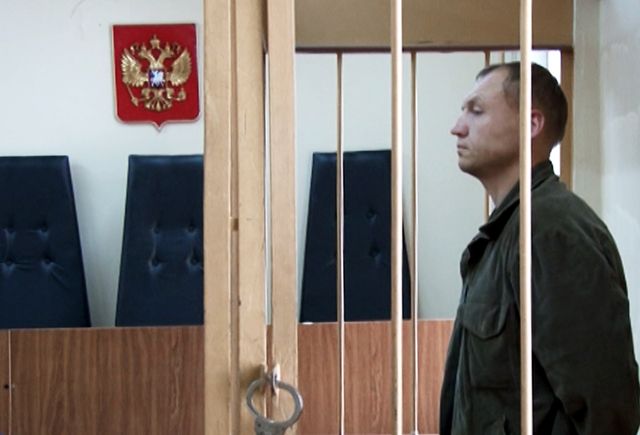
The most famous episode of the Baltic round of Spynomania is the case of Eston Kochver. The employee of the Department of the Department of Security of the Ministry of Internal Affairs of Estonia in the city of Tartu was detained on September 5, 2014 in the territory of the Pskov region. Under him, special equipment was found for a hidden entry, a Taurus gun with cartridges and five thousand euros. According to the Estonian side , the police officer was stolen at the border post during the performance of official duties. It is possible that he fought with smuggling and, perhaps, incurred the wrath of the special services. In Russia, Kochver was accused of espionage. On August 19, the Pskov Regional Court sentenced him to 15 years in colony.
Meanwhile, the court is waiting for a citizen of Russia and Lithuania Evgeny Mataitis. По данным ФСБ, он собирал сведения о вооруженных силах России по заданию министерства охраны края Литвы. Свою вину Матайтис признал . В шпионаже подозревают и другого гражданина Литвы Арстидаса Тамошайтиса. Его задержали 20 мая 2015 года при получении «документальной секретной информации». В ФСБ утверждают , что Тамошайтис — офицер литовского разведывательного ведомства.
* * *
Новейшее направление контрразведывательной деятельности ФСБ — это военно-морской флот. В феврале 2015 года стало известно о четверых военных ВМФ России, осужденных за госизмену. Речь идет о старших офицерах ВМФ Захарии Агапишвили и Сергее Данильченко и еще двоих военнослужащих — Леване Чарквиани и Константине Яшине. Какие именно секретные данные они передавали и кому, неизвестно.
С трудом избежать срока удалось жителю Феодосии, электромеханику танкера «Койда» Черноморского флота Сергею Минакову. Он провел в СИЗО «Лефортово» почти два месяца по обвинению в шпионаже, после чего его дело было закрыто в связи с отсутствием состава преступления. По версии следствия, в 2008 году он передал украинской разведке данные о планах кораблей Черноморского флота. Примечательно, что это дело вел следователь по особо важным делам ФСБ России подполковник юстиции Михаил Свинолуп, который ранее занимался делом Светланы Давыдовой.
Кроме того, управление ФСБ России по Краснодарскому краю расследует уголовное дело в отношении сотрудника Черноморского центра обслуживания движения филиала «Аэронавигация Юга» Петра Парпулова. Он находится под стражей с марта 2014 года, его подозревают в госизмене, но что именно разгласил Парпулов, неизвестно даже его адвокату Олегу Елисееву.
Ilya Rozhdestvensky
Moscow