
Translated material
Consider the defeat
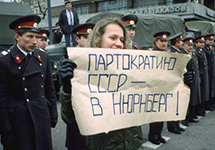
25 years ago, historical events took place in the USSR. August 90 - the climax of perestroika and publicity: the laws of the media and the rehabilitation of victims of repression, the return of citizenship to the exiles. Why did democratic reforms not become irreversible? Will the current Russian Federation repeat the fate of the USSR? The participants of the events reflect on the historical logic of the KGB revenge and further scenarios.
Sergey Kovalev
In 1990, he was a member of the Presidium of the Supreme Council of the RSFSR, chairman of the Parliamentary Committee on Human Rights.
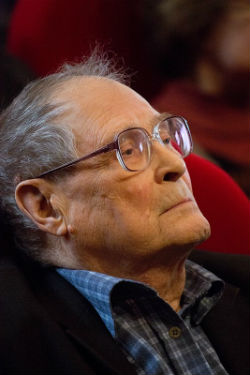
Twenty -five years ago it was the impression that evolution was historically instantly, we are moving in an important, new and encouraging direction. Then the division into the USSR and Russia was already planned (although our circle of former dissidents and newly made democratic politicians did not attach serious significance to this). But the atmosphere itself, which inspires not even hope, but confidence, appeared back in 1987, when the famous painting by Abuladze "Repentance" was released on the screens. Many of us - and I perfectly remember the reaction of the deceased Larisa Iosifovna Bogoraz - said "Well, everything, there is no return back."
It was a collective mistake that is very easy to explain. Now we see that there is a return back - and it happens before our eyes.
For me, a very expressive representation of the then atmosphere is to enter the street from three hundred thousand to half a million Muscovites in January 1991, when Soviet troops in Vilnius threatened the Sejm and attacked the television center, which led to the death of fourteen people. Muscovites’s answer to this was a decisive factor in the liberation of the Baltic countries.
And a few years later, during the war in Chechnya, there were a lot of pickets, there was a wonderful work of the then NTV and other journalists (precisely thanks to the remarkable law on the press, which guaranteed freedom and independence of the press), but hundreds of thousands on the street were not even smelled.
What do we see now? A mass flash in December 2011, then the famous events in May 2012 on the approaches to Bolotnaya. These are powerful flashes, but a maximum of one hundred thousand people immediately recorded in the fifth column. The head of the state mockingly mixed up their symbolism with condoms, acting in the role of the Kipling boat of the KAA and calling us a banderologist. This is the attitude of the authorities to their citizens, powerfully supported by the population.
The indigenous question arises: what's the matter? What happened to those hundreds of thousands of active Muscovites who went out to intercede for distant Lithuania, and now they call on to smash the Ukraine close to us? A serious historical, political science resolution of this problem is a matter of the future, but I will allow myself to express some hypothesis.
The first is the biological nature of man. Our animals would not have survived if they had not learned to divide the world into their own and strangers. This is a fundamental reason for what is called patriotism. From the point of view of the authorities, there are no longer simply wrong or mistaken opponents, but there is a fifth column introduced from someone else's world. And people supported this: not every of us can overcome this call of the ancestors and live in a world where there is a place of justice.
The second reason. Dr. Goebbels was an infinitely cynical and vile, but very stupid person. He said: "Give me the media and I will turn any nation into a herd of pigs." What we are experiencing today is a mass experiment confirming the Goebbels idea. There is no evidence here: turn on the TV and watch federal channels. At the same time, as we read with Cheslav Milos, it is difficult for a person to stand out from the pack. No one is obliged to think deeply about the prospects of democracy, people think about simpler things and watch this box, the only, conscious and undisguised task of which is to score their brains.
As a result, we returned not twenty -five years ago, but much further.
In the Stalin Constitution, there was a famous 125th article, which with all in a uston, very concise, but listed the basic civil and political rights. In the zone, the prosecutor explained to us that he would no longer accept complaints and statements based on the Constitution. He sincerely and frankly said: "The Constitution is not written for you, but for American blacks, so that they know how happily it lives for Soviet citizens. Do not refer to the constitution." The same thing happened with the new constitution, and I think this is our collective wine. The origins of this fault are the first after -getting times when a lot was done. The Gaidar government was created, which, to the best of strength and then conditions, greatly moved the country to freedom, since the market is an important condition for freedom. This government was engaged in very important things, but exclusively in the economy, and not at all political reforms. And immediately after the coup, a certain number of more perspicacious deputies of the Supreme Council tried to convince Boris Nikolayevich Yeltsin that they should take up decisive political reforms while there are conditions. Create a political atmosphere in the country, which will provide a transparent, responsible policy.
Forces, trying to return us to Soviet history with the help of a putsk, were terribly scared. But at the same time they made up the parliamentary majority. 87% of the deputy corps of the USSR were members of the CPSU. In the Russian Supreme Council, this share was lower - more than sixty percent - but what kind of communists were: even if not the first, but the second or third echelons of Soviet power. So they were frightened and were afraid that the winners would do the way they would do with their opponents if the putsch had won.
But Boris Nikolaevich said that there was nowhere to rush, we won and time works for us. In less than six months, we learned that this was not so. And time began to work vigorously against us.
The fact that the situation can come to today, we, alas, did not notice. But it was easy to foresee and try to prevent it.
I will refer to an expressive example: remember how Putin became a successor in the fall of 1999. Firstly, this is in itself a monstrous violation of all the principles of democracy and parliamentarism: a successor declared long before the elections and even the acting president. Remember, did anyone say: "Have mercy on how to vote for the president from the KGB? From the office who performed our gloomy, monstrous history?" For example, in the Gaidar Party "Democratic Choice of Russia", in which I was then, two or three people opposed this candidacy. This was very vigorously said by Sergey Nikolaevich Yushenkov, Boris Andreevich Zolotukhin and me. And Yegor Timurovich Gaidar reacted respectfully to our point of view, but said that after long hesitations he decided to support Putin, and the DVR party followed him. We were not even in the minority, but alone. Neither in the press, nor in a wide public opinion, the position that it was impossible to choose power from the KGB was not presented. Are you crazy? Imagine a post -war Germany in which Obersturmbanfuhrer Gestapo would become a chancellor. The Party of the ATP, which the FER actually joined, also tried to interact with the new president, and my position was simply not accepted and not noticed: they say that some old dissidents do not understand something. As the chairman of the Constitutional Court Zorkin put it, "these are all the Kumran manuscripts!"
Unfortunately, the KGB (now the FSB) has been preserved, was not reformed and made a revenge. In the early 90s, the KGB core survived, the state remained their main idea in which the power is monopolized, omnipotent and belongs to one corporation. And in many ways we missed the dissidents. We thought, well, here it is, this power, she wants good and at the same time, unlike us, understands the levers of government.
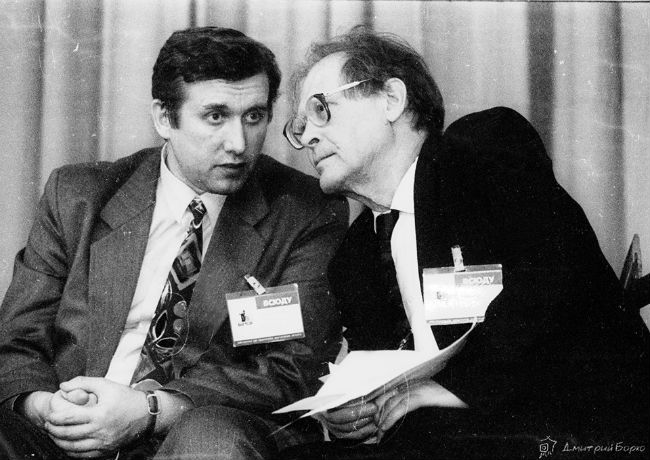
Sergey Yushenkov and Sergey Kovalev. Photo by Dmitry Borko
The option that the same thing will happen to the Russian Federation that with the USSR in the eighties is not excluded. Honestly, I am not a master of this kind of forecasting. I have hope and at the same time the fear that the current situation cannot stretch for a long time. Moreover, no gradual progressive evolutionary movements in the country are impossible: this is a harmful illusion. This is when people say: it is necessary to do at least something, at least to clean in their entrance ... But in fact, you need to change power. Another question is - by whom it can be replaced. It is unlikely that the current, as they say, is a non -systemic opposition. The stubbornness of this opposition is an important thing, but it is unlikely that a change of power comes from it. Hence the fears - no matter how fascism has not replaced.
Now many in the world talk about the Russian situation as follows: "You can’t drive the rat in a corner, otherwise it will become dangerous." This is true, but only she has long been in the corner. The current government has no freedom of choice. She can either continue moving in that stupid, completely monstrous and brainless direction in which she develops a political situation today, or collapse into tartarars. When they talk about the rat, whether it walks free, or is at a dead end, forget that it is a powerful tank of plague. And you need to choose - either to fight with the pitch of the plague, or, based on Pushkin’s play, celebrate the feast during the plague. In my opinion, the first is reasonable.
Vladimir Mironenko
Leading researcher at the Institute of Europe of the Russian Academy of Sciences. In 1990 - the first secretary of the Komsomol Central Committee. Lieutenant Colonel of the KGB reserve.
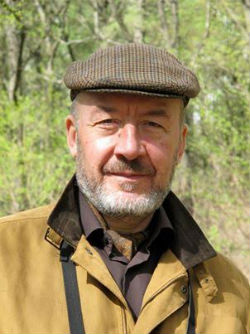
Democratic reforms (although I would call them more correcting modernization of society: remember - “acceleration”, “new political thinking”, etc.), it was possible to stop in 1991, because the most ignorant and useless part of the political class (“nomenclature”) that was frightened by real democratization was able to rally around the allegedly offended by Gorbachev and skillfully skillfully pretended to pretend "Democratic Russia." They knew how to pretend to anyone.
But the part of it, which supported the reforms, was internally split into the "Soviet Bourbons", who "did not forget anything and did not learn anything" (Zyuganov and his comrades, many of my countrymen - Ukrainian communists, etc.), and those who decided that "new wine" can be poured into the old Stalin Mehi - they say, Gorbachev is weakly more and more.
The thinking part of the political class, including the initiator of perestroika and its "foremen", had no clear idea of the final purposes of reform. Everything was done from good intentions, the right analysis in general, but AD HOC - according to the situation. For everything good against everything bad! The “restructers” (including me) could not see that part of the Soviet society that wanted and could “rebuild”, and rely on it. According to the old demagogic habit, everyone promised everyone, without taking into account the obvious - the interests of different social groups diverge.
There is another very important circumstance. The people as a whole were exhausted and exhausted by endless revolutions, wars, hunger, poverty, disappointment, etc. The subconscious dominant he had a desire to live calmly. This was played by the repainted yesterday's "solid Bolsheviks." They offered a very attractive but through a demagogic slogan: we live ourselves and let everyone live due to the eating of two or three generations accumulated in decades, which they really were not given to live in the name of a "bright future."
Due to these and mass of other circumstances, in December 1991, a real, not an octing "revolution" occurred, the union state was finally destroyed. In Russia, the Yeltsin period began, which had nothing to do with the goals of the country's modernization. The Russian nomenclature took the remaining industrial and primarily resource-energy potential to its hands and began to eat it. Schools or almost flashes, drew attention to what at the time of the destruction of the Union neglected. So the "Russian world" arose - the same propaganda myth as previously "democratic Russia").
As a result, we have what we have.
I still hope. In recent years, I went to Siberia a couple of times, to Altai and saw real Russian people. Every year I visit my homeland - in Ukraine and I see how, despite our “help” to her and the stupidity of some of its own politicians, Ukrainian society recovers, becoming, staggering, to his feet, in order to go to the future, which I am convinced, he has. Earlier or later, Russia will go along this path. Because in the modern world there is no other way for her. The night is the darkest before dawn.
What to do, you ask. Open our eyes wide, listen to the fact that no one will do anything about us, Russians that no one will do anything for ourselves, and, alas, return to the point at which we turned on a light but slippery path: - to the fork, in 1991, to real modernization. Now it will be incomparably more difficult to implement it than then. We probably need to try again to become free, self -sufficient, proud people. This is a long way, but it begins with the first step.
Alexander Osovtsov
Deputy of the Moscow City Council and the State Duma of Russia of the first convocation. One of the founders of the Democratic Russia movement.
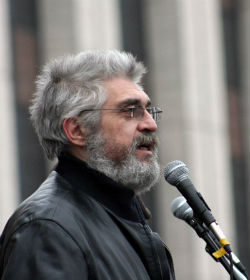
My wife recently remembered how in 1991, immediately after the defeat of the putsch, she, being in a very good mood, asked what I was so gloomy. I replied: the best that we had in social activity ended. The only question is whether only the most difficult time or defeat begins in inevitable.
Already in those years I felt that the Scandration is "Yeltsin! Yeltsin!" - This is the same idolatry as "Stalin! Lenin!", Or falling to knees before Nicholas the Second. Yeltsin was paradoxical, but in fact an absurd choice. The light of democracy is the fallen angel from the Politburo. But it was Yeltsin who supported, there was the same effect: "Who, if not Yeltsin?"
For the symbol, different people would fit, but in any case new people. There was a worker in Poland Valens - and there was a worker of Travkin. But he had no chance. There was a playwright Gavel in the Czech Republic, well, please: playwrights, writers, scientists were also enough, their names are known to everyone who will read this in "faces". But also no chance.
The point is not that Yeltsin was a communist for a long time, although this is important. This was a person, firstly, authoritarian, and secondly, without strong beliefs. A person whose main quality in politics was a tremendous will to power, and not an idea of values.
It was clear to me: the matter is not in the direction of deep reorganization, high -quality shift from the traditional Russian model (which always hesitated between serfdom and the liberation of serfs, between aggressive wars with all over Europe and periods of absolutely peaceful foreign policy). In this model, there is always the opportunity, depending on the will of the highest authority, to move again to repression and aggressive wars. This opportunity itself has never been destroyed.
Imperial, authoritarian principles have not been subjected to this analysis, or even more so real condemnation. The guilty (at least the main ones) was not brought to judicial liability. In the 91st year, we only heard: "Do not arrange witch hunt!" This is right when, under the guise of witches, normal women are burned. And when is the witches really around? As the Strugatsky brothers wrote: "If in our house it smelled of gray, we must assume that somewhere nearby the features with horns appeared, and take all the necessary measures up to the production of holy water on an industrial scale." Very soon it became clear that the devil with horns - here he is! And over time, he made a revenge.
There was a return to the imperial - now sometimes they say, the Horde - models of the historical existence of the Russian state. This was the next failure of the next modernization.
And there are very few chances that this revenge was not for long. The Soviet Union lasted seventy years and ceased to exist only insofar as one leader began a qualitatively different policy. Imagine that, by virtue of some other momentary situation, Gorbachev in order to maintain power and suppress his opponents in the Politburo would not begin democratization, publicity and restructuring, but, on the contrary, the most rigid twisting of the nuts. I would have lowered the KGB in the style of Stalinist repressions ... so what?! Would what happened? I think that nothing like that. There would be simply economic, financial, consumer, food crisis. Well, there would be a card system for this time.
Reforms were a movement from above, although they supported part of the population. And most of it reacted to this, although obediently, but within the framework of the usual model of behavior when they support everything that the authorities offers. Today they maintain a course to confront the West. Tomorrow they maintain a course on Western reforms. These were the same people who in 1983 were convinced that the South Korean Boeing was correctly shot down, and already in 1988 they believed that such actions were absolutely unacceptable. In 1979, they were sure that the troops in Afghanistan were correctly introduced, and in 1989-that they needed to be withdrawn as quickly as possible. Because they were told so.
To predict that the system is about to collapse, I see no reason. The only chance is that any pendulum is swinging and it is very difficult to stop it even to those who swayed it. The external aggression to which they passed last year, of course, are fraught with big problems, and if it continues, then yes, the end of this regime may come. But do not forget that he can come along with the end of civilization.
Представьте на секундочку, что не было в прошлом году ничего такого, что случилось сразу после сочинской Олимпиады. Не присоединили Крым, нет вторжения в Донбасс, не сбили "Боинг", никаких санкций нет, в Украине, естественно, много всяких сложностей, но при этом нет внешней агрессии в качестве фактора внутреннего сплочения и международной поддержки - вот ничего этого нет. Тогда у Путина был бы полный шоколад. И никакие проблемы в обозримом будущем его режиму не грозили бы.
Да, агрессивный военно-империалистический характер режима создает ему угрозы. Но насколько эти угрозы опасны, пока неизвестно.
Во второй половине 80-х в стране был сложный многофакторный процесс. Говорить, что, мол, тогда падала нефть и развалился Советский Союз, а сейчас падает нефть и развалится Российская Федерация, - это примитивно. Повторю: тогда был восходящий тренд свободы, и шел он сверху, от генсека. Государь-император даровал волю. А теперь все тренды и наверху, и внизу абсолютно противоположны "перестройке".
С тех пор изменилось многое. Многие считают, что огромную роль в крушении Советского Союза сыграла афганская война. Действительно, разговоры о погибших наших солдатах, о том, как от нас это скрывают, как все это жутко, - они же были в самых разных кругах общества. А сейчас все знают, что в Украине гибнут российские солдаты. И что, все считают, что это ужасно? Нет - нормально, правильно, ну а как: воюем с Америкой. Наши герои погибли за великую Россию. Тогда преобладающее настроение у людей было такое: "На хрен нам все это надо? Пусть Афганистан живет как хочет". And now? "На хрен нам вся эта Украина, пусть живут как хотят" - такого не услышишь.