
Translated material
Belarusians outlawed
For those who do not understand sports: the most loud scandal in Russian hockey
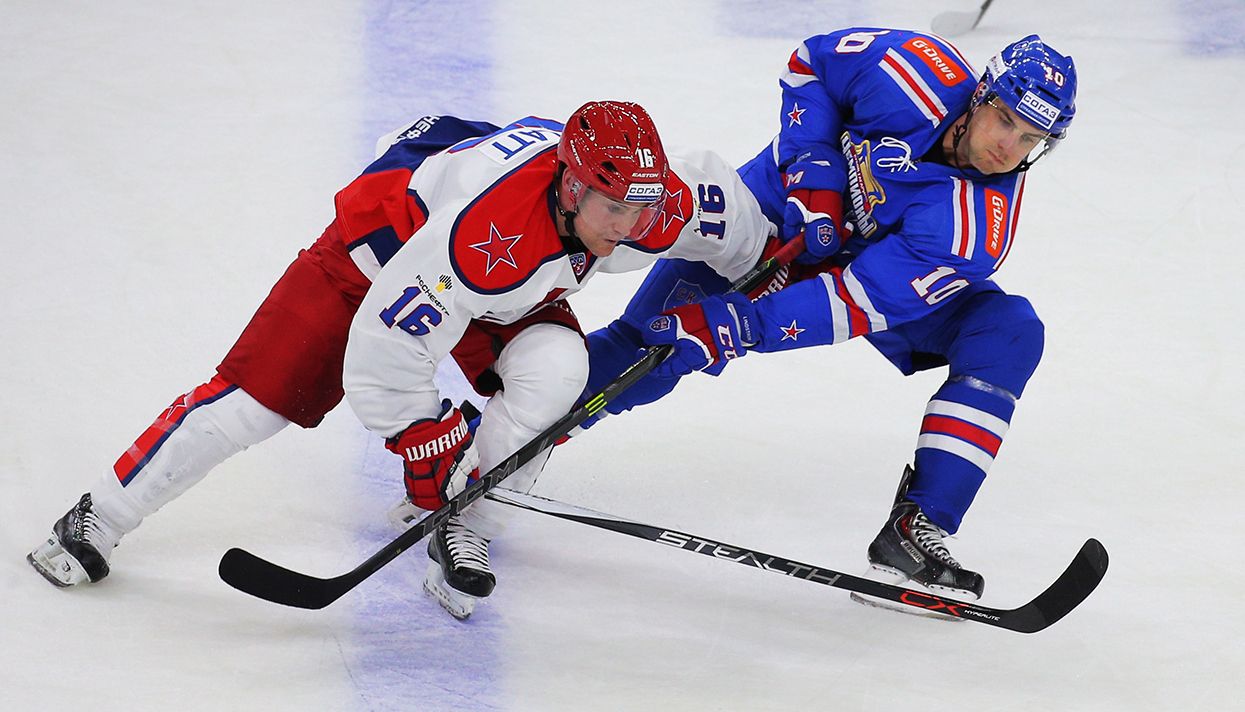
On August 27, the Ministry of Sports and the Russian Hockey Federation announced that the so -called limit for legionnaires prohibiting the games of more than five players with foreign passports is now applying to citizens of Belarus and Kazakhstan. The decision was made after the start of the season in the Continental Hockey League and signing contracts with players - that is, at the most uncomfortable time. A week ago, the KHL said that players from the countries of the Customs Union would play on the same conditions as the Russians. Medusa tells how Belarusian and Kazakhstani hockey players fell into disgrace and what all this means - even for those who watch hockey once a year and complain that they can never understand where the puck is.
To begin with, a little basic facts. Unlike football, hockey in Russia is really at a high level. The continental hockey league created eight years ago is one of the strongest organizations in the world after the NHL. In the Russian clubs, high -level players have eagerly came to the Russian clubs, including the legendary Jarmir Jagra at the peak of forms, and it was pleasant and interesting to watch the game. There are no contractual matches in the KHL, here the richest club, which is led by the founders of the league, can fly out for years in the first round of the playoffs, and teams go into the finals without a single loud name, but with character. The Russian hockey team is one of the best national teams in the world, now inferior, perhaps, only Canada, and it constantly fall into its composition (and become stars at the world championships) KHL players along with Alexander Ovechkin and other Russians from the NHL.
What kind of limit on foreigners?
As in Russian football, in the KHL there is a limit on foreign players, but due to the fact that clubs from different countries play in the continental hockey league, it acts in a special way. Foreign clubs, including the Dynamo Riga, Finnish Yokerit, Bratislavsky Slovan, Astana Barys, Dynamo Minsk and others, these clubs are subordinate to the rules of hockey federations of their countries. Until recently, Russian clubs had the right to declare no more than five foreign players, while a foreign goalkeeper in the team can only be one, so as not to deprive the playing time and chances of developing a career of domestic goalkeepers.
Kazakhstani and Belarusian hockey players were not considered foreigners on the basis that these countries are included with Russia in the Customs Union. If there are almost no good hockey players with a Kazakhstani passport outside the Barys (the exception is the Canadian with the citizenship of Kazakhstan and at the same time the most productive defender KHL Kevin Dallman), then Belarusians are decent. In the Nizhny Novgorod Torpedo, for example, the Brothers of the Kostitsyns who performed in the NHL play. There are several North Americans playing at the KHL (say, Jeff Plett and Kevin Lawland) have Belarusian passports. In total, Belarusians in Russian clubs 19, the total cost of their contracts is about 800 million rubles a year.
The Russian Hockey Federation, led by Vladislav Tretyakom, insisted that the limit should be tightened in the interests of the Russian team - inviting foreigners, we allegedly train players for other national teams. Critics of the limit consider this to be completely absurd fears, especially about Belarusians and Kazakhs, whom the Russian team always plays in any composition. On the contrary, in the KHL, claiming the title of the Second League of the world, there should be healthy competition for a place in the composition. Until recently, the situation with five legionnaires and the “preferential” status of Belarusians and Kazakhs did not change, the same regulations should have acted in the new season.
What has changed?
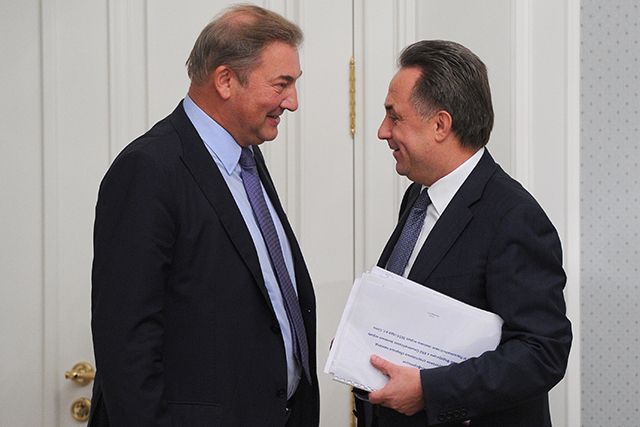
In July 2015, Russian President Vladimir Putin signed the law on legionnaires in Russian sports. In short, this law obliges sports federations to subordinate to that limit on foreign athletes, which will be established by the Ministry of Sports, and not to establish it themselves. The Ministry of Sports was made to understand that Belarusians and Kazakhstanis are most likely equated to ordinary foreign players.
July is the time when pre -season preparation is underway, the compositions of many clubs have already been finally formed, and contracts with foreigners with all contracts for premature gap have been signed. Despite the rumors, the KHL made it clear to the clubs that everything would remain still. In mid -August, KHL President Dmitry Chernyshenko, a close associate of entrepreneur Gennady Timchenko, even announced that Belarusians and Kazakhs would play as before, their contracts are out of danger. At the same time, other officials of the league and unofficial patrons of the level of the same Timchenko spoke the exact opposite.
On August 27, a few days after the start of the KHL regular championship, it became obvious that the KHL did not succeed in agreeing with the Ministry of Sports. The published decree on the limit on foreigners, which enters into force on August 28, clearly says - there are no exceptions for citizens of the Customs Union, they are ordinary legionnaires, and let the clubs behave in such a situation as they want.
What will happen to the clubs?
Several KHL teams have already announced that contracts with Belarusian hockey players would have to be terminated. According to unofficial information, Torpedo will part with the Kostitsy brothers. In some cases, a foreigner will lose the contract, but in general, the KHL clubs do not want to violate the law. Clubs will suffer significant losses - it is impossible to evaluate them for sure, everyone has different contracts, but compensation for termination can be half the annual salary of hockey players. Thus, the damage can amount to more than 400 million rubles, and these are only fines for terminating contracts excluding the cost of buying a player for a replacement.
What does that mean?
KHL is a private and unrelated structure, but now it has shown that it depends entirely on the state, and the rules of the game can change at any second. For example, no one is safe from the fact that in the middle of the season the number of legionnaires will be reduced to three due to the defeat of the national team at the Eurotour stage. In the KHL, it’s not the best situation with the players now - only in the offseason to North America a dozen Russians (including those playing for the national team) left, and foreigners are not eager to play in Russia after the ruble collapse. Now it will be even worse because of the unpredictability of the League rules.