
Translated material
From al Capone to hot five
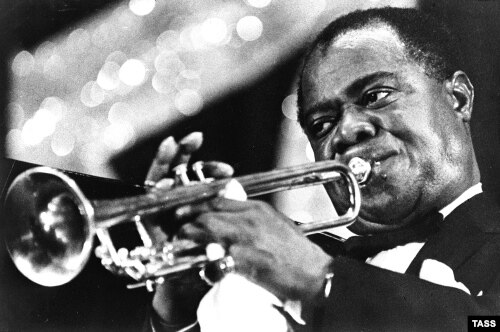
It is never harmful to return a little back and talk again about jazzmen once, about the Great Satchmo. The topic is relevant: the dry law always attracted me on the eve of the rain season. Yes, and the gangsters season around the world in the very fact that is fashion. Again, it’s nice to return to the city of winds, Chicago.
In 1925, in Chicago, in the early era of the Sacle Law, the struggle between the Gangster gangs reached the climax. Dyon O'Banon Head of the Jewish-Irish mafia group of the northern part of the city, a clear psychopath, was shot dead in a flower store. Al Capone, the sworn enemy of Dyon, commented on this fact as follows: "O'Banon's head bounced off his hat." Armed groups began to prepare for the battle for the territory in which trade was illegal drinking. O'Banonon was replaced by Haimi Whius. Then the boss Kapone, Johnny Torrio, was wounded on the steps of his house by Bags Moran, one of the lieutenants of Whis. Having got a bullet and frightened, Torrio refused to fight and got into prison. Later he was released and fled to New York, where he entered the alliance with Laki Luciano himself. Al Capone had neither experience nor ingenuity Johnny Torrio. For some time he was confused, and then began to grow, as if on yeast. On the day of Valentine of 1929, he proved by the Chicago gangster, who is now a boss. The real massacre was organized in the garage on Norsa Clark Street: the opponents of Al Capone were sewn from the Thompsons, like on a sewing machine.
Your transistors melted from the heat round the sound of our waves to gurgling. So it is better to listen to the “Jazz Time” right from the website of the radio station www.svoboda.org . The microphone in Paris Dmitry Savitsky.
The question arises: what does jazz have to do with it? The fact is that the musicians from the New Orleans and St. Louis had to play in this atmosphere, the word is inappropriate in these conditions. So the famous Chicago period of jazz developed, and with it the twenty -eight -year -old trumpeter - Louis Armstrong.
Louis Armstrong - Weather Bird - 2:42 (An Introduction to Louis Armstrong, 1924-38 - Best of Jazz RDS)
“Weather Bird”, usually “Weather Cock” is a changeable person; The play of King Oliver, who lured the young Satchmo in Chicago in his orchestra, thinking that he could control him thus. In this case, Louis Armstrong is a pipe and Yerl Hines, who accompanied him on a piano. December 5, 1928, Chicago.
The shootings of gangsters were constantly invading the life of jazzmen. Chicago Cornetist Maggsi Spanier recalled how two guys shot right in front of his nose. “Continue to play” - it was the rule of those days and Maggsi duddel with all his might, although he completely forgot the melody and soaked so that he had to go on a break to change all the clothes, including boots.
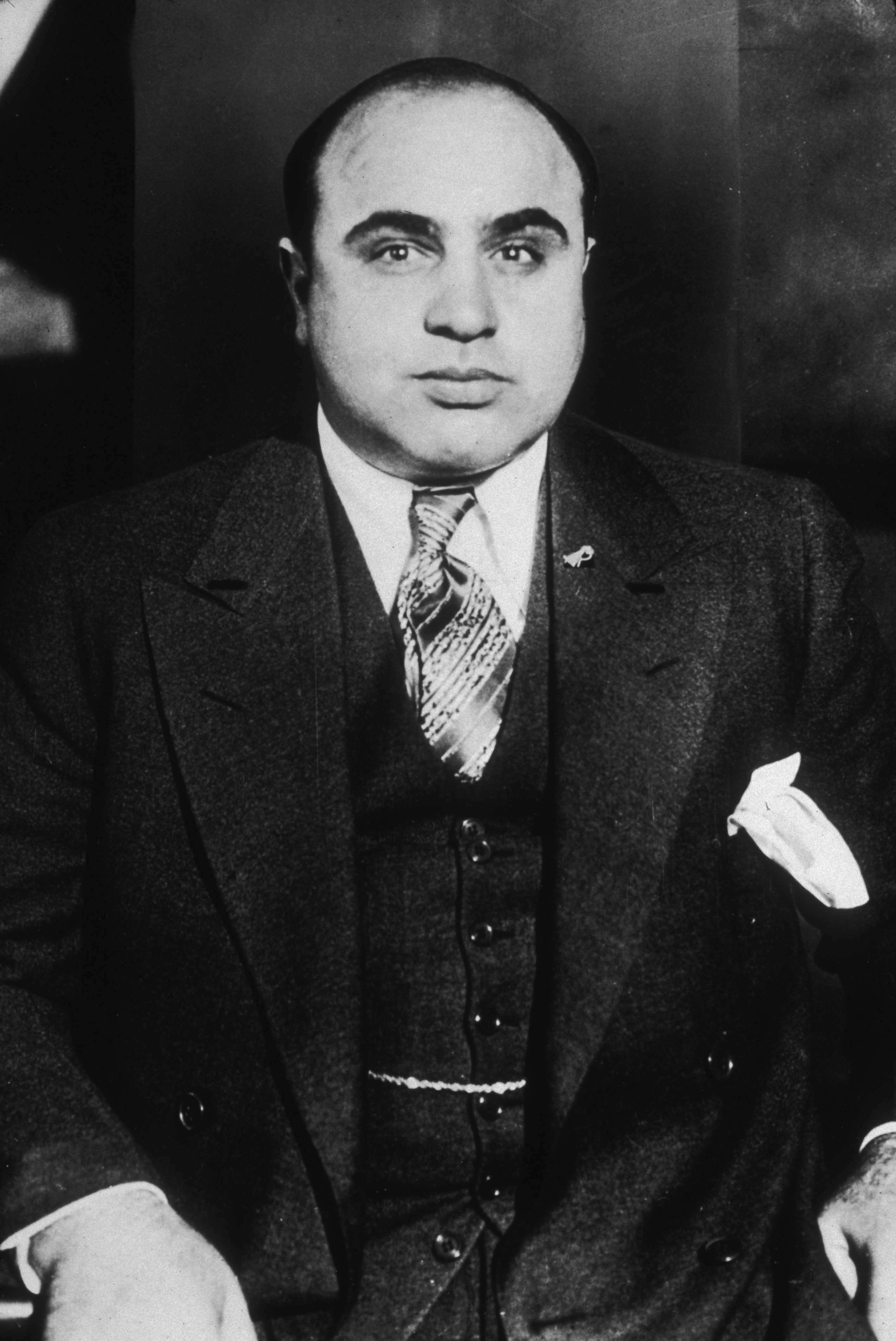
Al Capone was a great lover of club jazz and always threw large tips on stage. Maggsi Spanier wrote that one bandyuga told him: “Jazz turns you into daredevil; You shouldn't be more smaller ... "
Only a clarinetist and a saxophonist, also from Chicago, Mez Meszroou, objected: “It was one giant criminal underground and they seized the last thing that cost something on this earth, our music and trampled it in the mud ...”
Louis Armstrong - West End Blues - 3:11 (An Introduction to Louis Armstrong, 1924-38 - Best of Jazz RDS)
"West End Blues" King Oliver. The Hot Five Louis Armstrong. Satchmo - pipe and scatter; Fred Robinson - thrombone; Jimmy Strong - clarinet and tenor; Erl Hines - Piano; Mensy Carr - Banjo; Stitching a singletone - drums. Chicago, June 28, 1928.
Another indigenous chicagage Cornetist Jimmy McPartland wrote that from time to time, a gang from the opposite camp was from time to time and made a pogrom. He recalled that they turned people into minced meat: they broke a bottle of someone's head, and then crashed it in the face.
“But we continued to play and the point,” he wrote. These scenes were repeated, and police raids turned into a weekly routine. Yerl Hines was washed off in a police van and I was also used to dumping from the club at a good pace. ”
Satchmo said in those days: "Evil rock danced around you day and night ..."
Louis Armstrong - Basin Street Blues - 3:18 (An Introduction to Louis Armstrong, 1924-38 - Best of Jazz RDS)
"Basin Street Blues" - Spencer Williams. This time the “hot seven” of Armstrong. The second vocal or rather the moo belongs to Berla Hineza. December 4, 1928, the same town of gangsters and jazz - Chicago.
Louis Armstrong reacted to what was happening at concerts in general. He did not consider the firing and scammers something extraordinary. In the end, he grew up in a very similar environment. A teenager in New Orleans, he worked in Honky-Tonks and cheap clubs, often brushing to the brothels, which the Sicilians seasoned in the city and this New Orleans experience helped him think not about the nightmare of what was happening, but about what he plays.
“Jazz Time” at frequencies of freedom and on our easily accessible website www.svoboda.org . “Jazz Time” is the story of American music, jazz and all its genres: from Ragtaym, the New Orleans style, Chicago, Kansas, Harlemic forties, Bi-Bopa, Kula, third course, avant-garde, hard-bope and folklore jazz. You will also find the Archive of the Jazz Time on the website of freedom.
Louis Armstrong - Wild Man Blues - 3:14 (An Introduction to Louis Armstrong, 1924-38 - Best of Jazz RDS)
"Wild Man Blues", "Blues of the savage" of Armstrong and Morton. Satchmo - pipe; John Thomas - thrombone; Johnny Dodds - Claret; Wife of Armstrong, Lil, Piano; Johnny Art. Sire - Bango and Brother Johnny - Beibi Dodds - drums. May 7, 1927, Chicago.
Zagltone has left the following memories:
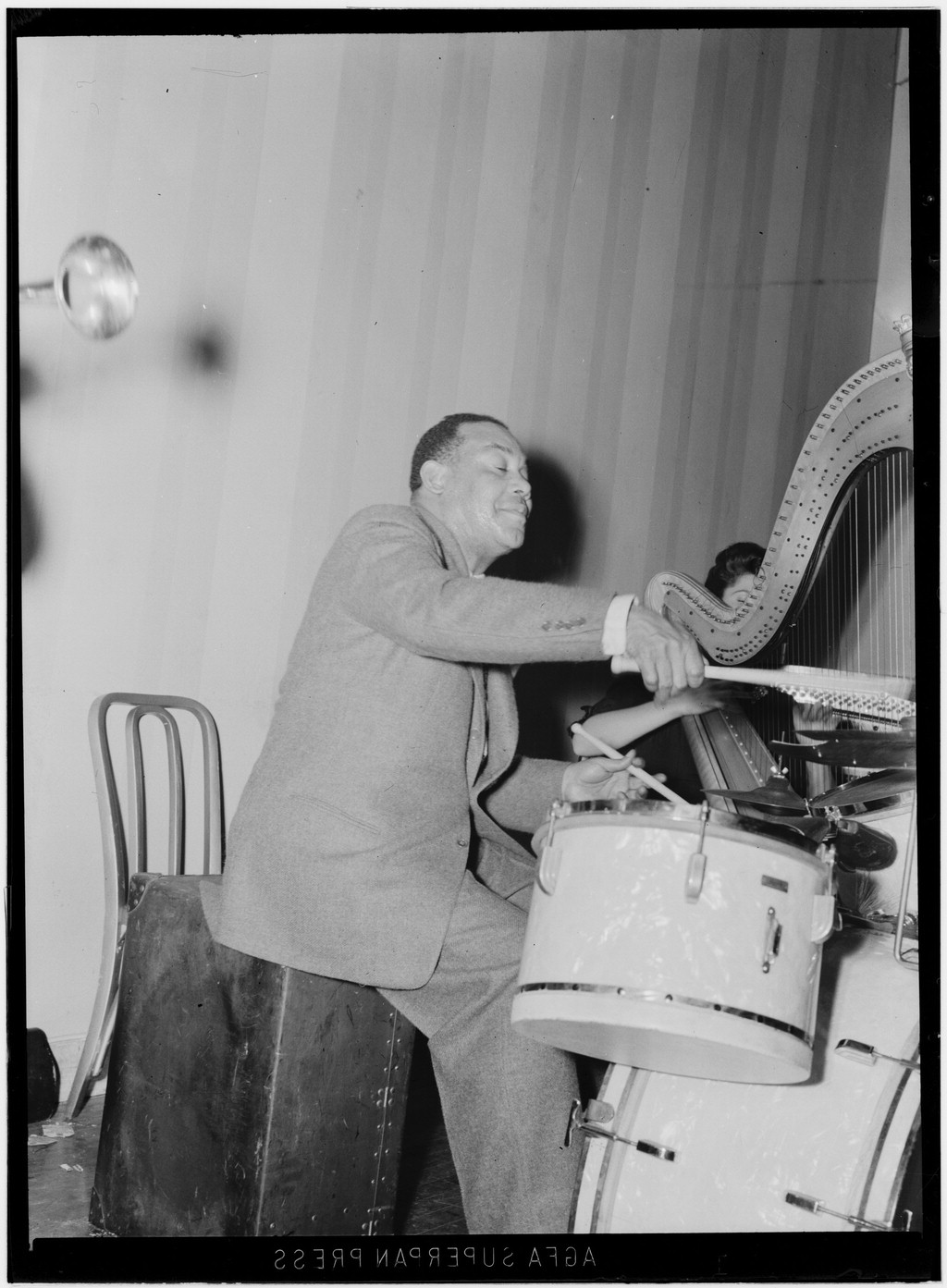
- the muzzle gangster sculpted the slap in the face on the face of his girlfriend directly opposite the scene. Then he turned around, pulled out a hefty gun and asked Satchmo: “You might not like it?” “No problem,” Louis answered, “it does not concern me.”
A few days later, a fierce shootout began in the club and all the jazzmen set off to the floor - only Satchmo continued to play, as if nothing had happened.
“For me,” said Armstrong, “all this was part of the evening and night work ... Everything jumped and rode around us in those days in Chicago, but the work was in bulk.”
Louis Armstrong - Keyhole Blues - 3:27 (Louis Armstrong - The Complete Hot Five and Hot Seven Recordings - Columbia)
“Keyhole Blues”, “Blues of the Kaloor well” Wilson. The Hot Five Armstrong, May 13, 1927, the city of Vetrov, Chicago.
Before moving on to later times, I will say that the First World War is to blame in the Chicago period of jazz. The New Orlean became the military port and the US Navy’s authorities decided that the area of brothels and clubs was stagus - an undesirable place for sailors. Stryville literally closed and jazzmen went to other shores, the banks of Lake Michigan, to Chicago. In the baggage they had a dixiland, but in Chicago itself gradually began to acquire the shape of swing and boogie-wool. Styles in jazz have always developed at the same time. Swing blossomed in the thirties in Kansas, hooked and strengthened in New York.
Louis Armstrong - Black and Blue - 4:10 (Louis Armstrong - Louis Armstrong and the All Stars at Symphony Hall - Giants of Jazz)
"Black and Blue" masterpiece of Fats Waller (music) and Harry Brooks and Andy Razufa (words). For the first time, this song, which became the standard, sounded in 1929.
In this case, the record was made in Boston on November 30, 1947 Louis Armstrong and its All Stars orchestra. Satchmo - pipe and vocals; Jack Tigarden - thrombone; Barney Bigard - Claret; Dick Kari - piano; Orvel sho - double bass and Sydney Cathlet - drums.
His nickname was “SMEK”, that is, smack. Officially - Fletcher Henderson. He reigned in New York and the orchestra played him in the Dauntown for the whites in the Rosland dance club , and played almost by notes. For Louis Armstrong and the first move from a warm, swinging life itself, New Orleans to a gangster, sharpened as a knife, Chicago, was a shock. Well, the move from Chicago to New York was a disaster. In Chicago, at least there were familiar faces of New Orleans musicians and friends around. New York was impersonal, stone in every sense, a city. The New Orleans jazz idiom did not take the roots in this city. Jazz was not hot, seething, boiling, but a little warm.
Satchmo recalled his first day in this city. He introduced himself to Fletcher Henderson and said: - Good afternoon! I am a trumpeter that you sent. SMEK dryly answered: “Your score is there ... And he pointed with a long finger with a heavy ring ...
Your suffering from Ragtaym to the vanguard receivers are tuned to a wave of “freedom”. The weekly jazz, which you can listen in direct relay on weekends or in podcasts from our website www.svoboda.org . The microphone in Paris has your ds.
Somehow it’s worth talking about rings and rings who loved jazzmen so much. Duke Ellington pockets were stuffed with this product ...
Louis Armstrong - St. Louis Blues - 8:50 (Louis Armstrong - Plays WC Handy - Columbia)
"St. Louis Blues »William Christopher Handy. Handy published a blues, which is actually closer to tango, in 1914. "St. Louis Blues ”is guilty of the emergence of a new dance - Foxtrot. By 1958, the Blues brought Handy annually 25 thousand dollars for copyright.
In this case, the Pops orchestra, aka Satchmo, “All Stars”: Armstrong - pipe and vocals; Velma Middliton - also vocals; Trami Young - thrombone; Barney Bigard - Claret; Billy Cail - Piano; Orvel sho - double bass; Barrett Dims - drums. July 12, 54. Star decade of Armstrong.
Rings and rings ... Pianists wore them on the right hand, the one that is visible to the hall. But in this case, Satch opens the score of the play “Minnetonka” (there is such a town in the state of Minnesota) and is slightly dying. The fact is that in that era he did not read from the sheet. In short, his first performance was a failure. He did not understand the note of the Smece Pianissimo (R.R.), and when Henderson asked him why he was so powerfully buzzing, although it was written clearly by Pianissimo, Louis replied: “I misunderstood.” I thought it was Pound Plenty - press on the whole coil.
The Armstrong career could be slightly rusted in New York, but his friend and colleague Clarinetist Baster Bailey, whom SMEK decided to import him from Chicago, saved him. Louis became easier, Buster on a familiar and beloved theme “Tiger Rag” wound up one hundred percent and then Louis felt at home and gave out such a solo that the orchestra gasped, gasped and, having received a powerful vaccine in real jazz, broke off. Rumors about an incredible trumpeter went across the city and listened to the crowds to listen to Armstrong. When he began to play Harlem, this was a real revolution. Satchmo once and for all changed the New York jazz, he got warmer, warmed up, boiled and became-an inappropriate word, but there is no other-real, himself. Finally, the arc between the new Orleans and New York closed and broke out a powerful pulsating light. New York was torn from Manhattan and took away ... where would it be ....? In short, carried away!
Louis Armstrong - On the Sunny Side of the Street - 6:49 (Louis Armstrong - C'est Ci Bon Satchmo in the Forties - Proper Records)
“On the Sunny Side of the Street”, “On the Sunny side of the street” - officially Fields and McChee, but they say that this standard was written by Fats Waller and, as often happened, sold more commercially successful guys from the alley of tin pots. Armstrong and his "All Stars", 1947.
The finish line of your weekly jazz time. You can listen to us at short frequencies of “Freedom”, through satellites Hotbird and Asiasat-3, as well as from our website www.svoboda.org .
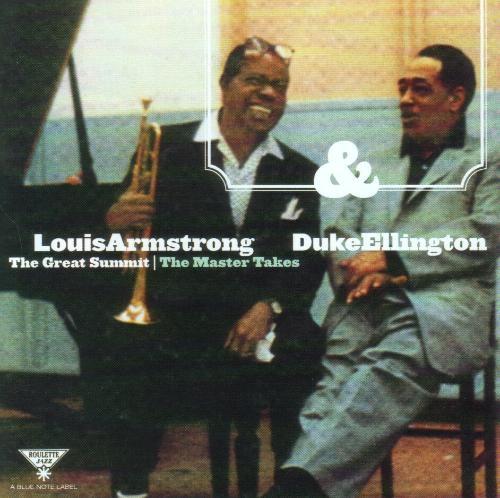
We will part in a rare record in every sense. This is Duke Ellington and Louis Armstrong “The Great Summit”. The rarity lies in the fact that this is almost a rehearsal run with the return to Duke’s song Don 'Don' Don 'Around Much Anymore. The words were written by Bob Russell.
Satchmo - pipe and vocals; Ellington - piano; Trami Young - thrombone; Barney Bigard - Claret; Mort Herbert - Dennie Barcelona - drums. The record was made in the RCA studio on April 3, 1961:
L.ARMSTRONG & D.LLINGTON - DONIT GET Around Much Anymore - 10:42 (L.ARMSTRONG & D.LLINGTON - The Great Summit - Roulette Jazz )
“Don 'Get Around Much Anymore”, that is, “Do not hide too much in any places while I am not ...”. "The Great Summit" Satchmo and Duke, 1961.
That's all for today. You will find the podcast of this and previous issues of the “Time of Jazz” on our website www.svoboda.org . All you are blessings, blue sky, Chao, Bai-Bai