
Translated material
Without illusions and hopes
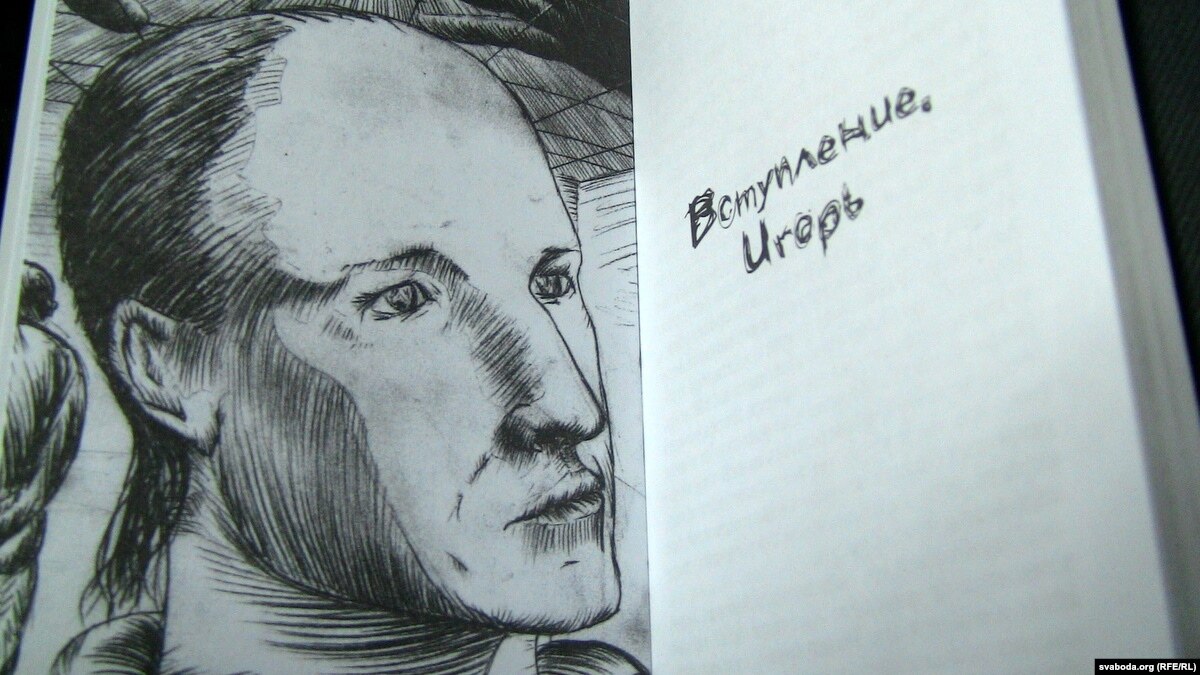
Igor Onelevich, author of the book “I am going to Magadan”, the Belarusian anarchist and political prisoner, was released after almost five years of bondage
"On November 28, 2010, Moscow, the cafe of the Gorbushka shopping center, 14.45 on the clock. The eyes of people, fuss, preoccupied faces are sticking out from a sleepless night. The employee is in every second one ... Dima is sitting from his own paranoia. At night, a proposal came from Buratino. There was a persistent desire to abandon, because we know that he knows that he -But this is necessary We leave the complex - four shadows darted from all sides, grabbing under the arms ... "
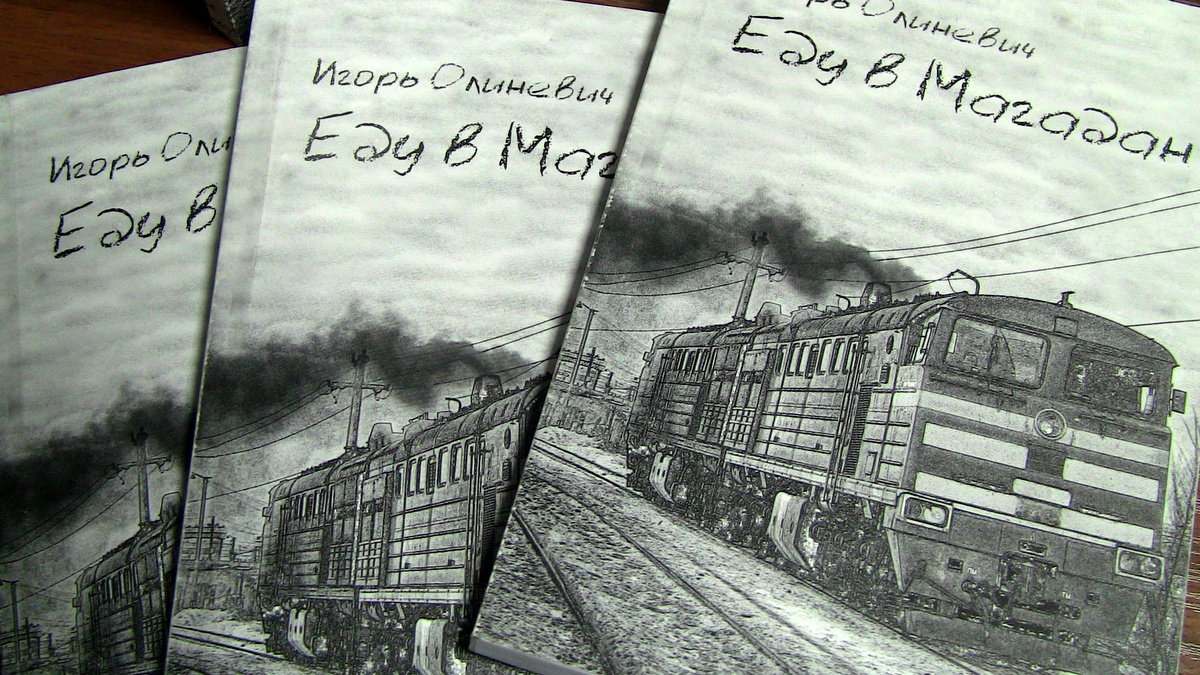
Thus begins the book “Food to Magadan” of the Belarusian anarchist Igor Olevich, who conducted in prison for about 5 years and was recently released by the President of Belarus Alexander Lukashenko (on the eve of the election and under the pressure of Europe) along with another five political prisoners - Nikolai Statkevich, Nikolai Vaskovich, Artem Prokopenko, Yuri Yuri Rubtsov.
Onelevich was convicted of the so -called "case of Belarusian anarchists" in connection with an attack on the Russian Embassy in Minsk on August 30, 2010. Several "fire" was thrown into the embassy, as it was later stated - in the support of the Russian anarchists, against which a wake of persecution was in Russia at that moment. After the attack on the embassy in Belarus, repressions began against the anarchists, Olenevich was hiding in Russia, but was captured and transferred to the Belarusian authorities there.
Onelevich, like the other released , says that he did not expect liberation:
I was not hoping for anything
- The first time the news in the newspaper "Our Niva" had slipped that Lukashenko met with representatives of independent media, and there he was asked about Nikolai Statkevich - whether they were going to release him. There was a hint that this issue can be resolved positively. However, just a few days later, several participants in the protest movement for graffiti were detained, they were brought a very difficult accusation. I regarded this as a signal to the fact that there will be only a deterioration, that there are hardly any release against such a background. I was preparing for the fact that they would “close” me into a chamber -type room - this is an internal prison in the camp. I did not hope for anything. And the picture of liberation was typical of all of us. At 4 o’clock in the afternoon, the operact officers came and told me to go with things at the checkpoint. In this place, a search is usually carried out, and a person is either transferred to the prison, to another colony, or is transferred to the Black Building building. And until the last moment they did not tell me that they were released, they performed a standard procedure, however, with a very thorough inspection of my records, letters. Literally every page was studied. I realized that I was released only when an employee of the special department came to me and read out the order of pardon.
- Several days have passed at large. Have you returned to political life or just now enjoy freedom?
- I enjoy communicating with people close to me, with those people who supported me all these years, paid attention, wrote letters to me, helped my family. This euphoria has not yet passed.
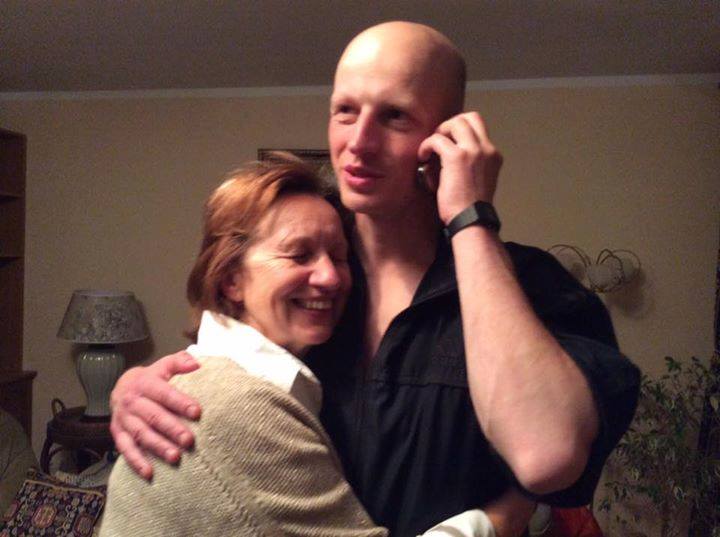
- Let us return to the events that brought you in conclusion. You tried to hide in Russia. You were kidnapped there and transferred to Belarus. It has now subsided now, somehow went into the distance?
My comrade is still on the run
- That story, in principle, cannot go into the distance for the reason that it is not completed. Not all criminal cases were completed. My comrade Dmitry Dubovsky is still on the run. He is pursued by the same accusations. He is the only witness to my abduction in Moscow on November 28, 2010.
- He has been hiding since then?
- Yes, and very successfully.
From the book "Food to Magadan":
"They clanged the gate, the car drove. The hat was still in my eyes. I am completely disoriented. They start into the office, put them on a chair, face in the table, the rib of someone’s palm is lowered around the neck. Ahead is the longest night in my life ...
“Igor, let's talk with you as a person with a person,” came the voice opposite.
“People do not talk in this position,” I myself was surprised at my voice.
Apparently, they did not expect resistance and hesitated for a while. This gave me confidence. Then they started:
- We know everything, say, admit!
- I don't know, I have not been.
- Everyone has already passed you, what to deny?
Only one question torments: Dima left or did they take it later? But how to find out?
- And what about Dima? Gives testimony?
- What is Dima? Do you mean Dubovsky?
Clear! Didn't take it! So, everything is not so bad. "
Injustice and lack of freedom that existed a century ago, are relevant now
- When I read your book, I had the feeling that it was a real underground. Somewhat reminiscent of descriptions of the beginning of the last century, when the revolutionaries fought with the guard, they were tracked, grabbed. Provocations, traitors.
- Over the 100 years, only the external background has changed - technological progress, new historical events. But the structure of society, the system of power remained about the same. Those injustice and lack of freedom that existed a century ago are relevant and now cause the same reaction of disagreement from many people who share anarchist ideas.
Shard of the Soviet nomenclature
- Is it possible to say that your main enemy is not Lukashenko, you are generally against the state in any form? Or are personalities important?
- The point is not at all in Lukashenko. The point is the power of those in power, which govern the country. For me, they are a fragment of the Soviet nomenclature, which after the collapse of the USSR did not go away. She was modified. Their children went down the service ladder, their relatives. But in comparison with Soviet times, this caste degraded. If earlier there were at least some facets of the unreasonable, now all these faces are crossed. And this poisons the whole society from top to bottom. I approach the issue of the state at the system level. It's not about personalities. The case is a relationship. If tomorrow Lukashenko leaves, then this will not change anything, because the ruling class consists of about 100 thousand people with an already developed mentality. This mentality will change any new president, any of his teams. It is necessary to fundamentally change the structure itself. Anarchists advocate civil self -government, where each person participates daily in solving public issues. We advocate the creation of various associations, for strengthening horizontal connections within society, for the development of personal initiative not only in the economy, but also in the social sphere, in culture. We believe that society should be like a kind of neural network, which in effectiveness is much better than the traditional hierarchical structure.
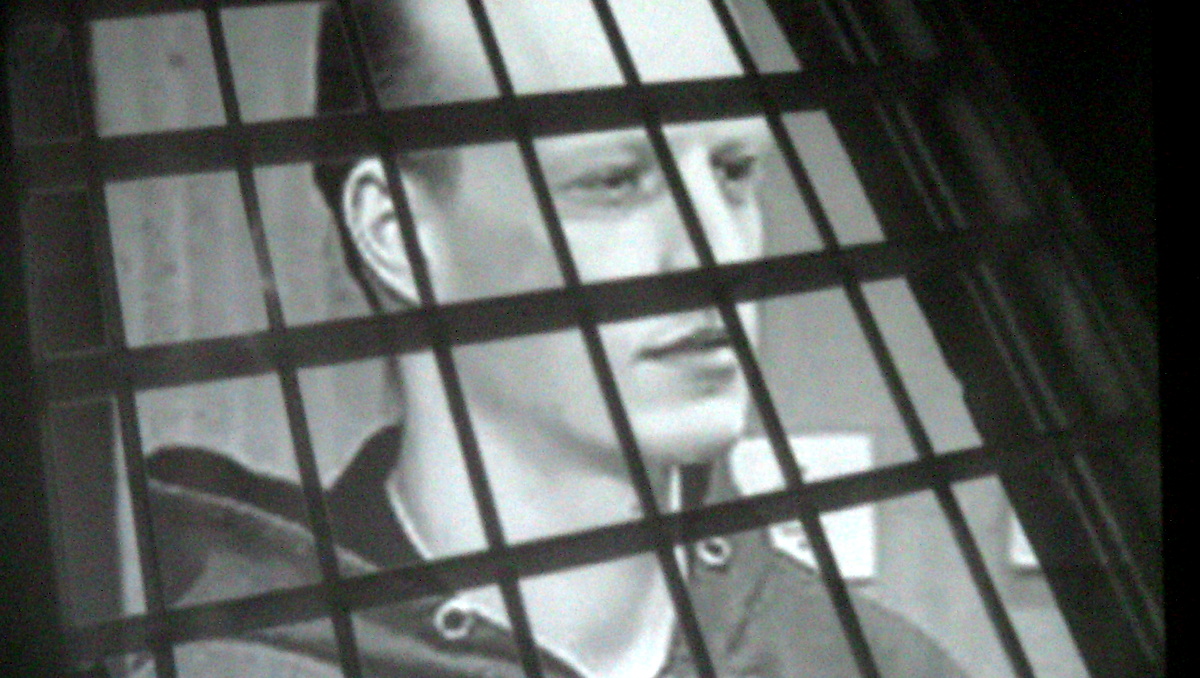
I call it direct democracy
- I talked with Nikolai Dedko . He said that the institution of presidential power, because one person cannot decide for 10 million, but at the same time I did not have the impression that he was generally against state institutions.
- For the most part, people already have the usual stereotypes, the terminology that they use. The state usually means not only the institution of power, but also organization as such. Therefore, the question is exclusively perception. Saying that I am against the state, I mean that I am against oppression, against the hierarchy. But at the same time, I advocate organization, for an effective society management system. I do not call this state, I call it a direct democracy.
Anarchists who are faced with repression behave courageously
- Anarchists have never been widely popular precisely because people are afraid of anarchy, and they can be understood, there are many examples of what the anarchy led to. How widely do you feel support in your country?
-As a political movement, I do not hide, we are not some kind of big force. But over the past 5 years, support has been felt, rather, at a moral, personal level. For some reason, it turns out that for the most part, anarchists who are faced with repressions of the state behave quite courageously, with dignity. And this causes admiration, respect for many and, accordingly, growth to our views. After all, personal qualities come from the worldview.
From the book "Food to Magadan":
"Having once attended a seminar with the participation of Markelov (the land to him by fluff), I learned firmly: no confessions! It is on the testimony given in the early days, as a rule, things are being built ...
The first rule is "Do not believe!". All they say is a lie, half -truth. And if true, then with the aim of further manipulations ...
Taken with great. I fell asleep and woke up many times - as soon as they felt fatigue, they immediately increased pressure. Everything was used: threats, flattery, blackmail, exhorted the meaninglessness of the struggle, cast doubt on the loyalty of comrades, emphasis on selfishness, etc. I did not know how much time passed. It ceased to exist. It was unclear where the reality is, and where is the dream ...
"Throw in the hut to the skinhadam! We have a special skinhata! ... You are handsome, they love them in prisons ... They haven’t beat you normally ... Why do you need this?"
I turned on only to say “I don’t know, I was not,” and again went into unconsciousness. The second rule says: "Do not be afraid." As a rule, they will bluff. But even if not, then only you can find out whether you can withstand it or not. Who was frightened is already defeated. It is worth showing fear - and you are on the hook, everything will be pulled out of you.
Throughout the inquiry, a feeling of finding out that I read it somewhere. This thought was very sobering up, it was confirmed that all this is a staging. After all, anyway, there was a feeling of a certain isolation, subconsciously I wanted to believe in their arguments and thereby stop everything. Psychological protective reaction. There is no getting away from her ...
The expectation again. Terribly wanted to drink and was tempting to shoot a cigarette. But I knew that this could not be done. Any request must be put in the format of the requirements. The third rule is "do not ask." Any request makes the psychological climate softer, and maybe this drop will be enough to outweigh the bowl in their favor. "
The camp system is sharpened to break a person
- Let's get back to the conversation about the conclusion. You described how you were transferred to Belarus, interrogated, you did not sleep. At the same time, you had a clear plan how to resist. You followed some internal attitudes so as not to yield to people who interrogate you. You spent many years in prison. Is it dulled or all these years was it an internal struggle?
- Now, evaluating the spent 5 years, I can say that the “American” ( KGB SIZO - RS ) was a kindergarten compared to what was waiting for me and many others. When I compared my history of detention and investigation with the stories of other prisoners, I came to the conclusion that many people in prison have to deal with a much worst attitude, with much more rigid approaches, with more sophisticated methods of breaking will, not to mention what many have to deal with in the camps. The camp itself is initially sharpened to break a person. There is no task for a person to return to society in order to integrate, so that he begins a new life. The task is set there - either to make a plant creature out of a person, or to call and break off all his social ties. You can talk about the goals of this for a long time, this is a separate question.
The conveyor to instill consciousness that a person is completely powerless
- What are the goals?
- Given how many people go through prisons and camps for decades, this has a huge impact on the mentality of the entire society. For Belarus with a population of 9.5 million over 20 years, at least several hundred thousand people went through this system. Moreover, I do not take convicted in administrative cases, civil, economic, passed through "chemistry", lighter types of punishment. But these people still collided, if not with the camp, then with the judicial system, they saw all its cynicism, duplicity, double standards. It turns out that the courts and camps are a kind of conveyor to instill consciousness that a person in the system is completely powerless, that in power is always right. And for those who pass the camps, also a presumption of distrust to another person. Even preserving its soul and spirit, it still overtakes the camp with distrust of people, cynicism. How can this affect society, except for its even greater decomposition?
- 5 years in the camps. Was this a test of will all the time?
- Yes, every day.
What does not kill, does more
-Was there any positive experience? Shalamov, however, writes that there is nothing good in the camps and this is just hell on earth.
- One truth works here: what does not kill, does more. This fully concerns the camp. I read a lot of literature - the memoirs of the prisoners of the Gulag, later Soviet camps, including prisoners of modern Russian colonies, in particular, read Vladimir Pereverzin "hostage", as well as the memories of Khodorkovsky. It was even possible to meet the people who were sitting with them, to find out the details that it is true that it is described there.
- That is, in your personal experience there is nothing that you could attribute to the positive?
- No, I will not say that. This question has long been discussed. There is the opinion of Solzhenitsyn, there is the opinion of Shalamov. I believe that both of them are right. If not breaking, the camp strengthens the spirit. He tempers character. He teaches to understand people. And the most important, probably for me - he teaches mercy. I probably began to understand people in the camp much more, their situations. I learned to distinguish between those halftones where I used to see only black and white. I even learned to distinguish between the motives of sexots, scammers, not all of them are the same. Even in the inflow, you can find a grain of something good. There were situations when such people due to the fact that I helped them somewhere, knowing that they were sexots, they could even cover me, not to convey something. The palette of life is felt much brighter in the camp. But for this you have to pay with this same distrust, suspicion, emotional callousness. The camp is a cemetery of human destinies. And as Solzhenitsyn said, you cannot pay everyone in the cemetery of living. It is better, of course, never know this. For normal development, a person does not need a high level of cynicism, which he is drank in the camp. We need some kind of idealization, romance. She does not remain in the camp. After the camp, the world will already be perceived differently.
From the book "Food to Magadan":
"A person’s life is intertwined from thousands of social threads: communication, plans, relationships, work, even a salad in the refrigerator-everything has a thread in our minds. And in an instant, you start slipping from this durable flooring. Not immediately, but gradually ... You try to grab the threads, not to miss, somehow lift it in a new way, but instead you lose everything and fall into the abyss of emptiness ...
... In this pitch vacuum, the first gear and the first letter from loved ones, like a ray of light, pierces the darkness and burns warmth. I remember. As he pulled out warm socks and a woolen blanket from packages. He wrapped himself in him and immediately fell into a dream with a sensation of home and parental care ...
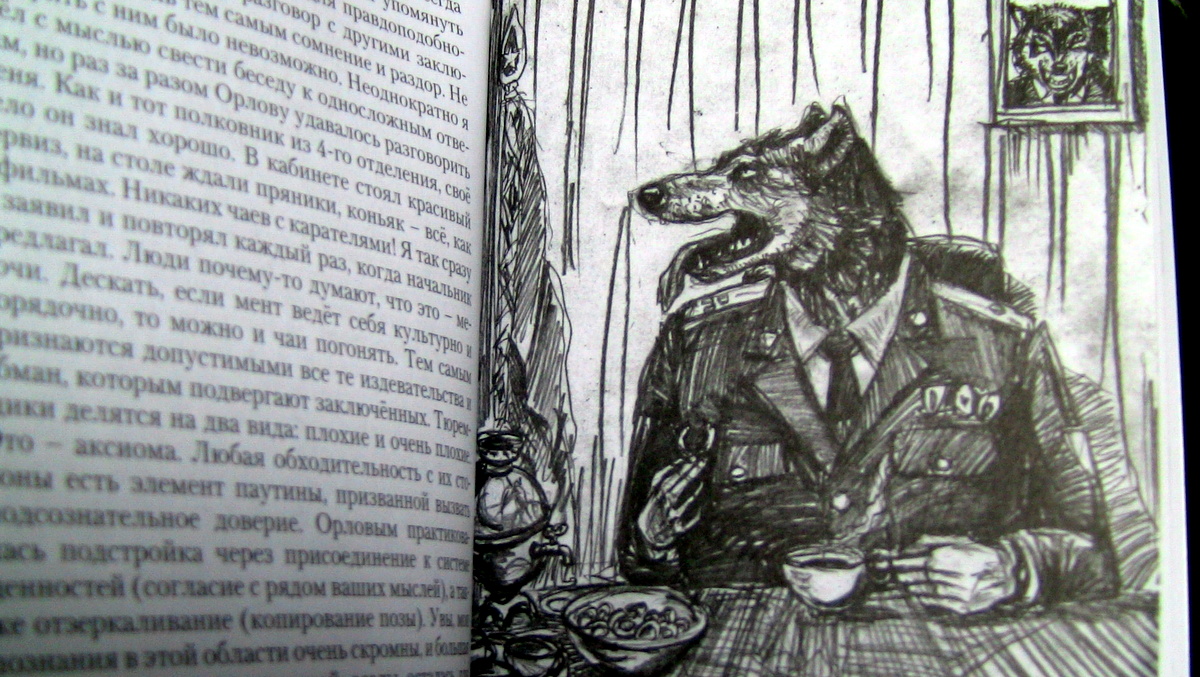
“I have something to talk about with you,” said Sedoy, but a strong colonel from the 4th branch of the KGB. From the window of the farthest cabinet, a sudden view of the night city, the central avenue of Minsk, was opened. I will not believe that after the camera for someone it would not make an impression. So close and so far, long in the years ... tea, cookies, gingerbread, other courtesy, as in films.
“Do you know why you are here?” - The insidious question sounded, so the Inquisition of the century ago did it.
“I would like to know for a start where I am,” I answered.
- This is not a prison, thank God, but the KGB pre -trial detention center. There is a difference. "American", as the people say. In the 30s, more than 30 thousand people were shot here. It’s sad, but I assure you, neither I nor my colleagues, even in my thoughts, can allow more this, ”the colonel continued.”
An amazing new world
- Under what circumstances did you write a book?
- Now I myself am surprised how everything turned out. There is such a holy naivety - when a person falls into such conditions, he still does not fully understand where he was. I did it. For the first few months, the camp was perceived by me as an amazing new world, the island of a kind of Tumba Yumba tribe. I did not realize all the danger that he carries me and, as it turned out, brought in the future. Therefore, every day I pondered at least a few paragraphs and slowly wrote, lying on a pile. Thanks to coincidences, accidents, I had the opportunity to write everything and convey everything to the person who was released in 9 months.
“But then you no longer had thoughts or strength to write?”
- After the book, I wrote several articles, some of which were included in the book. I already took some point topics. But to write a new book at that time I did not see any reason.
Демократия нового типа, демократия участия
– Сейчас вы на свободе. У вас есть какое-то представление о будущем?
– Общаясь с различными людьми все эти годы, я постоянно примерял на себя различные варианты – чем я могу заниматься. Но я всегда хотел, чтобы мои будущие занятия были полезны для человечества, для его окончательного освобождения. За время, проведенное в лагере, я пришел к выводу, что современные информационные технологии – это то, что позволит обществу ресоциализироваться, развить горизонтальные связи, эффективную систему реагирования на различные общественные вызовы. Ключевое социальное явление нашей эпохи – это краудсорс. Я считаю, что это явление станет глобальным, повсеместным и приведет общество именно к той истинной демократии, о которой столько люди мечтали. Это будет демократия нового типа, демократия участия. Это будет истинное гражданское самоуправление. Я вижу себя в сфере развития IT-технологий. Тем более что и образование позволяет мне это.
– Означает ли это, что вы отходите от политики, или, по крайней мере, от той политики, которой занимались прежде?
– Нет, не означает. Скорее, я углубляюсь. Я бы хотел заняться чем-то более фундаментальным, а не ежедневной бытовой рутиной, которая была раньше. Но одно другому не противоречит, одно без другого не может существовать. В цепочке все звенья важны.
Для меня навсегда закрыто подполье
– Вы окружены близкими людьми, но у вас есть ощущение, что вы изолированы? Или вы чувствуете, что есть большая группа единомышленников, людей, которые думают так же, как вы?
– Я чувствовал огромную поддержку и внимание со стороны соратников. Но при этом я понимаю, что ряд аспектов анархической борьбы теперь для меня навсегда закрыт, в частности подполье. Будучи уже изобличенным властью, я не имею права подставлять других людей. Потому что теперь, в случае чего, я всегда буду под подозрением в первую очередь. Самое лучшее средство защиты – не устанавливать контактов с теми, кто борется радикальными средствами.
Лагерь учит не питать иллюзий и надежд
– Как вы видите дальнейшее развитие событий? Вы готовы к тому, что вас могут задержать? Вас выпустили на свободу, но все говорят о том, что это под выборы. А это игры кошки с мышкой.
– За 5 лет лагерь приучил меня ценить тот день, в котором я живу. Мы никогда не знаем, что будет завтра. И я насмотрелся на такие случаи, когда люди выходили на свободу, а прокурор выносил протест, и они возвращались. Или когда человек проходил комиссию на УДО, все было хорошо, а в последний момент суд ему отказывал, а он уже вещи раздал. Лагерь учит не питать иллюзий и надежд. В любой день все может повернуться как в сторону большого плюса, так и в сторону огромного минуса. И всегда найдутся для этого причины. Будем решать проблемы по мере их поступления. Что касается страны, то для меня очевидно, что ситуация продолжает ухудшаться. Если не будет никаких изменений, то все это закончится массовым социальным взрывом завтра или через три года – кто знает.
Я еще не принял свободу как данность
– Значит ли это, что вы готовы к тому, что вас могут опять посадить? Или к этому быть готовым нельзя?
– От лагеря никогда не зарекайтесь.
– Это понятно. Но может ваше сознание принять мысль о том, что пройдут выборы и за вами могут опять прийти?
– Прямо сейчас я еще не принял свободу как данность. Ментально я еще остался в лагере. Должно пройти какое-то время. Никакой вариант развития событий не будет являться для меня шокирующим, удивительным. Я живу сегодня.