
Translated material
"Score" a place next to the chairman
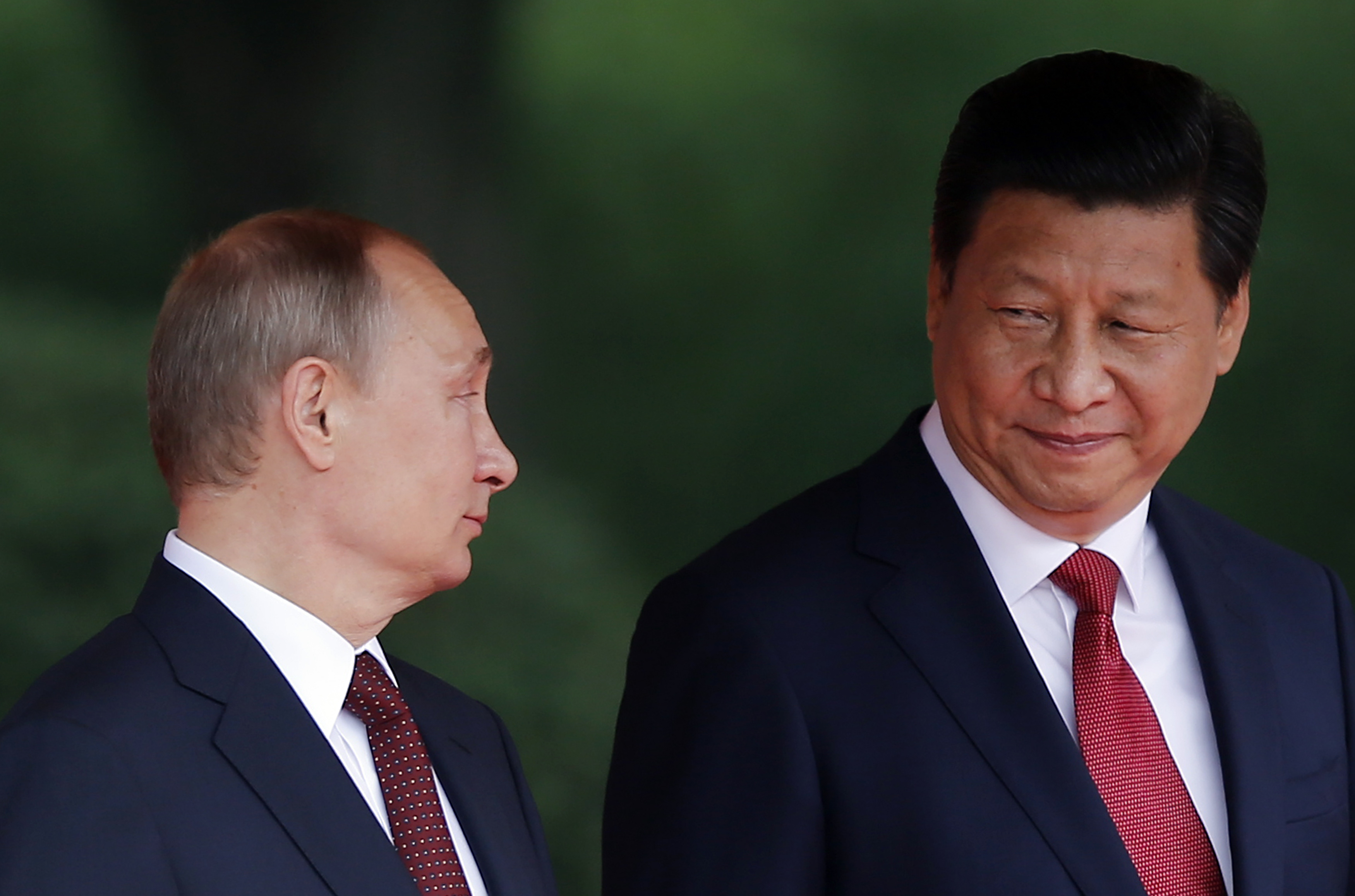
Why does Vladimir Putin go to Beijing to a military parade dedicated to the 70th anniversary of the surrender of Japan, but there are no Western leaders?
In Beijing on September 3, a military parade on the occasion of the 70th anniversary of the surrender of the Armed Forces of Japan in World War II will be held. For almost three years of the reign of the PRC of China, Xi Jinping, military parades in China were not held at all. Like all 66 years of the existence of the People's People's Republic, the country never celebrated the victory over Japan by military parades. Why is the leadership of China now? And what is the role of Russia on this holiday?
Some time ago, Beijing made it clear that he wanted not only to celebrate the 70th anniversary of the surrender of Japan, but to do this as solemnly as in Europe a victory over German Nazism is celebrated. For this, however, the ruling Communist Party had to continue to rewrite history, since the Communists were never really fought with the Japanese; The enemy of the Communists Kuomintan, headed by Chan Kayshi, fought against the Japanese, reminds the expert of the American Enterprise Institute Michael Oslin :
There will be no Western leaders in Beijing, as they were not in Moscow
- The myth of the war as a crucible in which modern China was forged, as a spiritual scraper connecting the Communist Party and the people, was always inflated by power as persistently as it was done in the Soviet Union since the time of Brezhnev and how it is now being done in Putin. There were still no military parades, but everything was steadily going on, because it was Xi Jinping who established several new popular holidays related to the war. In particular, the day of sorrow for the victims of the massacre in Nanjing, taught in 1937 by the Japanese army. The threat of "Japanese militarism" is an eternal, endless topic that Chinese propagandists include.
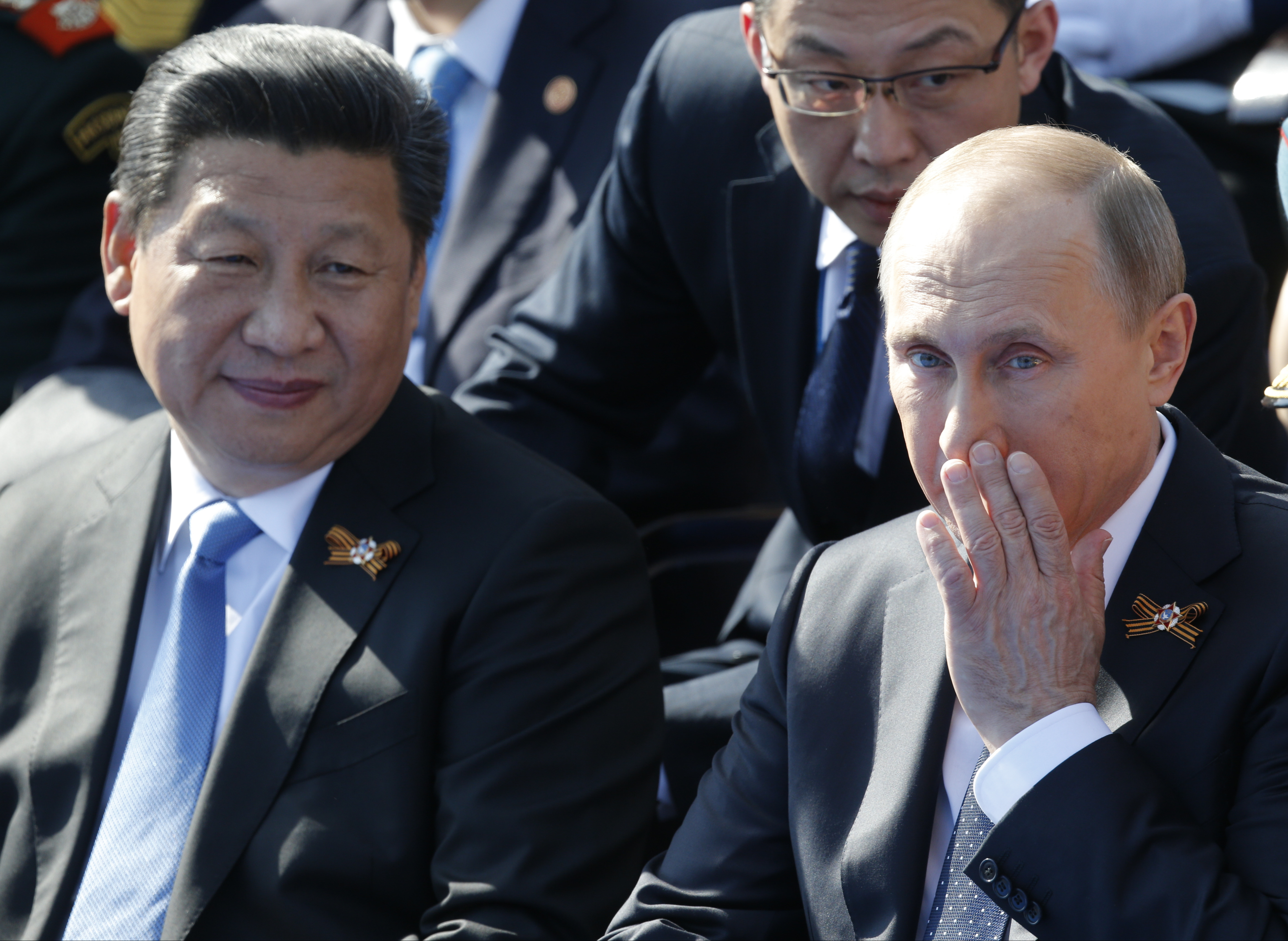
The grandiose economic achievements of China and the successes in the field of military construction, apparently, convinced the leadership that finally the time and military parades came. In demand by the patriotic people, no matter how sinister these paramilitary processions may look in the West - and especially in Japan - in the light of China's growing aggressiveness in relation to almost all their neighbors in Asia, endless territorial claims to them. However, China is very correct with Russia, and Putin will be present at the celebrations in Beijing on September 3, as Xi Jinping was present at the parade in Moscow on May 9. Only now there will be no Western leaders in Beijing, as they were not in Moscow.
It is completely clear why Putin is going to Beijing, but why there will be no Western leaders - the question is more complicated, Michael Oslin emphasizes:
How will Putin are close to Xi Jinping? Will the cameras show him close -up?
-To some extent, probably because of the unwillingness to meet with Putin. But this, in my opinion, is not the main thing. The main thing is that Western leaders do not want their presence to give legitimacy to this unprecedented and frightening event. Now in the light of financial troubles in China this parade cannot but look like an attempt by a nationalist revenge for defeating a regime in the economy: an increase in the material well -being of the population to the current collapse served as the basis for the legitimacy of the regime. Military nationalism, which until the time was only the help of successes in the economy, from now on can become the only alternative to them. Moreover, Western leaders do not want to participate in an event that will be painted in such an unsightly anti -pinee tones. Let's not forget: Japan is like the next ally of Europe and the United States. In Europe, the wounds of war are healed, in Asia they are still sheds. In the West, democracy collectively celebrates the victory over totalitarianism. China offers Western leaders to join the celebration of the victory of one authoritarian regime over another authoritarian regime, which has evolved into democracy today.
- The question of the protocol and high political symbolism: the Russian military unit, according to the plan, is the latter in the upcoming parade in Tiananmyn Square. In the Chinese table of ranks to be a closing prestigious or, conversely, humiliating?
- I don't know. And I am sure that none of my colleagues also knows this either. As they do not know whether the leadership is going to turn this parade into a tradition or is satisfied with a one -time action. The military parades in Asia, unlike Europe, do not often take place, and their protocol with all intriguing details, it seems to me, has not been thoroughly worked out. It is much more important in the Chinese table of ranks - this is a place that will be given to Putin at celebrations. How close will he be to Xi Jinping? Will televisioncaps show him close -up and individually? Or only in the group? Will the audience applaud upon the appearance of Putin? It is all more important than just participation in the parade of the Russian unit. Wait and see.
The Chinese Army unit participated in a military parade on Red Square
Commentary on this subject of another interlocutor Radio Liberty, analytics of the RAND Timothy Hita Research Organization:
The Chinese, by and large, do not have sympathy for Russia
- The place of the Russian column in the ceremonial calculation, in my opinion, is not very important. In the forefront, from the point of view of the organizers, the Chinese should go, and everything else is secondary. The main message of the parade is a demonstration of the ability and determination of China to repulse Japanese militarism. Japan, unlike Russia, is unconditionally Asian, which China considers its main competitor in Asia. Therefore, to determine where to put the Chinese column of war veterans with Japan is much more important than the question of who will close the procession. Russians or platoon from some other country.
Those who think that love and friendship has now reigned deeply between Russia and China are deeply mistaken, in turn, Michael Oslin emphasizes:
- Nothing of the kind. The Chinese, by and large, do not have sympathy for Russia. And they perfectly remember the humiliations that they were subjected to tsarist Russia and the Soviet Union. But Putin personally, I believe, in Beijing is respected or respected until the very recent time as a player who very skillfully plays his objectively weak geopolitical map. Beijing and Moscow are needed by each other. For example, in the economic field, although the real scale of economic cooperation is not at all as grandiose as they are strongly focused by the Kremlin. This is a military-political, and even more-a diplomatic union of a tactical property. Manifested in joint vote at the UN or in nuclear negotiations with Iran. The bottom line is that both countries challenge the concept of the world order approved by the West. Both believe that, acting as a single or united, diplomatic front, they will get faster from the West what they want. In order not to further be connected by any mutual obligations, but to go its own way.
According to experts, the cost of frozen Russian-Chinese economic projects from the construction of gas pipelines to electricity supply reached $ 113 billion. The Chinese nervously monitor the fall of the ruble and the volume of industrial production in Russia, not to mention the dynamics of Western sanctions, which inhibit the implementation of a number of profitable projects in the Far East. They do not believe in official Russian forecasts that in a year or two the situation will straighten out, and therefore are in no hurry to shower their partner with lustful loans or pay for future energy supplies in advance. As well as to finance the construction of the bridge across the Kerch Strait or the high -speed railway line of Moscow - Kazan.
Russians, in turn, do not quite trust Chinese statistics and are not enthusiastic about what is happening in the financial and production sector in China. Moscow is also disturbed by the ongoing anti -corruption campaign in the PRC, which interferes with the development of partnerships with enterprises of the energy industry that fell under the audit. As for interaction in the military field, the Western press has recently written a lot about the Russian-Chinese project to create a drone designed to detect and destroy invisible aircraft. And about the teachings of the fleets of the two countries in the Black and Mediterranean Seas, and about the maneuvers that have just ended in the Pacific Ocean. How important are China military communications with Russia? Timothy Hit, Rand Research Corporation:
Military cooperation with Moscow for China is not as important as political
-The main one for China is political cooperation with the power, strong enough in military-technical and diplomatic terms. And ideologically close to him, because, like China, she strives to reorganize the world order. So far, this alliance of the two states opposing the global status quo is preserved, the USA, Europe and their allies in Asia will not be able to isolate China. And make him abandon the expansionism at the water area of the South China Sea, which threatens, in the future, by American strategic communications in this part of the world. And therefore, in general, all American interests in the region. Let me remind you: the first country that Xi Jinping visited, becoming the General Secretary of the Central Committee of the CCP, was precisely Russia.
Purely military cooperation with Moscow for China is not as important as political, and we see this by the fact that Beijing reduces the procurement of Russian military equipment. With the exception of the positions on which his lag is still strong-this is, first of all, deck aircraft and electronics.
As for joint military exercises, the danger that they represent for the rest of the world can only be long -term. It does not seem that in the near future Russia will want to intervene in some armed conflict on the side of China. And it does not seem that in the foreseeable future China itself is preparing open aggression against any of the neighbors, including Taiwan. China relies on its own military power, which Russia's military power reinforces only indirectly in order to diplomatically force neighbors to obey him as a new hegemone. And only potentially - in case of war, if the policy of coercion does not work and the armed conflict will break out.