
Translated material
"Roman in the genre of Ready-Made"
In the theater series of the publishing house “New Literary Review” , the second volume of the anthology “New Russian Musical Criticism” is released, dedicated to the Russian ballet and the dance theater. The Moscow presentation of the publication, prepared with the support of the Golden Mask festival and Zenit bank, will be held on September 19 at the Stanislavsky Electrotheater. Today COLTA . RU represents the premiere of two fragments of the book - the preface of Vadim Gaevsky and the introductory word of the compilers of Pavel Gershenzon and Bogdan Korolka, the kind provided for the publication of the UFO and the authors.
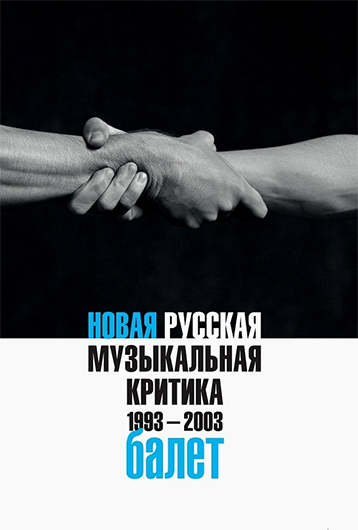 © "New Literary Review"
New names
Vadim Gaevsky
What we called the “new ballet critic” is not a simple play of words, not an editorial invention, not a fiction, but a reality. This phenomenon really existed, arising on special rights in Russian cultural life, moreover, twice: in the early years of the twentieth century, when the so -called new Russian ballet appeared, and in the last years of the same twentieth century, when the old Soviet ballet began to die and there was an obstacle to the speedy way to remove it from the road. The situation - especially in the second case - was fascinating, but also difficult and even unsafe, going beyond the ballet theater. She demanded many skills and different qualities, professional, human, civilian. And she had to put forward - and nominated - her partisans, her leaders, her thinkers, their chronicles.
I remember how it began when it was possible again with interest - and often with admiration - read articles about ballet: reviews of performances, acting (performing) and directorial (choreographer) portraits, season reviews. Before that, the press reigned that which can be called critical waste paper. And speaking more politely and more accurately-balletomanic criticism, expressing enthusiasm without any attempt to clarify something, to figure out something. Criticism without criticism, criticism without analytics and, accordingly, without a single thought - only emotions, mainly ladies. Even the type of ladies-critics, recalled, warmed up, in high gloves, although not in very high heels-years, you understand, years ... with an amazed expression on the face and loud words, so that they heard them: “Well, a checkmark, no words!”, “Well, Katya, you are today!”. Fit, as everyone should understand,-Galina Sergeevna Ulanova, who could hardly bear the ladies-Critics, and Katya-Ekaterina Sergeevna Maksimova, then just Katya Maksimova, Dam-Critics, who did not notice at all. And then there is a T -shirt, who confused all the cards - the difficult life has gone ...
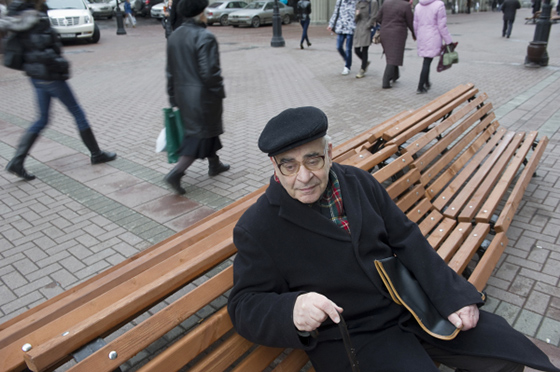 © Kirill Kallinikov / RIA Novosti Vadim Gaevsky
And there are critics of a completely different type. Educated art historians who graduated from LGITMIC, or GITIS, or even a university who know perfectly well the history of the domestic ballet and think about where he is going, understanding that our ballet did not start with a tick and will not end with a cocker. And most importantly, a sober report to himself regarding what place he, domestic ballet, occupies in the ballet world. And what place in our minds should be occupied and she, ballet criticism.
This group of professional ballet critics came to the press when the press itself again - after a long break - became professional. When a general revitalization was indicated not only in narrow -professional, but also in a wide intellectual life. When Soviet people regained the right to think on their own. Of course, all of them, my colleagues, young critics, were not intellectuals of pure water; First of all, they were theatrical people in all fascinating, but also binding meanings of the word. One of them was directly connected with the theater, someone was not, but everyone lived theatrical interests, the air of the theater-of any theater, Moscow or Leningrad, Sverdlovsk or Perm, its very atmosphere. Nevertheless, it was they who raised the level of ballet criticism, its business, cultural and social status. Naturally, they enthusiastically worked where the ballet life came to life, but with no less zeal - where they had to fight for the awakening of ballet life. They had a common goal: to free the Russian ballet theater from all the consequences of the iron curtain, to return the ballet theater in the global ballet space and reduce the lag threatening to become irresistible. There was another, more concrete, even special goal: to give an expert assessment and theatrical justification that the Mariinsky Theater began to do with brilliant success and what we really were “ahead of the entire planet”, ahead of New York, Paris, and London. I mean the scientific principles of restoration work based on historical research, the study of archival documents and a thorough decoding of records of a genuine text. It turned out that the authentic classic is also needed and as relevant as the latest Danzantic inventions of the Forsyte, which is not available to our stage inaccessible.
And who are these critics, which discussed the problem of authenticity and the Forsyt problem?
I will name seven names, the brightest.
First, let's recall the two representatives of the older generation, who began in the deaf post-Stalin years: the Leningrader is the poet and translator, the poal Karp and the Muscovite-the historian-ballet, Natalya Chernova. Both of them have retained their authority, their position and their literary giftedness during the turning years.
And the younger ones are five of them: two from Moscow - Tatyana Kuznetsova and Olga Gerdt, two from Leningrad - Inna Sklyarevskaya and Julia Yakovleva and, finally, Pavel Gershenzon, Sverdlovsk, then for a very short time Muscovite, now a Petersburger.
In the same 1993, from which our countdown of the New Age begins, at the Russian State University just created (the Russian State Humanitarian University) at the Department of History of the theater began to work as a special seminar in ballet, where future ballet critics were engaged, some of them-Varvara Vyazovkin, Anna Gordeeva, Leila Guchmazova-successfully began to work after five to seven years and continued this until today. not an easy business.
Here they are (with the exception of Sklyarevskaya, who left the profession for several years) and did all the weather.
How and where? Not at all in the only special magazine "Ballet", very conservative - in choosing the top, and in choosing words, and in choosing the authors, and even in their layout. So where?
There is an unspoken hierarchy of genres in the field of artistic criticism. The most revered genre is, of course, a book. The most serious is a magazine article. And the most alive is an article in the newspaper. There were few books written about ballet in those years. One can be considered the great book - the book of Lyubov Dmitrievna Blok "Classic Dance" published in 1987. She waited for the publication for a little less than half a century and was not at all outdated: in the ballet world, the movement of time passes slowly, according to his own laws (this briefly said this early - in 1959 - the dead Matvey Iofiev, who could also write a great book). Valuable books - academic research on historical material - has published our leading ballet historians: Vera Mikhailovna Krasovskaya in St. Petersburg, Elizaveta Yakovlevna Suritz in Moscow. Krasovskaya interpreted in a new way and summarized the already investigated circle of facts and problems, and the Suritz introduced almost not investigated topics into scientific circulation. The modern ballet of books was almost not written. The detailed apologetic and verbose portraits of the famous premieres and the premieres were written, but these, partly useful, partly dubious works, too-once or twice were expected.
The word - a free word - became an instrument of criticism, and once again it turned out that this gift, literally the gift of heaven, can be successfully disposed of.
Another thing is magazine texts. They were printed in theatrical magazines: “Moscow observer”, numbers prepared by the youth version of Theater Life, the St. Petersburg Theater Journal, and sometimes in the literary “Neva” and “Siberia”. Here they have already worked for the present. And here it was required-and it was achieved-a fairly high level of art history, as well as the same high quality of the art of the history language, not clogged with stamps: with dead stamps that came from past years, fashionable stamps that came from abroad. A series of substantial and talented articles appeared, which you re -read with easy envy today. No skepticism, especially the postmodern grin - and on your own account too. Nothing from the bored game of tired consciousness. The amazing ability to trust the promises of time and the fact that - in relation to various debuts - was called "advance". The advances were heard willingly and generously. Nobody thought about possible losses - losses in terms of critical reputation. They thought about how to recognize future masters in the debutant works and how to see the outlined diversity of the dance language and the independence of thought in these works. Thought about the upcoming height of the domestic ballet.
But, of course, the most interesting, most intense life took place in newspapers. The rhythm of the daily newspaper also determined the rhythm of the reviews that appeared there. Partly related to the rhythm, outside which there is no classic ballet, on the basis of which there is a classic dance. The rhythm of the tense, looking for the exact word of thought, the rhythm of replacing impressions waiting for a quick assessment. And in our, ballet-critical, the workshop appeared virtuoso of newspaper strips, who own the technique of this accelerated rhythm. Actually, this is work on wear. For a long time, this almost everyday struggle with elusive ruthless time cannot last. Newspaper reviewers leave the newspaper. The more recognition is the ascetics who have not gone from the distance for many years. Without losing either the form or interest in the subject of their works and in this work itself. Of course, I mean Tatyana Kuznetsova.
A ballet review printed in a newspaper far from art is a long tradition of Russian journalism. In the "Exchange Vedomosti" in 1911 he began as a ballet critic Akim Volynsky. Then he had no followers or students. Now they have appeared - first in the newspaper Today and Kommersant, then in the Russian Telegraph. Although, unlike Volynsky, the novelty did not fear them. And they scared them - this very long -awaited novelty - insecurity.
Ballet criticism lives with similar fears today.
Summing up, we recall that the heyday of the domestic ballet in the most gloomy 30s is explained by many reasons, including the one that the ballet did without words, namely the word-oral and print-has become the monopoly property of ideology, its main tool. And since criticism exists only in a word, a similar circumstance determined a gradual decline that existed in a brilliant Russian ballet school, created by the same Akim Volynsky, Andrei Levinson, Ivan Solletinsky, Love Blok, Fedor Lopukhov. When the word was freed from ideology, ballet criticism - like all theatrical criticism, actually destroyed at the end of the Stalin era, began to return the lost positions. But now the word - a free word - has become an instrument of this criticism itself, and once again it turned out that this gift, literally the gift of heaven, can be successfully disposed of.
* * *
From the compilers
Pavel Gershenzon, Bogdan Korolek
The second volume of anthology “New Russian musical criticism. 1993-2003 ”is dedicated to the events in Russian academic ballet companies and - attention - in the field of domestic Contemporary Dance .
After long disputes, it was decided to call this volume a “ballet”. With the same success it could be called “dance” - the number of letters coincides in both words, with the design of the cover would not have to be tormented. The problem is different. For brevity, we give a quote from Facebook by Olga Gerdt, one of the authors of Tom and the user of the Berlin Sinemate of the Amerika Gedenkbibliothek :
“... and everything was very convenient until the library had a large repair with the appropriate improvements.
How surprised I was when I saw that the choreography was stopped divided into “ballet” and “dance”, but united in one general word. What do you think? No, not “ballet” - it would be in Russia, where so far everything that moves is “ballet”, even a stake on the head of the Anti. Everything is now (in the Sinemate of America Gedenkbibliothek . - approx. comp. )-from modern to postmodern, from ballet to modern dance, from the physical theater to Buto, from Pina Baush to Marius Petip-all-all-all is called “ tanztheater ” . And not because, I think that the Germans created the “dentater” direction, but because the library workers think that everything that dance in theaters is a “dentist”. It is logical, after all, niht war?
How did I swear today when, marked as a “dentist”, clicks, flamen and freedrichstadtpalastbells fell on me from the shelves! ”
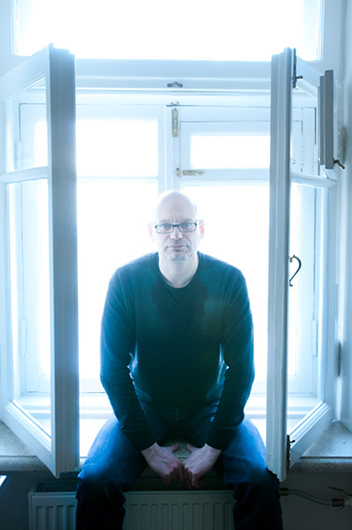 © Evgeny Gurko Pavel Gershenzon
Features of national consciousness in Russia are such that only the carrier of the officially tested and stipulated by GOST of the technological name is revered strong, reliable and deserving. Let's say the “Ballet Conservatory” sounds suspicious, but the “ballet troupe of the Opera and Ballet Theater of the St. Petersburg State Conservatory named after N.A. Rimsky-Korsakov ”is a completely different matter. And if the ballet is approved by the state as an ideologically important art, a means of education, an instrument of diplomacy, then any local undertaking, from the premiere in the former imperial theater to a dubious performance at the former Goulin factory, will crown itself with the proud name of the Ballet. The directors of self -preservation instinct (existence outside the traditional genre hierarchy is unsafe), the audience has a need for comfort (the search for a familiar definition for an unfamiliar name in the poster). In extreme cases, a system of conventional signs from the stagnant times is provided: modern ballet, neopathia, anti-ballet, ballet shmalet-any plastic heresy easily fit into these formulations.
Actually, the question is that in our country the difference between two antagonistic phenomena is still not realized (in European practice, this difference is present in the presence of two concepts - Ballet and Dance ), and the name of Tom is a tribute to the mental characteristics of the perception and thinking of the Russian viewer (and the reader). It will be like this: everything that moves in Russia, let it come under one cover and will be called a ballet - for nothing that half of the performances described below is in no way connected with five averted positions of the legs, six Port de Bras and eight years of harsh professional education.
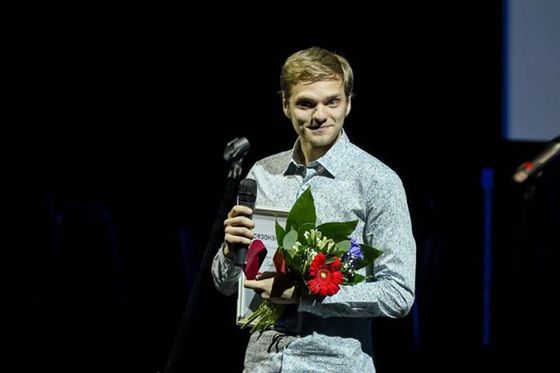 © Diaghilev festival Bogdan Korolek
The historical and cultural context of the project “New Russian Musical Criticism” is described in detail in the article “From the Compiled” in the first (opera) volume. Let us explain by what principle the body of texts was formed in the second.
Most articles are still dedicated to the premieres. For each - up to three texts, if possible contrasting. The exception was made for events that caused the greatest resonance and became key points in the formation of the new Russian ballet theater: these are, in our opinion, the premieres of the reconstructed “sleeping beauty” in the Mariinsky Theater (1999), the “daughters of the pharaoh” in the Bolshoi (2000), the Balanchin ballet programs in Mariinsky and Bolshoi Theaters, as well as Fortaine in the Fraud of Fortaine Mariinsky (2004).
The importance of Balanchin and Foresight programs, the understanding of their symbolic and structural role in the fate of the Russian ballet forced us to expand the chronological framework of ballet volume and, as an application, add separate articles of 2004-2005 dedicated to the centenary of Balanchin in Russia and the premiere of Forsyt ballets in the Mariinsky Theater. This premiere, in our opinion, became the final point of the entire chaotic collective movement at the Russian Ballet Theater of the 1990s. A similar event at the Opera Theater was the Chernyakovsky Kitezh.
Compared to the “opera”, new groups of texts are included in the “ballet”, the subject of which became:
1) performances in the program of the Golden Mask festival. With the advent of the National Theater Prize, the capital's critic was able to more or less fully describe the choreographic picture of the Russian dance-ballet world, without getting out of the boulevard ring (the exception was the Mariinsky Theater, where the Moscow landing was forced to stand regularly). Thanks to the “mask” there was a unique situation when, for example, the Petersburg performances renewed a year ago were subjected to re -execution at “masking” shows - and the result was sometimes the opposite. Here it is necessary to remember the mythological confrontation of the Moscow-Command VS VS Your-Strage-Strait-Construction-VID, the traces of which are visible in the texts and which makes up a stable hidden plot of ballet criticism of the nineties-the beginning of the zero.
2) the tour of foreign troupes - the most effective in artistic terms, important in the historical and geopolitical context; Tours, formerly world -class signals for domestic ballet institutions, for example, the first with the legendary tour of 1972, the visit of the Balanchinsky New York City Ballet to the Mariinsky Theater (2003). В сравнении с оперной епархией в балете такие гастроли случались регулярнее и оказывали неизмеримо большее влияние на неокрепшие умы аборигенов.
3) Юбилеи — программные тексты, посвященные титульным персонажам советского балета и тесно связанные с темой окончания советской эпохи. В антологии представлены три фигуры: Марина Семенова, Ольга Лепешинская и Майя Плисецкая. Семенова успела за период 1993—2005 гг. отметить круглую дату дважды, Плисецкая — трижды.
4) Политическая ситуация — говоря о балете в бывших Императорских театрах (неизменно объект высочайшего кураторства), нельзя обойти программные тексты балетных критиков на тему «искусство и власть»: речь, прежде всего, о внутриполитических ситуациях в Большом и Мариинском театрах.
Наконец, в томе представлены единичные образцы жанров, ныне покойных, но процветавших в период критического S turm und D rang 'а: мнения о премьере и хроники сезона (тексты произвольного формата, специально написанные для газеты «Мариинский театр»), обзоры спектаклей, итоги балетного сезона.
Перед нами практически постпостмодернистский роман в жанре ready-made с тьмой второстепенных персонажей и локальными курьезами.
По логике вещей, балетный том следовало плотно напичкать отчетами о местных дебютах и рецензиями на гастроли иноземных этуалей-одиночек. Интерпретации затертых до дыр и выученных дотошными балетоманами наизусть текстов составляют едва ли не важнейшую интригу классического балетного театра. Смогла ли иноземная балерина X прочувствовать духовное наполнение партии Одетты-Одиллии? Кто репетировал с Y — у нее же совсем не те руки в начале вариации. Погрузневший Z уже недостаточно хорош в прыжковой вариации «Корсара», хотя до сих пор отменно вертит grand pirouette в средней части, — и так до бесконечности. В конце концов, balletomania есть преклонение не перед хореографическим текстом и не перед театральным спектаклем вовсе, а перед Балериной/Балеруном (как все-таки удобно устроено в итальянском языке: Prima Ballerina — это Она, Primo Ballerino — Он; крики «Brava!» предназначены Ей, «Bravo!» — Ему, «Bravi!» — всей труппе). Объектом жесточайшего судейства, виртуальных перепалок и реального мордобоя может стать любой их сценический вздох. Ввиду жестко ограниченного объема и необходимости сосредоточиться на других, не менее важных, сюжетах буйного десятилетия в книгу вошли тексты только о двух дебютах — Ульяны Лопаткиной и Дианы Вишневой. Компанию им смогла составить одна Анастасия Волочкова — правда, в ином ракурсе. И это тоже знак лихих девяностых.
Итоговый состав отобранных текстов может показаться набором случайных morceaux , написанных ночью, в истерике, с претенциозными заявками и несогласованными предложениями. Мы, однако, надеемся, что в данном томе можно обнаружить сложно устроенное повествование — перед нами практически постпостмодернистский роман в жанре ready - made с тьмой второстепенных персонажей и локальными курьезами (хроникерская однодневка неожиданно взрывается атомным грибом).
Легко составить список основных действующих лиц — он на поверхности — и обнаружить в числе первых Бориса Эйфмана (наиболее частые творческие акты), Алексея Ратманского (эпизод «Новая надежда»), Евгения Панфилова и Татьяну Баганову (пышное цветение уральского contemporary dance ), а также Юрия Николаевича Григоровича — почетного monstre sacré девяностых.
Важнейшие сюжетные линии залегают глубже. О двух, условно обозначенных нами как «Баланчин и мы» и «Форсайт и мы», говорилось выше. Третья — язык и его эволюция, что с точки зрения постпостмодернистской литературы и является истинным сюжетом.
Балетные рецензии (возможно, даже нагляднее оперных) демонстрируют, как формировался новый критический лексикон и как искалось оптимальное соотношение в тексте причудливой беллетристики и сухой информации. Нам казалось важным показать разницу между традиционной позднесоветской манерой письма и стремительно набирающим очки Ъ- style . Оба критических модуса не существовали автономно — новая русская критика есть результат их длительного сожительства.
И вот еще один сюжет: в 1990-е годы отечественные писатели о балете ( ballet ) совершили профессиональный подвиг, начав параллельно писать о современном танце ( dance ). В чем героизм? Проблема в прерванной традиции: дело в том, что последние фундаментальные тексты о современном танце, написанные по-русски, принадлежат Андрею Левинсону и датируются 1913—1917 годами (Изадора Дункан, Жак-Далькроз, наконец, «Фавн» и «Весна священная» Нижинского) — дальше Левинсон писал о танце уже по-французски. Критики 1990-х, воспитанные непрерывной линией рефлексии классической хореографии (Волынский — Левинсон — Блок — Слонимский — Красовская — Гаевский), впали в ступор: на них уставилось чудище обло, огромно, озорно, стозевно и лаяй. Под рукой не оказалось ни одного привычного костыля: ни жесткой классификации па, ни знакомых структурных форм, ни линейно развивающегося сюжета. Игнорировать русский «контемп» становилось невозможно, в равной степени невозможно было нарушать редакционный дедлайн, так что искать адекватные формулировки приходилось на полном ходу. Фактически в рамках данного тома предпринят первый опыт презентации российской критической мысли об отечественном танцтеатре.
Остается уведомить читателя, что настоящее издание не претендует на всеохватность и тем более объективность. Это наш личный взгляд на танцевальные процессы в России 1993—2003 гг. Свод критических текстов о балете и танце за отчетный период мог быть другим, и этот том не претендует на почетное звание истории, которая пишется один раз. Мы будем рады появлению альтернативных исследований.