
Translated material
SunTimeters of aggression
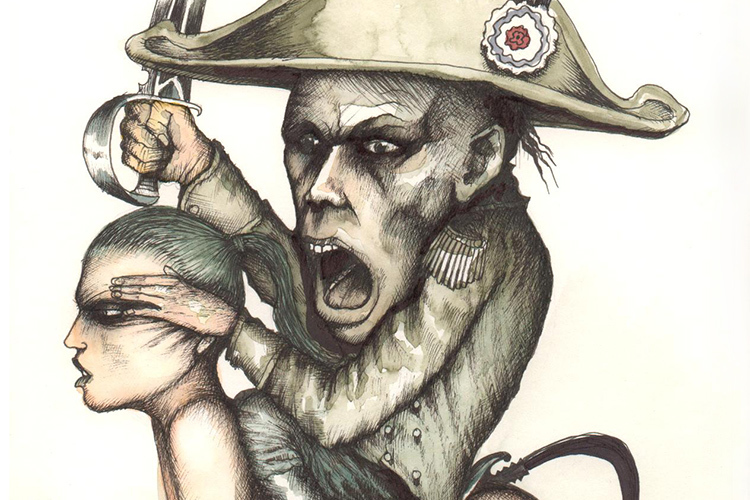
In a psychological gloss, this is called the “complex of Napoleon”: if you have 157 centimeters of growth, like in the emperor of France, you will supposedly look for a way to compensate for your flaw. You will attack Britain. Occupy Egypt.
Explain the aggression of dictators with low growth is the idea of seductive, but it is precisely older than evidence -based psychology. On the propaganda caricatures of the time of the Waterloo Napoleon, they have already been portrayed with an embittered shorty, so you can suspect that the reasoning about the “complex” is just a political myth converted into everyday wisdom.
A team of psychologists led by Dennis Reidi from the Center for Monitoring and Prevention of US diseases ( CDC ) tried to approach the issue from the standpoint of science. It turns out that growth as a source of aggression is only a special case , and if you properly summarize the problem, you can find a lot of interesting things very close, without deep swims in the history and analysis of the biographies of emperors with African love presidents like a boxing.
Actually, CDC - This is one of the branches of the American Ministry of Health, which most often appears in the news in connection with the fever of Ebola or bird flu. A new job, about the Napoleon Complex, also takes place on the category of medical ones - it was published in Injury magazine Prevention ("Prevention of bodily harm") , where it is customary to publish scientific articles on how people less cripple themselves and others in everyday life. The typical topic of the magazine - whether the mortality of schoolchildren in Cambodia has changed greatly thanks to bicycle helmets. Or what kind of interior details most often cause injuries in children in the United States - stairs, sharp corners of furniture, slippery baths?
Those who are most worried about their insufficient masculinity are 348 percent more aggression with bodily harm.
The “complex of Napoleon” (more precisely, its generalization, when low growth is considered a special case of a lack of male qualities) is also a common cause of bodily harm in everyday life. The leading author of the study, psychologist Dennis Reidi, is a specialist in psychopaths and family violence. Since 2007, he has published an article on the article on what launches the mechanism of kitchen quarrels at the level of a whole community or a separate family. And now Reidi and his colleagues have interviewed 600 men from different US states from 18 to 50 years old, who were invited anonymously answering a series of questions about their own masculinity (“I would like me to be more masculine”, “most women around believe that I am not as courageous as my friends”) - and about different types of behavior that deviates from marijuana to inconspicuous. Driving, fights in the bars (“How often did your opponent need the help of a doctor?”) And fights at home, with a woman-partner.
Although all respondents and were recruited on the network for two dollars through the Amazon service Mechanical Turk , these were not aggressive proletarians. Half had an income of more than 37 thousand dollars a year, and for some it exceeded 100 thousand. The average level of education in the sample even slightly exceeded the secondary in the country. And still, adults often admitted that they were fighting (about 15 times more often than they are drunk at the wheel), threaten weapons and inflict physical injuries to others.
Clearly zero hypothesis - which will be more aggressive of all, the most masculine of men. Who is higher, stronger and more courageous in appearance, he thus demonstrates his dominance. And the weak and unmartly seek comforts in alcohol and drugs.
The Napoleon Complex is a common cause of bodily harm in everyday life.
It turned out almost the opposite. Those who are most worried about their insufficient masculinity are 348 percent more aggression with bodily injuries-roughly speaking, cases of beating a woman or other men-compared to those who are not tormented by the question "man I am or not a man." But the use of alcohol or drugs with experiences on this subject is in no way connected.
Reidies with colleagues call a psychological source of problems with aggression "stress from insufficient masculinity." And what is sufficient masculinity? This is the image of a “real man” that translates the traditional culture. He is tall, muscular, with a strong -willed chin and is always ready to repulse the enemy. And if you have a “male” in your graph of the Paul’s passport, but you are not like that - consider yourself inferior.
This stress easily explains the most diverse types of social evil, which supporters of traditional values write off to the emancipation of morals. Take at least AIDS and other sexually transmitted diseases: in the January study, Reidi proves that the complexes are more prone to risky sexual behavior (for example, to sex with a stranger without a condom) and, as a result, to the spread of the same AIDS. All because they do not reach the traditional ideal of a “real man” - and strive to compensate for it.
The harm from the stereotypical image of a “real woman” is a well -studied thing, with which the feminist movement is not without success . Dissatisfaction with their own body (which women compare with the body of girls from the cover of gloss) is a popular cause of food disorders, from anorexia to bulimia, and depression. In the case of men, the difference is that others become the victims - those who are directed to violence, primarily homemade . And each picture with the heroes-defenders (in contrast to the strained losers-non-bogatry) makes his contribution to this.