
Translated material
Great Friendship – 2
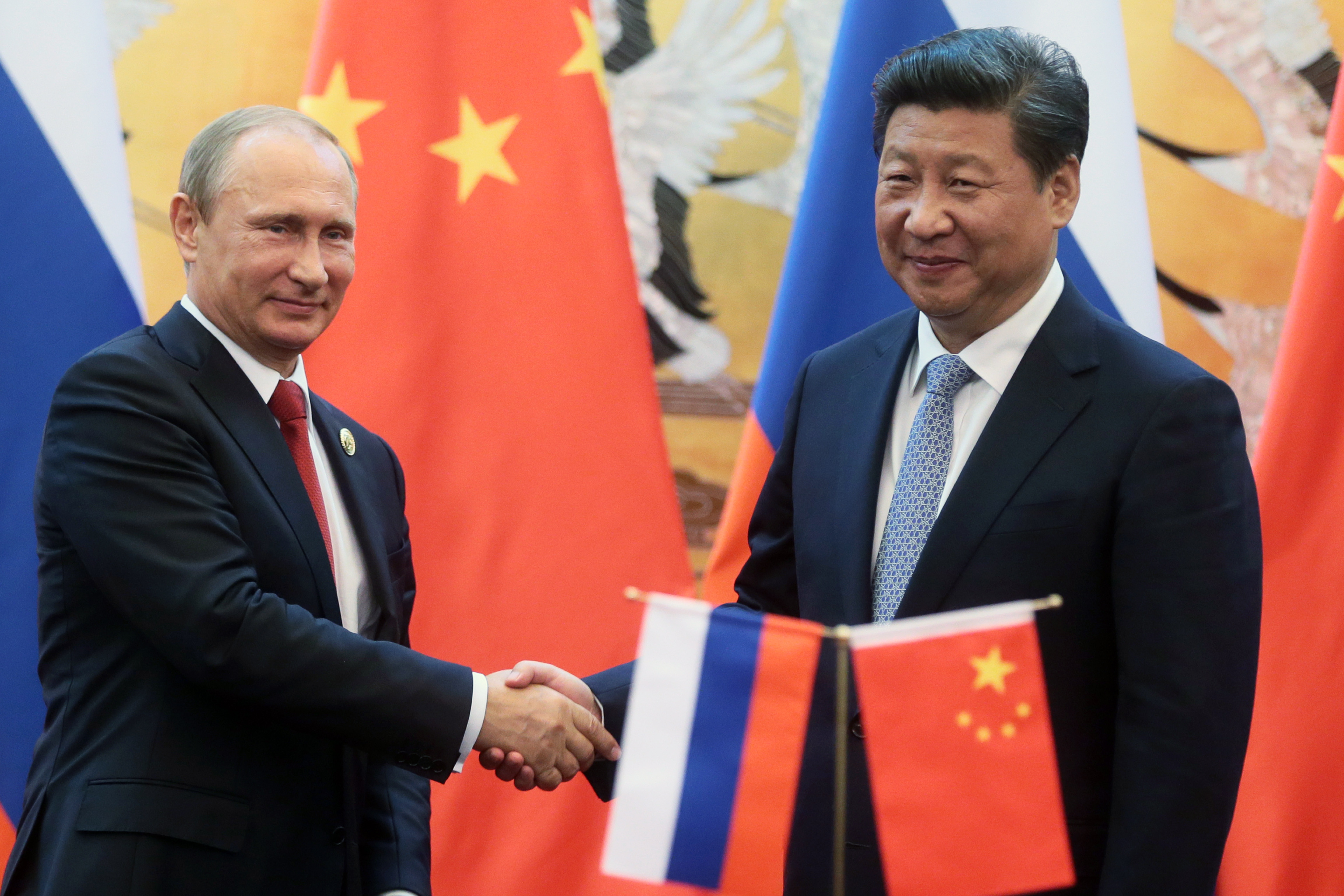
China marked the 70th anniversary of the end of World War II with a military parade
The day before, celebrations to mark the 70th anniversary of Victory in World War II ended in Beijing. But the strange set of heads of the great victorious powers leaves no doubt and gives rise to various comments from competent observers.
We will discuss the new format of celebrations in honor of the Victory in World War II, tested in Beijing, with our guests - international journalist Boris Tumanov and historian Boris Sokolov.
Presenter: Vladimir Kara-Murza Sr.
Vladimir Kara-Murza Sr. Were you surprised by the idea itself when it first appeared, and its implementation - the celebrations in Beijing on the occasion of the victory in World War II? We were taught at school that the USA, England, France and the Soviet Union are the main creators of victory.
Boris Tumanov: Australia was still there.
Vladimir Kara-Murza Sr.: Well, there were up to 36 countries in total!
Boris Tumanov: It was strange even because of how few foreign guests there were in Beijing during this celebration, especially from Western Europe, in general from the West... After all, on May 9, Red Square also sinned with the paucity of this kind of guests. If we are talking about what happened in Beijing, from my subjective point of view, it was what is called deja vu, that is, something that has already been seen. Moreover, this was perceived, on the one hand, as a parody of our magnificent celebrations, and on the other hand, as an underlying warning to our leaders: “Guys, you can claim as much as you like that the Soviet Union bore the brunt of World War II (which, in fact, is true), but now you have, if not a competitor, then a partner who wants to stand on the same level as you and wants you to recognize his role in ending World War II.” Let's not forget that we constantly talk about the number of victims we had to make in this war - 27 million people. And the Chinese, without specifying over what period they suffered these victims, easily operate with numbers, calling 33-35 million.
Boris Sokolov: 30 million is a semi-official figure. It includes both killed and wounded. In addition, there are very serious doubts about it.
Vladimir Kara-Murza Sr.: The Chinese suffered comparable victims - that’s what they mean. They want to be among the leading creators of victory.
Boris Sokolov: Well, this is some kind of Asian thinking: measure yourself by victims and be proud of their number. In Western countries, a government leader who makes great sacrifices is usually removed from office. There, an increase in the level of losses is a reason for very great public concern and reaction. And if our death toll does not reach tens of millions, it seems like a “frivolous” war. The Americans are blamed for the fact that they only have 400 thousand dead: “Is this a serious war?!” But the role is determined not by sacrifices, but by real contribution - the defeat of enemy forces. And from this point of view, China's contribution was, frankly speaking, minimal. Because it was a purely secondary theater of war even for Japan. There was a semi-guerrilla war with Chiang Kai-shek in the south. There were Chinese communists in special areas, and they also did nothing special.
Vladimir Kara-Murza Sr.: And Soviet advisers.
Boris Sokolov: By the way, there were no Soviet advisers anymore, because it was necessary not to irritate Japan.
Boris Tumanov: It’s not even a question of whether the numbers the Chinese give are fair. The main thing is that this celebration really went beyond all limits of reason...
Vladimir Kara-Murza Sr.: Yes, there was a imbalance. Gigantomania.
Boris Tumanov: I got the impression that this was addressed not only and not so much to the international community, but to us. Let's not forget that the celebration of the 70th anniversary of the Great Victory took place in the context of extreme geopolitical claims on our part. And the Chinese decided that they could take the opportunity and do the same to show that their role in both the Great Patriotic War and the Second World War today is greater or at least equal to our claims. This is what I see as the meaning of this holiday among the Chinese.
Boris Sokolov: It seems to me that the point here is not even in the memory of history, but rather in the demonstration of our own military power: “Today we are very strong. And we can make a parade cooler than in Moscow.”
Vladimir Kara-Murza Sr.: Let's give the floor to the historian and politician Sergei Stankevich.
Sergei Borisovich, when the 50th anniversary of Victory was celebrated in 1995, in my opinion, there was no doubt then who to call and who not to call. Why did 20 years later suddenly create a completely different configuration, different layouts?
Sergei Stankevich: Why exactly this composition in the stands is more or less clear - the situation in and around Russia has changed significantly. Unfortunately, we have a rather acute and, apparently, long-term conflict with the Western, with the Euro-Atlantic community. The heads of this community have so far been the main co-authors of the victory in the Great Patriotic War and the first guests at any celebrations.
Vladimir Kara-Murza Sr.: We are in touch with orientalist Andrei Karneev, professor at the Institute of Asian and African Studies at Lomonosov Moscow State University.
Andrey Niyazovich, what is the approximate number of Chinese losses in World War II? And did China occupy an adequate place in the history of World War II?
Andrei Karneev: I do not entirely agree with what was said by our respected interlocutors, in terms of the fact that China addressed this parade to us. It seems to me that this is not a completely accurate assessment. As for what goals the Chinese side set, it seems to me that they would like to emphasize the importance of the Asian front, on which China has tied down up to three-quarters of the manpower of the Japanese army. It is said that this front was insignificant and the operations were minor. It is precisely these stereotypes that are widespread in Western historiography that the Chinese side opposes. Moreover, these efforts were made not only this year; over the past few years, Chinese historians have been working to emphasize the significance of the Chinese front.
To say that China invested nothing at all in victory. Well then, how can we evaluate the contribution of France, which was almost completely captured by the Germans? I think that these questions will be the subject of heated debate between historians of different directions in the coming years. But we can say that the Chinese have already achieved their goal, that is, they have again intensified the discussion, which did not begin today and will not end today. Of course, in China, literally immediately after the victory of 1945, a civil war began, and it was simply inconvenient and indecent for the victorious communists to claim the laurels of the winners, because they overthrew the government that bore the brunt of resistance to Japan. But 70 years have passed, and now the Chinese say: "It was the Chinese people who sacrificed so much on the altar of victory. Please respect our contribution." This is what Beijing wants to tell both its own people and its partners in the international community.
Vladimir Kara-Murza Sr.: But it can be recalled that the participation in the war of the Normandy-Niemen squadron had a much more symbolic meaning than that of other huge armies. Because it was so symbolic and so memorable in history that it is worth other big battles.
Boris Tumanov: Indeed, China decided to recall its participation in the war, and quite rightly, and its casualties were very large. I am not disputing anything and I am not going to belittle China's role in the overall victory. But the point is that I view this in today's geopolitical context. And in this context, the fact that China, for the first time in the entire history of its existence and Russian-Chinese relations, suddenly remembered that its contribution to victory was no less than Russia’s, says something. When Putin and the Chinese leader say that “from now on we have a common vision of history,” this means that we, who just recently said that it was the Soviet Union that made the decisive contribution to the victory, tacitly acknowledge by the fact of Putin’s presence in Beijing that China is as great as we are in this regard. And I’ll tell you that this is a forced confession.
Vladimir Kara-Murza Sr.: But Tito also stood on the Mausoleum in the first years after the war, and then he was kicked out, and his role in the victory over Germany was crossed out.
Boris Sokolov: This pompous parade is a show of force aimed at America, Japan, South Korea, and Russia. Another thing is how real this is all, and how much of it is all a sham - it’s difficult to judge from the parade. But, of course, there are ambitions. That is, China says: “We are not only a great economic power, we are turning into a great military superpower.” And this is a rather alarming factor, since it could aggravate the situation in the Pacific region.
And as for winning. Let me remind you that in the run-up to May 9, Putin had the following statements: The Soviet Union, Russia (since Russia, as he believes, made the greatest contribution of all the republics of the USSR) played a major role in victory in Europe, and China played a major role in victory in Asia. And this seems to be in defiance of the Americans and their Western allies. Well, this correlates very weakly with reality, because the Chinese front did not pin down any three-quarters of the troops, not even the ground forces. In any case, the Manchurian army was not fettered by Chinese troops in any way.
Vladimir Kara-Murza Sr.: This reminds me of the story of Leonid Ilyich Brezhnev with his “Malaya Zemlya”. As he grew older, he became an increasingly great commander.
Sergei Borisovich, is the revision of the contribution to the victory related to China’s claims to world dominance?
Boris Sokolov: For regional domination, at a minimum.
Sergei Stankevich: Both regional and global. I agree that history in this case is only an excuse for China to send a unique message to the outside world. And this message has several addressees. Of course, the recipients are primarily neighbors in Asia. China is demonstrating a clear, open, unequivocal claim to a leadership role in the Asia-Pacific region. “This is our region,” says China. And the heads of the countries of this region, present at the podium, look at their new leader, who firmly intends to strengthen these positions. In addition, this is a claim to the role of a global leader, perhaps not yet fully, but already almost equal to America.
Why is the occasion here the 70th anniversary of World War II? It was after this war that the world order was formed, the main institutions that support this order, including the United Nations, the rules of the game, and the international security system. And China shows that it is not only a participant in the construction of this international security architecture, but also one of its guarantors, one of the leaders. It is this dual leadership role - the role of a leader in the Asia-Pacific region and the role of a leader on a global scale, challenging the hitherto sole American leadership, claiming to participate in the discussion and resolution of all world affairs - that China emphasized with this pompous parade.
I wonder if this parade will now become a tradition, or if it was an isolated event. If this takes hold to some extent and becomes a tradition, then we can talk about a new period in Chinese foreign policy. Until now, Chinese foreign policy has avoided such messages. Apparently, some new stage is beginning in China’s rise to the forefront of world politics.
Vladimir Kara-Murza Sr.: Andrei Niyazovich, remind us how the allies’ contribution to the victory is treated in school and university textbooks in China? Is there anything about Pearl Harbor or the bombing of Hiroshima and Nagasaki? Or did Mao Zedong do everything?
Andrei Karneev: First of all, it is not entirely correct to say that with this parade China is claiming the same role in the victory over fascism as the Soviet Union. Nobody said this. This is already on the conscience of those who expressed such a point of view. In my opinion, perhaps we have not yet named the main message.
But this is what really united the Russian and Chinese sides. After all, such parallelism is not accidental: May – Red Square, September – Tiananmen Square. In recent years, we have been discussing the attempt of certain forces to rewrite the history of the Second World War, to glorify those forces that collaborated with Hitler, at least in Eastern Europe. This is what the Russian side invested. I agree with the almost joint celebration - each side had its own priorities. It was important for us to emphasize that we are against revising the results of the Second World War, against putting the regimes in Hitler’s Germany and the Soviet Union on the same level. And now this is a popular point of view among some of our publicists - to declare the aggressor and his victim absolutely identical.
For China, the priority here is a little different. They don't say that "we were the big winners." They say: “We were a weak and backward country. We were fragmented. The colonialists did whatever they wanted with us. But during the Second World War, the Chinese people rose to their full height. For the Chinese nation, this was the most important point in the history of the 20th century.” Indeed, for many decades, due to the hostility of the CPC and the Kuomintang, it was inconvenient to talk about this. And now, when the CPC and the Kuomintang are rapidly establishing and improving relations, unprecedented situations have arisen that are unique in history. And now you can no longer pay so much attention to the division “you are a communist”, “you are a nationalist”. That is why China says: “We are against changing the status quo that arose after the Second World War.”
Mr. Stankevich said that the most important institutions of the modern world order arose as a result of the Second World War. Thus, China shows: “Those who accuse us of attempting to achieve hegemony, to destroy the existing world order, must understand that this is not so. We are precisely in favor of ensuring that the results and achievements that were brought by the Great Victory remain unchanged.” Of course, it cannot be avoided that outside China his intentions will be interpreted in a completely opposite sense.
By the way, I would like to note that this parade is by no means the only one. The People's Republic of China has held military parades 14 times, but as a rule they were entirely dedicated to the Founding Day of the Republic. And the uniqueness of this parade is that the Chinese are celebrating the anniversary of their victory for the first time. This, indeed, is the importance of this new moment.
As for whether China will continue to claim leadership in the region. Indeed, this is an important issue, indeed the core issue of the future relationship between China and the United States. That is why the Americans “twisted the arms” of their allies so that no one, God forbid, would come to Beijing. By the way, at the level of ambassadors and special envoys, the prime minister came from France, and there were some retired prime ministers. So, it’s still impossible to say that the Western allies completely ignored this, as their colleagues called it, pompous parade in Beijing.
Vladimir Kara-Murza Sr.: I would like to remind you that Speaker Naryshkin is the chairman of the Commission against belittling the actions of the allies. And he also proposed creating a tribunal over the American allies who bombed Hiroshima and Nagasaki. Is there schizophrenia here?
Boris Tumanov: I would like to clarify one thing. It was not in vain that I spoke about the need to place everything that is happening in the context of the current situation in the world. Let's leave the fashion show alone. After all, China has repeatedly made it clear in completely different areas that it clearly claims to be, if not the main, then at least one of the world leaders. And this is completely obvious. In this situation, what concerns me most is how our leaders calculate their moves in relations with China. We already know that China will never agree to a full-fledged military-political alliance with Moscow. Undoubtedly, China is ready to develop economic cooperation and trade with Russia, and this is welcome. But China in this case is guided by purely pragmatic considerations. The times when we sang “Moscow - Beijing. The peoples are moving forward” are over. Beijing today perceives Moscow as a benevolent partner, but it does not forget for a second that Russia for it is, first of all, a source of energy raw materials.
And, based on this, it seems to me that our hopes are that in the extremely unfavorable international, economic, trade, and financial situation that has now developed around Russia, the hopes of our leaders are that friendship, rapprochement with China, which I have nothing to object to, is what will pull us out of this situation. And we, together with China, will proudly look at our ill-wishers and so on. That's the crux of the problem for me.
Boris Sokolov: By the way, I want to recall a funny episode of how Brezhnev did not allow the normalization of Soviet-Chinese relations after the overthrow of Khrushchev. This just shows certain geopolitical contradictions. When Khrushchev was overthrown, the Chinese immediately perked up and decided that it would be possible to restore friendly relations with the Soviet Union. But Brezhnev clearly did not want to do this, because friendship with China would mean fraternal and selfless assistance to China. Actually, the Chinese wanted to be friends on this basis. But Moscow no longer wanted to help him fraternally, disinterestedly, because they realized that China is a serious geopolitical rival that has its own interests that differ from Moscow’s, and Moscow was not going to strengthen it. On the other hand, from the point of view of the international communist movement, it was also inconvenient to initiate a severance of relations with China. It was necessary, if possible, to ensure that the initiative came from China. But the Chinese, on the contrary, came to make peace.
On November 7, 1964, a reception was held in the Kremlin in honor of the 47th anniversary of the October Revolution. A representative Chinese delegation headed by Premier Zhou Enlai is present there. During the reception, a drunken Marshal Malinovsky approaches Zhou Enlai and joyfully tells him: “We threw off the annoying Khrushchev! Now you will let your Mao go to waste. And we will be friends with you.” At the same time, the head of the Security Service and other members of the delegation are present, as well as American journalists and many others. The Chinese are outraged and demand an explanation from Brezhnev. In two or three days, the Politburo will gather, headed by Brezhnev, Gromyko, and on the other hand, the Chinese delegation. They are indignant and demand Malinovsky's resignation. To which Brezhnev tells them something like this: “You never know what a drunken Soviet marshal can say!” Zhou Enlai says: “Yes, Comrade Stalin generally drugged me to death, but I did not allow myself to make such statements.” And Malinovsky remained Minister of Defense until his death. The Chinese could not tell the episode with Malinovsky to the fraternal communist parties...
Vladimir Kara-Murza Sr.: And Malinovsky is a hero of the war with Japan.
Boris Sokolov: He did a lot to support the Chinese communists; during the war he commanded there. This is all clear. But here he was given such a role - precisely provoking a break. Because it had to come from China. This came from China, and relations did not normalize before Andropov.
Vladimir Kara-Murza Sr.: We all remember the film “Mirror” by Tarkovsky. And there are semi-documentary inserts: Red Guards with Mao quote books, a huge crowd held back by our border guards. Has this generation already left the stage? I figured this scene was filmed about 45 years ago.
Sergei Stankevich: You touched on a very important issue. Of course, that generation has left the scene. And the appearance of the Chinese changed decisively. 35 years ago, only less than 20 percent of Chinese lived in cities. Today in China, 55 percent of the population lives in cities. That is, rapid urbanization has occurred, and it continues. And if the trend continues, then in 15 years, according to international authoritative demographers, the share of Chinese living in cities could grow to 70 percent. This is a different China.
A Chinese middle class emerged. There are people earning serious money, there are decent salaries. Consumption standards have changed. And how to keep this new Chinese, this new Chinese middle class in control under a one-party system, under a communist ideology that is mandatory for everyone, under control over the Internet, under so many restrictions on political activity - this is a serious challenge for the current Chinese leadership. And it seems that a new Chinese patriotism is being added to the traditional methods of governing society by the Communist Party.
And so the parade in Beijing is a desire, I think, to use the growing wave of new Chinese patriotism as another anchor for the growing Chinese middle class. And now the topic of China’s contribution not only to the victory in World War II, but also in general to the formation of the new world of the 21st century, the topic of the greatness of the Chinese nation with a historical background, I think, will become one of the leading ones in China’s domestic politics. And this internal political message was very serious during today's parade.
Vladimir Kara-Murza Sr.: Andrei Niyazovich, in the conditions of severe fluctuations of the yuan and several collapses on the Shanghai indices, didn’t this parade look like a “feast during the plague”?
Andrey Karneev: Indeed, now there is a wave of publications, and the verdict has almost already been made that the Chinese “economic miracle,” which has surprised the whole world for 35 years, is over. As American journalists like to say: “The party is over.” But, as always, the view of historians allows us to make a calmer forecast. Since June of this year, the capitalization of the entire market has indeed decreased. And this is very serious. On the other hand, we must not forget that in the first half of the year the stock market grew by approximately the same amount. It's like a roller coaster. And this is very dangerous for social stability in China. By the way, the Chinese authorities understand this very well. On the other hand, starting with the events in Tiananmen Square in 1989, when tanks crushed the sprouts of Chinese democracy, almost every year one or another major American analyst predicted the collapse of the Chinese model, the collapse of the Chinese economy. But so far this has not happened.
Of course, everyone understands that it is absolutely impossible to grow at the same rate as China grew under Deng Xiaoping under his successors. And sooner or later, the Chinese economy will move to a “new normal” - a term that is now very popular in Beijing. Perhaps this has already happened. But still, most experts believe that over 35 years the Chinese leadership has accumulated a fairly impressive arsenal of various administrative-directive and indirect management methods, and therefore it is still able to control the situation and carry out the so-called “smooth landing.” That is, a transition to average growth rates - say, 5-6 percent, maybe then even less - and without a sharp collapse. Namely, a sharp collapse, upheaval, some kind of social explosion in China would be disadvantageous not only for Russia, as a close neighbor of China, but also for its other partners. We must not forget that China is the second economy in the world, and in terms of purchasing power parity it is already the first; it has already surpassed the American economy in size. Therefore, of course, all other players in the global political and economic space will suffer from an explosion in China.
Boris Sokolov: Purchasing power parity is a crafty invention. And it was made for one simple purpose - to reduce the required amount of aid to poor countries. That is, thanks to the so-called “purchasing power parity,” if we compare America and Russia, let’s say, “Zhiguli” is equal to “Toyota” in cost. And by this method, China may be the first, but in reality, I think it is the third. Because I have a suspicion that in the context of a non-convertible yuan, the real volume of China's GDP is overestimated.
Judging by some reasons, the collapse of the real estate bubble began there. That is, the same thing that happened in America in 2008. Therefore, I suspect that if this “bubble” bursts, China and the world economy will face a full-scale crisis within a year. There won't be a collapse of China, maybe there will be a slowdown, zero growth or even a decline. But China and the world economy will come out of this crisis sooner or later. But after this crisis, most likely, the growth of the Chinese economy will already be somewhere at the European, American level, maybe a little higher. But the pace is unlikely to continue. The collapse of the real estate bubble itself, of course, creates global problems. And it is still unclear how this problem will be solved in China.
Vladimir Kara-Murza Sr.: How does the “new normal” of China combine with the previous intransigence, for example, towards the appearance of the Dalai Lama there? He is prohibited from appearing in China. Or with intransigence towards the inhabitants of Taiwan, the heirs of Chiang Kai-shek. In my opinion, these are still ideological prohibitions, taboos.
Boris Tumanov: I have the impression that China, in its current tactics, is not going to soften its positions on such problems as the issue of Tibet, the Dalai Lama, and so on. Just look at how he behaves in the history of the islands, Vietnam, Japan, and so on. Agree that China is not making any drastic moves in this case, it is simply constantly repeating that its position in this case is unshakable, and it will not change it. And this, from my point of view, plays in his favor.
But I keep trying to connect the conversation to our hopes. After all, we really hoped that China, its economy and close cooperation with it would pull us out of the current economic “hole.” I don’t want to dramatize the situation, but it is quite obvious that we are going through a crisis, just as the Chinese and world economies are going through a crisis. Today, while refreshing my memory about the problems of Russian-Chinese relations, I came across a statement from a fairly high-ranking Chinese official, I think from the Foreign Ministry. While Putin is in China, he stressed, and was carried by the Chinese media, that Russia should have no illusions - it will never become the sole or monopoly source of energy resources. "We're relying heavily on shale gas." And he gave several examples of other sources that China is committed to tapping into. At least, from what I heard and read from the statements of our leaders, I got the impression that they sincerely believe that it will be enough to build two “Power of Siberia” gas pipelines, set the right price, the Chinese will not bargain, we will put them on the “gas hook”, as they put Europe on the hook, and everything will be all right. No! You see what is happening with the Memorandum of Intent regarding the “Power of Siberia-2”, the so-called “western route” of gas flow to China - we cannot even count on the fact that we will ever sign it. Because we are greedy, as the Chinese believe, by charging too high a price.
This kind of pragmatic, I would say, selfish disagreement is a completely new phenomenon in Soviet-Russian-Chinese relations. In the past, our relations were based on ideology, on different interpretations, and then on some kind of compromises and so on. But we don't have a common enemy today because the Chinese don't consider the United States an enemy.
Boris Sokolov: Do they consider Japan an enemy?
Boris Tumanov: It seems to me that no.
Vladimir Kara-Murza Sr.: We keep our gold reserves in American banks. The entire gold reserve of the Central Bank of Russia is in American securities. Where is the logic here? They can bankrupt the Russian economy with one click of the mouse.
Sergei Borisovich, the economic crisis that came from the East - will it deeply affect the domestic economy?
Sergei Stankevich: First of all, I want to object to US Treasury securities. China is the world's largest holder of US Treasury securities. There are no more of these papers anywhere than they have. Therefore, any slightest fluctuations in these securities will primarily hit China. And vice versa, if China decides to get rid of these securities, then the dollar will have a hard time. And there is enormous interdependence here, and not just between China and America, which I am sure neither side has forgotten.
Regarding the crisis that is currently developing in China and how it will affect us. The fact is that this crisis is natural and organic for China. One model of economic growth, one structure has been exhausted, and China is moving on to another. The economy based on the growth of industrial production and, first of all, infrastructure construction has been exhausted. The possibilities associated with this have been exhausted. They even rebuilt it. There are so-called “ghost towns” where “high-rise buildings” stand, waiting for years for someone to move in, settle or buy these apartments. There are excellent Chinese roads that are used at 15-20 percent of their capacity. That is, they rebuilt, they did everything they could on their territory in this regard.
China is moving its infrastructure construction outside. He will build infrastructure in other countries, primarily in Asia. And for this purpose, he created the Infrastructure Investment Bank, which in the coming decades will be the most important tool for Chinese foreign economic expansion. And within the country, they will have to create a new economy, focused on services, so that the share of services in their GDP continues to grow, so that industry works for the domestic market, for the domestic consumer, whose welfare will also grow. And the worldview of the Chinese mass consumer will grow. This very serious test of the consumer economy is facing China and the Communist Party, which has a monopoly ruling in China. How they will cope with this transition is a very serious test for the so-called Chinese development model, which Russian communists are so actively jealous of.
I still think that Russia, if it approaches this wisely, will be able to take advantage of China’s transition to a new model of more moderate economic growth. Demand in China for hydrocarbons is growing steadily. For oil, the Arab world has always been and will remain the main supplier, and for gas... China will have to replace its coal industry, which is poisoning the largest Chinese megacities, strangled by smog, with gas. And no amount of their own shale gas will help them in this sense. Anyway, through the pipe they are ready to “swallow” all the gas that we are able to send there.
But the main problem is, of course, prices. It will never have the prices that Russia has on the European market in China. Here you will have to work on a significantly lower margin, sometimes at the payback level of quite expensive pipes. And the problem of reducing costs in our own economy, including the hydrocarbon economy, is a challenge for us. If we cope with this challenge, perhaps we will adapt. And besides, we need to invite the Chinese to infrastructure concessions in our country. However, we are afraid of this. We are accustomed to super-expensive roads (which, however, for some reason are quickly destroyed), we are accustomed to colossal costs in infrastructure construction. And the fact that nearby the Chinese will build roads, bridges and airports for significantly less money, with significantly lower costs, incredibly irritates our monopolists, who are accustomed to making uncontrollable money from infrastructure construction. But this direction - infrastructure concessions with the invitation of Chinese partners - I hope will help us develop the Far East, and not only it.
Vladimir Kara-Murza Sr.: Andrei Niyazovich, is the Chinese economic model ready for the tests that Sergei Stankevich so colorfully described to us?
Andrey Karneev: I believe that he quite correctly described the degree of complexity that the Chinese economy now faces. At one time, Chernomyrdin said an immortal phrase: “It is very difficult to make forecasts, especially if they concern the future.” However, we can still draw on the experience of the last few decades. We see that, on the one hand, the Chinese leadership is capable of taking quite sophisticated measures. During the years of reform, the Chinese leadership showed its ability to mobilize both expertise and foreign Chinese, to invite foreign experts and foreign capital. On the other hand, we know of cases, like the recent disaster in Tianjin, when local authorities demonstrated complete mismanagement and inability to react promptly in a critical situation and honestly answer questions from journalists. That is, as always, unfortunately, in China we have a glass half full and half empty. And not a single responsible sinologist will undertake to say exactly what may happen in the coming years. But still, the majority is inclined to a moderately positive scenario.
Vladimir Kara-Murza Sr.: I remember that under Primakov they flirted with China, then everything went into the shadows. Is this the long-term choice of Kremlin diplomats – our rapprochement with Beijing?
Boris Tumanov: I have a completely firm conviction that the pivot to China, or the pivot to the East, is a direct consequence of our troubles that have arisen in the last two years, and primarily in connection with Ukraine. When we said that we were turning to the East, we meant primarily China, counting on the fact that the intensification of economic and trade cooperation with it would seriously compensate and make our, in fact, painless break with the West. But for those who count on this, the trouble is that by turning to China, turning to the East, we are, in fact, turning to the global economy from which we are so frantically trying to escape. Paradox!
Boris Sokolov: In principle, since Andropov there has been constant, relatively speaking, progress in Soviet-Chinese, and then in Russian-Chinese relations. And under Yeltsin, I don’t remember any tension in Russian-Chinese relations. There was almost always an increase in trade turnover. Another thing is that now we can’t count on China buying our gas. Now the trend is downward. In principle, at the price at which China would be willing to buy gas, it is clearly unprofitable to build the Power of Siberia. Therefore, I think that this project will simply be quietly buried.