
Translated material
"Ukrainian-Chechen business"
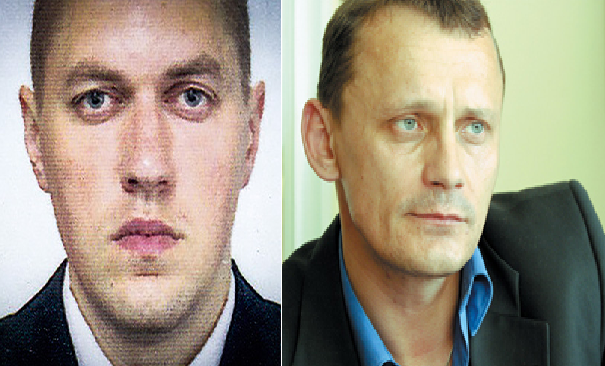
In the near future, a trial in the case of two citizens of Ukraine accused of participating in the territory of the republic in 1994-1995 should begin in Chechnya. The report of the Investigative Committee talks about two members of the nationalist organization “Ukrainian National Assembly-Ukrainian People's Self-Defense” (UNA-UNSO; in Russia is prohibited), Nikolai Karpyuk and Stanislav Klykh. He is charged with leadership and participation in the gang, murder and attempt on the murder of Russian military personnel and law enforcement officers. At the same time, since we are talking about the events of long -standing, the murder and attempt on the murder of “persons in connection with the fulfillment of their official duty” are qualified according to the relevant articles of the Criminal Code of the RSFSR, which was operating until 1997 (P.P. “B, Z, H” of Article 102 and part 2 of article 15, clause 102 of the Criminal Code of the RSFSR). The leadership and participation in the gang are qualified, respectively, the 1st and 2nd parts of Art. 209 of the current Criminal Code.
According to the Investigative Committee, Karpyuk, along with the prominent figure of UNA-UNSO and subsequently the Right Sector (this organization is also prohibited in Russia) Alexander Muzychko (killed by law enforcement officers of Ukraine in March 2014) recruited Ukrainian radicals to participate in the fighting in Chechnya on the side of the separatists. They organized a gang called “Viking”, which, according to the UK, entered, in particular, Stanislav Klykh, as well as the head of the “Right Sector” Dmitry Yarosh. The murders of “at least 20 military personnel” and the infliction of “wounds of varying severity” “at least 13 military personnel” participants in the Viking gang committed in December 1994 and January 1995 in Grozny: in the territory of the Presidential Palace, on a minute and at the railway station.
Nikolai Karpyuk was indeed a prominent member of UNA-UNSO. At the end of 2001 he headed the organization. Then he, along with a side by Soratnikov, was sentenced to imprisonment on charges of participating in clashes at the Building of the Presidential Administration of Ukraine, was released in 2004. In March 2014, shortly after the Russian Investigative Committee first announced the initiation of the case against UNA-UNSO activists for participating in hostilities in Chechnya, it became known that Karpyuk disappeared from Ukraine. The Ukrainian publication Gordon suggests that the Russian special services detained him in the Chernihiv region and took him to Russia. As Dmitry Chernov, the Coordinator of the International Human Rights Assembly, told the ATS-Info, Karpyuk was invited to some meeting, after which the connection with him was interrupted.
For a long time, relatives had no news about him. According to various sources, it was detained in Rostov, Essentuki and Vladikavkaz (investigation of the case of led by the Investigative Department of the SK in the North Caucasus Federal District). The four lawyers still failed to meet him or to enter the case - they showed statements written by Karpyuk, which said that he refuses their services and wants his interests to be represented by Lyudmila Mamukaeva as an appointment. The representatives of the Consulate of Ukraine have never been allowed to Karpyuk, who repeatedly tried to achieve a meeting with him. All this brought lawyers thought that Karpyuk was not alive at all. Only from medical documents and from the fact that he was an official charge, could we conclude that he was alive. Meanwhile, back in March 2014, it was reported that the court ruling on the placement of Karpyuk into custody said that he admitted that he had fought in Chechnya with Muzychko and Yarosh. As transmitted by "Faces. RU ”, in the Un-UNSO itself, they say that Karpyuk was not in Chechnya.
As for Stanislav Klykh, he, according to the defense, not only did not fought in Chechnya, but did not even participate in the active activity of Una-UNSO. As lawyer Marina Dubrovina, representing his interests, said from his words, in 1991, when he was a student of the History Faculty of Kyiv National University named after Shevchenko, he was invited to join the Ukrainian National Assembly. Students filled the questionnaires, there were a lot of them. But no mechanisms for leaving this organization, according to Klykh, were spelled out. “He says that he quickly departed this organization and he has nothing to do with it,” says Dubrovina. -Klykhi was listed in the lists of the organization, even for some time the Kiev branch of this organization was registered, but he was very quickly cut by his current head Igor Mazur (a prominent figure in the Right Sector-OTD-info). And Klykh later received a second education, taught, wrote and published articles in various publications, organized festivals, and was engaged in social activities. ”
Klykh was detained in August 2014 in Orel. After the detention of him, there was also no news for a long time, but Marina Dubrovina in June 2015 still managed to break through to him. Dubrovina claims that in the first one and a half to two months after the detention on the Klykh there was pressure: "He was beaten, tortured with electric shock, suspended the handcuffs, left without food and water, torture were long and sophisticated." He currently officially abandoned the testimony given under torture. Dubrovina believes that Karpyuk was tortured and beaten - otherwise it is difficult to explain why no one is allowed to be allowed to. Dubrovina twice filed a petition for the fake rates of Klych with Karpyuk, but they were refused. In September, the new lawyer Karpyuk, Dokka Itslaev, came into the job, but he still has not seen his client.
The report of the Investigative Committee mentions another accused in the case of the murder of Russian troops in Chechnya by the UNA-UNSO militants. This is a citizen of Ukraine Alexander Malofeev, who entered into an agreement with the investigation, in connection with which his case, already sent to the court, will be considered separately. According to Dubrovina, from the materials of the case it follows that Malofeev allegedly participated in Chechen events in 1994–1995 and 2000. In the early 2000s, he moved to Crimea, where he committed a crime and was sentenced to imprisonment. In 2005, he was taken by his mother, who lives in the Novosibirsk region. There he committed two more crimes and was sentenced to 23 years in prison. Since 2009, Malofeev has been in a colony in the Sverdlovsk region.
According to Dubrovina, the attention of operational employees was attracted by the numerous tattoos of Malofeev: among them was the inscription "Una-UNSO", Swastiki, signs of the SS. In the fall of 2013, he began to take testimonies about participation in UNA-UNSO and in hostilities in the territory of Chechnya. However, in his first confession among the people that he mentioned as those who were with him in Chechnya, there was neither Klych, nor Karpyuk, nor others, about whom the Investigative Committee is indicated in connection with the current case. But then, the lawyer says, when they “closely looked closely at the Malofeev and transferred to Essentuki”, new testimonies appeared - “on those who were needed”.
It was quite simple to get testimonies from Malofeev, Dubrovin believes: he has a terminal stage of HIV with generalized lymphadenopathy, hepatitis B, hepatitis C and tuberculosis, and in the past - severe heroine dependence. In order to achieve the “necessary” testimony from him, “it is enough either not to give him the antiretroviral therapy that he is supplied with, or wave a heroin dose in front of him,” says the lawyer. According to her, Malofeev was also beaten.
The preliminary hearings in the case of Karpyuk and Klykh in the Supreme Court of Chechnya should begin on September 15, however, as representatives of the Republican Public Supervisory Commission report, not one of the accused of the Terrible pre -trial detention center has yet been.