
Translated material
Schengen cracks at the seams
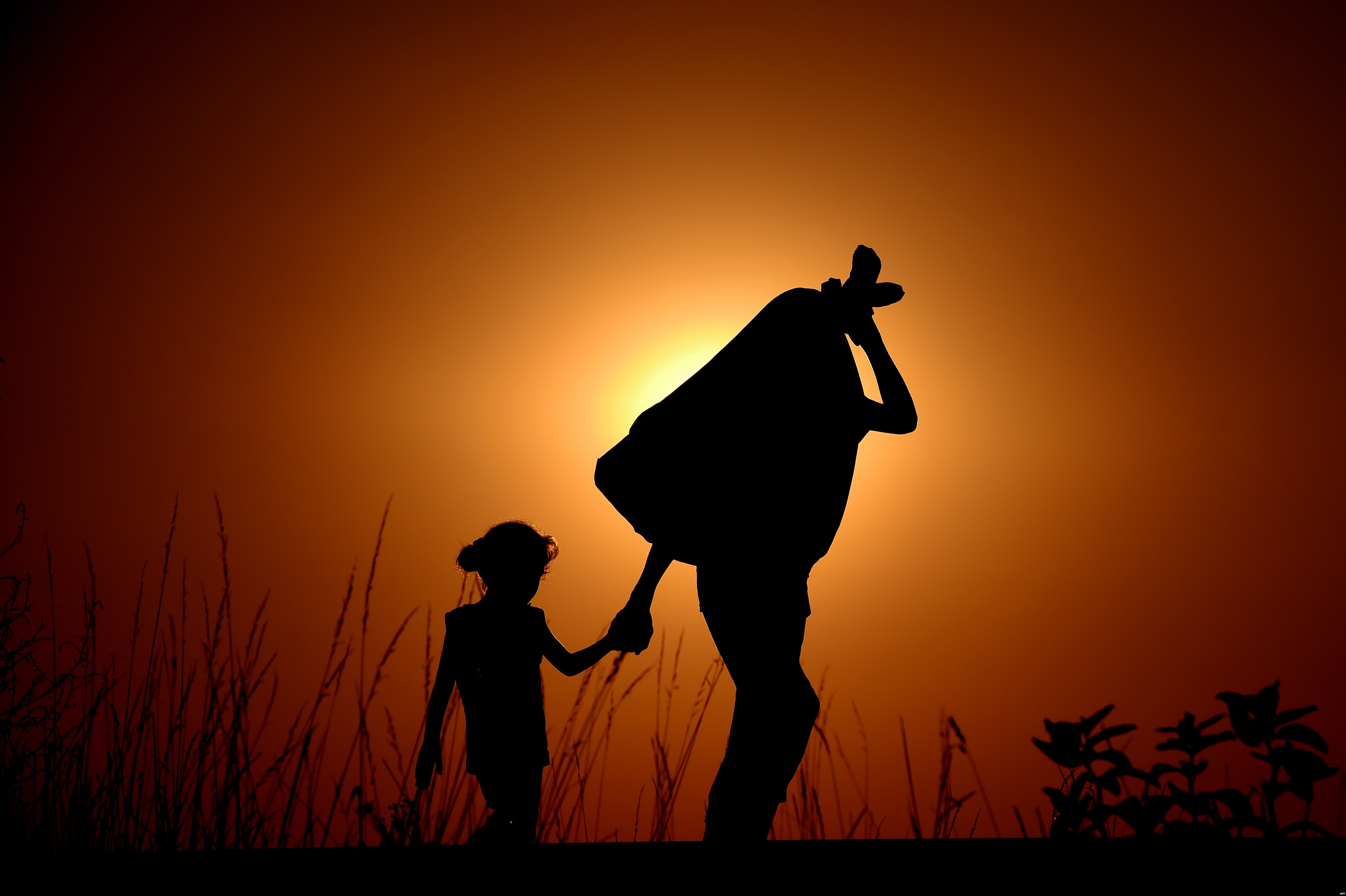
Due to the migrant crisis, control on the borders between several EU countries has been restored
The migrant crisis in Europe takes more and more. While the ministers of the internal affairs and justice of the European Union did not agree in Brussels, to whom of the 28 EU states, how many refugees to accept, several European countries announced yesterday and today about the temporary restoration of border control at the borders with some neighbors.
Germany restores the control regime on the border with Austria, that, in turn, on the border with Hungary, Slovakia - with both of these countries. The Czech authorities reported an additional 200 police officers to the Austrian and Slovak border. As for Hungary, it, in addition to the construction of barriers on the Serbian border, through which thousands of refugees penetrate the country, from September 15, introduces a new law, according to which an illegal crossing of the country's borders will be declared a crime, and who committed it are immediately arrested. Until Hungarian itself, until September 30, enhanced security measures were introduced, and from October 11, as reported on the official website of the local police, citizens of the third (i.e. not part of the EU) countries will take fingerprints even if there is a visa. True, in all these cases, the EU countries certify the purely temporary nature of such measures that it does not contradict the Schengen agreement . Nevertheless, the fears of the future of Schengen sound louder.
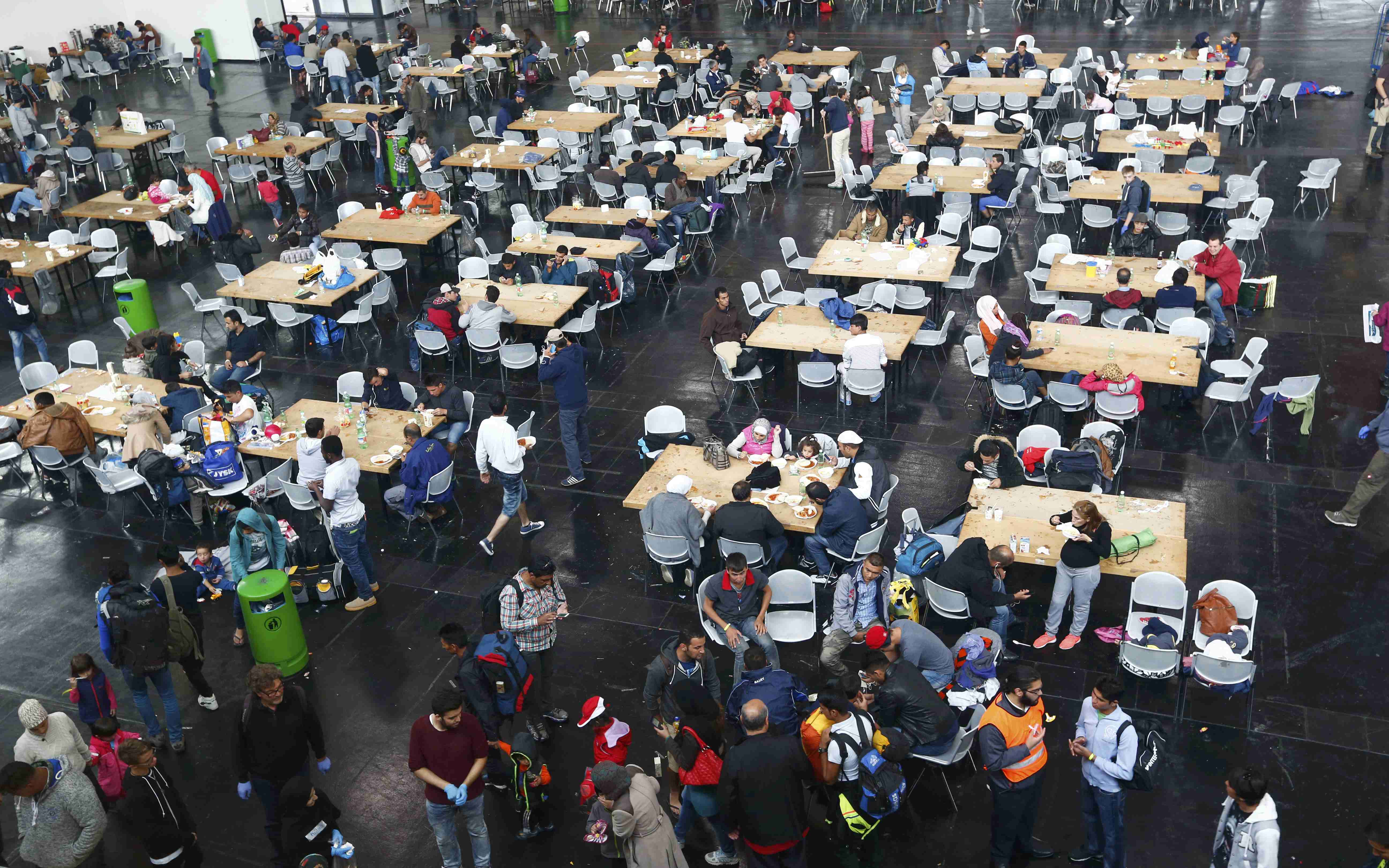
The Austrian authorities attract the army to protect borders. According to the Austrian Minister of Internal Affairs , Johanna Mikl-Linitner , over the past two days, more than 20 thousand migrants crossed the country's border. Germany is experiencing even more influx: only 13 thousand migrants arrived in Munich for only Saturday . Bavaria authorities say that they lack at least five thousand places to accommodate new arrivals, and other lands of Germany and the federal government ask for help. In the meantime, it was the mouth of the Vice Chancellor Sigmar Gabriel changed the forecast of the number of refugees that will arrive in Germany before the end of this year-from 800 thousand to 1 million. Berlin declares, nevertheless, the current measures on the boundaries of the country are temporary, and the German policy itself in relation to refugees (unlike economic migrants) remains favorable.
We need to restore migration rules in Europe
The Prime Minister of the Earth Bavaria Khorst Zeehofer , speaking on Sunday before journalists, however, sounded more alarmed:
- We need to restore migration rules in Europe. I hope that this will happen according to the results of today's meeting (ministers of the internal affairs and justice of the EU countries. - RS) in Brussels, that there will be solid control on the external borders of the EU. I talked about this, in particular, with the Prime Minister of Hungary Viktor Orban. Without Orban, without Hungary, these problems cannot be solved, ”said the Bavarian prime minister.
Meanwhile, it was Hungary and other countries of Central and Eastern Europe that had the greatest resistance to the plans for the introduction of quotas for the placement of refugees - Germany and France are primarily advocated for such quotas. Although today we are only talking about the distribution of a relatively small part of refugees - 160 thousand, part of the EU members against the principle of quota itself and believes that individual countries must decide how many refugees they are able to accept. The Polish Minister of European Union Rafal Tzhaskovsky has already warned that if the decision is made by a simple majority of votes, against the will of a number of countries, this will lead to an “institutional crisis” in the EU. According to the results of the Brussels meeting , it was decided to begin the distribution of this first portion of migrants between the countries of the European Union, but the issue of introducing mandatory quotas was postponed at least until the new meeting on October 8.
Apparently, the head of the European Commission, Jean-Claude Junker, who wrote on Twitter, also realizes the danger of the schism: "We talked with Chancellor Merkel and came to an agreement that we need more Europe and more solidarity in the decision of the refugee crisis."
I Just Spoke W/ Chancellor Merkel. We Agree: To Keep Borders Open Between Eu-Ms, We Need More Europe & Solidarity in Managing #refugeecrisis
-Jean-Claude JunCker (@junckeereu) September 13, 2015Meanwhile, British Prime Minister David Cameron headed for the Syrian refugees camps in the Middle East-where dozens of thousands of people are now striving to move to Europe. Cameron, whose position in relation to the reception of refugees was initially tough enough, on behalf of Britain promised additional financing of camps in Lebanon and Jordan, and also stated that London would try to fulfill this recently as soon as possible - to accept and place 20 thousand refugees from Syria in the United Kingdom.
Last weekend, a mass demonstration in support of refugees took place in the British capital itself:
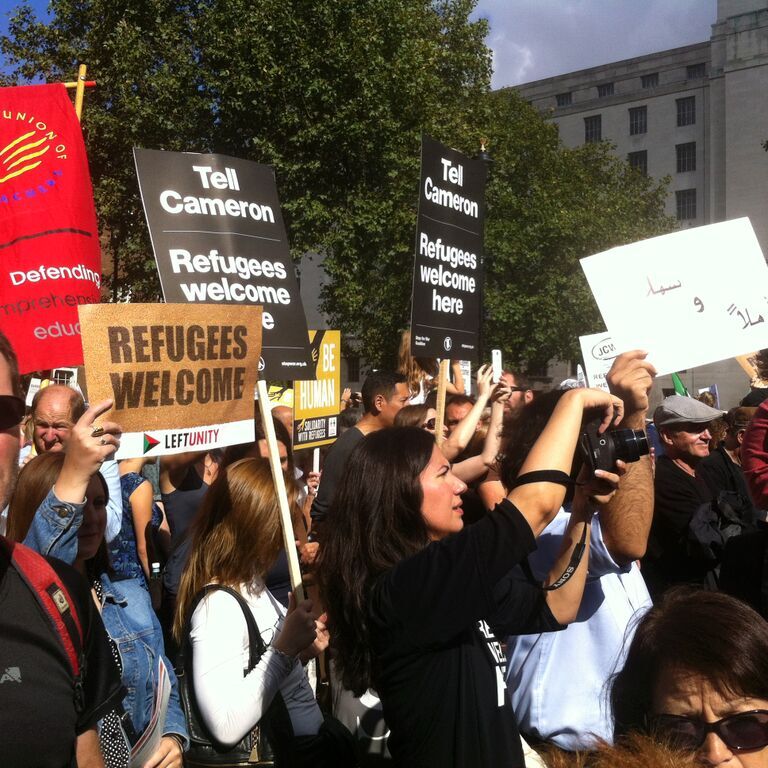
London. Demonstration in support of refugees
The migrant crisis, meanwhile, affected not only the EU countries, but also their southern neighbors from the Balkan region. The Balkan Peninsula in recent months has turned into the main transshipment base, through which thousands of refugees from the Middle East enter the countries of the European Union daily. As it turned out, there are many people who sympathize with the Balkans, because hundreds of thousands of citizens of the former Yugoslavia turned to flight recent conflicts in the region, many of whom themselves want to move to the European Union as soon as possible.
If you are now coming to Belgrade by bus, be prepared for the fact that you will have to unload immediately into the crowd of refugees who settled at the Central Bus Station of the Serbian capital. Thousands of people, mostly Syrians and Afghans, are trying to get from here to the territory of the European Union.
Refugees fall into Serbia mainly from Macedonia, and there from Greece. In recent months, this route has been especially popular among smugglers. According to the authorities, in the first nine days of September, almost 22 thousand refugees and migrants who strive to Western Europe passed from Serbia to Hungary. Only on Saturday, a transition of more than 4 thousand people was recorded, which has become another record. Whether the authorities of Hungary will be able to completely close the border with Serbia is still unknown. In any case, an alternative path remains for immigrants from the Middle East: from Serbia - to Croatia, then to Slovenia, Austria, etc.
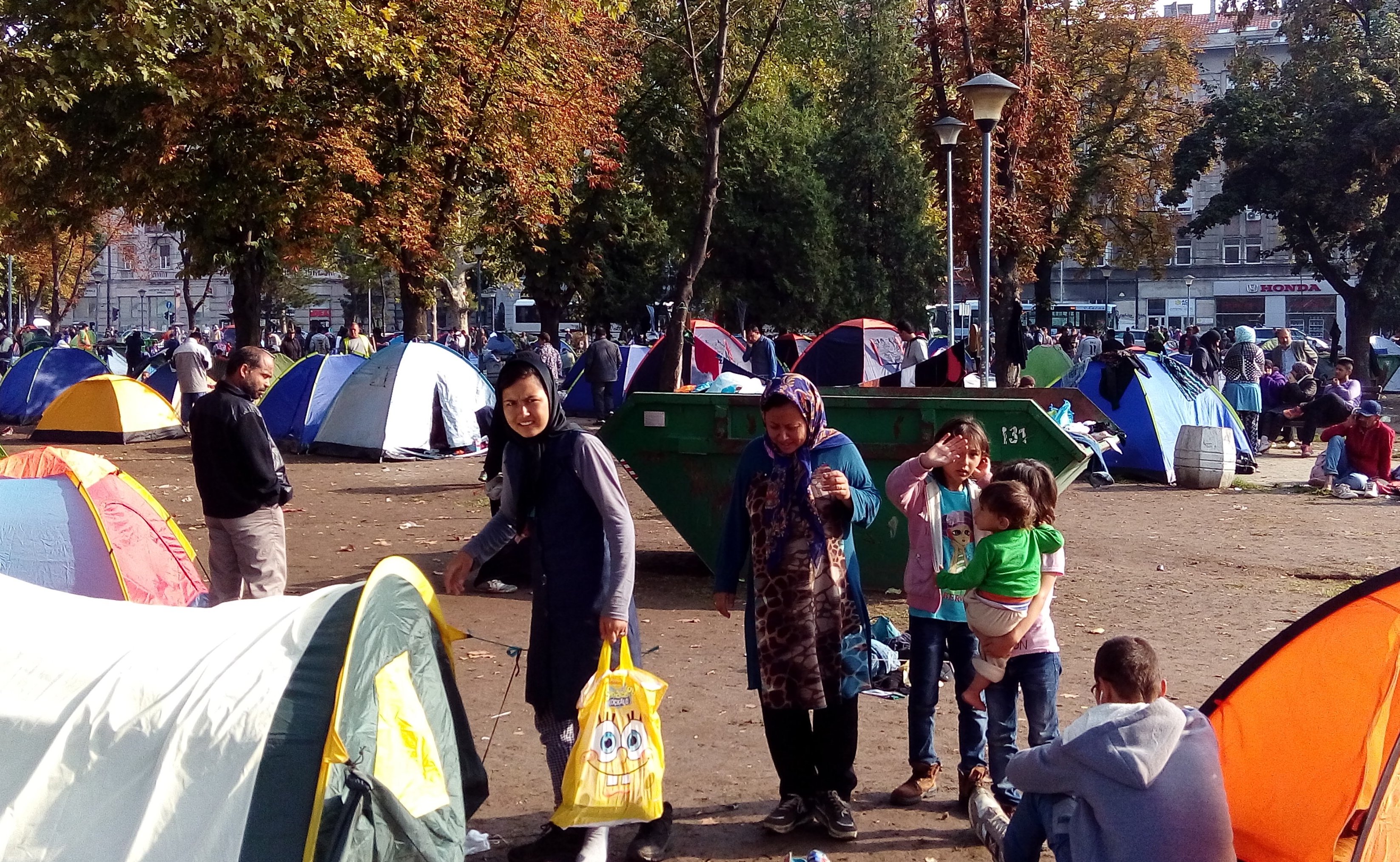
In the Balkan countries, refugees usually linger for only a few days - as much as it is necessary to move to the Hungarian border. And although some give petitions about the shelter, without reaching Hungary, the Balkans themselves are not very attractive to the Middle Eastern immigrants. This is understandable: the region still lives in the post-war life, the economic indicators are very weak, unemployment reaches 30-40 percent, and nationalism is still stronger than any other ideas. Nevertheless, local authorities are nervous: for them, refugee flows mean additional economic and political risks against the background of dissatisfaction of the population. According to estimates, more than 140 thousand refugees passed through Macedonia and Serbia, and in the near future their flow will not stop. At the same time, the Balkan countries themselves, which are not included in the EU, like Serbia and Macedonia, cannot affect the European Union policy in matters of migration.
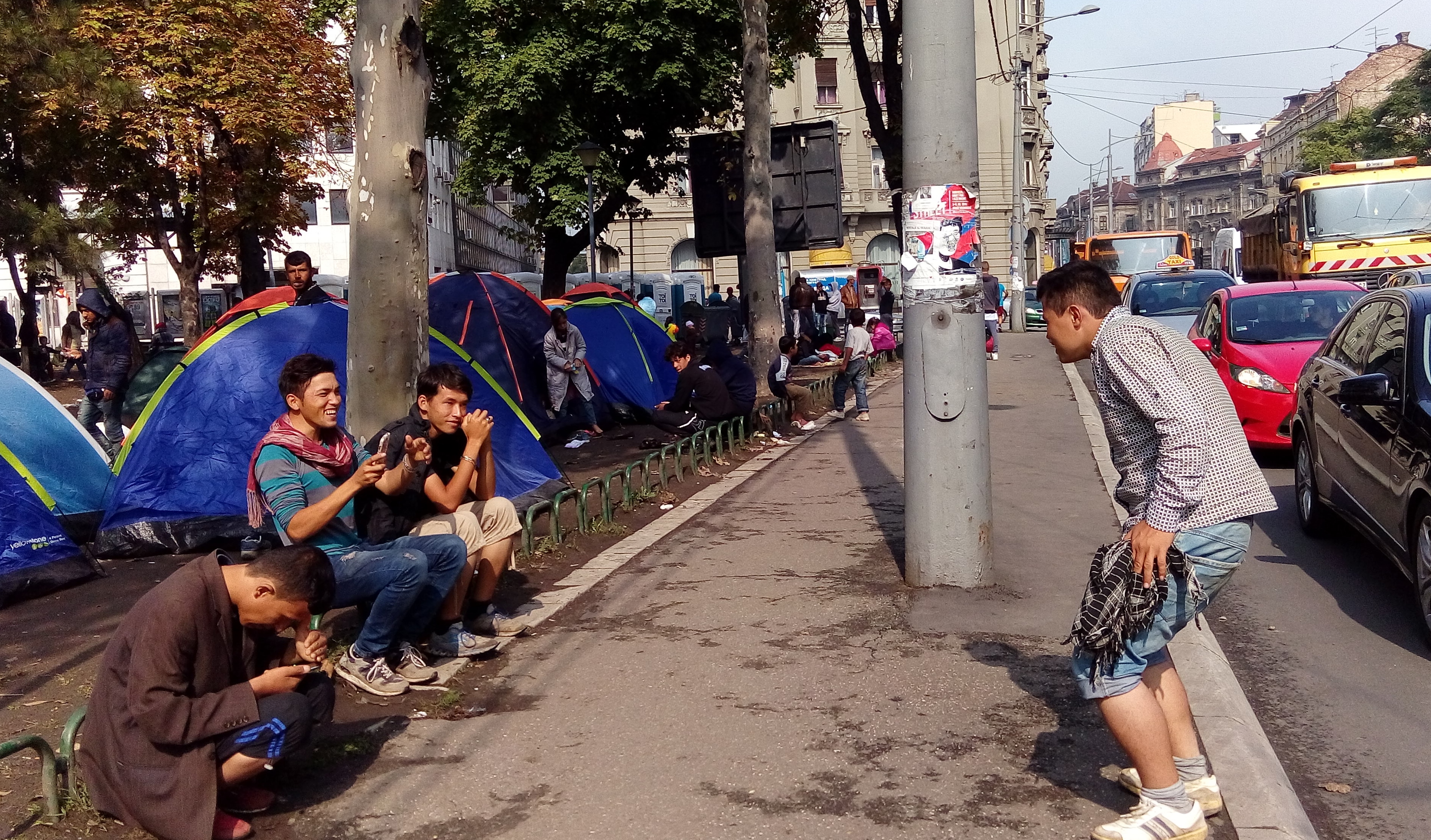
The Belgrade bus station is one of the last haven on the way to Europe. Refugees occupied the local park, setting up a tent camp, and in general all the free space, with the exception of only office premises. Arabic speech is heard from all sides. People sit and lie even near the plates and ticket offices, and hurrying passengers are crossing through them. One of the things has only cellophane, which can be covered instead of a blanket. Someone sleeps right in the open sky without warm clothes. In the afternoon there is about 30 degrees, but the nights are already cold and raw. In local cafes, more comfortable. The waiters who were briskly operating in the euro are happy to be even more than local guests than local.
Where is the mail? Where is the nearest Western Union? Where can I change the currency and eat?
At dawn, cleaners appear in the tent camp. There is a lot of garbage, although there are large containers in the park itself. Locals bypass the park. Almost every passerby awaits questions: where is the mail? Where is the nearest Western Union (a company engaged in quick international money transfers. - RS) ? Where can I change the currency and eat? These are obviously newcomers who have not yet had time to get settled at the station. But on the run, they do not forget to thank the answer and sometimes add May Frend.
Local law enforcement officers also demonstrate politeness. “Mr., remove the linen from the fence,” the policeman turns to the refugee standing right there. He is trying to explain that his things are drying, but the policeman politely insists on his own: "Mr., pliz, down!" I am interested in the policeman, whether it is forbidden to dry things here. “You cannot allow them everything in a row!” He is indignant in response. “We are too kind to them!” You can’t argue with the policeman. So far, Serbia has managed to position itself (unlike the same Hungary) as a hospitable country. So far, there were no scandalous stories with beating refugees with batons or humiliating scattering of food , as for animals in the zoo. They try to support the image of a hospitable country at the very top. As the Prime Minister of Serbia Alexander Vuchich put it the other day, "although we are not a member of the EU, we are ready to share this burden."
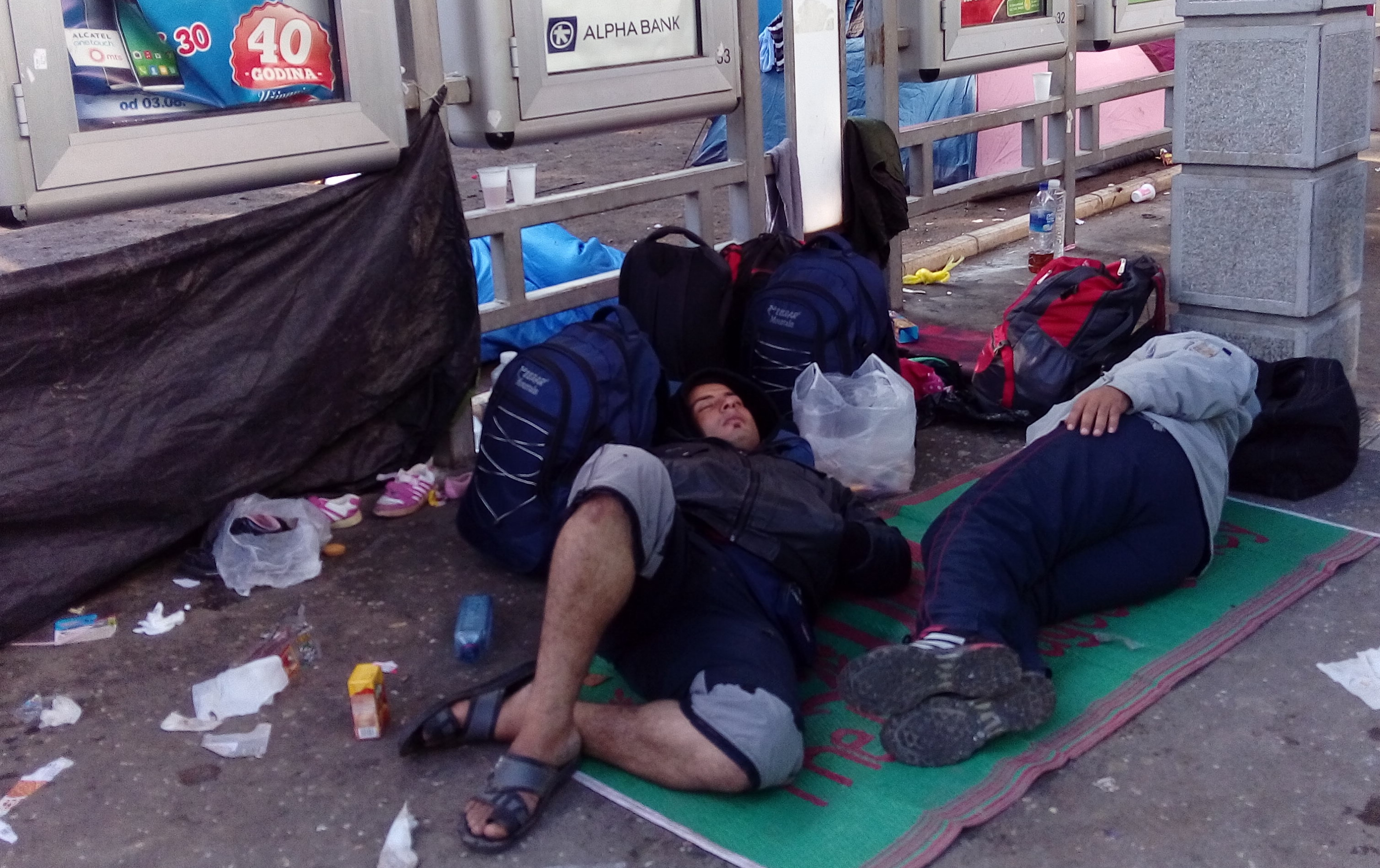
The cash desk regularly has groups of men who want to buy tickets to Subotitsa (near the border with Hungary), but not everyone can explain themselves. Kassirov is only interested in the answer to one question: how many people are going? At the same time, they suggest how much tickets are in the euro and where you can change the currency. One of them in a mobile phone is always ready for a map of a district adjacent to the Serbian-Hungarian border. He patiently explains to each refugee in accessible English, where you can cross the border in a legal way, and warns against illegal actions. 37-year-old Ali not only does not know which city he would go further, but also wants to bargain. He asks the cashier the maximum discount, saying that his "mother is very old, and the child is very small." But there are no discounts and no arguments help. “Then give two tickets, and I will hide my son in a bag,” he frankly. The cashier advises not to hide the child, but to try to agree with the bus driver about a free passage for him.
Just look at how many men among them who could hold weapons in their hands
Those who are richer can use a taxi. Taxi drivers park next to the tent camp. Before Subotitsa, a taxi driver Zoran takes 50 euros from each passenger. “The car is 200 euros. I take it to the subotye, and then let them understand themselves, be a stone's throw to the border,” he says. This is not so expensive, they say that from Presevo (near the Macedonian border where the interim center for refugees is located) to Belgrade is taken for 500 euros. In the Balkans, this is a good monthly earnings. According to Zoran’s calculations, 30 thousand refugees have already accumulated in Belgrade. “They can be seen everywhere. Just look at how many men who could hold a weapon among them,” he is indignant. “Probably not everyone wants to fight,” I suggest. "But someone must protect the homeland! If we reason like that, then we will all perish once!" High -pairing speech interrupts an urgent order. War war, and there is always work here.
Serbia and Macedonia were not ready for such an influx of "transit passengers." It is clear that with scarce budgets, these countries cannot provide serious assistance to refugees, especially in the conditions of an approaching winter.
About how refugees from the countries of the Middle East are perceived in the Balkans and how their influx threatens the region, Radio Liberty says political analyst and psychologist Sdjan Pupalo .
- How do the authorities and ordinary people perceive refugees of Nebalkan origin? How does this stream affect the political and economic situation, are there any risks in the field of security?
-People in the Balkans mainly with understanding relate to refugees from Syria, Iraq or Afghanistan, because here the memories of what happened in the region during the war of the 90s is still fresh here. This sympathy and help can be seen in different cities of Macedonia and Serbia. The authorities have other problems: they expect them to provide all the necessary technical assistance to refugees, for which they have no real possibilities. Hence the fears of some politicians that this can lead to serious economic problems. I think that in the EU this is well aware and help the authorities of the Balkan countries to overcome this problem. Of course, there are those who consider the problem of refugees as a kind of “war against Christian Europe” and opposing the help of them. Nevertheless, I must emphasize that there are few people, but their voices sound very loudly on social networks.
- Can Serbia, Macedonia and other countries of the region help to resolve the refugee crisis?
There are those who consider the problem of refugees as a “war against Christian Europe” and opposed the help of them
- I think that they cannot contribute to the settlement of the crisis, but they are able to create humane conditions for refugees on their territory. We are talking about the provision of the necessary information, the organization of transport, the creation of transit centers adapted for the normal life of refugees - with medical help, food, etc.
- It is known that the influx of migrants from the countries of the former Yugoslavia itself is a great problem for Europe. It was reported that a few months ago they made up 40% of the guide applicants in Germany. Is it possible to stop the mass migration of people from the Balkans to Western Europe?
- Many factors influence the departure of people. I think that first of all this is the lack of faith in the best future. A big problem is the low quality of local political elites, which are occupied only with their affairs, and not solving the problems of citizens and creating more favorable living conditions. Young people do not want to fight for themselves in their own country, travel abroad seems to be a simpler solution. We cannot blame them, because the crisis has been going on here for 30 years and many people simply lose patience, ”says analyst Sdjan Pukhalo.