
Translated material
Is history invented or predetermined?
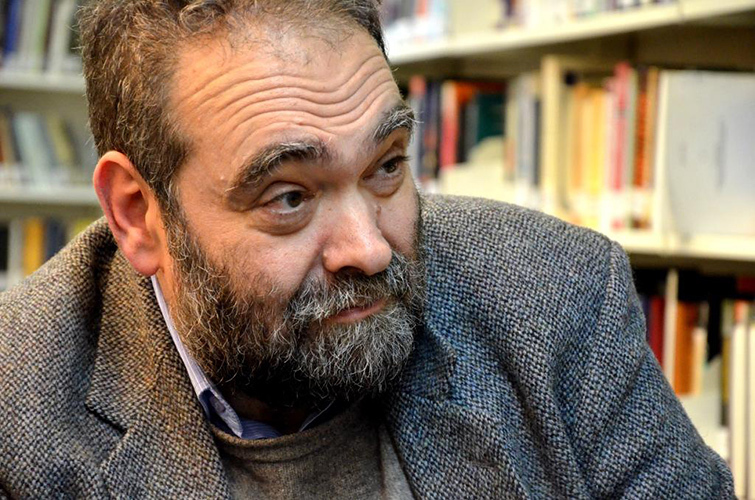
Over the centuries of existence, science has generated many explanations of what determines the historical path of the country. At different times, either geographical, economic, or cultural factors that somehow determined the development of the country came to the fore. COLTA . RU has recently published a lecture by economist Alexander Auzan; He puts forward some hypotheses about why Russia is following the path that looks more like a rut. Within the framework of the same summer discussion school Gaidpark -2015, Yegor Gaidar fund , a philologist, professor of Oxford University, was a lecture on why it is so important for a person to explain why the determinist theories were created and who actually creates history.
The topic, of course, is frightening, because, in essence, it implies a question on the basis of which we are talking about history and how history is generally moving. You can start a lecture on such a topic only by honest recognition: I do not know. Rather, as the sages said in ancient China, when they asked all kinds of simple questions: "I would like to know that."
In relation to history, all people are divided into a number of unequal categories. There are people who professionally study history - their insignificant minority. There are people who are interested in history, read something about this-they are also perhaps a minority, but already significant, not insignificant. There are people who sometimes think about history - apparently, the majority, although many people on this topic, naturally, do not think. And there are people who live in history - there are, in fact, almost everything. A separate question whether you know about it or do not know.
Accordingly, based on this very primitive separation, I will speak, relying on the first and fourth categories. On the one hand - what are the ways of a professional view of history, how can one think about it in principle, in what categories, and on the other hand, what reflection is possible in relation to one’s own life in history, to its existence. It is clear that what happens to us is happening to us anyway. But we think about it, we have the opportunity a little-not very much-to influence it or do we just live unconsciously in this stream?
I think it is obvious that the story was not always. History is our way to think about the past that changes. The very ability to notice changes, to see how the object changes in time, and consciously relate to this - this is the ability to attribute the object of historicity. The story for us is only what is changing, and only to the extent that we see it. If we are interested in the quality of the air that we breathe and worries that it worsens and the atmosphere becomes worse, we can say that the air has a story. Once he was clean, and now we made him less clean. So he acquires the property of historicity. So far, we do not think that the substance we breathe somehow change, the air does not have historicity. That is, the property of being subject to changes is the property of historicality, and this is not so much the property of the subject itself as our way to understand it. History is a way of understanding some events, relationships and the like.
The story for us is only what is changing, and only to the extent that we see it.
In the Russian language there is homonymy - it is clear that the word "history" has two or three meanings. The first meaning: History is the science of the past. The second meaning: history is what was in the past, it is the object itself, and, by the way, this homonymy is manifested in relation to far from all sciences; There are language - and science linguistics, nature - and physics, chemistry, other sciences that study it. In history, we are dealing with an interesting language phenomenon: science and the subject that it studies are called the same word. In addition, the word "history" has, as we all know, also the third meaning: we tell stories. In Fonvizin’s play “Undergrowth”, the visiting guest who is interested in the quality of teaching different subjects asks whether his teacher teaches a story, to which his mother or nanny says: “What are you, he is a hunter to the stories.” That is, history is what is told about the past.
These three meanings are not random. Because there is no complete homonymy in English, although History is also called the object of study and the science of it, but the word “history” in the third sense is Story - another, although one -root, hence, from this nest. You can walk in different languages - the relationship exists. The language captures this feature - in order to understand the historicity of the subject, we need to tell a story about it. We must attribute to him some fundamental, our invented properties-the beginning, the logic of development, determination, some end. In this sense, of course, a way of understanding history, its basic analogue, on the basis of which we are talking about it, is human life. We know at what moment it begins, at what moment it ends, and we have some general cultural idea of what logic it develops - a person lives from youth to old age, in his life there are certain phases.
When we begin to think about the events of the past, we tend to historize them, tell this story about them. So in history as science, what we call the myth of the foundation arises. Almost every community of people - the state, the people, the imaginary community, which one or another is recognized as a community - ascribes to itself the myth of the foundation. This was not always the case, but in today's states it is usually reflected in the system of national holidays. The state comes up with the day when it began, and celebrates it, as a person celebrates his birthday. Here is our beginning. We are going the logic of the path. Learning yourself, a young society is all impositions on the dynamics of the historical process of presenting a person about the logic of the structure of his own life.
I used the word “logic” several times, and the idea of history as knowledge is usually an attempt to find logic in these same events. A person ascribes some meaning of his own life. There is a characteristic well -known combination - “the meaning of life”, whether he is what, whether he has a common or everyone has their own and so on. And the same meaning, the same logic we strive to find in history.
When historical works begin to be written - chronicles, chronicles - they, as a rule, describe events. But this is also an archpriest text. That is, it is already partly historical, because we are talking about the event - this is what happened, that which is unique, that which violates expectations. What happens always under all conditions is not an event. The event is what we are not waiting for. Therefore, when events begin to be fixed, in their selection there is already a way of historical understanding. One thing happened, the other, the third - we recall the events. But this is still an archong -Hodoric way of thinking, because events are simply fixed, internal relationships are not established between them, there is no development logic in them.
To understand the historicity of the subject, we need to tell a story about it, attribute it to him the beginning, determination, end.
Further, when we begin to think about this logic - but how, why it is - we begin to attribute to stories causality, the connection between events. This is also, as I would like to pay attention immediately, not an obvious mental assumption - that a historical event has a reason. This must be assumed that it does not happen just so that he has some kind of logic.
There are two poles in the understanding of this. One pole is fatalistic, these are usually some providential representations: a book of heaven, a book of fate, where everything is recorded, the Lord knows what will happen, everything is predetermined, fatally determined. And the other pole, the opposite, is an endless pile of chaotic accidents. These poles are opposite, but they are not so difficult to logically reduce into one. That all this is an absolute noodles - we just cannot see any logic, and the one who is upstairs knows why this is needed, he drives us into these chains, but for us it all sees as an absolute and total incomprehensible uncontrollable chaos.
A significant question here: why is it important to think about it? What does this mean - is there a reason, there is no reason? Written in the book of fate or not written? What is the practical difference? The difference, of course, is obvious, because a person makes decisions, and he needs to know whether his decision has some meaning or not. I will not leave the field of history in the field of psychology - modern psychological science generally questioned the question of how much a person is able to deliberately make a decision, and there is a hypothesis that a person makes a decision before he finds out that he does not consciously make any decisions. But still, the culture in which we lived for the past two thousand years is based on the prerequisite that a person is a responsible creature that makes a decision itself, and I will discuss further in this logic.
So, in order to make a decision meaningfully, we need to know what we can influence, what we cannot, what depends on us. Any decision is made based on the horizon of the future. A person does not have a present, it is only a separation point, but there is the experience of the past and the expectation of the future. He makes decisions on the basis of the experience of the past, based on the horizon of his expectation and ideas about the desiccance of a modesty of a particular development of events.
These fundamental dichotomies were decisive until there was an idea that there is science as such, which has its own rules, and there should be some laws that we can understand by scientific way. This is approximately the end of the XVIII - beginning of the 19th century and the second half of the 19th century in particular, when the ideas of scientific law arise, and at the same time the idea of historical determinism appears: all events are somehow determined by monumental macro -historical factors. The ideas about what kind of these factors can be different, but, as a rule, different scientists and historians proceed from monistic ideas about history - that there is one main factor. Human societies are very diverse - I almost said “infinitely diverse”, but not endlessly, although extremely. So why are they so diverse? How to explain?
The event is what violates expectations. What happens always under all conditions is not an event.
One of the fundamental answers, very alive for today, is geographical determinism. That the development of society is determined by the locus in which it is located, natural conditions, the fertility of soils, the duration of daylight hours, the climate and the size of the state. In the theory of Montesquieu, the difference between tyranny - or despotism, as he called them, is described exclusively on the size of the sizes of states. The democratic republican system, from his point of view, was suitable for small communities. The average size of the community gave rise to the aristocratic system, which he considered generally ideal, as did the average size of the state. And for large states, only despotism was suitable. Catherine II really liked his theory, because, on the one hand, she allowed her to consider herself an enlightened and at the level of development of European thought, and on the other hand, justified for Russia - the state is more difficult to imagine - a despotic device as the only suitable.
This, of course, is a very rude meter, so supporters of the models of geographical and climate determinism then very sophisticated it as a theory. The ideas of marine and continental civilizations appeared with the theory of trade civilization, which comes out to the sea, and the closed continental civilization, which arose from this theory, and there were extremely many such theories. For those who are curious to look at this on Russian soil, there is a classic book by academician Milov “Great Russian Pagger”, where the whole history of Russia is derived from the specific geographical latitude and Russian climate. It does not deserve an ironic attitude at all, because intellectual energy is invested in it, and the intellectual focus that is done here is extremely strong and exquisite. This logic convinces me little, but it was done great.
People of the older generation are most often faced with these logicians, but nevertheless they are laid down as if in the underground teaching systems today, since the logic of thinking is changing slowly. These, of course, are Marxism - the ideas of economic determinism: that everything is determined by the development of productive forces and production relations and that all social phenomena, including the finest, refined, cultural processes, are determined by the economic logic and class interests of certain participants in the events. We are talking about the situation of each group in the system of distribution of labor and social products and resources, and the interests and positions of the group determines this particular. The idea of economic determinism, of course, is extremely developed and deep.
In Montesquieu Theory, the democratic system was suitable for small communities. And for large states, only despotism was suitable.
No less popular and widespread among the deterministic models of history is-it can be called differently-a model of cultural or civilizational determinism. That there are cultures and they determine cultural conditions. Some time ago, in my era, intelligently speaking, of the middle youth, the term “mentality” gained incredible popularity. Now, somehow a little with this mentality has learned. But then there was an idea that there was somehow a historically established culture or mentality-the word “mentality” emphasizes almost a biological character-that there are some communities in which everyone shares certain mental representations. These systems of cultural representations determine the whole history of man, society, the state, the people and so on, depending on what society we consider. They are closed in this zone.
But one of the latest and intellectually strong in this sense was the civilizational model Samuel Huntington, who divided all of humanity in civilization and said that everything is determined by them. Huntington recently died, and now, these days, he would certainly rub his hands, because he repeatedly said that Greece cannot be a member of the European Union, since it belongs to another civilization. He managed to find the time when the Greeks were accepted into the European Union, and he had an explanation of another civilizational paradigm of the Greeks: they are Orthodox, while the European Union and this civilization are based on the Protestant Catholic tradition. Huntington said that Greece should be excluded, otherwise it will end badly. Now he would be very happy. Although before his death, both Romania and Bulgaria were accepted there.
That is, Huntington considered religion the basis of civilization as an established system of representations. In particular, she made it possible to create these same cultural models and get away from straightforward biological, racist explanations. Say, the Dominican Republic and Haiti were compared, despite the fact that this is one island, one ethnos and almost one story, but different religions are beliefs based on Voodoo in Haiti and Catholicism in the Dominican Republic. As a result, a very definite conclusion was made that Race doesn ' t Matter , Culture DOES : One country was still capable of development, the other is not particularly. Culture can be overcome to some extent, but it has a high degree, so to speak, elasticity, resists changes.
Huntington has recently died, and now he, of course, would rub his hands, because he repeatedly said that Greece cannot be a member of the EU, since it belongs to another civilization.
Before that, I said that these theories unites. This monism is one basic factor. But what disconnects them? The fact that, for example, cultural and geographical determinism focuses on stability, on constancy, on immutability. That there is some kind of established culture or geography and it largely determines. While economic determinism emphasizes the teleological logic of changes. According to the theory of Marx, economic relations and economic formations are constantly replaced. In the last century, the theory was clarified, and the last edition was the theory of modernization-that all societies pass it, but in different ways, to varying degrees, with different acuity, but nevertheless, modernization is accompanied by the same signs. Some societies are completely modernized, some partially, but there is a clear teleology of movement along the way. Although civilization and cultural models also love the metaphor of the path.
I have been playing at the Moscow School of Social Sciences-it holds an annual conference called “Rossiya’s Ways”, and this is such an interesting idea that Russia has some ways. Я посмотрел по Гуглу, как обстоит дело с другими известными мне языками, есть ли пути у каких-то стран, которые изъясняются на других языках. Обнаружил, что « the Way of Britain » и « the Way of England » не существуют вообще. Упоминаний подобного рода буквально единицы, их очень мало. « Le chemin de La France » — это исключительно железнодорожное правление, которое отвечает за развитие железных дорог Франции. Но зато « Deutsche Wege » больше, чем «путей России»: у Германии невообразимое количество путей, набираешь — и на тебя вываливаются сотни и сотни тысяч упоминаний. Понятно, что все эти идеи — немецкого происхождения, они были перенесены на русскую почву, как и идеология особого пути — Sonderweg — из Германии, что мы куда-то откуда-то идем. Соответственно даже больше, чем в немецкой традиции, в современной России актуальна железнодорожная метафора: мы шли по пути, но потом с него сбились, съехали, и нам надо вернуться обратно, вопрос — куда. Это еще в перестройку обсуждалось: то ли в досталинский период, к идеалам революции, то ли в царистский период, то ли в допетровскую Россию, то ли еще куда.
Это интересный вопрос, потому что первым об этом заговорил знаменитый русский мыслитель Петр Яковлевич Чаадаев в «Философическом письме», и он говорил, что главной исторической ошибкой был неправильный выбор религии — взять ее у падающей Византии. Чаадаев, конечно, никогда не пользовался железной дорогой, но удивительным образом появление его первого философического письма совпадает с началом строительства русской железной дороги. Это произошло совершенно синхронно. То есть способ размышления очень характерный: путь, ветка, боковой путь, возвращение, съехали с пути, потеряли колею — почему-то мы представляем себе страну и государство идущими по железным дорогам.
Интересная сама по себе идея, что у России есть какие-то пути. Я посмотрел, как обстоит дело с другими известными мне языками, и обнаружил, что the way of Britain и the way of England не существуют вообще.
Теперь я решительно перейду к противоположной идее — что история не детерминирована, а наоборот, определяется поступками и действиями людей, сознательным, волевым решением, воздействием и так далее. Кто эти люди, которые так или иначе влияют на исторический процесс? Это, прежде всего, цари, боги и герои. Свойство быть исторической личностью приписывалось начальству — князьям, вождям. Вот они принимают решения, и отсюда биографический интерес к жизни тех, кто принимает решения за других. Еще Толстой смеялся над идеей, что если бы у Наполеона не было насморка на Бородинском поле, он принял бы правильное решение и история пошла бы по-другому. Звучит смешно, хотя, с другой стороны, неизвестно, так ли это смешно. Я мало знаком с французской частью истории войны 1812 года, но, скажем, чудовищная идиосинкразия русского императора Петра Алексеевича к жаре — у него начинали плавиться мозги, он терял самоконтроль и способность командовать войсками в условиях жаркого климата — сыграла очень значительную роль в геополитическом развороте России от Черного моря к Балтийскому. Он же начинал с Азовских походов, но там у него что-то не получалось. Как всегда, сработали глобальные исторические факторы, но, вероятно, какие-то его интересные биологические идиосинкразии не остались без влияния на этот процесс.
Вторая идея, кто влияет, исходит из того, что власть над историей — это власть над умами. Соответственно влияют поэты, пророки, авторы и создатели религий — они являются главной движущей силой истории. В совсем недавнее время возникли новые модели, понятные в этом смысле, что история человечества — это история научных открытий и соответственно именно ученые, открывая, все определяют. И хорошо понятная модель — что это деньги. Что те, кто обладает деньгами, обладают реальной властью, принимают решения и меняют все. Но что существенно во всех этих представлениях и моделях? Это то, что люди делятся на две группы: на тех, кто принимает решения, кто определяет, и на тех, кто ими заражается.
Крайним выражением этих систем представлений об историческом процессе являются так называемые теории заговора. Есть специальные исследования по теориям заговора, которые могут приобретать почти эпидемический характер, когда общество фактически заражается идеей, что где-то есть заговорщики, которые тайно рвутся к мировому господству и манипулируют обществом тем или иным способом, добиваясь выгодных для себя целей. В отличие от идеи экономического, географического или цивилизационного детерминизма, здесь просто поставить некоторый мысленный эксперимент, чтобы проверить эту теорию.
Думаю, каждому доводилось в своей жизни что-то организовывать — какое-нибудь выступление, мероприятие, чтобы все вовремя пришли, чтобы все подготовились, чтобы все сделали, чтобы все сработало. Если это три человека — в общем-то, запросто. Задача, не отличающаяся никакой сложностью. Девять человек — уже становится трудно. Решаемо, но трудно. 27 — можно, но нужно иметь какие-то специальные способности, чтобы получилось, не у каждого получится 27 человек организовать. 81 — уже нереально, никто не может. Так, чтобы все работало как часы, правильно, чисто, без накладок и так далее.
Идиосинкразия Петра к жаре — он терял способность командовать войсками в условиях жаркого климата — сыграла значительную роль в геополитическом развороте России от Черного моря к Балтийскому.
Насчет всемирного заговора — все понятно, да? Вероятность организовать что-нибудь подобное, чтобы оно вот так работало, ниже нуля. Опять же, бывают локальные заговоры — можно убить главу государства, можно совершить теракт, локальных заговоров сколько угодно. Но практически никто, осуществляющий теракт, государственный переворот и так далее, уже не может контролировать успешную реализацию своего замысла. То есть из всего, что я перечислил, это интеллектуально самая слабая модель. Но очень популярная, потому что она соответствует идее истории как истории, которую рассказывают. Это история про ужасных заговорщиков, про тех, кто с ними борется, про столкновение двух сил — особенно нынешнее массовое искусство страшно склонно к воспроизведению этой модели, где есть силы добра и силы зла, осуществляющие такую коллизию. И это, конечно, объяснительная модель, обладающая колоссальной умственной привлекательностью именно потому, что она страшно проста как способ объяснения непонятного.
Последнее, о чем я хотел сказать очень кратко, прежде чем переходить к заключительной части, некоторому подведению итогов, — это развившееся в последние полстолетия представление о том, что никакой истории не существует вообще, что история — это выдумка. Мы не можем узнать, как что было на самом деле, потому что ничего и не было. Это уже борьба за власть, то есть ретроспективная манипуляция с целью символического контроля над прошлым. Те или иные группы, люди борются за контроль над прошлым и навязывают свои версии прошлого с целью усиления своих статусных финансовых и ресурсных позиций в настоящем. Это такое очень распространенное представление об истории: все чистое вранье, просто мифы. Слово «миф» снова приобретает чрезвычайное значение.
В XIX веке знаменитый немецкий историк Леопольд Ранке вывел формулу, что дело историка — узнавать, как он сказал, «как это было на самом деле», как это было в действительности. Но только ленивый двести раз не сказал, что это какая-то ужасная глупость, наивность и идеализм — кто может знать, как было на самом деле. Мы действительно ничего не знаем и, вероятно, не узнаем никогда, как что было на самом деле. Но тем не менее мне кажется, что без этого импульса, без желания узнать, как было на самом деле, думать об истории бессмысленно. Что уже сам процесс ее обдумывания определен желанием узнать, как было на самом деле, даже если это у нас никогда не получится.
Соответственно я перехожу к заключительной части всего того, что я хотел сказать. Мне представляется, что все те объяснительные модели, о которых я говорил, при их невероятной разности обладают одним и тем же фундаментальным свойством. Их цель — это устранение из истории ее загадочности и непонятности, устранение незнания, создание модели, которую мы можем считать объяснительной, непротиворечивой, дающей нам силу предсказывать будущее на основании прошлого и так далее. То есть речь идет о попытке интеллектуального вытеснения или объяснения присутствующей в ней тайны и непонятности.
История Эдипа — это история об ответственности за то, чего ты не делал, не хотел, не рассчитывал. Но принятие ответственности есть акт сознательного решения.
Опять-таки, если пользоваться ресурсом английского языка, там есть прекрасное словосочетание, вернее, глагол to explain out — когда ты ликвидируешь проблему путем объяснения. Мне кажется, что все эти модели объединяет идея объяснения загадки истории, вытеснения ее, ликвидации, подчинения ее понятной нам логике. В то время как фундаментальным свойством интересной истории является неопределенность. Есть прелесть в истории, особенно истории, которую рассказывают детям: дети любят знать, чем кончится. Мы заглядываем наперед в конец книжки, нам нравится рассказывать сказки, потому что мы слышали другие и знаем, чем кончаются сказки, что в конце все будет хорошо. К тому же у нас есть опыт человеческой жизни, и мы тоже знаем примерно, чем всякая человеческая жизнь кончается. Здесь все известно. Но именно поэтому интеллектуально очень трудно принять неопределенность, многофакторность, наличие процессов, о которых мы не знаем.
Есть книга Карла Поппера «Нищета историцизма» (она многократно выходила по-русски), где он пишет, что главный закон истории — это закон непредсказуемости последствий. Принимая решение, человек не знает, к каким последствиям это приведет. Поппер говорил об unintended — ненамеренных последствиях и приводил простой пример выхода человека на рынок. Вы хотите купить дом, заинтересованы в том, чтобы купить его дешевле, но, предъявляя платежеспособный спрос, автоматически повышаете его цену. Это понятная всякому экономисту логика. Но суть в том, что последствия действий человека всегда непреднамеренны, мы никогда не знаем, какими они будут. А ответственность — реальна. За те последствия, которых ты не только не предусмотрел, но и не имел возможности предусмотреть. И это историческая ответственность.
Это не я придумал, это знали давно, и об этом поразительно сильно написано в трагедии Софокла «Царь Эдип». Ему на роду было написано — греки верили в судьбу и предопределение, — что он убьет отца и женится на матери. И он сделал все возможное, чтобы этого избежать. Тем не менее все, что он сделал, привело его к тому, что он совершил. Для него все это было полной неожиданностью, но когда он узнал, что все исполнилось, он принял на себя ответственность за оба преступления. Это интересная история с точки зрения права, этики, отношения к жизни, это история об ответственности за то, чего ты не делал, не хотел, не рассчитывал. Но принятие ответственности есть акт сознательного решения.
История — это действия в условиях неопределенности. У меня не было возможности подробно говорить о субъекте действия — что такое государство, которому приписывается право быть активным игроком, народ или другие абстрактные общности, каково во всем этом место индивидуального человека. Но в этом смысле я хотел бы вернуться к тому, с чего начал. Я не описываю вам, как устроена история: я не знаю. Я рассказываю, какие есть способы о ней думать, и просто делюсь тем, как пытаюсь о ней думать я. Что история и есть результат сознательных действий и сознательных решений людей — многих, всех. Только никто из них никогда не знает, что выйдет из сознательных решений, и всегда бывает не то, что мы хотим, думаем и планируем. Что не отменяет нашей ответственности за то, чтобы хотеть, думать и планировать, принимать решения и действовать.