
Translated material
Separatists by vocation
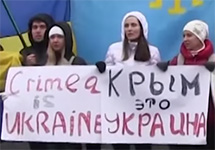
September 15 - Day of two political processes for a "separatist" article. In Tataria, the verdict is sentenced to Rafis Kashapov , in the Kuban they begin to judge Daria Polyudova . Article 280.1 of the Criminal Code on calls for separatism has been valid for a year now. She became another tool for repression against the opposition.
On December 30, 2013, Vladimir Putin signed the law on criminal liability for the propaganda of separatism. Only six months later, July 22, 2014, he signed a new law - tightening sanctions under this article and expanding its action.
In the current edition of the article, the maximum punishment for it is four years of colony, and if there is a qualifying attribute "using the media" - five years. At the same time, any Internet resources are equated to the media. Alternative punishments are also provided: a ban on profession, forced labor, fines.
The first known case of applying the article followed a month after the entry into force of its second edition - in August 2014. The authorities nervously reacted to the trolling action preparing in Krasnodar - the march for the federalization of the Kuban.
The idea of the Kuban march arose under the influence of the march preparing in Novosibirsk for the federalization of Siberia (later the march "for the inviolability of the constitutional system, in particular, for compliance by the state of the principle of federalism, enshrined in Art. And 5 of the Constitution"). The initiator of the Novosibirsk campaign was the activists of the National-Bolshevik platform. However, on August 17, 2014, when the march was planned, the police and provocateurs were pulled to the place of its holding. Some of the organizers were detained during interrogations in far -fetched affairs, another was blocked in a rented apartment.
Before the opening of the criminal case under Article 280.1 did not reach Siberia. However, a year later, the leader of the NBP Mikhail Pulin was sentenced to 1 year 4 months of strict regime on charges of attempted robbery.
The Kuban march, which was planned on the same day, was also ripped off, but its organizers - Daria Polyudova, Pyotr Lyubchenkov and Vyacheslav Martynova - unlike Pulin with his comrades, attracted the "separatist" article. Lubchenkov before the action went to Ukraine. In early September 2014, Martynov also went there. Meanwhile, Two days before the march, Polyudova fell under the administrative arrest in the fabricated case of petty hooliganism, and she did not have the opportunity to hide. Immediately after the departure of the 14-day arrest, she was detained already in a criminal case, and then arrested. The activist spent six months in a pre -trial detention center, after which she was released on a recognizance not to leave in connection with the expiration of the deadline for arrest on imputed charges.
There are three episodes in Polyudova. Two are qualified according to the "extremist" of the 280th article of the Criminal Code, and the third - just in part 2 of article 280.1 (public calls for separatism via the Internet). This accusation of the activist was charged with the publication on August 5, 2014 on a personal page on VKontakte, a text called "cutting his own weapons on the Putler."
Already this year, part 2 of Article 280.1 was also charged with the head of the Naberezhnchelninsky branch of the All-Tatar Public Center Rafis Kashapov, in December 2014, arrested in the "extremist" article. He is also persecuted for several publications on VKontakte. In particular, we are talking about the text " Crimea and Ukraine will be free from the invaders! "
Kashapov’s case came to court faster than Polyudov’s case. On September 15, the publicist will already be sentenced. The prosecutor in the debate requested four years of general regime for the defendant.
In January, Amnesty International began the international campaign in defense of Kashapov. In May, the Human Rights Center "Memorial" recognized him as political prisoner.
The affairs of the "separatist" article were expected to be opened in the occupied Crimea. So far, however, in this region under article 280.1, no one was arrested.
In March of this year, FSB operatives searched the housing of the Crimean journalist Natalia Kokorina, after which they took her for a six -hour interrogation as a witness in the case of separatism. This case was opened after the publication by the publication of the “Center of Journalistic Investigations” of the Crimea volunteers . The author of the text, Anna Andrievskaya, by that time moved to Kiev, but continued to write for the site. Meanwhile, they also searched her father, who had never used the journalist. Another former employee of the ZHR - Anna was questioned. Shaidurova.
Human rights activists stated that the principle of territorial jurisdiction was violated in this case: the publication was registered in Ukraine, and its editors are in Kiev.
They did not know about the further progress of the case, they told the “faces” of the journalist of the CHD. They were no longer summoned to investigative actions.
On May 29, it became known about the initiation of the case under Part 2 of Article 280.1 against the chairman of the Mejlis of the Crimean Tatar people Refat Chubarov. It was reported plans to put a policy on the international wanted list. According to the FSB, in April 2015, Chubarov in an interview with the Ukrainian media called for "violation of the territorial integrity of the Russian Federation", namely, "to the exclusion of the Republic of Crimea from the Russian Federation and its joining to the territory of Ukraine."
According to the experts of the Center for the “OVA”, “the initiation of the case of“ separatism ”regarding the leader of the Crimean Tatar Majlis is unacceptable: it is impossible to accuse the person who did not recognize the accession.”
According to some reports, another “separatist” case was opened on the fact of anonymous electronic letter to five governors of the border Russian regions. The author of the text urged officials to separate the areas they head from Russia and attach them to Ukraine. Despite the obviously the ironic nature of the message, the TSPE investigators and investigators of the TFR took up work seriously and began to randomly interrogate random citizens from the list of the police detained on May 6, 2012 in Bolotnaya Square: for some reason they concluded that the author of the letter belongs to the environment of protest youth. After a series of interrogations, however, the activity of Moscow operatives and investigators came to naught.
However, the reliability of this information is in doubt, since the affairs under Article 280.1 belong to the fabricity of the FSB, and not the TFR.
The last of the today's “separatist” cases is the case of Vladimir Kovarkin , a municipal deputy from the Karelian city of Suoyarvi. Speaking on May 20 in Petrozavodsk at a rally for the resignation of the head of the region, Alexander Khudininen, Nakarkin ended his speaking with the words: "If the Russian Federation does not hear us, we will conduct a referendum, I think. We do not need Karelia of Russia - let's disconnect." Now he threatens for four years under part 1 of article 280.1. The investigation did not lose time and already notified Nakarkin on the transfer of the case to court on August 31. The accused himself believes that in the case of “separatism”, local authorities are trying to take accounts with him, because, protecting the rights of their voters, he regularly denounced city and regional officials to non -fulfillment of duties.
Features of the application of the "separatist" article for the "faces" are commented by Alexander Verkhovsky , director of the SOVA information and analytical center.
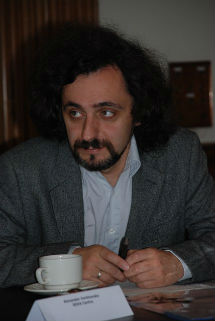
"Article 280.1 is a political invention: there was no legal meaning in the creation of a new article by the Criminal Code. And before there were criminal cases of calls for the separation of some parts of Russia. They were investigated under Article 280 of the Criminal Code (" Public calls for extremist activity "), which consistent with its letter, since separatism from the very beginning (since 2002) was included in the definition of extremism in extremism. The corresponding law.
Pursuit for calls for separatism is a problematic thing from a legal point of view. It is impossible to carry out a real attempt to separate some territory with legal methods, since the constitution declares the territory of the Russian Federation indivisible. But calls to change this state of affairs can be completely legal - after all, it is legitimate to desire changes in the Constitution (otherwise how to change it). However, the same constitution contains a grammatically unsuccessful phrase, which also included in the definition of extremist activity: "a violent change in the basics of the constitutional system and violation of the integrity of the Russian Federation." As you can see, the word "violent", being in the singular, does not apply to separatism. Thus, it remains not quite understandable that it is qualified as extremism: only violent separatism and calls for it or any conversations to reduce the territory of the Russian Federation.
So far, such conversations (about the separation of the North Caucasus, for example), as a rule, are not persecuted, but this can happen. Back in 2009, the head of the Perm Civil Chamber Igor Averkiev was prosecuted under Art. 280 of the Criminal Code for the article “Let's leave the Caucasus - we will become free and stronger”, in which it was possible to see the call to the department of the North Caucasus from Russia. This case was discontinued, but it was not the only one. In 2010, Vyacheslav Dreznere, who distributed leaflets in which he called for a referendum on the independence of Part of Karelia, followed its accession to Finland, was sentenced to a fine of 100 thousand rubles.
So, until recently, the cases of calls for separatism were conducted in not the most serious reasons. So, after all, the real separatism in Russia by that time almost disappeared - that in the Volga region, in the North Caucasus. But together with the Crimea, our country immediately acquired many separatists, at least virtual. And law enforcement agencies acquired a new front of the work, and a new article 280.1, albeit not necessary from a legal point of view, was understood by them as a signal to action. At the same time, "antisapopratist" law enforcement, as before within the framework of Art. 280, is extremely selective and often anecdotic. Although the accused, of course, is not funny. "