
Translated material
Innovators, Elon Musk and the evolution of reason
Three books about the future. Overview of Galina Yuzefovich
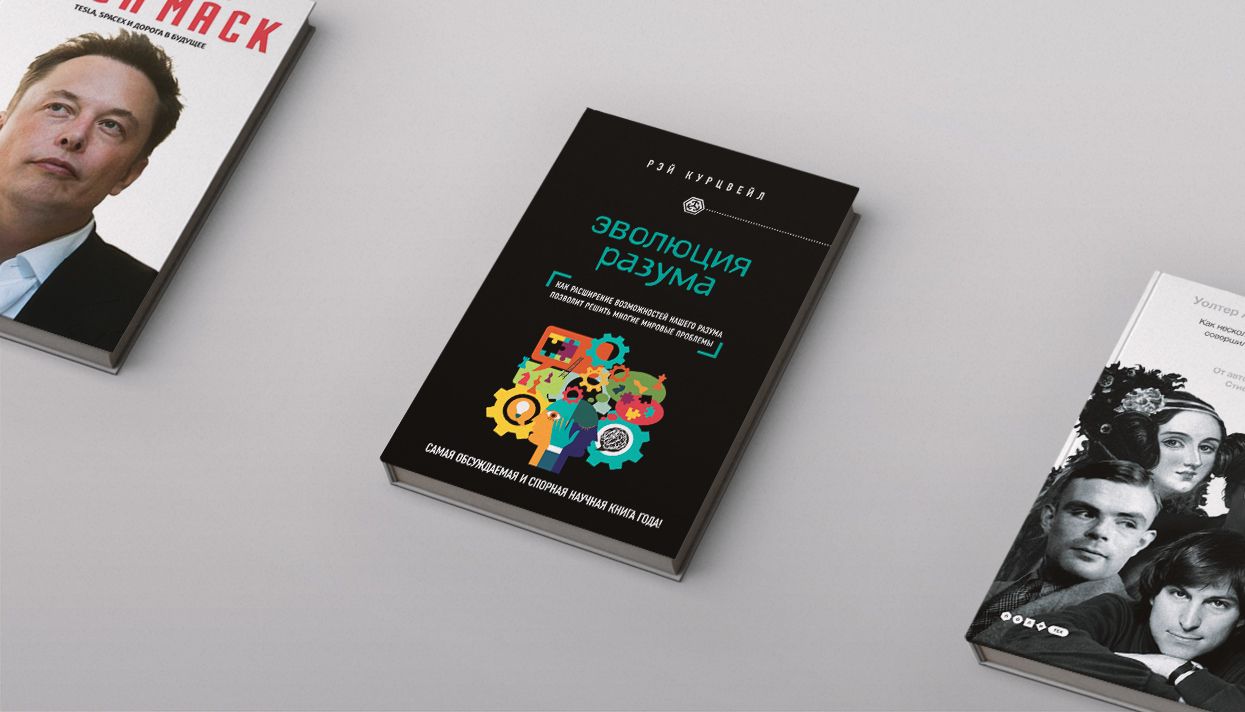
Weekly on Fridays, the literary critic Galina Yuzefovich tells at Medusa about the most interesting book novelties published in Russia. In the current review there are three books: “Innovators” by Walter Aisekson, “Ilon Musk: Tesla, SpaceX and the road to the future” by Ashley Wans, as well as the “Evolution of the Mind” of Ray Kurzweil.
Unlike civilizations of the past, mostly facing face back, our current civilization is literally obsessed with the future. How, where and why are we moving - scientists and engineers, and - almost the most - writers and journalists are now talking about this. About three book news that explore the different facets of the phenomenon of the future, then we will talk.
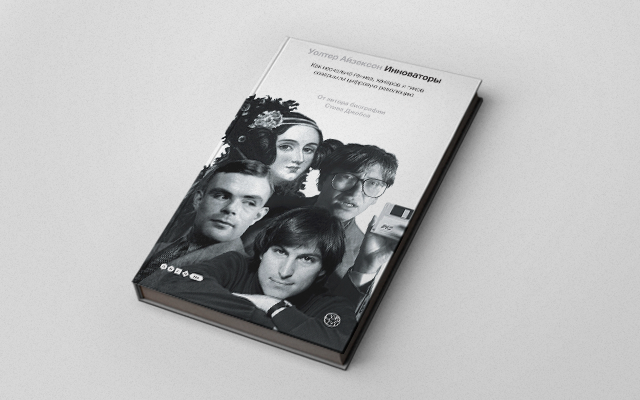
Walter Isexon. Innovators. M.: Corpus, 2015
Walter Aisekson is a person who is capable of removing any material in pure gold. It seems that if he collects the story of, say, the woodworking industry, he still gets something simultaneously large -scale and detailed, historically reliable and poetic. Having taken up the topic of innovation and innovators (which personally is associated mainly with the Medvedevskaya “thaw” that has gone into the dusty past), Aisekson writes the story of both people and the process given by these people in motion. Innovative thinking becomes a prism through which the author looks at the world, and the idea of a beauty union and benefit - its banner and motto.
The first heroine of Aisekson is the daughter of Byron Ada Lavelis, who was a marvelous combination of poetic temperament with an analytical warehouse of the mind for the first time to formulate the principles of computer programming. Turning this woman (as outstanding as underestimated) into a kind of symbol of progress, the author fascinates the reader into a rapid and exciting cruise on the history of European technological thought. Alan Turing and Steve Jobs (where without him), Claude Shannon from Bell Labs and Bill Gates, Steve Wozniak and Larry Page - Aisekson's book is built around people, but in no way is a biography, or even more a set of biographies. The private fates of individual geniuses and enthusiasts are woven into a whole and complex canvas, the main plot of which is a change in the usual world and the transformation of the future. The majestic, as a sea shaft, and for all its multidimensionally focused, this movement to technological heights truly fascinates and forces-without exaggeration-to reconsider our views on the entire course of history over the past hundred years.
Six hundred pages of a constant intellectual call with generous prizes in the form of historical jokes, touching inserts, as well as “pictures and conversations” (as Carroll Alice would say)-all together makes the “innovators” of Walter Aiseksson the best non-fictional autumn in my personal rating. And, of course, as always damn sorry that no one writes in Russian today.
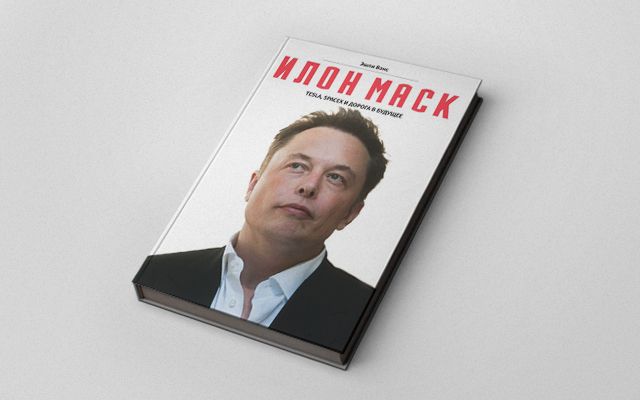
Ashley Wance. Ilon Musk: Tesla, SpaceX and the road to the future. M.: Olympus-Business, 2015
Unlike the visionary and the philosopher of Aisekson, Ashley Wance, primarily a journalist writing about information technology and business. This circumstance leaves a significant imprint on his book. Formally, remaining the biography of the most incredible entrepreneur of the Silicon Valley, it still takes place primarily throughout the department of “business literature”, and not a public non-fiction. Vance, telling the story of Ilon Mask and its amazing projects, constantly slides into a discussion of business models, investments, access to IPO and other prose things, which is somewhat knocking down the general pathos of its narrative.
However, even through all this SOR (may business-oriented readers forgive me), a figure of a completely Tony-Stark scale appears. If Elon Musk does not fly around the sky in a costume of an iron person, then exclusively due to a lack of time - he clearly has all other potential. The cheapest and most effective missiles that are able to deliver everything you need to the ISS (“The family is worried that the Russians will want to eliminate me - I break their business on space”), Tesla electric cars (even car pickles are ready to recognize them with absolute perfection), the project for the development of Mars (“If we can solve the problem of renewable energy and take the path of transformation into multiplanetic views with Supporting civilization on another planet-thereby preventing the worst scenario with the death of mankind, then ... I think that it would be very good ”)-against the background of other giants of silicon valley that does not produce anything material, the mask looks both eccentric and somehow surprisingly human. If we add to this touching inappropriation to practical life, funny fears (“Larry Page, actually can create a whole park of robots with artificial intelligence that can destroy humanity”), brutal appetite, five children (all the boys, a set of twins and triplets) and a difficult childhood in South Africa, then the picture is practically vile. True, it contrasts with the slightly cannibal reputation that Musk uses inside its industry and which the biographer mentions reluctantly and casually.
The author’s love for his hero (and the fact that Wence is in love with a mask hotly and fervor does not cause any doubt)-this, of course, is always great and even necessarily, without this, no biographical non-fiction does not “start”, but in the case of Vance, love will be a little a little to cover him with a horizon. And again, a comparison with Aisekson cannot be avoided - already as a biographer: if, with all his love for Jobs, he manages to see him voluminous, then Ashley Wence has everything bad (or at least not unequivocally good) that he can say about the mask, packaged in the section “I used to think that ...”. That is, interesting - yes, of course. Useful - probably under certain conditions, yes. Convincing and versatile - definitely not.
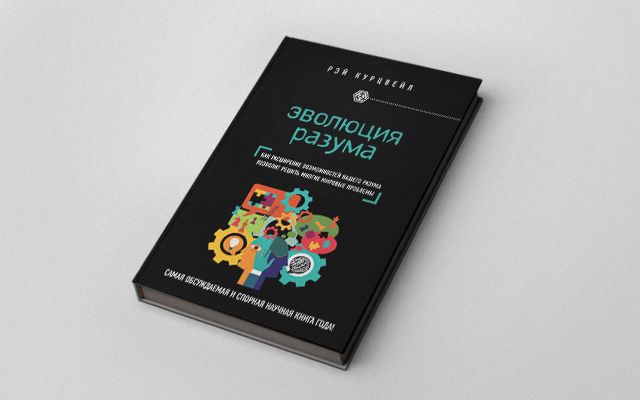
Ray Kurzweil. The evolution of the mind. M.: Exmo, 2015
But the fashionable American theorist of artificial intelligence Ray Kurzweil does not need a protagonist in order to offer his vision of our close future. His book (very difficult and not in the most optimal way translated) is in its pure form a futurological treatise on the future of the human brain. The main idea of Kurzweil is that the creation by technological means of intelligence, similar to the human, is actually a priority task of our type and, moreover, this project may well be implemented today.
Using the physiology of the brain as a starting point, Kurtzweil explores the ratio between the brain and reason, and then it passes to the seemingly abstract issues - whether free will exist (and if so, what tools are responsible for it), how the system of mental recognition of images is arranged and what kind of brain functions are determined (I am today and I am the same person or fifteen or fifteen different?). It’s so difficult to get through the thick, dense text of Kurzweil that at some point you lose a common thread, you get in the details and just forget what, in fact, the author is driving at. And then, having recovered again, you suddenly realize that the text, which seemed a pure scientific abstraction, is actually a complex, but nevertheless quite understandable and clear instructions in the spirit of “do it yourself”. The description of the mechanisms of brain function smoothly flows into the recommendations on their technological reproduction (Kurzweil calls it “reverse design”), thereby explaining the meaning of the original name of the book “How to Create a Mind” - “How to create a mind”.
I don’t know how you are, but I perfectly understand Ilona Mask, who has the idea of artificial intelligence, not distinguishable from the natural, causes a slight panic. If you are as scary as Ilon and I, then Ray Kurzweil’s book will not in any way dispel your worries. But at least it will prepare for a meeting with the inevitable and inevitable future - in the end, we must imagine what awaits us in the next few years.
Galina Yuzefovich
Moscow