
Translated material
Samurai decided
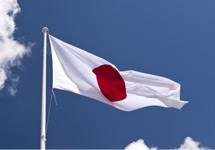
The upper house of the Japanese parliament supported the law allowing national armed forces to participate in hostilities outside the country, reports Reuters. In July, the lower house of parliament voted for the document. Thus, the law is completely adopted.
The adopted law "is necessary to protect people's lives and their peaceful lifestyle, as well as prevent wars," said Japan's Prime Minister Shinzo Abe after voting. According to him, the largest change in Japan's defense policy since the creation of the post -war self -defense forces in 1954 is vital for solving new problems, such as protection against strengthening China. Abe promised to "stubbornly and politely" to clarify the meaning of the document.
The adoption of the law was accompanied by mass protests near the parliament building. According to the protesters, the document violates the country's pacifist constitution and can draw Japan into military operations after 70 years of peaceful life.
The post -war Constitution of Japan prohibits the use of force to resolve conflicts, with the exception of cases of self -defense. The adopted law allows the use of minimal forces to help the Allies within the framework of collective self -defense, even if the country itself is not attacked. However, the law determines that the conflict itself should pose a threat to the existence of Japan and the right of its people to life and freedom, and there will be no alternative to military intervention.
In May, the Japanese government approved a bill that allows self -defense forces to participate in operations outside the country, and introduced it to parliament. The document was developed in accordance with the Japanese-American defense principles, revised in late April against the backdrop of increasing threats in the Asia-Pacific region.
"We live in an era when not a single country can protect ourselves alone. Over the past two years, Japanese citizens have become victims of terrorism in Algeria, Syria and Tunisia. Japan is in the area of the hundreds of North Korean ballistic missiles," Abea said then. This is reality. We should not try to ignore it. "
The DPRK regularly conducts missile tests , and its missiles can reach the territory of Japan. In 2005, North Korea announced the presence of nuclear weapons in her and conducted several nuclear tests over the next years.