
Translated material
"Moscow will win Putin earlier or later"
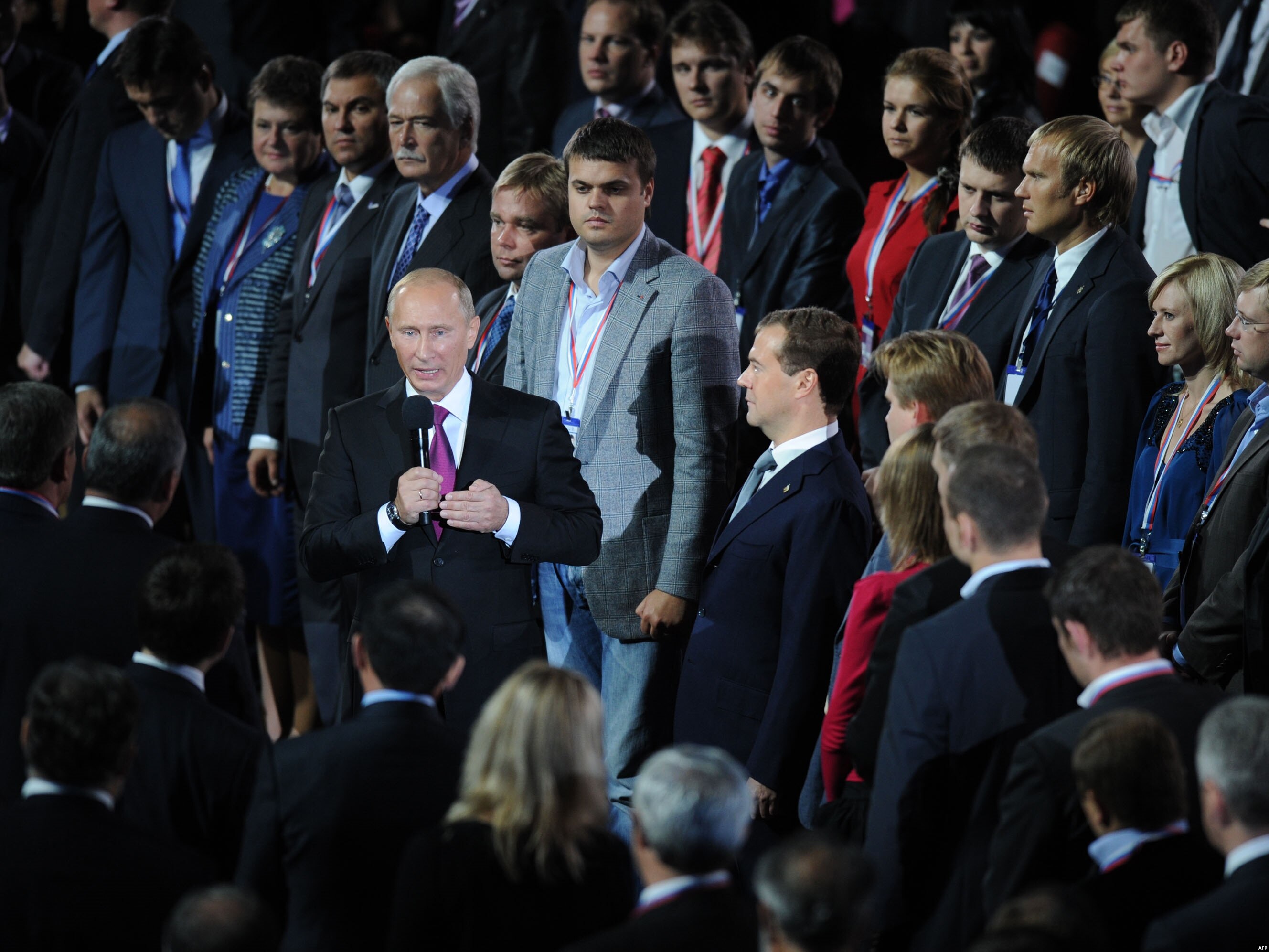
Dmitry Oreshkin - About a rally in Maryino, "Rokyrovka", the inevitability of Putin, Navalny and about the fate of Russian Europeans
"Four years ago, on September 24, 2011, at the Congress of United Russia, Putin and Medvedev announced the" Rocky ", putting the whole country before the fact: the power in Russia was finally usurped and regarded as a lifelong right of the current ruler. The retention of power has become the only meaning of all actions of state bodies."
This is a fragment of an ad on the opposition rally "For the replacement of power" , which will be held on September 20 in the Moscow district of Maryino. Basic requirements: the access of the opposition to the elections, the cessation of the war, the abolition of censorship, the liberation of political prisoners and the fight against corruption.
Four years after the “castling” in Russia, a lot was accommodated: mass protests against dishonest elections that began in 2011, the followed reaction, tightening domestic and foreign policy, conflict in Ukraine, and an extreme deterioration of relations with the West.
Political scientist Dmitry Oreshkin is one of those who took an active part in the events of 2011. At a rally on Bolotnaya Square on December 10, he read out data on falsifications in the Duma elections from the stage, and thousands of manifestants reacted violently, hearing that United Russia gained much less than officially announced.
Now the opposition is preparing for the new elections to the State Duma. The prologue for this was regional elections. The opposition was allowed to participate in them only in the Kostroma region, and there it gained only 2 percent of the vote. Judging by the page of the event on Facebook, less than 10 thousand people were going to go to the rally in Maryino by morning on Saturday.
This is the result of four years after the "castling". Dmitry Oreshkin calls her fateful:
- She became one of the events that changed the perception of the world among Russian democratically thinking people. For a significant part of the people who, until 2011, were inclined to assume that in principle we were in a democratic society, just with some features, let's say, after Dmitry Anatolyevich Medvedev announced that he had absolutely no mood to go for a second term, and Vladimir Vladimirovich Putin had a mood, much became clear. And when in December 2011 the technologies were manifested by which we intend to manage, then in Moscow, in the elections instead of 30%, which United Russia received in reality, it was drawn by 46.6%, all this was recorded by observers of the new civilian school, which was called the “observer citizen”, after which there was a swamp square with all subsequent events.
Stagnation goes to collapse
But all this was safely broken, the protest was scattered, the leaders of the protest were localized, and the country began to plunge safely again, which they did not still understand, in the bosom of a completely Soviet stagnation. For economists, it was clear that in 2011 the economy stopped growth. For the broad masses, this is still incomprehensible, they think that these are some local troubles associated with sanctions. The period of awareness of the already political retreat “back to the scoop” begins, but economic degradation, when prices are rising, income falls, the quality of the products is reduced, and we are more abundant and more abundantly fed fatty propaganda. Now we are experiencing a phase of step -by -step awareness of different groups of people that they live worse than they were promised, and after a while it will become clear that no prospects for improvement are visible. Now people think that in a month or two the annexed Crimea will begin to work, since we were repulsed by the United States, they were freed from dependence, from the dollar, that we will begin to rise and, finally, Soviet happiness will come. What can you explain here? Soviet happiness is drawn in bright colors in their heads, but they think that this is reality. So, 2011 is a fracture from disappointment in the political sphere to some stagnation, and now stagnation goes into collapse, but not in the political, but in the economic sphere, people in their pockets feel that they are played out.
He believes only in force, he does not believe in institutes
- Tighten domestic and foreign policy, Crimea, Ukraine, anti -Americanism - was this laid down "screaming"? When the authorities announced her, there was no other way?
- It seems to me that there were forces, but the authorities did not notice them and could not notice them due to the specific structure of their mental apparatus. The simplest fork: in the country there are institutions, parliament, parties, electoral laws, a constitution, courts, and either we develop these institutions or leave them with decoration, and we take their functions to the Kremlin. The second option is more organic for Putin in the mental and social nature of this person. Still, he is a KGB protege, he believes only by force, he does not believe in institutes. There may be other reasons. I think, to a large extent, the rollback to Soviet values was inevitable simply because a huge number of people, primarily special services, bureaucrats, military, who in Soviet times were relatively good, would like to restore it. And to these people, having felt that the economy was working, the steam locomotive went, it was very difficult to deny himself the pleasure of saddle this process, to say that thanks to them the steam locomotive went, and, accordingly, to receive the first gingerbread, which this steam locomotive is baking along the road. But as it turns out, the monopoly of the driver’s position leads to the fact that the steam locomotive works worse and worse and gradually stops. It is very difficult to blame Putin. I call it a group of people who support it for myself, that is, the Union of Bureaucracy and Business, when bureaucracy to its deduced business allows you to occupy a monopoly position in the market and pump profit, and business supports this bureaucracy. This bournes is interested in monopolization, and monopolization inevitably leads to stagnation. So, to limit them, make them live according to the law - for this you must be a courageous person. Vladimir Vladimirovich Putin is not such a courageous person, therefore he is not with the people, but with these elite groups that control the key positions, and concluded something like a public agreement, the main point of which can be called corruption buying loyalty: we allow you to steal, we allow you to violate the laws, we allow you to arrange a monopoly control over certain sectors of the economy, and you provide us with a political support.
I think that Putin as a political phenomenon was inevitable. Where to go these millions of people who, after the collapse of the Soviet Union, remained, if not in the material sense, infringed, then in social and prestigious absolutely accurately. All these colonels and even the KGB generals who are accustomed to be celestials in their ideas, who can all, all these party leaders, ideologists, a million people, should they go to the back yard and make Harakiri for themselves? No, they did not. They began to integrate into the new market economy, using old competitive advantages, and this is the opportunity to use a power resource by acquaintance, send a company of machine gunners to a competitive production complex so that life does not seem like honey there. It is difficult to resist the temptation to use this kind of advantages in the competition. Therefore, earlier or later, such a restoration, the revenge of the Pseudo-Soviet Union was supposed to take place, and Putin personified this restoration. It was unlikely that this could be avoided. Another question is that restoration can be soft and hard, smart and stupid. Putin was soft, now it is becoming more and more tough. And most importantly, it is stupid. It’s possible to screw the gikes even further, but then there will be North Korea, and the same social contract can collapse here - not with the broad masses that they are poorly understood what their rights they have, and are not ready to protect these rights, but with the elite groups of comrades, with those millions of people who have sufficient education, sufficient resources, sufficient ties to help move the chariot forward or slow down this chariot. That is, they slowed it before, unconsciously simply because they tied bags with their money to these wheels so that their money was spinning, thus, which makes it difficult to move the entire chariot, but this is understandable - this is a bureaucratic brake. And if Putin strikes a serious blow specifically on their interests, then they will slow down purposefully, insert the sticks into these wheels. Putin cannot allow this, but now the problem is just that. Because the sanctions on which he ran into, a decrease in the income on which he ran into is all beats in the interests of not only working people, but to a much greater extent, because they just understand the difference between currencies, the connection between the economic decisions of the government and the income of their business, and so on. Now a split and fermentation in the elite layers themselves will begin.
For them, Russia is private property
And society, about Putin, was well worked out, he despises society very deeply, he believes that this is a manipulated mass, which is guided by some forces, respectively, he pays attention to society extremely little, and he pays an extremely many attention to the forces that by this society. He thinks that if you cut off the money from financing some kind of social activity, this public activity is suffocating. Or it is worth cutting off the leaders of this social activity, this public activity is suffocating. And we must pay tribute to him, it is very close to the truth. Therefore, he is now destroying what was previously called non -governmental organizations, so he now sees politically active people, represses or intimidates. The question is how much such a country management technique is destructive for the property of those people who own this country. After all, Russia is private property, it is a corporation, they feed from this corporation. The population for them is not no voters, but personnel who are staff. To allow this staff to the elections is a rather strange idea, instead it is better to put a member of your corporation learned at the State Security Committee Vladimir Evgenievich Churov, who will always consider them as its corporation should be. As soon as all this rotates to the ground, we will enter the new cycle of perestroika, destruction, we will see, perhaps, the territorial decay of Russia, and in any case, the crisis of Russian statehood in the form in which Putin built it. How to get out of this crisis peacefully, I simply can’t imagine. It would be possible to go out if there were honest elections, if there were some institute that could be leaning on. There is simply nowhere to expect a real improvement in the situation. On what wings, which wind can be brought in, I do not really understand.
Moscow will win Putin earlier or later
- In December 2011, you performed at a rally on Bolotnaya, remember that feeling? Now you have a feeling that society can somehow rise, that the rally, which is collected by Alexei Navalny on the 20th, can lead to something? Or now we are only talking about when the structure of the current Russian statehood is rotting, and society itself cannot influence this in itself?
- I belong to the number of pessimists. After the “swamp” protests of 2011, when about a third of the volume of votes dedicated to United Russia turned out to be assigned, the situation in Moscow, where the city rose on its hind legs, changed. Three months later, in March 2012, Putin’s real result was somewhere between 40 and 45 percent in Moscow, which is really a lot. But in Moscow he did not win the first round, according to official figures, he was shown 47, somewhere 3-4 percent were added. Moscow swallowed these 47 percent, because, in principle, there was no claim to present, well, they attributed a couple of percent, as without it? The rest of Russia, with the exception of activists, desperate brave people in large cities, did not even move. As people lived in addition to the elections, they live in addition to the elections, look at the processes that occur in Moscow and extrapolate them on what is happening in Russia, a rather deep misconception. Yes, earlier or later Moscow will defeat Putin, one way or another, large cities win, the question is only in time and the question is that they win, which territory. Moscow won its right to honestly count. By the way, in the elections in 2013, when Navalny and Sobyanin competed, the voices were considered almost perfectly, that is, they never counted so honestly for the Putin era, only one and a half percent of the votes were stolen there. True, this was enough Sobyanin to win in the first round, but compared with 17 percent assigned two years ago, in December 2011, this is completely crazy progress. Therefore, Moscow seemed to achieve what she wanted. And then what? Indeed, the elections are honest, indeed, Navalny lost, scored two times less than Sobyanin - and this is true. What next? Some period of benign retreat came, because, on the one hand, this power does not suit us, and on the other hand, here they are, the results of the elections, here it is, democracy. Most voted in 2013 for Sobyanin. In general, the majority of population now in the country named Russia supports this regime. Another question is that when this population will stop maintaining this regime, then it will not be possible to demonstrate this in the elections, it will be too late, because the elections have already been degraded.
Russian Europeans understand that they are stuffy and crowded here
- That is, by and large, it doesn’t matter what the opposition is doing now, the system should break itself, the opposition has nothing to do with it?
- I think that this system cannot be optimized by legal methods, it cannot be improved, although Moscow experience shows that it turned out. Navalny tries to play another game, in response, the system acts against him in the most effective way: it explains to people that he is a protege of American imperialism. People believe, well, only in Moscow they do not believe. In Russia, 14 percent of citizens have foreign passports, by a strange coincidence, just 14 percent do not support Putin’s course, it is clear that this is not the same set, but to a large extent it is intersecting sets. In our country, 9 percent of the population has dollar savings at the bank, the rest do not. All these problems with the ruble course, with trips abroad, with freedom, all these opportunities to compare the achievements of the Russian economy and the European economy - this all applies to 15, a maximum of 20 percent of the population. They, Russian Europeans, understand that they are stuffy and crowded here. But the squadron moves at the speed of the lowest ship, and in our sense of political reforms, the republics of the North Caucasus and the south of Siberia, some kind of Tuva, or Ingushetia, or Kalmykia are. Navalny speaks of understandable and necessary things for Muscovites, and his support in Moscow is almost 30 percent, which is a lot. In the rest of the country, they simply do not understand him. Yes, the authorities steal, but she always stole. Yes, we could probably live better if the authorities did not steal, but where to get it another?
Yes, people lived in the Soviet era due to the fact that they planted potatoes and collected mushrooms, and cucumbers with cabbage were salted for the winter. And in the post-Soviet era they worked in the same way, only in the Soviet plant there was some kind of plant that paid them regularly a salary, and now this plant went bankrupt, and it became much worse, and the guilty of this was too smart Muscovites who pronounced some incomprehensible words about liberalization. Therefore, when the authorities directed Yashin and Navalny to Kostroma, she knew very well what she was. She knew very well that in Kostroma, maybe in the city itself, someone would hear them, and in the Kostroma outback of the city of Buy, they simply won’t understand what was at stake. Yes, there people understand that the authorities are stealing, but they do not observe the connections between bosses and optimization of the economy, they have no ideas to start their own business. All people who have such opportunities or ideas have left for Moscow for a long time. Some improvements can be there in case of an ideal option, when there is a magnificent power that does not spare itself and enlighten people, helps them and so on. And improvements can begin in five to seven years, when people think about whether to start making something to sell. Now they simply do not have this in their heads, not on the agenda. Therefore, the performances are very, perhaps, the correct and smart Mr. Navalny and Mr. Yashin, whom I sincerely respect, in Kostroma listened with some bewilderment. А когда приезжали абсолютно дешевые пропагандисты из молодежных движений, привязанных к "Единой России", и рассказывали, что на самом деле Навальный – ставленник Госдепа, то людям становилось очень многое понятно: то-то он так непонятно говорит, то-то он говорит о чем-то нам не очень ясном. Да он же просто американец, он же в американском университете учился, он ставленник тех сил, которые хотят поработить небывало богатую природными ресурсами Костромскую область, ввести туда войска НАТО и топтать ее сапогом под бряцание натовского оружия. Вот это они понимают, потому что это советское, это у них заложено на генетическом уровне. А то, что необходима экономическая свобода, то, что необходимы независимые суды, какие суды, с властью судиться, о чем речь? С сильным не дерись, с богатым не судись – это они прекрасно знают. Суды вообще для них ничего не значат. В ментовку – это они понимают, ты подрался, тебя забрали, а суд-то здесь при чем?
В Костроме ему просто не за что зацепиться
Непонимание московской демократической публикой той пропасти, которая отделяет Москву, вообще крупногородскую Россию от всей прочей, – это одна из проблем, на которой действующая власть Навального и поймала. Ведь его не послали в Новосибирск, где совершенно другая городская культура, где его бы услышали и поняли, его не послали в Калужскую область, где близко Москва и достаточно продвинутое население, и не послали в Магадан, где потомки ссыльных переселенцев не любят московскую власть и коммунистов они еще не любят, они систематически поддерживают Жириновского, потому что они лихие ребята, то, что в Америке называется Дикий Запад, у нас называется Дикий Дальний Восток. Такие вот специфические избиратели. Там бы Навальный как человек достаточно брутальный, как человек достаточно патриотичный, мог бы набрать голоса. В Костроме ему просто не за что зацепиться. Кремлевские люди, достаточно тонко чувствующие ситуацию, именно там позволили ему пробежаться, с тем чтобы он в результате занял какое-то почетное 10-е место с 2 процентами голосов. И это почти правда. Но если бы он набрал больше, возможность чего тоже рассматривалась кремлевскими стратегами, то там поправили бы результаты голосования с помощью фальсификаций, благо в провинции наблюдателей все равно нет, наблюдатели Навального смогли закрыть 400 избирательных участков из 600, оставшиеся 200 вполне могли быть использованы для фальсификата, если что-то пойдет не так. Но все пошло так, и Навальный действительно не набрал двух процентов.
Присоединиться к европейскому пространству в индивидуальном порядке
На самом деле креативный класс Москвы оторвался от широких народных масс, в некотором смысле взлетел в стратосферу, на что ему кремлевские начальники с издевкой систематически указывают. This has its own truth. Тут вопрос такой: ждать, пока вся остальная страна подтянется к уровню Москвы, довольно бессмысленное занятие, потому что она не потянется никогда. Соответственно, европейски мыслящие люди, испытав два из трех возможных варианта, выбирают третий, последний. Три варианта следующие: Россию попытаться втянуть в европейское пространство целиком – не проходит. Второй: пытаться втянуть в европейское пространство отдельные регионы России. С Советским Союзом прошло – это Прибалтика, это Молдавия более-менее удачно. Или присоединиться к европейскому пространству в индивидуальном порядке. Все больше людей из продвинутого класса выбирают именно этот вариант, за что им кремлевская власть бурно аплодирует. Потому что чем меньше их будет, тем легче будет обеспечивать азиатский статус России, опираясь на господ Кадыровых и на эксплуатацию природных ресурсов, у которых голоса нет. Чем меньше народу на нефтяную ренту, тем легче ренту распределять. Так что уезжайте, все слишком умные, все слишком продвинутые, европеизированные, разочарованные, милости просим, границы открыты, скатертью дорожка. The logic is approximately like that. А что можно еще предложить? В принципе, я думаю, раньше или позже произойдет распад Российской Федерации на какие-то политически обозначенные или де-факто существующие территории с более независимым управлением. Потому что Москва однозначно ориентирована на Европу, а Чечня однозначно ориентирована на Азию. Для того чтобы их удерживать в одном пространстве, надо Москву держать за штаны и лидеров протеста сажать в КГБ, а Чечню еще более сурово держать за штаны. Две разные территории, как их вместе втянуть в европейское будущее, у меня в голове не укладывается. Я могу себе представить, что Москва туда раньше или позже продвинется, но что она при этом будет делать с братской Чечней, Ингушетией, Калмыкией, Тывой и многими другими достойными всяческого уважения субъектами Федерации, я не понимаю. Поэтому мы переживаем когнитивный диссонанс, мы не знаем, что делать. Я вижу, как московские тусовки пустеют, люди отзываются кто из Латвии, кто из Соединенных Штатов, кто из Израиля, кто из Канады, кто из Испании, но уже не из Ясенево или Чертаново. Люди уезжают.