
Translated material
The sun and cabbage
Regrets of the American about lost Russia
The Columonist "New York Times" David Brooks is not as a journalist as a culture-critic who has repeatedly posed on the pages of this newspaper the questions of a certain philosophical order. And his recent, dated September 11, the article was devoted to Russia-and again not in the political-zlobo-day, but in a worldview-cultural plan. The very name of his article is remarkable - Russia I Miss, that is, Russia, which I do not have enough, by which I miss. You can like this: Russia that I lost. So what did David Brooks lose, why does he miss Russian?
In Russia, it was always believed that since in the West capitalism and private property, which means the West of the bourgeois. This is wrong
It is clear that he speaks of former Russia, about the great Russian literature and the powerful cultural influence that it had to the West. But not only that: David Brooks recalls the twentieth century with those events in Russian history, which, in his opinion, cannot be evaluated unambiguously negatively. That is, he speaks not only about Tolstoy and Dostoevsky, but also Lenin and Trotsky, about the Soviet satellite, about Solzhenitsyn, about Gorbachev and Yeltsin. Brooks recalls the classic, according to his assessment, the book of James Billington “Icon and the ax” quotes the author: “Disputes that go between people in the West are much more intensively inside a person, an individual soul.” Brooks recalls another undisputed expert in Russia Isaiy Berlin: a Russian person in all his social identifications is holistic, looking for a fullness of truth, we do not reduce to his professional activity, if he is a musician, writer, warrior or priest - he is concerned primarily by the salvation of the soul. Whereas a Western person is not so much interested in gaining final truth as with his professional achievements or pragmatic solution to a particular social problem. In general, what David Brooks or the authors quoted by him now writes now is a long time ago as a confrontation between Slavophilism and Westernism. The resume that Brooks gives these themes is quite correct. But he is not limited to this resume, and in the light of the past he wants to see and evaluate the current image of Russia.
So what is the lack of David Brook in today's Russia that he lost in it? It very interestingly affects his own spiritual warehouse - a highly cultural person and in this capacity of anti -bourgeois. This is what they could never really understand in Russia - at least socialist, at least any other. In Russia, it was always believed that since in the West capitalism and private property, which means the West of the bourgeois. This is wrong. The concept of bourgeoisness is not reduced to the forms of economic activity, it is also a certain spiritual warehouse of almost oriented, pragmatic, rationally organized, moderate and accurate person. There is bourgeoisness in the sense of Marx and bourgeoisness in the sense of Flaubert, who said: the bourgeois thinks that the sun exists so that his cabbage grew better.
Russian culture, says in its article David Brooks, was good, high and life -giving in that it gave some counterbans of this bourgeoisness, did not lose a high spiritual horizon, obscured for the bourgeois of cabbage. In modern times, such a spiritual fighter, Brooks writes, was Solzhenitsyn, who saw himself with a sword in the hand of God. And now these horizons have now left Russian life, these counter -battalions have disappeared from today's cultural discourse. Brooks writes literally the following:
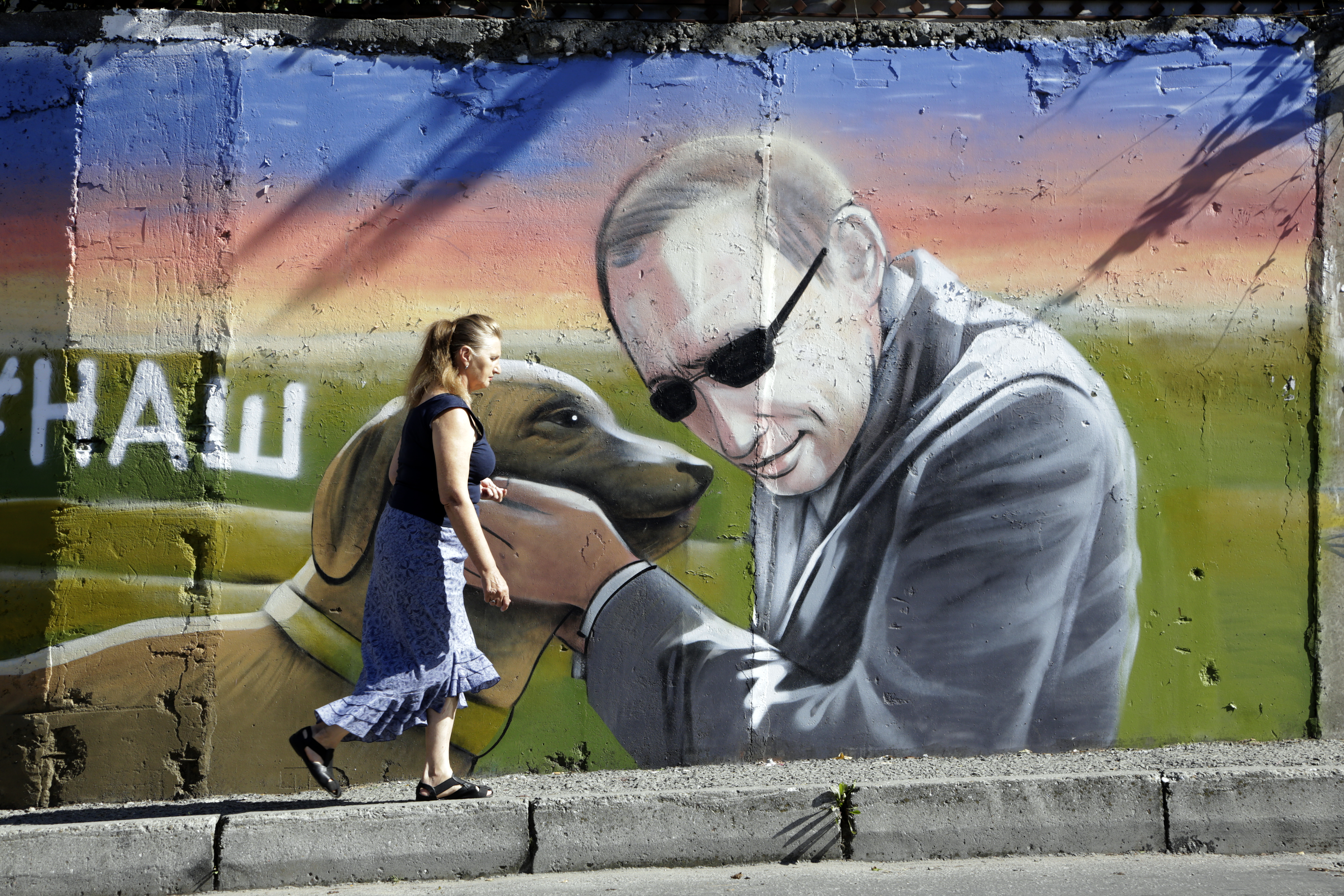
“Today all this has gone. Russia is now a more normal country than it was before, and it has become easier to live in it, at least young people. But when you think about the cultural influence of Russia on the modern world, only Putin or oligarchs come to your mind. Srightly stand in St. Petersburg, on which army caps, Stalinist raids and coffee bowls are exhibited. Naked to the waist of Putin. "
The article by David Brooks evokes mixed feelings. He did not finish something, did not notice something-and if he noticed, he did not attach the primary significance. Here is such a place in his article:
"All this (Russian) pressure, all this extremism, this romantic utopism, all this tragic attitude in reality has generated very bad political ideas. But they also gave rise to a cultural tension that had an impact on the whole world."
David Brooks, apparently, thinks that the cultural sensitivity is one, and bad political ideas are different. Meanwhile, there is a paradoxical relationship. There is a common denominator, whose name is maximalism. Brooks himself in one place says that Russians tend to think about morality rather than jurisprudence. You can recall another Russian apotheme: in Russia it is easier to find a saint than a decent partner. “Bad political ideas”, if they associate them with the formation of the Russian soul - and Brooks states such a connection - are generated precisely by this spiritual maximalism, in the atmosphere of which the pragmatic, in essence, the question of socialism became the reason for the worldview, to the total suppression of the cultural order. Socialism may well be - and, for example, became in the Scandinavian countries - the experience of a more fair distribution of material wealth, but in Russia socialism has acquired all the features of a total concentration camp. And this flowed out precisely from the main feature of the "romantic", as Brooks says, utopianism: any utopism is not aimed at the reform of political or social life, but to the reorganization of the entire universe, he does not hates the bourgeois, but the world. I recall the sharpness from the "notebooks" of Ilf: he does not like Soviet power, he hates the universe. The Russian man "Western" think about cabbage and even the sun, he thinks about "victory over the sun" (the famous futuristic opera).
If you offer today's cultural Russian to choose from: another brilliant writer or honest elections - he seems to prefer the second
David Brooks's reasoning about Russia is the lamentation of a benevolent, but third -party person, they have an element of cultural snobbery. For him, a good book is more interesting than a good life, he, being a prosperous American, does not notice a good life at all, is used to it - and Leo Tolstoy cannot be noticed. And this aesthetic highly limiting his vision, the very topics of his reasoning: he squeamishly frowns at the sight of the St. Petersburg souvenir stand, but as if he forgets that there is something worse than souvenir tsar in modern Russia. This aberration of cultural vision retroactively clarifies precisely what happened in Russia: rewriting a map of the starry sky overnight, the Russian people did not notice that they had under their feet. And under their feet, the Pugachev’s Emelyki, who took the spiritual leaders of Foma Opuskin in the spiritual leaders. Russian high -lorious people did not find it difficult to make American farmers from these grandfathers of Pugach.
And if you offer today's cultural Russian to choose from: another brilliant writer or honest elections - he seems to prefer the second. Only no one will offer: achieve yourself and choose yourself. Does this not mean, by the way, that a decent socio-political order is more difficult to restore than to write a brilliant book?
Yes, along with Stalin, the Russians received Platonov. But is it not better to do without both?