
Translated material
The last ally of Assad
Why did we open the Syrian Front?
Why did we open the Syrian Front?
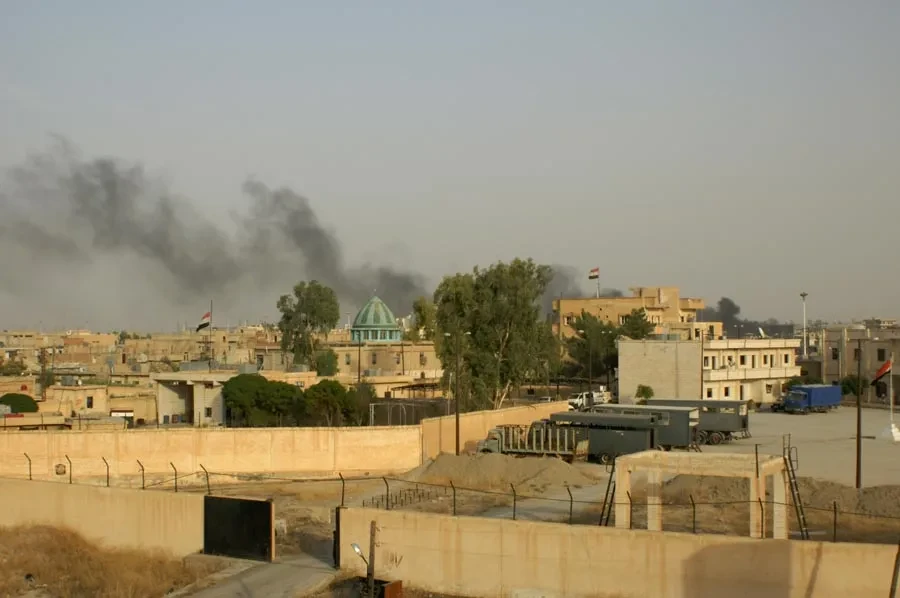
In this story, there are much more questions than answers. For example: is there any special “Russian plan” of searching for settlement in Syria, or the current actions of Moscow is nothing more than a reaction to what is happening in this country in the new conditions (the frequent cases of the military defeat of the Bashar al-Assad army on both fronts-against ISIS (grouping prohibited in Russia) and against the rebels; changes in the Iran’s approach to Syria, etc.)? Or Moscow-in the absence of its own settlement plan-seeks to update, revive some of the previously designated plans, joining it (for example, the resumption of the negotiation process based on Geneva-1)?
They are now trying to decipher the actions of Russia in all capitals of the world. A set of reasons that can explain the actions of Russia is wide and diverse: from attempts to “divert attention from Ukraine” through the creation of a “profitable information context in the spirit of the fight against terrorism” for the upcoming speech of Vladimir Putin in the UN on September 28, to the desire of Moscow to “warm up the oil market” with a escalation of military operations in Syria. All arguments, of course, should be taken into account, but not all of them give an answer to the main question: why does Moscow work like this and why now ?
So, does Russia have its own plan? The answer is positive, this plan was recently announced by the president himself. It is extremely simple: all parties involved in the Syrian conflict both on the battlefield and politically must forget about disagreements and unite in the fight against the main enemy - the Islamic State forbidden in Russia. This is a plan for creating a “new coalition”, which is fundamentally different from the already acting against IG. By and large, this is a plan for the accession of Russia (and maybe Iran) to the current coalition, but subject to the inclusion of Bashar al -Assad in it and ... Is this plan realistic? At the moment - decisively not. But will they not reckon with him in the world if he is backed up by the Russian military force?
And with this formulation of the question, the answer will be more negative: the main state -included Arab countries, the United States and most of the European Union countries - will hardly consider Russian arguments convincing and will change their attitude to the role of Assad's government.
Everyone, except Moscow and Tehran, consider Assad the main culprit of the Syrian tragedy.
It was the Assad, believe in the world, brought down military power on peaceful Syrian protesters and rebels, and thereby created the ground and conditions for the appearance of jihadist terrorists.
Speaking the other day in the British parliament, the Saudi prince of Turks Al-Faisal called attempts to leave Assad in power in Damascus "an insult to 350 thousand dead Syrians." And he explained: “There is a difference in the approaches of Russia and Saudi Arabia to the Syrian crisis. The Russians represent Assad as a “fighter with terrorism,” while we consider him a terrorist in the kingdom. ”
Opponents of Assad in the region and in the world bring many arguments, for example, spilling light on the features of the relationship of the Syrian regime with the terrorist group of IG. Their essence is that Damascus and IG, of course, are opponents, but as if “sparing each other”, recognizing that both of them have a more important common enemy - Syrian rebels. Therefore, the main military efforts are sent first of all against the rebels. Curious facts in this regard are given by Time magazine in the room of February 26, 2015. For example, that two main cellular Syrian operators continue to work in the “capital” of terrorists in the city of Rakka: in the case of equipment breakdown, Damascus specialists arrive in Raqqa for repair work and returned safely. The authors of the article in the journal disclose the mechanisms of active trade in terrorists with the regime, provide terrorists with food supply, etc.
“Is it possible to imagine that such specialists and businessmen, upon returning to Damascus, would remain free if the regime seriously fought with the IG?” The opponents of Assad rightly ask.
In a word, there are practically no prospects for introducing the President of Syria against the international coalition against the IS. It seems that in Moscow this is aware, and therefore negotiations are underway (like secret, but with leaks) that Assad should ensure a “beautiful care”, but ... according to the “will of the Syrian people”. That is, in the context of the renewed political process in the spirit of Geneva. In the channel of this version and logic, representatives of the real (not “court”) Syrian opposition, an international-recognized national coalition, are also fitting to Moscow. As well as Moscow's calls to urgently resume the Geneva process. This, in fact, is discussed in Washington and Riyadh, urging Moscow "to force Assad to sit down at the negotiating table", but with the aim of "beautiful transfer of power"-and nothing more. There is no clear answer from Moscow yet.
Another new circumstance: it was strange, from the point of view of Assad's supporters, Tehran behaved, reacting to the military defeats of his Damasian ally. On August 12, the Iranian Foreign Minister Muhammad Jouf Zarif handed the Iranian version of the settlement plan to Syrian partners, which did not please the environment of the Syrian president. In fact, Tehran offers a variant of decentralization (federalization) of Syria on a confessional principle. Specifically: the adoption of amendments to the Constitution in order to allocate areas (sectors) with the predominant population there are representatives of a particular religion, the formation of the government of national unity and preserving the “role of Assad” (but, not, not as a “general-Sirian president”) as a guarantor of an autonomous (Shiite-Alavian) sector in the north of the country bordering on the Livan.
In Damascus, they almost do not hide their disappointment: instead of rushing to defend the defeat of the government army, the projection formations are guided by Tehran to solve their own problems in the region. The main one, we emphasize, is to ensure the security system for the Hezbollah grouping in Lebanon. The pierce sector in Syria is designed to become a buffer between the Sunni sector and Hezbollah in a future configuration. Moreover, the Iranians convince the Assad to begin the process of moving part of the Sunni population from potential Shiite sectors to future Sunni areas, and vice versa (the first thorough attempt to do this was recently made in the city of Zabadani). And this already looks like stripping by religious signs.
The Iranian plan also caused disappointment in Moscow, since we are talking about the change of Tehran of the former Syrian strategy, about its concentration on the idea of the section (autonomization, federalization) of Syria.
In the Kremlin, we see, it is believed that it is “normal” in Ukraine, but not in Syria. Is Iran go too far in his flirting with the West on the wave of a nuclear transaction?
It is not surprising that in this situation, Damascus relies mainly on Moscow, making it clear that it can invite Russian troops to stabilize the situation in the country and, of course, the fight against IG. And in Russia they reply that such an appeal will be considered (of course, in order to fight terrorism). At the same time, Damascus increasingly appeals to the “Arab brothers”, confirming its readiness to fight terrorists from IG. In fact, he thereby sends signals about the readiness of the Assad regime to return to the "bosom of the Arab states", and not to make a bet on Iran.
We summarize: if the current military-mobilization efforts of Russia in Syria will not begin to be accompanied by a political process, then Moscow risks the Assad involved in the military confrontation in Syria against the terrorists of the IS and the rebels. The latter will be provided with support for the forces of the International Coalition, fighting the Islamic State. Iran in this situation does not look like a reliable partner either Assad or Russia. Deprived of allies, Moscow can solve the problem of salvation of Assad in the short term. In the long run, the price for our entry into the Syrian conflict will undoubtedly increase.