
Translated material
Putin forever, or the end of domestic policy
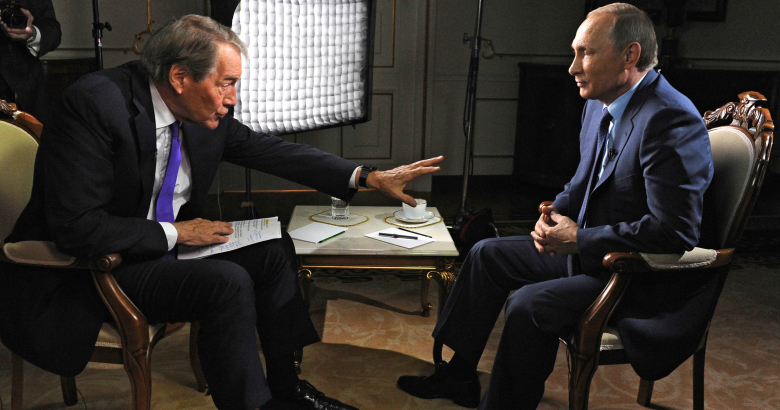
Neither the dictator nor the gangster - in an interview with CBS and PBS, published on September 29 (was given before the performance at the UN General Assembly) Vladimir Putin really wants to appear before the Western audience with his - political leader, who is no worse, but rather even better than his colleagues in the management of world powers. But we must admit that American journalists did not particularly torment Putin with questions about democracy in Russia: it seems that gay rights were interested in more opposition rights, about which a special conversation did not work out. The domestic Russian policy dies on the agenda of Putin and on the agenda of Russian-western relations.
For almost 13 years, the problems of violation of human rights, freedom of speech, and reducing political competition were in the focus of the relations between Russia and the West. Until Ukraine happened. The Russian leader began to be perceived as evil, with whom he had to deal and to which the requirements were sharply lowered - due to the fact that it is impossible to achieve their implementation. To reproach the president for the fact that the opposition is not allowed to the elections in the regions is already too small against the backdrop of Crimea, Donbass, and now Syria.
Putin’s interview with American television channels confirms: there is neither time nor desire to democracy in Russia in Russia
Putin’s interview with American channels well confirms that domestic policy leaves the foreign one. There is neither time nor desire for democratic affairs, but the issues are addressed completely superficial and long -beaten ones. Putin is annoying, but he holds on. “I already have a completely different job,” he throws Charlie Rose, who asked about the work of the Russian president in the KGB. “There are no former KGB officers,” Rose says Putin, obviously not trying to be original (I wonder how many times Putin heard this phrase from media representatives for his work by the president and prime minister?). And in response, a politician who does not want to quarrel receives the answers. Rose seems to want to pin Putin, showing that his charm is just a hypocrisy of a cunning security officer. And Putin wraps these injections into a CIA compliment, even getting a certain pleasure from the opportunity to talk in absentia with colleagues.
Rose asks Putin to give an answer to those who consider his power unlimited, built on the murders of politicians and the persecution of the opposition. As if he does not blame, but gives a rostrum for a counterattack. But Putin does not want to play this game already, and he stereo talks about the importance of compliance with the law. The routinization of domestic policy is also visible in how Putin comments on the investigation of the murder of Boris Nemtsov: unlike the murder of Anna Politkovskaya (Putin called her a journalist who had no influence), the president did not belittle the significance of Nemtsov’s figure, only promising to bring the investigation to the end. And his answer about the political system beats all the records of banality. He is very bored. Especially with the American. And you can’t break into.
Subscribe to read the whole
Make a subscription Redefine.media to read Republic
Subscribe [you can pay for a Russian or foreign card. The subscription is extended automatically. You can unsubscribe at any time.]
Where are the money subscribers going