
Translated material
To bow to the Kremlin?
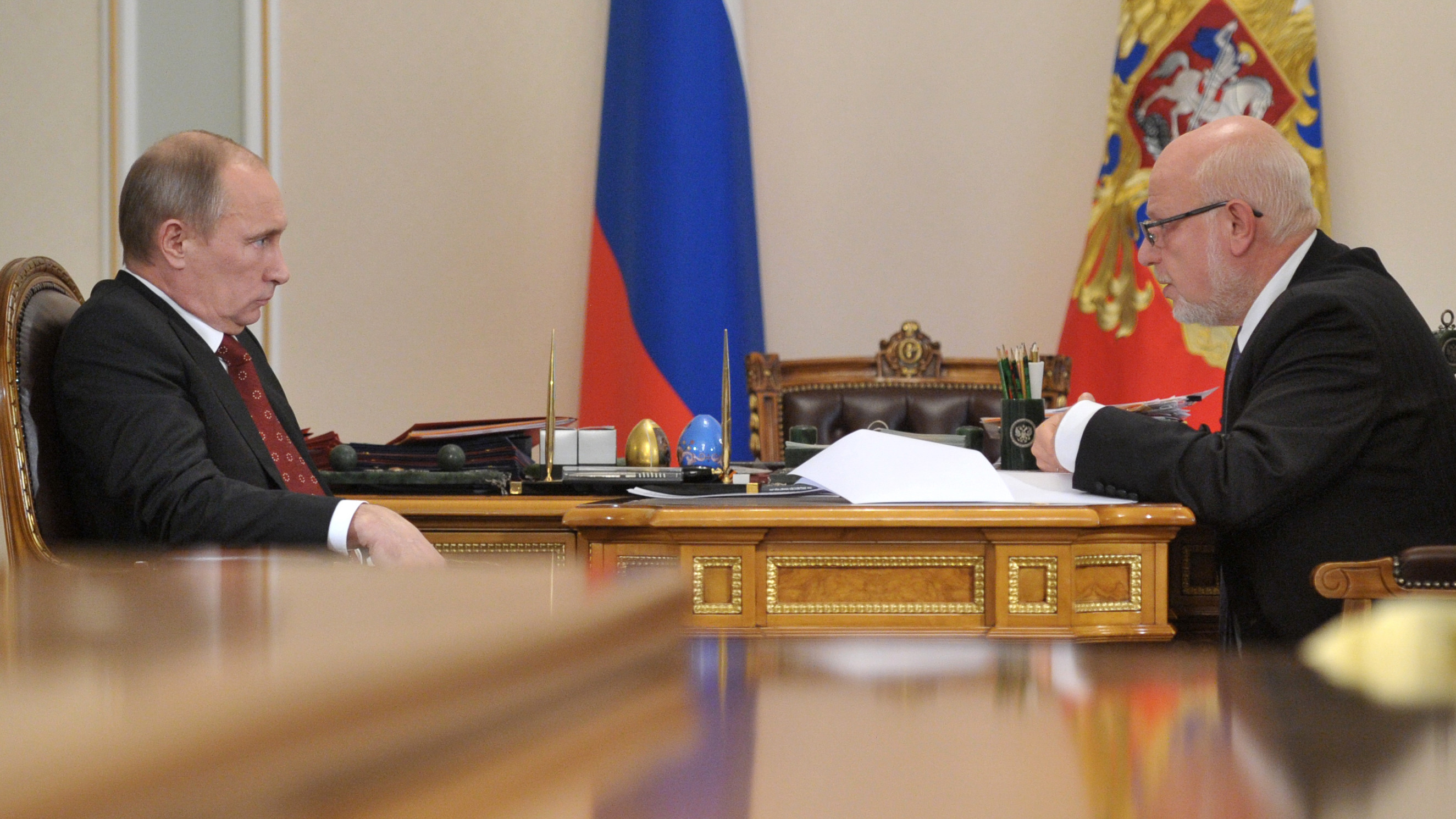
Human rights activists went to Putin. On the air: Andrey Yurov, Alexandra Bukverev. Andrey Pivovarov, Valentin Gifter, Sergey Kovalev.
On Thursday, Vladimir Putin met with members of the Presidential Council for Human Rights. The conversation was complicated, at times sharp. Will this meeting affect the situation with human rights in Russia and the fate of specific people who are faced with the injustice of the Russian state? Human rights activists Andrei Yurov (participant in the meeting), Alexander Bukverev , Valentin Gifter , Sergey Kovalev , politician Andrei Pivovarov (St. Petersburg-Kostroma) argue about this.
Presenter- Vladimir Kara-Murza Sr ..
Vladimir Kara-Murza Sr.: On Thursday, President Putin met with members of the Human Rights Council. The conversation was complicated, sharp.
About whether this meeting will affect the situation with human rights in our country, today we will talk with our guests - Andrei Yurov, a member of the Human Rights Council and the expert of the Moscow Helsinki group, and Alexandra Bukhrevy, the deputy head of the All -Russian movement for human rights.
Andrei Yuryevich, what questions did the human rights activists be raised at a meeting with the head of state?
Andrey Yurov: There were very, very many questions. I will not even list everything now. I can say about the few brightest. Of course, this is a problem with non -profit organizations, as a special case of the notorious law on "foreign agents". There were a lot of serious speeches related to the justice system - these are problems with both lawyers and justice as a whole. There were very deep performances of both Tamara Georgievna Morshchakova, and our other respected experts, lawyers and so on. The issues related to the work of journalists were very well affected by Nikitinsky and Max Shevchenko, Svanidze - issues of historical memory. Members of the HRC touched on individual issues - for example, a barrier -free environment for the disabled. And there were probably two dozen such questions. Moreover, of varying degrees of complexity, of varying degrees of volume: from very general to very private ones. There was a wonderful report by Mr. Shablinsky about the problems related to the elections, in connection with the last single voting day - those problems that were identified by mobile groups that consisted of members of the HRC. These are the main strokes.
Vladimir Kara-Murza Sr.: Did you manage to talk about political prisoners?
Andrey Yurov: No, it was not possible.
Vladimir Kara-Murza Sr.: But if Vitishko is considered political prisoner ...
Andrey Yurov: Yes, about Vitishko several times said. It so happened that even from previously agreed, recorded members of the HRC, about a dozen failed to speak. Not to mention the fact that there was still a "free microphone".
Vladimir Kara-Murza Sr.: We have a bright representative of "foreign agents" here. Alexandra, what questions would you have posed to the head of state if you were given a word at least for a brief question?
Alexandra Bukvereva: There are a lot of questions. And since you presented me as a representative of "foreign agents", I could once again ask this question. But I know what Lyudmila Mikhailovna Alekseeva spoke at this meeting. And as I understand it, we did not hear a clear answer. As usual, we heard that they would understand. On the other hand, how can you raise a question before a person who, in general, arranged this whole situation? Also not very clear. When this law was adopted, all statements from the human rights community were made, it was versed in in detail why this law is anti -constitutional, why it could not be adopted. But all this was ignored. And now we have a logical result.
Vladimir Kara-Murza Sr.: Valentin Gifter, Executive Director of the Institute of Human Rights, came in touch with us.
Valentin Mikhailovich, what do you think, how comprehensive was the agenda of the human rights activists with the head of state?
Valentin Hifter: It is difficult for me to judge, because I did not have time to read the entire transcript. I can only be guided by my experience when I participated in such meetings with the previous president. The panorama of those and individual cases was quite large. And Andrei correctly said that they did not have time. But some sick questions, of course, raised.
But I have an observation, a kind of deductive approach from the general to the particular. Of course, not at the peak to the current members of the Presidential Council and the participants in this meeting. This is a meeting of the Council. That is, not just the walkers came to the king (or to the leader), but the conversation on equal terms about what is happening in the area that the Council is engaged in. This is what I miss: what is the state policy in the field of protecting human rights, preserving human dignity? What does the state do or should not do for this purpose? First of all, it seems to me that this should be the topic of the meeting. But each time the Council explains to the supreme authorities that certain officials and departments are not working enough. That's right, you need to write about this all year. But at a one-time meeting, it seems to me that I would have a question in a different way: guys, but what is not what is the matter? It's not in some cases. We consider individual cases and decide (or do not solve). What are the new threats?
Here we entered Syria yesterday, roughly speaking. Is the military instructions that the protection of the civilian population is one of the goals of this operation? Who will control this? How is it possible? I do not want to take a conversation from the problems of social or prison, or some more. It's like an example.
We have a new subject of the Russian Federation - Crimea. What is being done there at the level of society and the state in order to protect the rights of all - Crimean Tatars, and prisoners, and those whom we allegedly (or sincerely) came there to protect, other groups of the population?
I miss this. It turns out that it basically works for us as a "bureau of complaints."
Vladimir Kara-Murza Sr.: Did you manage to talk about the operation in Syria?
Andrey Yurov: It was not possible. I, as the head of the permanent commission on human rights abroad, would like to raise a few enough systemic issues. Including about the civil dialogue around the Norman Four, which would be very important, about the participation of civil society in these processes. Perhaps about the timeliness of the beginning of a global civil or human rights American-Russian dialogue.
And of course, the humanitarian issue in Syria. Honestly, now I really lack information about which parties are primarily violated by human rights. Well, ISIS is understandable, everyone has on the lips. But the fact is that the territory controls about seven different groups. And I want in the near future, if I succeed, find experts of such a rank - I emphasize, not politicians, but engaged in human rights - and listen to what territory the greatest violations of human rights occur, and by the way, where the largest number of refugees come from. For example, in Europe they told me paradoxical things that almost all refugees are from the territory controlled by Assad. I don't know that. But for me, if this is true, this is a very disturbing signal. If refugees are almost so much or correlated with the same as they are from the territories controlled by ISIS, then this is a very disturbing thing.
That is, if the Russian Federation is involved there in the protection of human rights and civilians, it would be very good for the Human Rights to figure out what is happening there, where the most massive violations of human rights, in what areas, in which areas, who are more moderate, who tries to let human rights activists, let international observers. I honestly can say that I am very poorly versed in Syria. I tried to talk with several experts, but I do not have enough information. But it seems to me that on this subject the HRC should have to talk.
Vladimir Kara-Murza Sr.: The head of the Moscow Helsinki group Lyudmila Mikhailovna Alekseeva shared the general impressions of this meeting.
Lyudmila Alekseeva: The president listened to almost all 16 performances. We were sitting there from half a second to half a hundred to four hours. Well, to some he answered something to their performances, some almost did not answer. He answered with great interest to what was applied, I would say, to foreign policy. He answered both internal questions. I just find it difficult to say which were especially interesting. At first it was said that a decree was signed that human rights activists and philanthropists will be a prize of 2.5 million. This means that still some attention is paid to the activities of NPOs. And the fact that we should not consider us "foreign agents", he replied that in so many countries there are such laws. Although there is no such law as ours in any country. Well, do not join me with him in a polemic about this.
Vladimir Kara-Murza Sr.: Let's give the floor to Andrei Pivovarov, co-chair of the St. Petersburg branch of Parnas.
Andrey, your fate was remembered at this meeting. How did you regard this episode of the president’s meeting with human rights activists?
Andrei Pivovarov: Of course, it was extremely unpleasant to hear it. But I have the impression that the president was incorrectly informed based on the materials of my case. What he was talking about is not. He commented on the materials of the investigation that continues, that is, the investigation is still ongoing, no court decisions were made. And in fact, he accused me of crimes on the air. And this can be regarded, of course, as pressure on the court. Because the supreme face of the state makes some verdicts, judgments. It was extremely unpleasant for me to hear it.
Vladimir Kara-Murza Sr.: We remember that President Medvedev was even afraid to express condolences to the relatives of the dead, for example, Estemirova, so as not to put pressure on the court. And then the president practically gave instructions ...
Andrey Pivovarov: Yes, he gave an assessment. And of course, it was extremely unpleasant for me. But I think that he was incorrectly prepared for the meeting, they gave incorrect information on the case.
Vladimir Kara-Murza Sr.: Andrey Yuryevich, describe this episode how it all looked.
Andrei Yurov: The episode was due to the fact that Ilya Shablinsky made a beautiful, from my point of view, a report, but very short, because the elections are very small in several regions. But it seems to me that he raised important questions. Including talked about very strong pressure on observers, journalists and activists, which, of course, makes the elections abnormal, opaque, strange and creates completely unnecessary tension in society. Already not so decisive these elections to create such tension. Including he said: this indicates that often law enforcement agencies act, to put it mildly, not entirely legal.
And the answer was about the fact that ... we still have not quite a discussion. There is a performance - there is an answer. That a person committed almost an offense, giving a bribe. And this, of course, is a criminal offense. About this was the "question - answer." Unfortunately, no one had the opportunity to give more accurate information later. I think that if one of the lawyers who was in the know, maybe Pavel Chikov or Igor Kalyapin, they could say very briefly: "Unfortunately, the information that you were provided with is not quite accurate, to put it mildly. So far, no more than any more than debatable."
Vladimir Kara-Murza Sr.: Sergey Kovalev, a former political prisoner and former Commissioner for Human Rights in the Russian Federation, went to direct contact with us.
Sergei Adamovich, how hypocrite does it look like that today the head of state signed a decree on bonuses to Russian human rights activists?
Sergey Kovalev: I ask me to forgive me for the inevitable sharpness. I think, dear gentlemen, that we are now engaged in a completely empty business. This advice under the President was created with the goal adopted by the authorities - to cover the nature of our power. The following occurs. Our supposedly parliament - our appointed, not a chosen Duma - adopts one after another anti -constitutional laws. Well, at least about the same "foreign agents". No need to refer to foreign experience. It clearly follows from this law that, contrary to the Russian Constitution, a citizen should not notice the shortcomings of his power if he receives a grant from the grantors. Why does he get this money from abroad for his work? Because every domestic potential investor of the human rights movement should receive the sanctions of the Kremlin for his donations. And our oligarchs are generally a "Putin wallet." He climbs there when necessary, and spends as much as he wants. This is the situation in which this wonderful advice is in force.
This advice plays the role of camouflage, screen. It is necessary to show the Soviet layman, as well as a significant part of the Western commentators: "Everything is in order, guys, we have advice under the president. We are trying." And what depends on this advice, what is it able to achieve? Well, maybe sometimes some smallest little thing, and again for demonstrating the West. This council does not discuss any serious problems and cannot discuss. And what is the conversation about here? Why did you collect all of our synlite? What are we discussing here? Everything is clear here. And in my opinion, there is nothing more to discuss.
Vladimir Kara-Murza Sr.: Alexandra, and who else of the human rights organizations declared by "agents" ended up in a situation like your movement?
Alexandra Bukvereva: Many have been declared agents. But after this wonderful announcement, there is a series of fines for many thousands of rubles. The Ministry of Justice initiates these processes, and the courts after a fair and comprehensive proceedings find that the Ministry of Justice said everything correctly, indeed, it is necessary to fined the organization. I know that the "memorial" is currently fined a total of 600 thousand rubles. We are now fined 300 thousand rubles. But we have already initiated processes, which in total will cost us at 1 million 900 thousand. And I know that the other day the Sakharov Center was fined, and there are also hundreds of thousands of rubles.
Andrei Yurov: The committee against torture was already fined twice. And he already announced his liquidation.
Alexandra Bukvereva: For this, everything was done. There is nothing new here.
Vladimir Kara-Murza Sr.: Let's listen to Lyudmila Mikhailovna Alekseeva, who still believes that this meeting was important for human rights activists.
Lyudmila Alekseeva: For us it was very important, because each of us hoped. In particular, the performance of Mikhail Alexandrovich Fedotov was very good. I really liked his phrase: "Human rights is the art of the impossible." This is true. We seek a non -legal state so that it acts in legal methods. The same thing was in the speeches of Tamara Georgievna Morshchakova, Yuri Artemyevich Kastanov. They talked about the imperfection, to put it mildly, of our legal proceedings, about the difficulties of the work of lawyers, who are either not allowed by the law or not allowed by the client, or it is impossible to talk about the adversarial process of two equal parties - the prosecutor's office and the advocacy. This is not the first time that is said. I talked about the Law on Agents of Foreign States. Ilya Shablinsky talked about elections, an unacceptable attitude towards observers, and so on. Morshchakova, Kastanov, Mara Fedorovna Polyakova are lawyers. They talked about the court. And Grandmother had a proposal to introduce at least, except for lawyers, with consent, at the request of the accused, a public defender. I think this is a good thing. But I'm not sure that this will be performed.
Andrei Yurov: In many ways, Sergei Adamovich gave, of course, a fair assessment of everything that is happening. On the one hand, I believe that Sergei Adamovich is right, and on the other hand, it seems to me that Lyudmila Mikhailovna is right. The only thing I would object to Sergey Adamovich that the HRC is needed exclusively for a propulsion. The fact is that it is just not possible to deceive anyone with the help of the HRC - neither the local consumer nor international. Just no one seriously believes that the HRC is a good screen. And if it was created for deception, then it does not work out.
But I would say, rather, not about the collective screen, I would bring a different image. For many years I thought about what the archetypal image of the human rights activist, who are, if we take ancient Rus'. And it seems to me that this is the archetype of the holy fools, at the same time still buffoons and jesters. That is, the HRC is a collective jester that can tell the king in the face that no one can say anymore. No oligarchs, no ministers can. No one can, but they can. Not only members of the HRC, but also human rights activists. Human rights activists are a special body, a collective jester that can afford such things. And probably the king is useful. How terrible, cynical, pointless is a very difficult conversation.
I agree with Sergey Adamovich that we often solve private issues. But these private issues often concern hundreds of thousands of people. For example, two amnesties advanced by the HRC are about 200 thousand people who have been released over the past five years. It seems to me that 200 thousand destinies are a lot. Or what I am personally involved in is when the incredible efforts of many people managed to take the freedom of the famous Krasnodar human rights activist Mikhail Savva. То есть нельзя сказать, что ничего ни для людей, ни для судеб... Конечно, если Сергей Адамович говорит о системных изменениях в сфере прав человека и о стратегии государства, он абсолютно прав. Мне совершенно нечего возразить. Но для многих правозащитников участие в СПЧ – это не слепая вера в то, что мы делаем что-то офигенное, как раз у многих из нас чувства те же, что и у Сергея Адамовича. И я глубоко уважаю не только его самого, но и его мнение. Но я говорю о том, что иногда какие-то вещи удаются.
Вопрос в том, стоит ли этим заниматься. А если мы занимаемся этими мелочами, то мы как бы поддерживаем имидж нынешней власти. Вот это действительно очень важный вопрос. Стоит ли это делать ради отдельных побед... Ведь Совет по правам человека все-таки при президенте. Это очень серьезный этический вопрос, и для меня он абсолютно открыт. И в этом смысле Сергей Адамович выступает в качестве части моей совести.
Владимир Кара-Мурза-старший: Валентин Михайлович, оправдывает ли себя существование Совета? Или следует согласиться с Сергеем Адамовичем?
Валентин Гефтер: И то, и то. Если рассматривать это как обращение к царю, "бюро жалоб", самые квалифицированные и наиболее яркие случаи, то в этом смысле оправдывает. Но я всегда считал, – почему и критикую себя, когда я там был, и других, – что нам не удалось повернуть государство лицом к тому, чтобы оно определяло политику в сфере прав человека. Чтобы оно давало четкие и ясные директивы своему чиновничеству – всем тем, кто виновен в конкретных случаях (если виновен) нарушений прав человека, о которых говорится, для того, чтобы поменять что-то по существу, а не просто убрать исполнителей. А у нас получается, что мы все время вынуждены идти с этими эксцессами и получать оттуда успокоение: "Да, ребята, устраним. Будет лучше. Через год приходите". И хотя людей удается иногда вытащить, но все равно это абсолютно бесконечный процесс. Ни одной человеческой жизни не хватит – ни первого лица государства, ни последнего правозащитника. И этого совершенно нет ни в контексте работы, ни на этих разовых встречах.
Я приведу один пример, к которому я имею отношение. Это абсолютный запрет на пытки и унижающее, жестокое, бесчеловечное обращение в первую очередь с людьми, которые попадают в зависимость от государства – в полицейскую, тюремную систему, в психиатрические больницы и так далее. Предлагался ряд довольно серьезных мер по созданию целого направления борьбы с этим делом и искоренению его – ну, если не до нуля, то практически до минимально приличного уровня. Ничего на эту тему государство не делает. Why? А отчасти потому, что первое лицо не дает прямых указаний об этом. И получается, что мы приходим и говорим об отдельных случаях: вот там побили, там пытали... Но этого недостаточно. Вот это и есть главный и основной дефект нашего диалога с президентом.
Владимир Кара-Мурза-старший: Сергей Адамович, когда началась война в Чечне, вы входили в окружение президента, как и Анатолий Приставкин, который руководил Комиссией по помилованиям. И ваши слова были очень важны для того, чтобы война скорее закончилась. Может быть, сравнить с этой ситуацией, что не совсем уж тщетны сейчас усилия правозащитников?
Сергей Ковалев: Эти мои слова, как вы знаете, принесли мне кучу обвинений. Я уже стал наймитом чеченцев, предателем, заставлявшим солдат сдаваться в плен, а их там пытали и обезглавливали, а потом их головами в футбол играли. Это все натворил Ковалев и сотоварищи. Я же был не один там. Это к воспоминаниям о Чечне.
Но я хотел бы не выступать пространно, а бросить вам, уважаемые господа, несколько коротких реплик. First. Многие утверждают (мы это слышим и в этой передаче), что хоть что-то по мелочи удается сделать. Флаг вам в руки, господа! Это хорошо, когда удается хоть кому-то помочь. Но только когда это происходит, я очень рекомендую задуматься, за чей счет это удается. Удается помочь немногим за счет того, что многие остаются без помощи и страдают. Ибо государству и нашему замечательному президенту важно получить очки. Вот он и получает за счет этой мелочевки. Это не надо доказывать. Послушайте откровенный разговор Чулпан Хаматовой. На месте Путина я бы очень обиделся на этот разговор. Но это правильный разговор. Он отлично понимает, чем надо платить для создания имиджа.
Second. К вопросу о том, что удалось сделать. Я не стану копаться в мелочах. А что с "делом Сергея Магнитского"? Между прочим, Валерий Васильевич Борщев, его друзья и сотрудники собрали потрясающе убедительный материал. Что вам сказал президент по этому поводу?
Ну, разговор о выборах. Давайте правду-матку не на хлеб мазать, а в глаза глядеть. Выборов у нас нет. Это не отдельные недостатки выборов, а просто система такова, чтобы назначить того, кого пожелает власть, и туда, куда надо, избирать народом.
Еще один маленький примерчик – отравленный полонием Александр Литвиненко. Как с этим обстоит дело? Я знаю, что главный подозреваемый в Думе уже не первый созыв сидит и выступает с законопроектами. А ему надо было бы сидеть на скамье подсудимых. И уж в конце концов, быть отстраненным от государственной и парламентской деятельности до тех пор, пока он не оправдался.
Вот так все происходит и с убийствами. Разве убийство практически под стенами Кремля Бориса Ефимовича Немцова – это единственное политическое убийство в этой стране? No! Если я начну вспоминать, мне не хватит пальцев на руках и ногах. Что из этих убийств расследовано? Где найдены заказчики? А как быть со взрывами домов? Власть точно оправдалась в том, что ее спецслужбы не причастны совсем к этому? Я не говорю, что я подозреваю, что это было организовано прямо на государственном уровне. Но мы были (и Валентин Михайлович Гефтер тоже в этом участвовал) в Рязани. И мы видели, как расследовалось эти так называемые не то покушения на очередной дом, не то спецоперация по проверке гражданской бдительности. Все, что власть говорила по поводу Рязани, – чистое вранье. Про другое я не могу так уверенно говорить. А вот это – вранье. И я готов это доказать в любом суде. Но этого суда не будет.
Владимир Кара-Мурза-старший: Как раз недавно была годовщина этих взрывов. У нас был адвокат Трепашкин. И мы вспоминали, как спикер Селезнев за три дня до взрыва в Волгодонске выразил соболезнование жителям Волгодонска – в тот день, когда был взрыв на Каширском шоссе. Этому так и не нашли объяснения. У нас был Александр Подрабинек, который привез книгу "ФСБ взрывает Россию" в Москву. Конечно, на эти вопросы нет ответов.
Андрей Юрьевич, удастся ли когда-нибудь эти вопросы задать президенту? Или вы уже отчаялись это сделать?
Андрей Юров: Я думаю, что это вряд ли удастся сделать в таком формате. И вряд ли это имеет смысл. Конечно, все, что говорит Сергей Адамович, совершенно справедливо. И я думаю, что многие члены Совета это прекрасно понимают. Все, что перечисляет Сергей Адамович, – это ужасные кейсы, по сравнению с которыми те, которые приводят члены СПЧ, которые говорят, что все это не зря, бледнеют очень сильно.
Я видел смысл деятельности СПЧ в последние годы не в громких вещах, не в том, что кого-то выпустили на свободу. И в этом смысле я согласен с Сергеем Адамовичем по поводу того, что это за счет чего-то: одного выпускаем, а 10 сажаем.
Владимир Кара-Мурза-старший: Например, выпустили Михаила Ходорковского. Я считаю, что это важная вещь.
Андрей Юров: Это очень важная вещь. Но я не думаю, что здесь роль Совета была хоть какой-то, хоть ничтожной.
Владимир Кара-Мурза-старший: Он часто напоминал про "дело ЮКОСа".
Андрей Юров: Конечно, Совет напоминает про политзаключенных. Но я не думаю, что нужно хоть одну галочку поставить, что это наша заслуга. Но я вижу другую работу. Я вижу работу по поводу многих законодательных вещей, связанных с правосудием, что делает Тамара Георгиевна Морщакова и Мара Федоровна Полякова, с правоохранительными органами и так далее. Может быть, я очень узко вижу, но мне кажется, что как раз те небольшие изменения, которые все-таки удается протащить, пока еще не превратили нашу страну окончательно в полицейское государство, когда там, где начинаются правоохранительные органы, начинается бесправие. И я видел очень много существенных и системных поправок. И это происходит не на ежегодной встрече с президентом, это происходит во время постоянной и кропотливой работы СПЧ. К ней привлекаются десятки самых лучших экспертов. И я понимаю, что если что-то там удается, то, может быть, это не зря. Но в целом я очень хорошо понимаю тон как Сергея Адамовича, так и Валентина Гефтера. И я не думаю, что в ближайшие месяцы, годы формат общения может быть другим. Скорее, это морально-этический момент: оставаться во всем этом либо, следуя долгу чести, торжественно покинуть СПЧ.
Я не хочу сейчас приводить все свои резоны, почему я вначале по предложению близких мне друзей-правозащитников на все это согласился, и почему до сих пор не покинул все это. Хотя было несколько моментов, когда меня уже собирались "покинуть". Последний момент – это когда возглавляемую мною Крымскую полевую миссию внесли в "патриотический стоп-лист". Это даже не "иностранные агенты", бери круче! Потому что "нежелательные" организации – это организации, с которыми нельзя общаться. Но пока мы не "нежелательные", а всего лишь в "патриотическом стоп-листе". Но, конечно, никто не потерпит в СПЧ главу структуры, если ее признают "нежелательной". It is simply impossible. Как я тогда могу встречаться с президентом, если со мной нельзя встречаться и здороваться никому вообще? This is a criminal offense.
Но у меня есть ощущение, что иногда есть выход на какие-то очень небольшие, но системные вещи, а не на отдельные кейсы. Но про это намного лучше могла бы сказать Мара Федоровна Полякова или Тамара Георгиевна Морщакова. Возможно, Игорь Каляпин и Павел Чиков. Я прежде всего говорю о юристах, которые действительно понимают, как многие вещи могли бы быть совсем беспредельными. И в этом смысле президентский Совет – это некий набор экспертов, которые подсказывают: "Ребята, это уж совсем беспредел! Давайте хоть немножко сохраним разум. Милосердие – уже нет. Но хотя бы разум".
Владимир Кара-Мурза-старший: Сегодня Николай Сванидзе выступил про историческую память и историческое беспамятство. Александра, ваше движение много делает для организации суда над сталинизмом. Связываете ли вы ваши злоключения с тем, что это как раз одно из таких начинаний, которые неугодны нынешнему режиму?
Александра Букварева: Я не думаю, что основная наша вина состоит в том, что мы помимо своей основной деятельности пытаемся остановить процесс возвеличивания Сталина. У нас очень много "преступлений", они начинаются от борьбы с насилием в системе ФСИН и заканчиваются борьбой со сборами на капитальный ремонт. Наше движение наиболее широкого профиля. Поэтому у нас есть "провинности" во всех областях: и по заключенным, и по полиции, и по ЖКХ, и по сталинизму. С ФСКН у нас тоже большие споры. Поэтому предугадать, что именно вызвало такую реакцию, нельзя. Но штрафы, которые на нас навешивают, должны привести к закрытию организации. Все идет к тому, чтобы наша организация перестала существовать. Такие штрафы просто невозможно выплатить. Это поэтапная, постепенная процедура уничтожения нашей организации и других организаций, которые находятся в этой ситуации.
Владимир Кара-Мурза-старший: В этом году отмечалось 70-летие Победы. И как ни странно, опять прозвучали слова о реабилитации пакта Молотова – Риббентропа и так далее. Валентин Михайлович, насколько актуально то, что сегодня Николай Сванидзе поднял вопрос об исторической памяти и об осуждении сталинизма?
Валентин Гефтер: Мне кажется, что этот вопрос очень важный, но на обочине. Но если бы президент в связи с этим говорил не столько о памятнике, который, конечно, достоин того, чтобы его поставили...
Владимир Кара-Мурза-старший: Жертвам сталинских репрессий.
Валентин Гефтер: ...а говорил о том, что государство сегодня делает для того, чтобы даже элементы проклятого сталинизма не проявлялись в сегодняшней практике государственных чинов, – вот это было бы для меня гораздо более важным символом этой встречи, чем возведение Стены скорби. But this is not. Видимость очень часто заслоняет или даже заменяет содержание. Если бы не просто жаловались президенту, и он бы как-то мягко говорил про закон об "иностранных агентах", а если он бы сказал: "Мы не позволим разорить эти организации, даже если они не хотят называться "иностранными агентами". Предположим, сделают финансовую амнистию на все штрафы. Но ведь этого нет. А есть отсылка к судам. Или: "Ребята, ну, поправим немножко закон. А вы сами тоже не ломайтесь". Вот этого мне не хватает в позиции государства и первого лица – не в претензии к правозащитному движению, упаси Боже, никого не хочу обвинять. Нет реальной инициативы защитить и права обычных людей, и права тех, кто защищает эти права.
Владимир Кара-Мурза-старший: Сергей Адамович, насколько искренне прозвучало решение президента установить памятник жертвам сталинских репрессий?
Сергей Ковалев: Я думаю, что дело очень простое. Президент понимает, что без этого будут нарекания. Кстати, по-моему, скверный проект. Но вот что представляется мне важным. Правозащитникам не надлежит, с точки зрения власти, критиковать государство, потому что это уже будет незаконной политической активностью. Но это не ко всем относится.
Я недавно полистал "Литературную газету" – и пришел в ужас. Некий профессор-историк написал длиннющую статью о том, что в Катыни советская власть не виновата. Мало того, что это немцы, но еще и остальной Запад помог взвалить вину за катынский расстрел, что обманывают публику, а публика не сопротивляется этому обману. А кто обманывает? Оказывается, наша власть. Ведь наши государственные органы признали преступления в Катыни. Другое дело, что жертвы не реабилитировали, заткнулись на трех четвертях пути. И президент Борис Николаевич Ельцин, и последующий, многократный президент (я не знаю, когда он перестанет быть президентом) тоже каялся за своих предшественников в связи с расстрелами в Катыни. А "Литературная газета" не хочет этому верить. Они вспоминают клеветников, обвинивших наши родные советские госорганы. А про теперешнюю власть даже не хотят вспоминать. И наша власть готова терпеть эту критику, что меня сильно удивляет. С другой стороны, она критику не желает воспринять – и затыкает рот. Слава Богу, есть еще ваша радиостанция, где можно говорить все, что думаешь.
А что касается Совета при президенте, извините меня, что думаешь, там не всем удается говорить. Вот Сережа Кривенко хотел рассказать о том, что думает, – нет. Правда, это было на прошлом заседании. Тут ссылались на замечательные речи Михаила Александровича Федотова. Но это тоже предшествующая речь. Мне стыдно было это читать. А мы с ним все-таки давно знакомы. Стыдно читать, когда твой старый знакомый говорит то, что говорил Федотов, обращаясь к Путину.
Владимир Кара-Мурза-старший: Я так понял, сегодня не всем удалось высказаться. Что, не позволил регламент?
Андрей Юров: Это всегда очень сложный вопрос: кому дают, кому не дают. Видимо, все-таки есть какое-то регулирование. Понятно, что если бы те, кому нужно было говорить 3-5 минут, честно бы соблюдали регламент, я думаю, что еще минимум десяти людям удалось бы сказать. Причем, я так понимаю, это были не самые приятные для власти выступления. Сложные вещи должны были быть. Я не вижу здесь какой-то, может быть, специальной интриги. Например, речь Людмилы Михайловны была вроде бы на острую тему – "иностранные агенты", но она была очень подробной и очень длинной. И выступления нескольких первых докладчиков тоже были неплохие, но очень длинные. За счет этого, мне кажется, много по-настоящему острых вопросов поднять не удалось.
Владимир Кара-Мурза-старший: А какие проблемы остаются перед Советом по правам человека при президенте?
Валентин Гефтер: Мне кажется, что дело сейчас не в том, достигает или не достигает позитивных результатов работа членов Совета – собрания людей, которые работают сверхурочно, без всяких денег и большого почета. Мне не хватает того, что мы сегодня пытались обсудить: почему власть не способна не просто не нарушать права человека, она всегда нарушает права человека – это общее место. А почему она не способна выстроить последовательную и хоть в чем-то результативную политику изменения той ситуации, которая приводит к этому?
Мы говорили о памятнике жертвам сталинизма. Но ведь важно подчеркнуть, что те пытки, те унижения, тот рабский, принудительный труд, который сопровождал политические репрессии, сейчас абсолютно недопустимы. Что мы сделали за этот год для того, чтобы это минимизировать? В чем вы видите принципиальные моменты? Не то, что кого-то случайно обидели. Слава Богу, удалось защитить полтора человека. Но этого я практически никогда не слышу. А рассказывать правозащитникам о том, что будут премии и медали, – мне кажется, на это жалко тратить время. Это хорошее дело – гранты и премии, но это все внешняя сторона.
Владимир Кара-Мурза-старший: Тем более, у нас присутствует представитель движения "За права человека", где эти премии вряд ли покроют те судебные издержки и штрафы, которые с них уже начинают взыскивать.