
Translated material
The last of the "swamps"

What is the difference between the process in the case of Ivan Nepomnya from the rest of the courts in the "swamp business"?
In the Zamoskvoretsky court of Moscow, the process continues over the last person involved in the “Swamp business”, 25-year-old Moscow engineer Ivan Nepomnya. He is accused of participating in the riots and the use of violence against police officers during the opposition campaign on May 6, 2012 on Bolotnaya Square in Moscow. Ivan does not plead guilty. Now the evidence in the case is represented by the prosecution.
The case of the latter to date, the "swamp" Ivan Nepomskvychi, began to be considered in August. Now the prosecutor's office continues to present evidence confirming, in their opinion, the guilt of the young man. The investigation believes that the Nepomnya, detained almost three years after the events of May 6, participated in the riots and "interfering with the detention of aggressive citizens, inflicted at least four beats with his hands and umbrella police officers." The police Yevgeny Gavrilov and Viktor Kolmakov were recognized as victims. They were already interrogated in court, and both admitted: they remembered that they had suffered from the actions of the non -removal only three years later, watching the video proposed by the investigation. Both police officers also said that they did not apply on May 6 for medical help. Viktor Kolmakov claims that Ivan Nepomnychi hit him on the helmet and hand, and Evgeny Gavrilov - that by his wrist (which hand does not remember). Both admit that the pain practically did not feel.
On October 1, Timofei Vasiliev, a witness to the prosecution, an employee of the Ridus publication, who was a bicycle filming of the action on May 6, gives the testimony in court. According to him, police officers were protected by metal fences from the "rally attacks" and delayed "the most aggressive" demonstrators.
To the question of the prosecutor: "Have you seen the manifestations of vandalism from the protesters?" Vasiliev: "They threw pieces of asphalt. Could it be vandalism"
- Committee on May 6 (@Help6MAY) October 1, 2015 Prosecutor: —wh the unlawful use of force by police officers? -I can’t say for sure. Well, maybe they touched someone on the shoulder with a club
- Committee on May 6 (@Help6MAY) October 1, 2015 From the hall: "Well done, you work out well!" The judge warns that he will be removed from the hall.
- Committee on May 6 (@Help6MAY) October 1, 2015At one of the past meetings about the nature of the injuries of police officers and demonstrators from the witness of the rostrum - for the first time in all the "swamp processes" - the ambulance doctor Sergei Larin , who was on duty on the square on May 6. According to him, it turned out that the police received "stab-cut wounds", and the demonstrators-only light "scuffs". Earlier, none of the witnesses during the “swamp process” thus characterized the injuries of the victims, and the Internet went around the photographs of the defendants that were beaten on that day.
The public defender of Ivan Nepomnya Sergey Sharov-Delon in an interview with Radio Liberty discusses the testimony of the doctor Sergei Larin and how the case of non-reflectors can develop further:
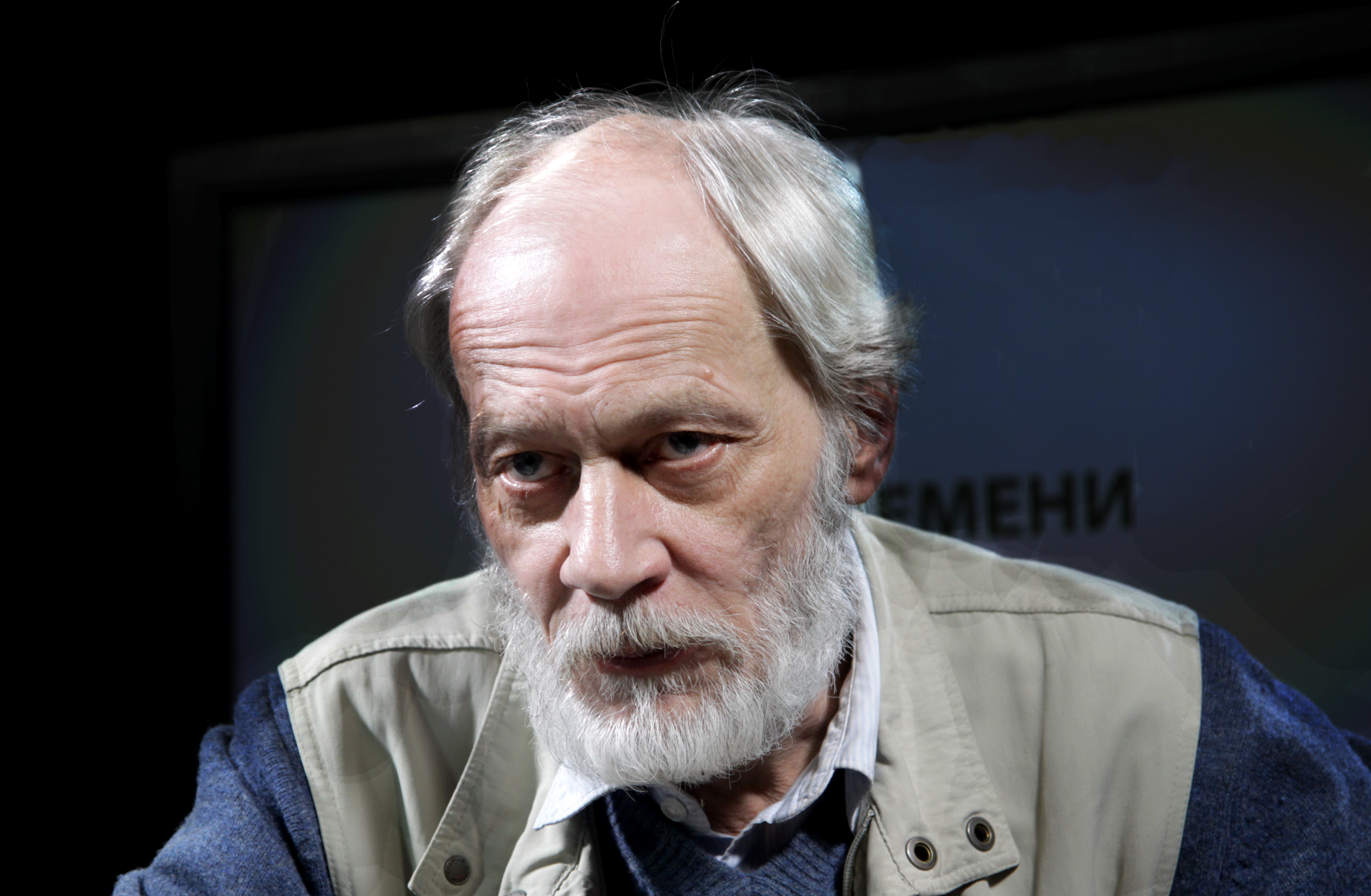
- At one of the last meetings, we had two witnesses. One of them is an employee of the 2nd operational regiment Denis Shavyrin. A quite ordinary riot police, a large rude guy who is surprisingly accurate, clearly and, most striking, honestly, said that he had seen personally in Bolotnaya Square. His testimonies were remarkable for protection because he said a lot of necessary. It’s hard to thank a person for telling the truth, but I want to say thank you. And the second was this doctor. He gave completely different testimonies at the preliminary investigation. And then everything became in the colors, he had a "reinforcement", which "flying". He does not know, but before that we read the protocols for the inspection of the area where the police did not find a single reinforcement. He had a "stab-cut wounds" among the injured police officers. He does not know, but we will announce the conclusion on all the injured policeman, where there is not a single stab wound. I know where it comes from. For police radio (apparently, he had her) a rumor that someone had been stabbed with a knife. But this rumor remained with a rumor. And he invented all this. We looked around different witnesses, among them were police officers who also lied, but disgusting when the doctor does it, when he lies about the diagnosis. I don't think they were specifically searched. We are faced with a situation when in the wake of hysteria and complete idiocy, which is happening around, people fly off the coils. So he - flew off the coils.
We looked around different witnesses, among them were police officers who also lied, but disgusting when the doctor does it
- And how did the prosecutor react to this performance?
- The prosecutor was extremely embarrassed. He told him a couple of times: they say, please answer, the defense extremely reasonably asks you a clarifying question. This is such a ... clinical case.
- You participated in the first "swamp business." In general, what are your sensations from this process?
- Everything goes in much less rigid form. We have much more opportunities to calmly interrogate witnesses. The prosecutor behaves differently. We let him wedge into our questions when we see that these are just clarifications. He lets us do the same when he interrogates. And the judge does not really interfere with this when he sees that we do not really object to each other. The situation is quite calm, less tense. But, however, it is completely incomprehensible to what it will lead to. So far, everything goes quite correctly, competently. There were few formally procedural disorders on the first “swamp process”. But this is not about formalities. We are talking about something else: this whole process does not find out what happened in Bolotnaya Square. In the best case, he finds out whether a specific person is to blame for specific actions.
“But how do you try to find out in court as a defense?”
The situation is quite calm, less tense. But it is completely incomprehensible to what it will lead to
- Of course. We do this with every question. We asked the riot police, and he showed that starting from some moment, the exit towards the small Moskvoretsky bridge, towards Luzhkov Bridge, was blocked towards the square. We show the picture: why did people stay in the square? Yes, largely because they could not leave. What all the time was trying to say, Lieutenant Colonel Belovodsky, our already famous opponent, who acts in almost every process: everyone who remained in the square, thereby participated in the riots. In many ways, this is the unspoken position of the prosecution. But even if we consider the guilt of a particular person, then his presence on the square is not his fault. He could not leave, even if he wanted to. Even if we assume that there were mass riots, although this is not so, then how did a specific person participate in them? We will now emphasize this, because there are previous sentences that can be used as a prejudice that there were mass riots. But now we can discuss another question: here is the specific person Ivan Nepomnyans, what did he do? We will prove that he could not leave and that there were no unlawful actions on his part.
-Do you think the recent decision of the ECHR on the "swamps" , which concerned the extension of the arrests, may not from a legal point of view, but from some general ideological to influence the case of Ivan Nepomnyans?
- I think this decision is the first swallow of the fact that the ECHR admits that all decisions on the “swamp business” are not based on the law. Whether it will affect us, I do not know. I do not think that our court is sensitive to external influences, except for the effects directly from above, ”says Sergey Sharov-Delone.
The father of the defendant, Andrei Nepomnyans , also speaks of the unpredictability of this trial. According to him, despite the apparent liberality of judge Alexei Kaveshnikov, it is impossible to predict what decision he can make:
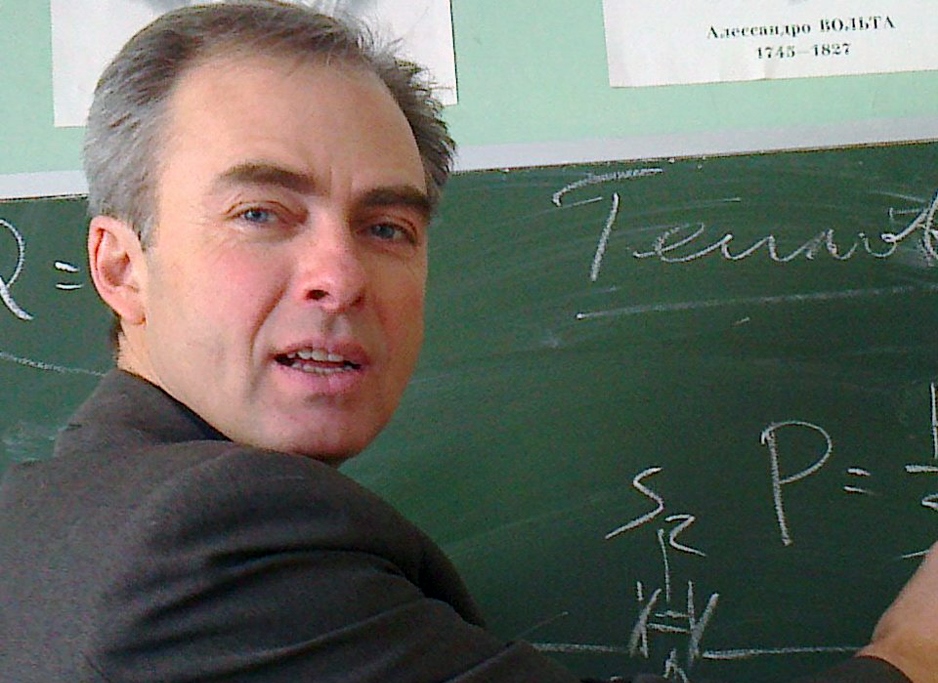
“The first time I was in the criminal process and full of impressions,” says Andrei Nepomnya. - Moreover, it is about my son. At the first meeting, I entered the hall last. It turned out that free space for me was left only on the front bench. I sat down. Next to me on my left hand were two people who clearly stood out. I did not even understand why they stood out. And when the judge had already entered and the process began, it turned out that these very victims of Kolmakov and Gavrilov were sitting from me. I just physically could not sit next to them. Although I am already an adult, a 55-year-old man, I was afraid of myself somehow incorrectly next to them. I left the hall and waited already in the corridor. But I examined them, the victims, whom my son allegedly beaten. They reminded me of some of my school students - the most arrogant, stupid and lazy. For some reason, it is precisely such students who are going to go to the police after school. It was I who saw them in many years, as they graduated from school, these Kolmakov and Gavrilov. Although I was in the corridor, I heard a little what was happening in the courtroom. For example, when the lawyer Olga Chavdar, showing Gavrilova the video personnel, asked what he sees on them, he was silent, for a very long time. Then he answered that he saw his partner. Then she asked: "What else do you see?" And again he is silent, five minutes. Another interesting point. The lawyer asked: "You claim that the defendant of the Nepomnya hit you, and where exactly did he hit you?" In response - silence again. I could not say anything.
It is very important for him: to know that he is not alone and he is not the first
- When we talked before the start of the process , you said that both you and Ivan are tuning up for the worst. With the start of the trial, is your mood somehow changed?
- The outcome of this process is absolutely not visible. There are not even hints how it can end. The fact that Judge Kaveshnikov looks like a very liberal person compared to the same Arthur Karpov is yes. In particular, he allowed Ivan to come to all the following meetings on his own, from Sergiev Posad by train. He gave time to get a haircut. Even allowed to go to work. Nevertheless, none of this indicates how this all can end.
- You said that Ivan was allowed to go to work. That is, he was partially softened by the conditions of house arrest?
- Judge Kaveshnikov cannot soften the conditions of arrest, this is a whole procedure. But each time he in response to a written statement by Ivan gives him permission, for example, from 8 in the morning of such a day to leave there for such and such a purpose, and at 14 o’clock he should, for example, return and report about this to the FSIN. That is, these are one -time actions, not mitigation.
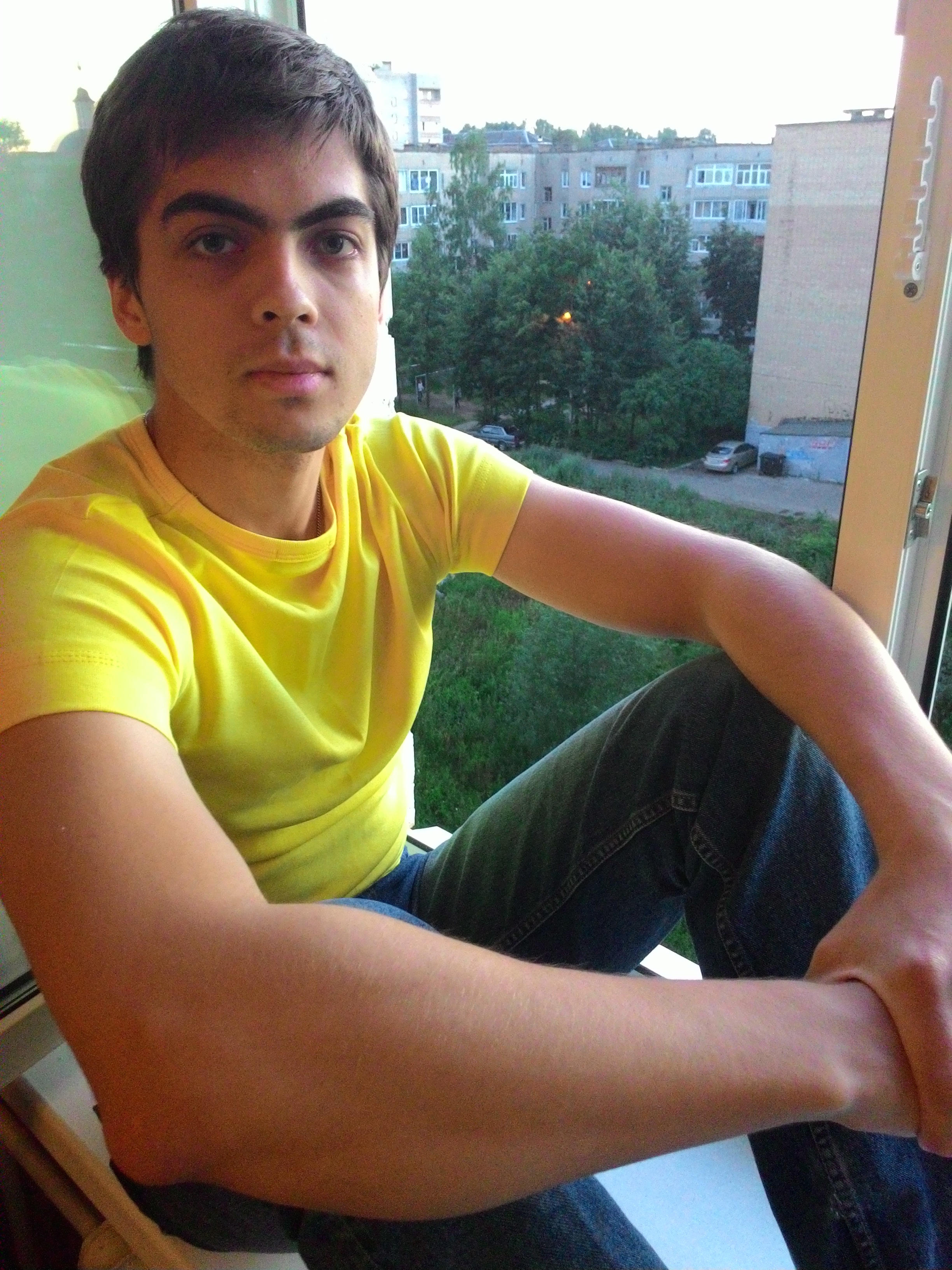
- How is Ivan configured?
- He is absolutely calm. He is ready for any outcome of the process. He constantly has an example of his courageous comrades, “swamps”, abandoned in jail. He knows about them all who in what condition, who came out, who sits and where. This is very important for him: to know that he is not alone, not the first. And if other guys withstood him, then he will withstand. We often talk about it with him. I try to support him, I say that he is not to blame for anything, although he himself knows this very well. Any sane person understands that if we had an independent court, the whole process would fall apart at the first meeting, ”says Andrei Nepomnya, the father of the defendant of the“ swamp business ”.
Ivan the Non -Writing was detained in February 2015, almost three years after the events in Bolotnaya Square. Since then he has been under house arrest. He became the 33rd person involved in the case. 18 people have already been convicted, two received conditional terms. There are six people at large. Another 13 were amnestied. None of the defendants in the case was justified by the Russian court.