
Translated material
Fear
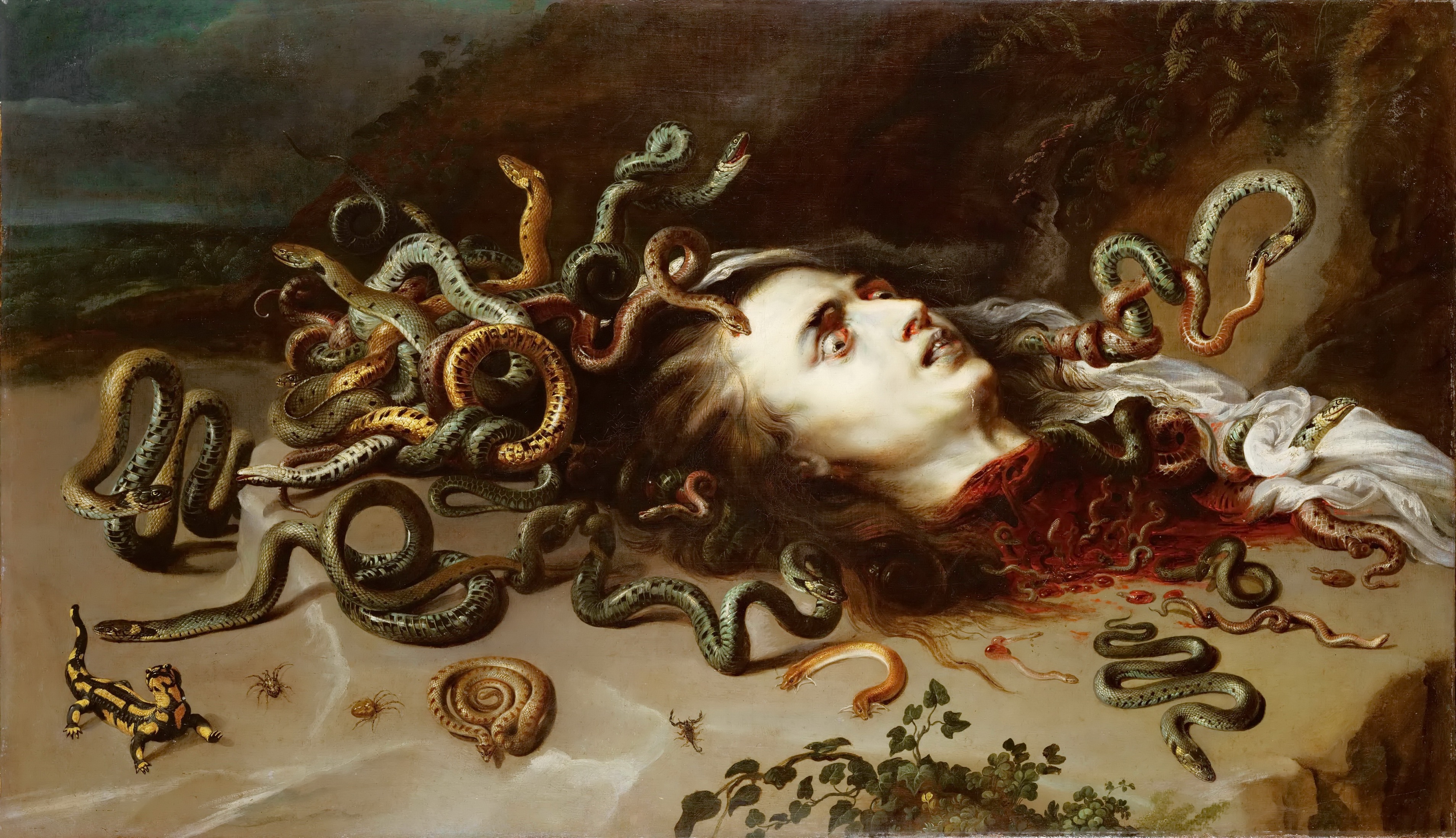
The writer, philosopher, film director, psychologist, etc. discuss various shades of fear *** Ballet artists about their craft *** “red dry”. What and how they drink in Lithuania
Psychologists call this feeling a negatively painted emotional process. Is it so?
Zhenya, Moscow schoolgirl, 9 years old:
Suppose, if you enter the basement, and the person is scary, then he will not go there. Where it is dark, there you can’t see another person, it’s somehow scary that he will leave now. Loneliness is not too good.
Igor Pomerantsev: Zhenya, are you afraid of mice?
Zhenya: No.
- And insects?
- Of course not.
“Can you jump, for example, into the water from the cliff?”
- Of course not.
-And what do you think, where is the fear in a person?
“I think from his weakness.” If a person is weak, then he may begin to cowardly.
- Is it nice or unpleasant: frost on the skin, goosebumps on the back?
- No, it's unpleasant. Although, I think, to someone, who is pleased, who is not.
Igor Pomerantsev: We will continue the conversation about fear, begun by a 9-year-old Moscow schoolgirl. It will be about the nature of fear, fear of the unaccountable, irrational, supernatural. I promise not to scare anyone, except a little at the very end, but the children may not listen to this program. The writer Arkady Lviv talks about his complex relationships with the sea:
Fear was a doping for me, the dose of which had to constantly increase “one of the swims almost turned out to be the last for me, but it was he who most of all clarified the mechanism of my strange attraction to distant swims alone. Fear - I formulated it for myself later - was a stimulant for me, a doping, the dose of which had to be constantly increased so that the acuteness of feeling would not be dulled. Undoubtedly distant swims were a training for overcoming fear, I at first understood this. But on that August day, I suddenly clearly saw that I was looking for the very fear, real, genuine. The sun only began to skip over the horizon when I was already a kilometer or more from the shore and suddenly, in a shame, in a focus of a cramp, I suddenly flew at me - the sea was absolutely mirrored - a whirlwind of fear. I suddenly saw the abyss clearly, black, without light, with some monsters in the abysses, and my heart sank in such a longing that I first felt: death is somewhere here, very close. My legs, at first the right, then the left -wing pain brought into an unbearable pain, I began to randomly move my hands, choke, I lacked, no matter how deep I inhaled the air, breathing. I don’t know how much time had passed, finally I saw myself on the shore. I want to emphasize that I looked at myself from the side. It seems to me that I lost consciousness. In any case, when I opened my eyes, the sun was already high in the sky. I think that this episode itself should have had to distract me from all sorts of reasonable calculations and should have seemed to warn me, but nevertheless, oddly enough, I have done this experience repeatedly, I always sought to experience this feeling of fear again and again.
Igor Pomerantsev: The Buddhist sages were reflected in the second half of the first millennium BC. Read more about this by the Buddologist and philosopher Alexander Pyatigorsk (1929-2009):
Death and Life: We always project fear on the polarity of our psyche
“Unlike Christianity, where fear has its own positive spiritual analogue - the fear of God, in Buddhism, fear appears only with a negative sign. Natural fear, even in yoga and in the great hermit, is exhausted with great difficulty, if you like, heroism, a feat of rejecting fear. In the first place, the fear of supernatural, purely spiritual fear, who is a simple person who experiences his idiotic fear before tomorrow or trembles with fear of fear of the dangers that he managed to avoid, is not considered at all at this level at this level. Fear in Buddhist philosophy is considered in itself as a result or as what accompanies the imperfection of our empirical consciousness, or rather, accompanies its empiricality. Death and life: we always project fear on the polarity of our psyche. When the psyche ceases to be polar, when a person ceases to perceive and think in the context of the opposition imposed by his vulgar structure of sensations-yes, no, well-bad, disgusting, attractive-only when a person outlines this opposition, fear gradually disappears. Fear acts in the process of imperfect opposite, built on contradictions in consciousness. A person is born of a great, according to Buddhist philosophy, empirical consciousness, so fear is given to him from birth. Therefore, it can be overcome not only by a natural way, but by restructuring consciousness, its transformation from the vulgar opposition consciousness, between the poles of which a normal vulgar person is rushing, in a consciousness that does not know the extremes and opposition. Then the fear disappears.
Igor Pomerantsev: The writer Sergei Bardin talks about his experience of fear:
10 minutes ago I was threatened by death from horror when the aircraft was sitting on landing, and now they tried to drown me in the countess of water
“The first time I was dying of fear. I flew from Moscow to Sukhumi on vacation, flew for the first time in my life. After landing on the flight field, I entered the bus, and the driver of the truck looked at me in the rearview mirror, met with me and suddenly shouted with a terrible accent: “No, no, do not die! Just not on my bus, dear. " He rolled out of the cockpit and rushed into the air terminal building. A minute later, he ran out of there with two decanters of water and accompanied by an employee in a T -shirt and a uniform. Crowing out something on an adverty unknown to me, they dragged me out, abruptly tilted and began to pour me water from two graphins behind the scruff and on the crown. 10 minutes ago, I was threatened with death from horror when the aircraft was sitting on landing, and now they tried to drown me in the countess of water. The fact is that it is not fear who visits me on the plane, but completely unknown horror. I began to rummage in books after the flight and found a monograph by Dr. L. Kitaev-Men called “stress”. This doctor used a plane in free soaring as a torture tool. One percent of his experimental people literally died in a free fall, among them there were even some athletes, masters of sports in skiing. But in the corridors of the Academy of Sciences in Moscow, I was once introduced to this doctor Kitaev-sninking. My secret, my horror and my interest did not make any impression on the doctor. He turned out to be a dead Darwinist. “You know,” he said, “Gibbons are the best jumpers in trees, but they often fall, they have all the bones of fragments, this has recently been clarified. Your ancestor, ”said the doctor,“ the ancient monkey, also fell from the rocks and branches. I needed an ultra -powerful impulse of stress so that it began to grab for anything. In you in 1%, in your genes this horror of the ancestor before the fall. Your ancestors did not know that planes would appear. ” “So I never fly to America?” I asked sadly. “Never,” the doctor answered me. In a word, like a scalpel, cutting off me, this failed single -percent branch of the evolutionary process: "Nothing will help you." “But maybe the training,” I mumbled, “getting used to, what do you think?” Well, how much time can it take to 1% get used to airplanes? ” The doctor leaned back and looked at me seriously and carefully as a doctor: “30 thousand generations,” he said, “about one million years.” “I'll wait,” I said, and stepped up.
Igor Pomerantsev: But fear can not only be tested, but also use. Art has long been engaged in art. The musician and poet Valery Brinin-Passek speaks of musical fears:
Infrasound with a frequency of 8 vibrations per second causes a feeling of panic horror
“There is a known case when, during one of the opera performances, the audience fled from the hall in a panic. The culprit of this effect was not at all a fire on stage and not a collapsed chandelier. The composer demanded to strengthen the lower sounds of the organ with new pipes, twice as long. It turned out that infrasound with a frequency of 8 vibrations per second causes a feeling of panic horror. This, although located outside of audibility, nevertheless explains the musical sound explains the problem of all the “flying Dutch”: the wind rushing over the crests of the waves, sometimes gives rise to a frequency of 8 hertz, and then the ship’s team, leaving a short -lived breakfast, is thrown overboard in a panic. In principle, all very low sounds are depressing and at the same time actively act on the psyche. As soon as the opera composers realized that from a reduced chord you can not only go to a variety of tonality, but even not to go anywhere, as the notorious chord began to catch up with fear. The whole romantic opera from Weber to Wagner was following the audience approximately as follows.
(Music)
I know at least one brilliant example from the classics that continues to act on me to this day. On February 4, 1971, then being a student of the Sverdlovsk Muzucchi, I went to the opera for the Don Juan Mozart. The small, belly Don Juan seduced the 17-year-old old woman Cerlin. The orchestra sawed, as they said at home, neither in the star nor in the Red Army. To top it all in the final, he fell on the stage, with a rattles of tin claws, the deceased commander in the diving spacesuit, issuing something completely inarticulate from his spacesuit. But in music at that time they crawled, nothing special, ordinary gammmas, musical garbage, who does not have an author belonging to everyone who wants to use it, up and down, up and down in different tonalities, and you won’t guess when the tonality is replaced, or when moving up, or tonality, as if it were, as if it were pulled out of the very underworld itself hellish flame. It was really creepy.
(Music)
Igor Pomerantsev: In different cultures, fear is personified differently. Says African ethnographer Viktor Bailis:
A woman can be frightened by a crocodile not because it is a predator, but because it is her husband
“The mouse does not pose threats either to human life or for his property, however, in the Indo -European cultural area, the mouse is united with a thousand threads with the concept of death. Looking into the eyes of death, the individual of the weaker sex can screeches, and in Africa, at the sight of the mouse, it does not score. But in Africa you can get scared to death when meeting with a menstruating woman, especially if a woman has a disorder in this area. A woman who loses blood and cannot give birth to children, in the social sphere is equated with a killer man who sheds blood. Anyone in Africa may be frightened by an ant. Sorcerers and witches love to turn into ants. A small ant can climb into the nostrils of a person, into his mouth or ear sink, while a person sleeps and sit down his soul. Without a soul, a person does not live for more than two or three days. The stronger fears of Africans, who take the type of real epidemics, are associated with witchcraft and witchcraft. Both witches and sorcerers have the so -called relatives, monsters or animals, which act as an instrument of the anger of their owners. These relatives have the forms of stunted men with twisted heels, as well as jackals, owls and rats. Among such creatures, a huge water snake with the face of the owner and a giant horned freshwater crab. A woman can be frightened by a crocodile not because it is a predator, but because it is her husband, who was a desire to enjoy human meat. ”
Igor Pomerantsev: Maybe the most appreciated by the fear of filmmakers. They created a whole film industry - horror films. Director Pavel Lungin reflects on the nature of the film insurance:
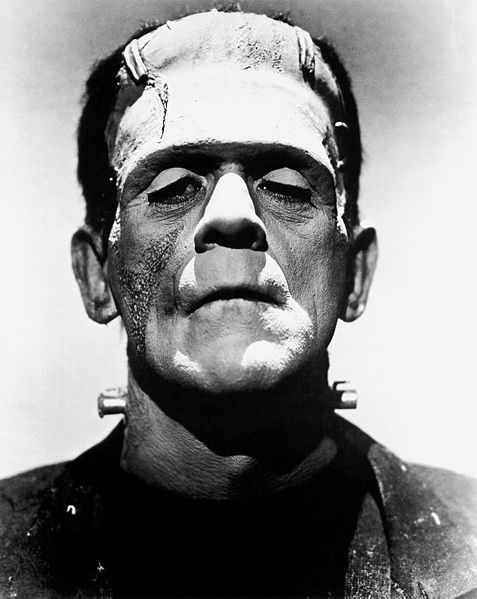
“What is the horror movie about? Honestly, I myself do not know. For some reason, I remembered one of the months spent in the Pioneer camp. So there, those who told indecent jokes were in great respect there, and there were also night masters of terrible stories. It was horror, and it was great. Now I think that the darkness of the cinema hall is initially close to the night ward where we slept, it remains only to pull the white sheet, and the film has already begun. Vampires, monsters, skeletons and so on reached the TV screen. But this is all as if not art, you tell me, this is a lubck, this is a comic book, this is monkey psychoanalysis. Remember, by the way, as in Mowgli at Kipling, Old Boas of KAA tells the monkeys about the great horror and they listen to him as hypnotized. Monkeys, too, apparently love horrors. But what about great films, big directors? It turns out that if they analyze them, they are also filled with fear. Only a talented person does not need vampires or skeletons, he creates horror from any improvised material. For example, if you remember, the remarkable director of Kubrick in the film “Shine”, there a chilling fear covers you when the writer’s son, actor Jack Nicholson, goes on a bicycle along the hotel corridor. Nothing happens in the frame, a three -wheeled bicycle is just rolling along an empty corridor, no one pops out of the rooms, no one is enough, the monsters appear. It is this expectation of what will never appear, that he will never appear, drives us crazy. The ingenious Kubrick makes each of us populate this empty corridor with its own nightmares. As soon as Nicholson finally goes crazy, with an ax begins to chase his son, then you feel some relief even, it means everything is fine-this is just another maniac, we understand, we saw it, we will deal with him. That is, the miracle of its own incomprehensible personal horror disappears as soon as evil is personified.
Igor Pomerantsev: The last word in this program is a Moscow psychologist, a researcher of fears and horrors Margarita Zhamkachyan:
“Fear is generally considered to be born with us. If it did not exist, then how would we find out that we really live. After all, a person himself, as it were, strives for fear a little. This is the feeling of goosebumps, it is at the same time unpleasant, at the same time, let's say right, pleasant too, somewhere we are pleased to injure ourselves. If we talk about supernatural, then this assumption of existence is nothing, nothing, non -being. ”
Igor Pomerantsev : Why can a strong adult be afraid of a mouse, thin -legged cockroach, antennae, flagella, tentacles?
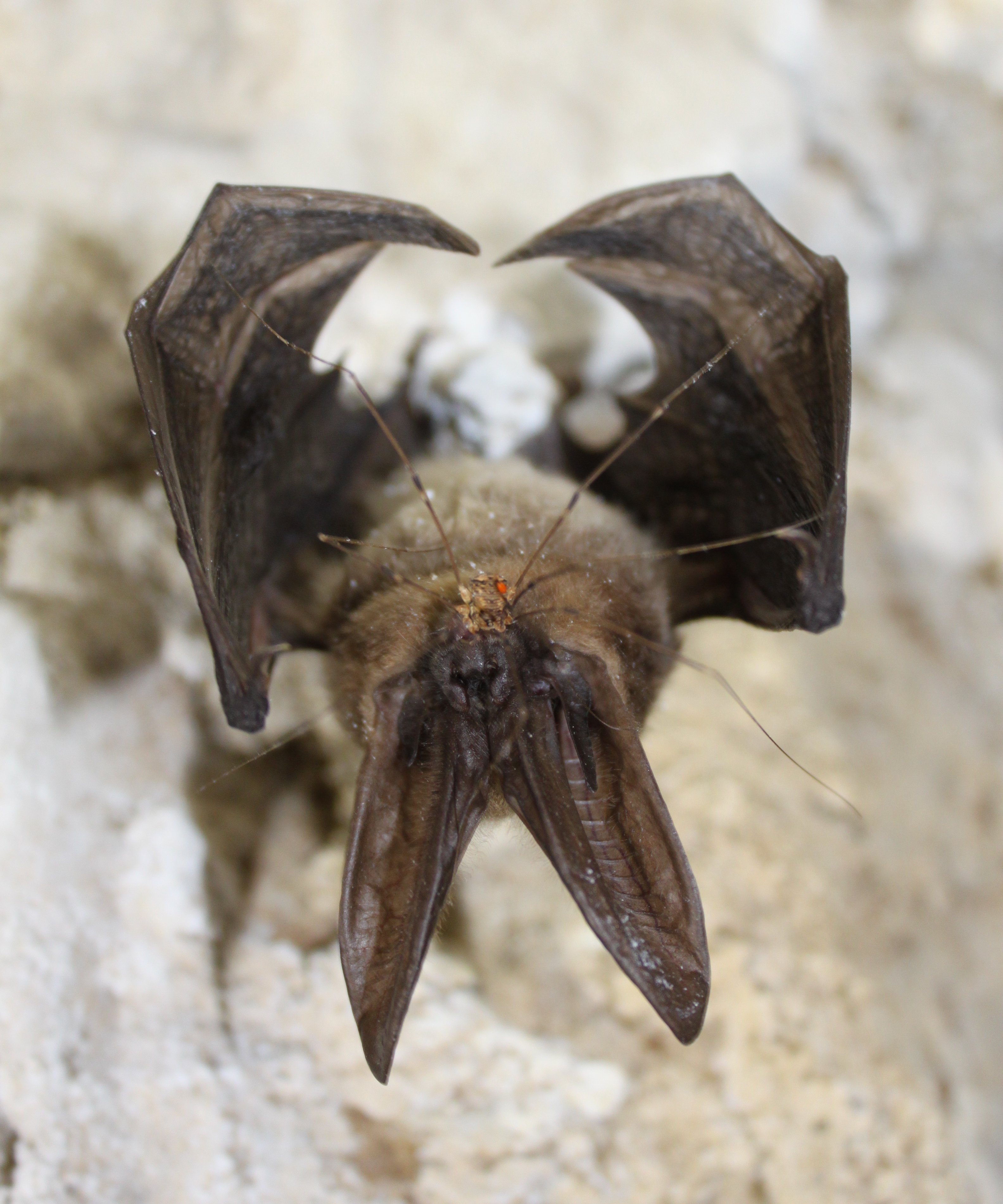
Margarita Zhamkachyan: next to our world, decorated, rational, exists, and we still feel it, as if something completely different-darkness, emptiness, something frozen. Representatives of this are nothing, and there can be a lot from darkness, all kinds of fantastic monsters, representatives of this nothing, such a transfer of something alien to a person, happens that a person is incomprehensible, for example, these are all sorts of flagella, movement is completely not like ours. Psychologists, philosophers have long associated the fear of the mouse only with the running mouse when it runs quickly, so that we do not see its legs, and for us, the run is similar to the movement of reptiles. The movement of wriggles or too fast, it always causes instant fear, even if you later understand that this is a mouse. By the way, this fear never arises when the mouse is in the cage.
Igor Pomerantsev: Leningrad philosopher Leonid Lipavsky, a friend of Harms, Vvedensky, Zabolotsky, in his study of horror, claimed that fear causes a muddy-pro-transparent, white-yellow color, the color of linen lice. Is it so?
Margarita Zhamkachyan: I think this is from the same nothing, only additionally painted in the colors of disgust. The colloidal form about which he says, jelly, colloids in many are disgusted. This is probably vaguely connected with fear. You asked if we have some kind of antenna or sensors, receptors, say, fear. Jung said that we simply do not know yet, maybe our unconscious is capable of perceiving this objective world not through consciousness, but simply to know it directly, only we do not know how, and to respond to it.
Igor Pomerantsev: Is fear good or bad?
You need to have courage to feel fear
Margarita Zhamkachyan: For me, of course, this is the most interesting question. There is a craving for it, and if there is an attraction, then fear has as a positive meaning. I love Belle's very story “Dr. Murka’s silence”. He just works on the radio, he is sick of all this, he is engaged in the fact that he collects fragments of a tape with pauses, collects silence, then listens to him at home and even makes his girlfriend listen. He clearly lives some kind of ephemeral false life from which he is sick. Every day, rising on the elevator in the radio building, clicks on a button that does not indicate any floor, falls into some strange, apparently, attic space, where everything creaks, grinds, the feeling is that something bursts about something, then goes back. This fear returns him to something significant that is in him, again that connection with the living. If you want, you need to have courage to feel fear. Если со страхом встретиться лицом к лицу, разглядеть его, если хотите, вступить с ним в контакт, то это чрезвычайно обогащает вашу жизнь.
Артисты балета о своём ремесле
«Мы исполняли массовый номер большой гусеницы на сцене, и я была какой-то частью этой гусеницы. Но я была безумно счастлива, что я на сцене. Мне казалось, что я улыбаюсь шире всех. И вот эти ощущения у меня остались».
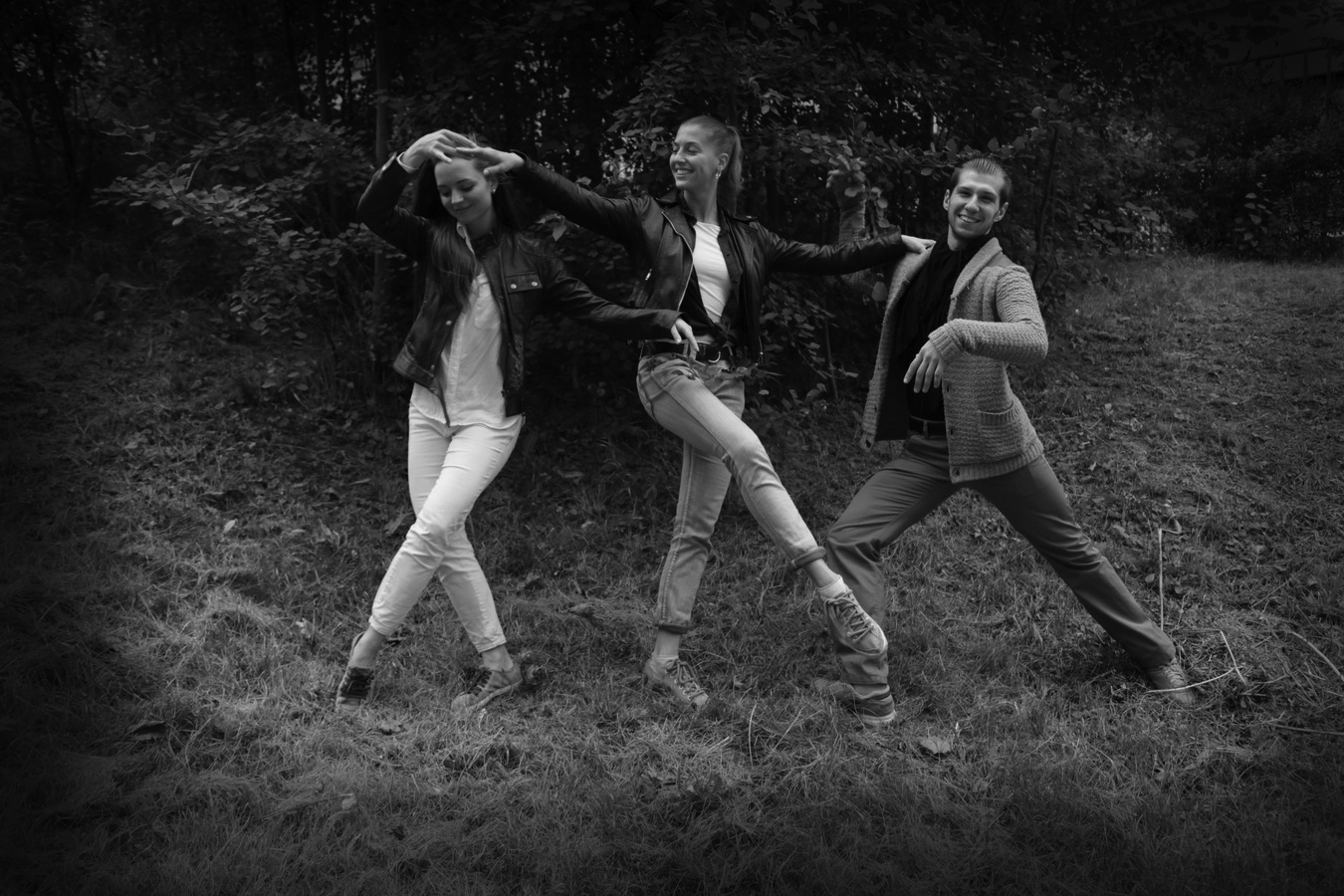
«Родители были против хореографии. Я пошёл против родителей. И родители приняли моё решение. Я стараюсь быть на сцене таким, какой я в жизни».
«Тётя рассказывала, что в детстве, когда я ещё не умела ходить, я уже танцевала, услышав любую музыку. Для меня танцор — прежде всего актёр. Но у актёров две жизни. А у танцора — одна. Я не могу ужиться в двух мирах. Я могу сыграть, но я хочу жить тоже на этой сцене. Всему что есть в моей жизни я даю на сцене полное освобождение».
«Красное сухое» Что и как пьют в Литве