
Translated material
Against parasites and malaria
To whom and for what they gave the Nobel Prize in Physiology and Medicine: N + 1
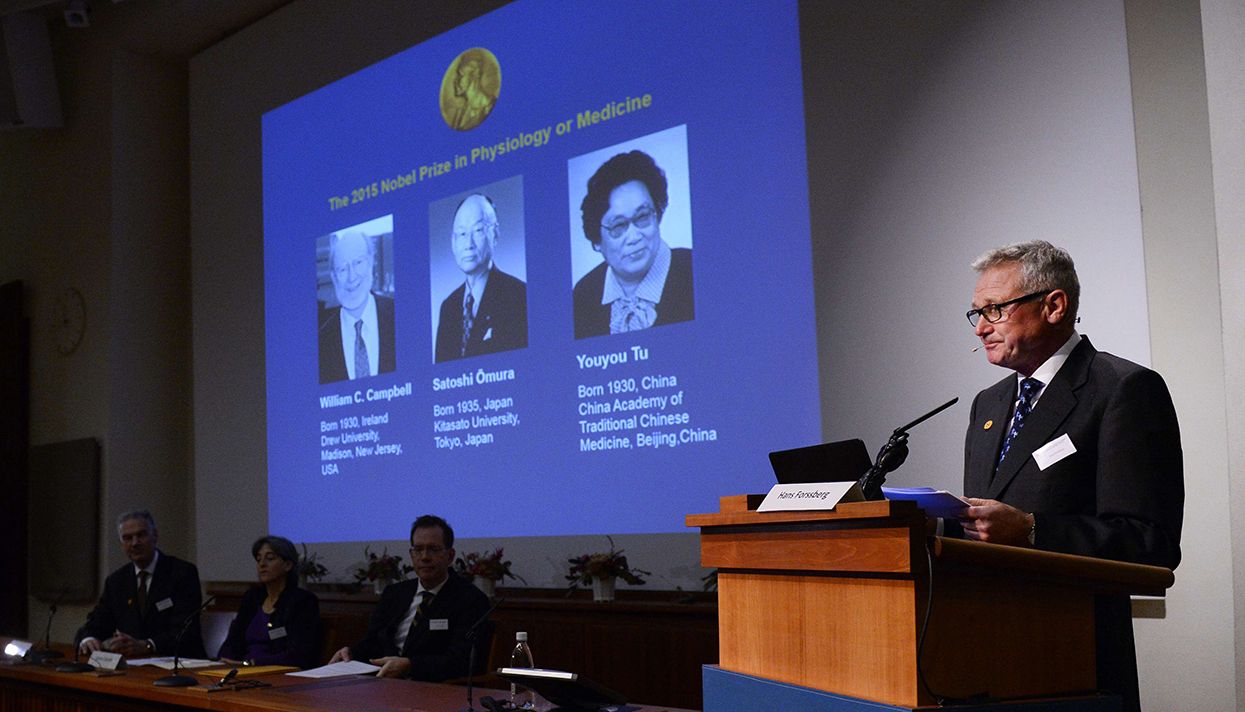
In Stockholm on October 5, the Nobel week began - traditionally the first announcement of the names of the winners of the prize in physiology and medicine. The prize was divided in half between Chinese Yu, two other researchers - Irish William Campbell and Japanese Satoshi Omura. The scientific publication N + 1 tells about the achievements of new laureates.
William Campbell and Satoshi Omura became the owners of the Nobel Prize in Physiology and Medicine, who developed “new methods of treating diseases caused by parasitic round worms - nematodes”, as well as Chinese woman Yuya “for creating a new type of therapy against malaria”. Both bonuses unite that they were given for drugs found in nature. In addition, this is the first reward since 1988, awarded for openings in the field of drug development.
Each of these drugs has its own unusual story, for example, Ivermectin, created by omura and colleagues, was developed on the basis of bacteria-wrestomitomycetes that the Japanese collected on the golf field. On the allocation of Artemizinin, one of the strongest antimalarial drugs, TU inspired the ancient scrolls about Chinese traditional medicine.
In 1969, Yuu began the archival search for candidates for replacement for Khinin among the many of the descriptions of potions at her disposal. For three years, Yuya, together with colleagues, studied about 2000 different traditional medicines based on the thousand -year experience of her ancestors, the group Yuu decided to highlight the active component from wormwood and explore its properties. This substance was called Qinghao, and in Western Pharmacopoeia it is known as Artemizinin. ...>