
Translated material
Kunduz effect
On September 28, the Talibam managed to capture the Afghan city of Kunduz for several days, located 60 km from the border with Tajikistan 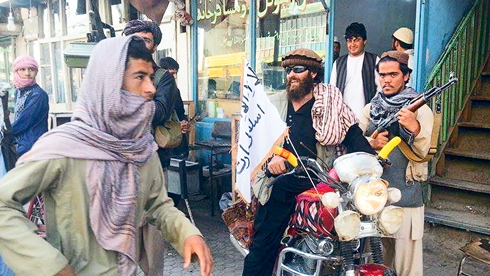
The dramatic events in Kunduz and the northern provinces of the country have not yet ended. The fighting is still going. Taliban detachments thrown from Kunduz are trying to leak through the gaps in the ineffective system of local security organs, skillfully using surprise, as well as the slowness of the Kabul bureaucratic machine. As a result, in Afghan and foreign public opinion, the “Kunduz effect” is preserved - a system of long -playing and emotionally bright information reasons that form the image of the “invincibility” of the “Taliban” and the hopeless weakness of the official Kabul, and at the same time its ineffective Western allies. By the way, the “Kunduz effect” has already begun to actively use the Russian propaganda machine. The Kremlin has now received additional arguments for the emotional pumping of the “jihadist threat” brand (which is extremely important in connection with the military penetration of Moscow into Syria under the pretext of fighting the Islamic State*), as well as for US criticism, which could not prepare professional security forces in Iraq and Afghanistan.
However, the real Kunduz history is much more interesting than its propaganda interpretations: it seems to be directly related to the extremely complex history of bilateral relations between Afghanistan and Pakistan and the incessant rivalry of the special services of these countries. For example, among those killed in Kunduz, employees of the Afghan intelligence services identified more than a dozen employees of the ISI Pakistani intelligence services. According to representatives of the Afghan intelligence services in private conversations, even their dead officers of the Pakistani intelligence found their official certificates.
Afghan military and police have no doubt: Pakistani "colleagues" played an important role in organizing a raid on Kunduz. Hence the very professional actions of the militants on the night of September 28: relatively small forces, up to one thousand people, they managed to successfully block the city on three sides, cause chaos and paralysis in the management system. And the moment of the attack on Kunduz was chosen extremely successfully: not only the Governor of the province of Mohammad Omar Safi (by the way, the favorite of President Ashraf Gani), but also the chief of the local State Security Department, as well as the leading field commanders from among the local Tajiks, capable of armed resistance, were absent in the city. Obviously, the Kunduz agents of the Taliban intelligence (or Pakistani intelligence - the necessary, as they say, emphasize) worked at a high professional level.
The Kunduz operation, quite likely, was the “response” of the Pakistani side of Kabul for the attack of other Taliban-from the Tahrik-E Taliban Pakistan group (TTP), made on September 18 at the Pakistani military base of Badaber near Peshawar. Then, 29 people, including officers of the Pakistani armed forces, became victims of the Pakistani Taliban, which Islamabad suspects of relations with Afghan intelligence. The very influential adviser to the Prime Minister of Pakistan on National Security Sartaj Aziz publicly accused Afghanistan of involvement in this attack.
However, no matter what there were between the special services of the two countries, the fact that such events occur in just a few tens of kilometers from the southern borders of the CIS, from Tajikistan, where the already difficult domestic political situation makes him think: where else will the “Kunduz effect” manifest itself?
* The Islamic State group (IG) is prohibited in Russia. Photo: AP/TASS