
Translated material
Russia is losing a friend
Relations of Ankara and Moscow deteriorated in a matter of days
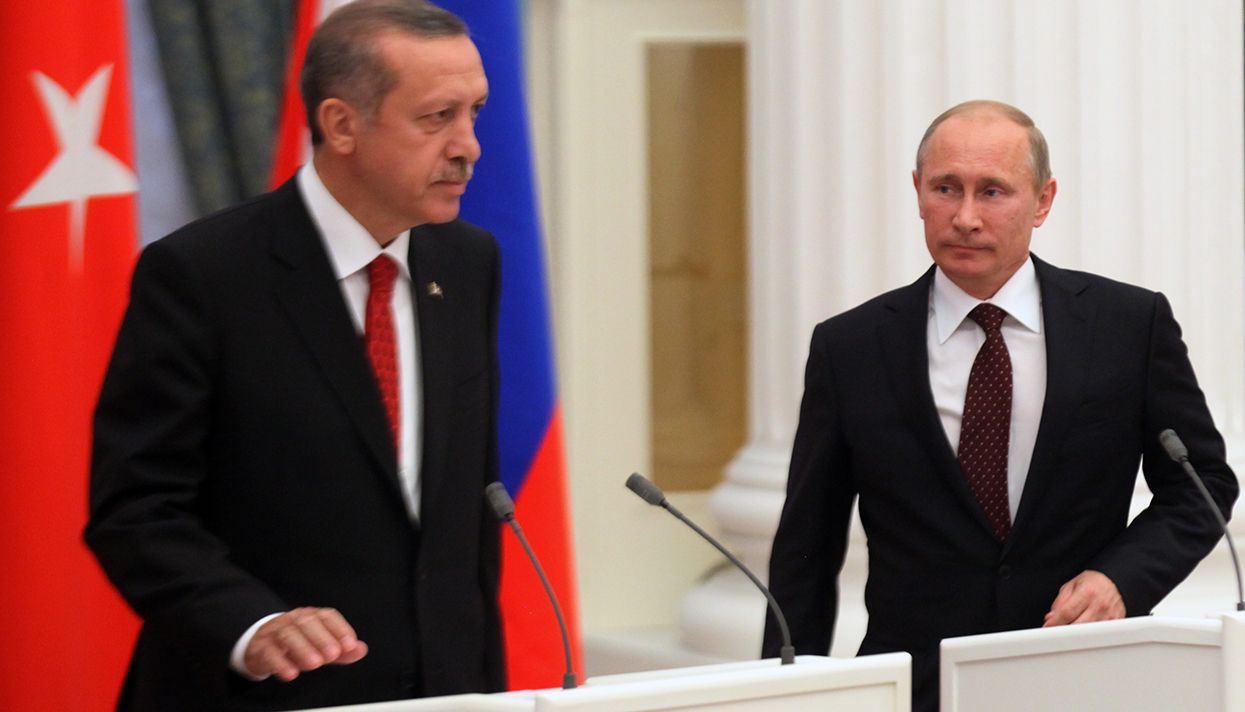
A few days ago, Türkiye was considered one of the main partners of Russia. President Recep Erdogan at the end of September came to the opening of a mosque in Moscow. Gazprom, refusing in 2014 from the South Stream, relied on a gas pipeline in Turkey. However, different positions of countries about the Syrian war spoiled the relations of Moscow and Ankara. Russian fighters either by accident, or intentionally flying into Turkey, Turkish Air Force discover unidentified MiG-29 near the border, and Erdogan Receps directly calls Russia's actions in Syria a mistake.
Friends
Türkiye is one of the most important trading partners of Russia, although this is usually about this, if it is mentioned, it is somehow casually. Russia ismore actively trading with Turkey than with the United States, France or Great Britain, and almost as actively as with Belarus and Ukraine. Every year, goods and services for more than $ 30 billion are sent across the border, of which the most important is gas. In 2014, Gazprom sent 27.3 billion cubic meters of gas to Turkey, only Germany received more in the world. More than four million Russians (more - only Germans ) go on vacation to Turkey annually. Turkish firms often build offices and other real estate in Russia, and five years ago Turkey agreed that Russia would build Akkui NPPs on the southern coast of the country.
Turkey is included in NATO and is going to join the European Union, but this does not prevent Ankara from having its own position on many issues-from the “continuity of power” (Erdogan leads Turkey at the posts of the president and prime minister since 2003) to rejection of gay parades and tightly overclocking of opposition demonstrations.
In the conditions of isolation and “U -turning to the East,” Moscow tried to get closer to Ankara, especially since it decided not to occupy a hard position in the Crimea. The first international flight from Russian Simferopol was held precisely to Turkey; In the future, local authorities did not interfere with the air report with the territory that Ukraine considers occupied.
Russia and Türkiye do not apply any sanctions to each other. A few months after the South Stream project failed, Gazprom announced his intention to stretch four branches of gas pipelines to Turkey: one to ensure this country, three others for export to south of Europe. The total capacity was supposed to amount to 62 billion cubic meters, and although negotiations on the gas pipeline were difficult, it was clear who Russia is now focusing in its gas policy.
Finally, Vladimir Putin and Recep Erdogan seem to get along well with each other (although they do not converge on the issue of Armenians important for Turkey). Judging by the official website of the Kremlin , they meet or talk on the phone almost every month. “We are highly satisfied with how our interstate relations are developing,” Erdogan said after a meeting with Putin at the opening of the Moscow mosque on September 23, 2015.
Opponents
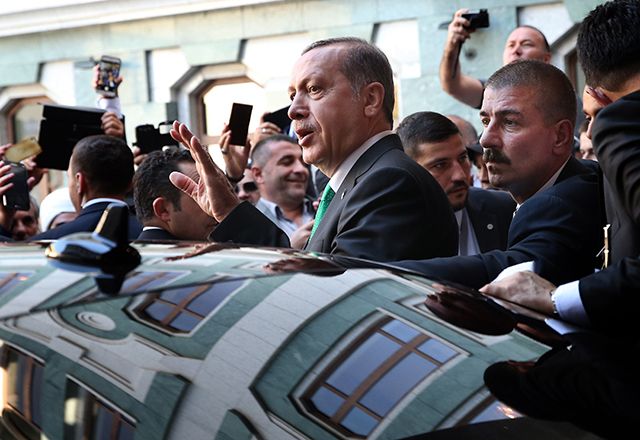
The fact that Türkiye does not support the regime of Bashar al -Assad was known for a long time. Turkey inflicts its air strikes through the territory of Syria, and sometimes invades a neighboring country on tanks. Turkey bombed not only the position of the “Islamic state” ( the organization is recognized as terrorist in Russia and is prohibited ), but also the Kurds who want to create their state in Turkey and Syria. The Kurds also oppose the Islamic State and help the United States conduct an anti -terrorist operation in Syria. They support Russia's air raids on IG.
The appearance of Russia in Syria has greatly changed the alignment of forces in the region and added an unpredictability situation (at least for the United States and Turkey). Immediately after the start of the bombing, Erdogan said that the Russian authorities make a mistake. The position of the President of Turkey regarding Russian airstrikes in Syria every day became more and more tough. “If Russia loses such a friend as Turkey with whom it interacts in many areas, it will lose a lot. And she should remember this, ”Erdogan said on October 6, a week after the start of the bombing.
Russian aviation - eitherin response to the indignation of the Turkish leader, or simply by coincidence - violated the airspace of the country (once, exactly, the second -presumably ). In addition, near the borders of Turkey, a suspicious MiG-29 flies for the second day-however, Russia officially stated that he had nothing to do with the Russian Air Force.
Finally, on October 6, it became known that the power of the “Turkish stream” would not be 60 billion cubic meters, but 32 billion. More, taking into account the expansion of the “northern stream” along the bottom of the Baltic Sea (it goes to Germany and requires much less cost for construction - in particular, because the Black Sea is deeper than the Baltic), Russia was not needed.
The Russian Ministry of Defense promises to increase the density of bombing further. If the incidents on the border of Syria and Turkey continue, Moscow risks losing another important regional partner who, under other circumstances, could become a reliable support.